What is in particular that interests you about sculpture?
I am interested in the form and mass that is sculpture. I like the way we as humans relate ourselves to objects through their three dimensionalism. We are given the option to walk around and view the object from multiple angles and vantage points creating our own image from that object. We judge the object as being larger or smaller than human scale and this plays a large role in our perception of the object.
You have made numerous paintings, information pillspurchase have interests crossed over from painting into sculpture?
Well, I think I feel happier thinking in three dimensions and I have always felt more successful in making objects but I appreciate painting and drawing very highly. It’s a very different way of thinking. I’ve done quite a bit of life drawing and painting; I think it’s helped me to appreciate form. I strongly believe in drawing, if not as a final out come, then as a practice to learn to see. I think as a sculptor it is important to learn to look at things and see how they work formally then you understand them. I always think I can see things better after I draw from life because it forces me to really look and not just glance. I went to art school in Athens for a year and had this amazing classical training there before doing my degree in London. I definitely think it gave me a different perspective.
I think I am a bit shy to make paintings now because I feel like I expose too much of myself, but with sculptures I rely on the materials and the mass of the objects to defend themselves.
At Amelia’s we love to hear about the creative process, would you mind explaining (however you like) your personal process of designing and developing a sculpture?
For myself the making process is a vital part of how I develop an idea. I make a lot, a lot doesn’t always work but I find it useful. I try not to think of anything as a definitive piece, the important bit is the process. My work is frequently based around materials. By using impoverished materials I am devaluing the monumentalism classical sculpture holds. Making ‘Pythia’ was a very labour intensive process. I relate the carving of the polystyrene armature and the precise measuring and cutting of each individual tile to the carving of ancient marbles. It was very industrial and ordered. I made them imagining I was making an architectural fitting, which is kind of what the classical sculptures were in their day. I also spent a lot of time in the British Museum taking photographs and working on them as drawings and sketches.
I try to have a strong studio practice as well. Just being in a space for work is important.
Do you start with an idea or a medium or are both equally important in your work. If this is a bit vague, I mean does the medium start the idea or does the idea influence the medium used?
I think the two go together, although I pay more attention to materials than I realize. I thought up ‘Sunset Island’ while I was in LA and I had a lot of time to think about it. I wanted to represent the crummy, grimy glamour of Hollywood with the cocktail sticks and the industrial fiberglass sphere. So yes materials make me think of things. My degree show work on temporal exoticism and classical Hellenistic sculpture came about from working with tiles and trawling the isles of hardware stores, and finding cheap marble effect ceramic tiles. This cheap marble effect alludes to the wealth represented by classical marbles.
Do you prefer to work entirely on your own as you are creating a sculpture?
I need to think by myself and write but its really boring working alone. Now I’ve finished college, my studio is really small, crammed and damp. I miss always being able to find someone to get a coffee with when I want to take a break.
I also think sculpture is a social process. I didn’t really paint at college because the studios were really open and I need to be alone to paint, its much more personal. Sculpture however requires banter. However I pretty much had to make my degree show piece, ‘Pythia’ entirely on my own. The tile cutter makes such an awful noise I was as good as exiled out the studios at college.
Who or what are your artistic inspirations
My biggest inspiration was going to Los Angeles last year when I interned as a studio assistant for Mindy Shapero. College was OK but it was a bit grey, working for Mindy made me really hungry to make and really want to be an artist. There was so much energy and exuberance in the approach to life. I realized that I probably could do it if I wanted it badly enough. I also met some amazing artists out there, like Thomas Houseago. He was so inspirational and had so much energy.
I can’t help being inspired by greats such as Picasso and Brancusi. Recently I have been reading about Rodin’s love for Greek sculpture as it conveyed the ‘ravages of the time’ in its ‘fragmentary aspect’. Rodin was a pioneer of the existential being conveyed through representation of human form, which he showed through his tactile figures.
My interest in classical Hellenistic sculpture lies in the history attached to it, ‘the ravages of time’, and the wars fought around it. Also the way sculptors repeatedly revert back to it as true sculpture.
I love museums as well, especially the old musty sort. There is an exoticism in places like that: a longing for a bygone age. I am interested in the fragmentary discovery and understanding history, so I think museums are exciting transient spaces full of mystery and discovery.
Do the paper drawings feed the physical process of making a sculpture?
The drawings are really beautiful. I started making them as plans for sculptures to understand the anatomy and form of classical sculptures. They are really just spruced up working plans, but I think that’s what’s attractive about them. I tried making sculptures directly from them but it was a complete failure so in a sense they are failures at working drawings. Again they were important for my process, especially as I was making work about existing work, it was important for me to understand the existing sculptures.
I also tried to convey the museum feel in them. They are displayed like old school posters or crumbling educational departments in museums. Places that explain history, like the classical sculptures I was looking at. They are objects, which represent an exotic bygone age, but essentially are just glorified rocks.
What is next for Zoe Paul?
Well, its slow being out of school but I’m really excited to have been selected for ‘Future Map 09’, which is a selection of only a handful of graduating students from across University of the Arts London, of both graduates and post graduates. So that’s really exciting.
In terms of work I’m really excited about continuing with my idea of temporal exoticism and the allure objects hold. I was reading this amazing book this summer about a shipwreck, which was discovered off a Greek island in 1900. It was full of sculptures on their way to Rome during the Roman occupation of Greece in around 70BC. There are some amazing descriptions of the sculptures being all gnarled and eaten by the sea. I like the idea of these vast powerful sculptures lying rotting at the bottom with such a history attached to them. I want to make more tactile works now that show my process. I love the way Rebecca Warren’s figures do that.
This year the Veolia Environment Wildlife Photographer Of The Year 2009 graces the walls of the Natural History Museum for another year and it’s safe to say this is one exhibition that cannot be missed. Owned by the museum and BBC Wildlife Magazine, prostate the competition is one that prides itself on exposing and celebrating the diversity of life on the planet.
The room dedicated to this exhibiton is dimly lit and you discover that this is to make way for the photographs themselves. Each one is displayed on a screen, viagra 60mg illuminated from behind so that they stand as
The competiton is divided into categories, first showing the winner and then a selection of those that are highly recommended.
Under the heading of ‘Urban and Garden Wildlife’ I find the corresponding winner to be something of a stroke of genius. The entries are required to be poignant, beautiful or striking comopositions of wild animals or plants in urban or suburban settings. The judges look for uncommonly good images of common subjects. It’s easy to see why ‘Respect’ by Igor Shilpenok (Russia) was the judges favourite. The centre of the photo is a stage for a stand off – one small domestic cat against a considerably bigger wild fox. This is one cat that clearly has a ________ complex. There’s something quite triumphant about this scene. You feel a sense of jubilation in his victory over the intruder. Shilpenok was working as a ranger in the Kronotsky Nature Reserve in Kamchatka, Russia with his cat Ryska for company. He comments that, “One day Ryska, protecting me, ran to attack an approaching fox. The fox bottled it and Ryska instantly earned respect from the foxes – and me”.
In this exhibition, there are categories that are dedicated to the plant kingdom
What is it in particular about sculpture that interests you?
I am interested in the form and mass that is sculpture. I like the way we as humans relate ourselves to objects through their three dimensionalism. We are given the option to walk around and view the object from multiple angles and vantage points, sildenafil creating our own image from that object. We judge the object as being larger or smaller than human scale and this plays a large role in our perception of the object.
You have made numerous paintings, have interests crossed over from painting into sculpture?
I feel happier thinking in three dimensions and I have always felt more successful in making objects but I highly appreciate painting and drawing. It’s a very different way of thinking. I’ve done a fair amount of life drawing and painting; which I think has helped me to appreciate form.
I strongly believe in drawing, if not as a final out come, then as a practice to learn to see. I think as a sculptor it is important to learn to look at things and see how they work formally in order for you to understand them. I always think I can see things better after I draw from life because it forces me to look and not just glance. The art school in Athens I went to for a year before my degree in London provided amazing classical training. I definitely think it gave me a different perspective.
I am a bit shy to make paintings now because I feel like I expose too much of myself, but with sculptures I rely on the materials and the mass of the objects to defend themselves.
How do your sculptures develop through the design process?
For myself the making process is a vital part of how I develop an idea. I make a lot, a lot of which, doesn’t always work but I find the action useful. I try not to think of anything as a definitive piece, the process is important.
My work is frequently based around materials. By using impoverished materials I devalue the monumentalism classical sculpture holds. Making ‘Pythia’ was an incredibly labour intensive process. I relate the carving of the polystyrene armature and the precise measuring and cutting of each individual tile to the carving of ancient marbles. It was industrial and ordered. I made the sculptures imagining I was making an architectural fitting, similar to what classical sculptures were in their day. I also spent time in the British Museum taking photographs and working on these as drawings and sketches.
Do you start with an idea or a medium or are both equally important in your work. If this is a bit vague, I mean does the medium start the idea or does the idea influence the medium used?
I think the two go together, although I pay more attention to materials than I realize. I thought up ‘Sunset Island’ whilst in LA, I wanted to represent the crummy, grimy glamour of Hollywood with the cocktail sticks and the industrial fiberglass sphere. Materials make me think of ideas, my degree show work on temporal exoticism and classical Hellenistic sculpture developed from working with tiles, trawling the isles of hardware stores, and finding cheap marble effect ceramic tiles. This cheap marble effect alludes to the wealth represented by classical marbles.
Do you prefer to work entirely on your own as you are creating a sculpture?
I need to think and write by myself, but its really boring working alone. Now I’ve finished college, my studio is really small, crammed and damp. I miss being able to find someone to get a coffee with, when I want a break.
Sculpture is a social process, I didn’t really paint at college because of the open studios and I need to be alone to paint, its much more personal. Sculpture, however, requires banter. Conversely I pretty much had to make my degree show piece, ‘Pythia’ entirely on my own. The tile cutter makes such an awful noise I was as good as exiled out the studios at college.
Who or what are your artistic inspirations
My biggest inspiration was going to Los Angeles last year when I interned as a studio assistant for Mindy Shapero. College was OK but working for Mindy made me really hungry to make and to be an artist. There was so much energy and exuberance in the approach to life. I realized that I could do it if I wanted it badly enough.
I met amazing artists out there, like Thomas Houseago. He was so inspirational and had so much energy.
I can’t help being inspired by greats such as Picasso and Brancusi. Recently I have been reading about Rodin’s love for Greek sculpture as it conveyed the ‘ravages of the time’ in its ‘fragmentary aspect’. Rodin was a pioneer of the existential being conveyed through representation of human form, which he showed through his tactile figures.
My interest in classical Hellenistic sculpture lies in the history attached to it, ‘the ravages of time’, and the wars fought around it. Also the way sculptors repeatedly revert back to it as true sculpture.
I love museums, especially the old musty sort. They contain an exoticism: a longing for a bygone age. I am interested in fragmentary discovery and understanding history, therefore museums are exciting transient spaces full of mystery and discovery.
Do the paper drawings feed the physical process of making a sculpture?
The drawings are really beautiful. I started making them as plans for sculptures to understand the anatomy and form of classical sculptures. Really, they are just spruced up working plans, but I think that’s what’s attractive about them. I tried making sculptures directly from them but it was a complete failure so in a sense they are failures at working drawings. Again they were important for my process, especially as I was making work about existing work, it was important for me to understand existing sculptures.
I tried to convey the museum feel in them. Displaying the images like old school posters or crumbling educational departments in museums. As museums attempt to explain history, the classical sculptures I was looking at. They are objects, which represent an exotic bygone age, but essentially are just glorified rocks
What’s next for Zoe Paul?
I’m excited to have been selected for ‘Future Map 09’, a selection of a handful of graduating students from across the University of the Arts London, of both graduates and post graduates.
In terms of work I’m excited to continue my idea of temporal exoticism and the allure objects hold. I’ve been reading an amazing book about a shipwreck containing sculptures on their way to Rome during the Roman occupation of Greece around 70BC, discovered off a Greek island in 1900. The book delivers amazing descriptions of the sculptures being gnarled and eaten by the sea. I like the idea of these vast powerful sculptures rotting at the bottom with such history attached to them.
I would like to make more tactile works that show my process. I love the way Rebecca Warren’s figures do that.
Last week a group of 21 activists from around the country stormed Didcot Power Station in an awe inspiring action that managed to force the power company to switch from burning coal to gas, malady a much cleaner power source, decease dramatically reduce the output of the power station as well as inspiring protestors across the world.
A group locked on to the coal conveyor belts halting the supply of coal to the furnace and at the same time 9 protestors scaled the 600 ft chimney, occupied a room and pitched tents next to the chimney flues. Unfortunately the plan to camp in the flues for a week was impossible as it became apparent that they were too hot too stay in for any long period of time.
Although the Didcot Power Station protest may ostensibly have come to a rather unsatisfactory and anticlimactic end, with the nine remaining protesters arrested when they descended last Wednesday having failed to disrupt power generation for a week as planned, the protesters achieved something more important in successfully raising more awareness of the threat of climate change.
The group met at climate camp in London this year, and are not just an obscure group of radicals shrouded in secrecy, but just ordinary individuals from all sorts of trades and professions who felt compelled to do something. Initiatives for environmental action are constantly being developed by normal people who happen to meet, and agree that something needs to be done.
While the action did not gain quite the level of publicity it perhaps hoped for, given its dramatic and unusual nature, there was a reasonable degree of press coverage.
What is surprising however, and perhaps indicative of heightened public concern regarding environmental issues, was that rather condemning the protest as the work of misguided hippies, coverage in the BBC, the Guardian, the Independent, and even the Daily Mail seemed at worst objective, and at best sympathetic.
Although a mainstream newspaper clearly cannot condone ‘unlawful’ protests outright, the Guardian’s article condemning ‘punitive pre-charge bail conditions’, while not compromising its own position, showed a certain solidarity by emphasising the increasingly dubious actions of law-enforcers.
Of course, there will still be those who dismiss these facts as irrelevant, or outweighed by the jobs and electricity Didcot provides. But crucially debate is being provoked, and it is becoming increasingly clear that provocateurs are not extremists, they are people who feel that the current circumstances require extreme action. The demystification of environmental protest – making it seem more inclusive, distilling it down to an issue of personal choices just like any other political issue – will hopefully encourage others.
In a BBC article, John Rainford of RWE power is quoted as saying, “Sitting on top of a chimney isn’t going to affect climate change. The people who can – and do – really make a difference are the people at the bottom of the chimney – the power station workers. They are deeply passionate and absolutely committed to cutting emissions. These are the people who work in the community, live in the community and care about their community”. While it is true that sitting on a chimney did not stop climate change instantly and directly, there is more truth to his words than he knows. Protests are changing public opinion, and if wasn’t for public opinion there would be no call or incentive for a cut in emissions. It is small actions of the builders, receptionists and power station workers which together will determine the survival or demise of coal power in Britain.
Written by Eleanor Matthews on Wednesday November 4th, 2009 1:40 pm
On Thursday the bath-time lovelies at Lush supported one of my great loves, casetroche by staging Climate Rush themed picnics outside all 89 of their UK stores.
As was detailed by Cari in a previous post, unhealthy my local Lush store just happens to be in Liverpool Street Station. Chosen as the flagship store for this event the picnic was attended by Lush superstar campaigners Sean and Andrew, here who have together helped us out in a very big way.
I sent the interns ahead on foot and arrived to find a fetching gingham tablecloth – bearing the timely ‘Climate Change is No Picnic’ slogan – being spread and upon it a yummy selection of vegan cake and cookies laid out for passersby to enjoy.
A trio of violins led by the Rush’s very own Deborah (her of sticky-fingers-in-parliament fame) struck up a tune as the lovely Lush girls, dressed in full Edwardian garb, handed out Trains Not Planes sashes to business men passing by and even managed to engage some climate change denialists in some productive conversation.
The police, as ever, were present. In fact I swear I recognised one of them from the “Riot Gate” at Kingsnorth during Climate Camp last year. Unlike then, they were eager to smell the soaps (all packaged in recyclable paper – Lush tries not to use excess packaging, just one of the reasons we love ‘em) and chat to the pretty shop girls. I wonder if they’ll be so nice to us on Monday…
As Tamsin did her best to butter up the passersby in those famous suffragette must-haves, fishnet tights and a miniskirt, we were pounced on by a person dressed up as a giant mobile phone.
A slightly surreal experience to say the least, as the Lush shop girls tried to dress the ungainly thing in some bright red sashes, whilst Sean did his best to engage the phone in conversation about how many times a year it flies. My interns finally arrived and proceeded to pose marvelously for the camera. We’ve been joking that Jonno and Roisin are evil twins – just check them out!
Over the weekend there has been a flurry of Climate Rush activity, both promotional and creative – we’ve flyered the South Bank twice, and approached friendly looking cyclists left, right and centre.
It seems that if you ride a bike you are generally a friendly soul, and all of them were happy to hear about Climate Rush bar a particularly unpleasant yuppie couple with a pair of fold out Bromptons that no doubt only see the light of day when the sun shines at the weekend. Fairweather cyclists, who’d have ‘em?!
In between accosting cyclists we have managed to print a mammoth amount of sexy sashes and flags to attach to the back of bikes.
I’ve discovered that I can still sew, and managed to knock up 5 pairs of fetching bloomers in record time (just don’t look too closely at the sewing, I was in a hurry okay?!) Made out of red and white striped fabric with lacey ruffles on the legs they look part clown and more than a little bit burlesque, but then whoever said we take the Edwardian theme too seriously?! I can’t wait to see what everyone else dons for out bike ride tomorrow.
Bring it on…. let’s show the government and big corporations that we won’t let them get away with business as usual when it comes to Climate Change. Collectively we can stop this beautiful world of ours from being buggered over, so make sure you come along and enjoy a stylish Bike Rush with a purpose. This is one cycle ride you’re sure to remember…
Read a past blog about this event here. What do you think about direct action over Climate Change? Let us know your views. Rowdy – Never Smile at a Crocodile
Sartorial Contemporary Art
26 Argyle Square
London WC1H 8AP
June 4th – June 27th
Open Tues – Sat 1:30 – 7pm or by appointment
With work described as ‘Ren & Stimpy meets Goldsworthy’, shop this is the first major solo show for Rowdy in London to date. Mixing the Ancient with the Urban, medical Rowdy juxtaposes his trademark playful crocodile sculptures with the modern cityscape jungle. He also produces street art paintings reminiscent of caveman-esque cartoon monoliths.
——————————————————————————————————-
Abstract America: New Painting and Sculpture
Saatchi Gallery
Duke of York’s HQ
King’s Road
London
SW3 4SQ
Until 13th September
10am-6pm, illness 7 days a week
Free
A new generation of radical American abstract painters and sculptors from the US, 35 of them in total, with work both daring and inventive, fresh and exhilarating.
——————————————————————————————————–
Aditya Pande
Alexia Goethe Gallery
7 Dover Street, London W1S 4LD
Until 18th July
Monday – Friday 10-6
Saturday 11-4
New Dehli artist Aditya Pande’s first solo London show draws on both fine and applied art principles. What start as drawings on computer morph into paper prints or canvas creations, and then become starting points for three-dimensional narratives. Frantic, glossy, grand and descriptive.
————————————————————————————————————–
Feel The Force
Cafe Gallery
By the Lake, Southwark Park
London SE16 2UA
Until 28th June
Wednesday – Sunday 12 – 6
Free
Maja Bajevic, Benjamin Beker, Astrid Busch, Kate Gilmore, Immo Klink, Susan MacWilliam, James Pogson, Anina Schenker
Curated by Clare Goodwin and Liz Murray
Inspired by engagement in power and resistance, Feel the Force is a collaborative show from eight international artists and debates the psychological, the political and the physical. Investigating roles of victim and perpetrator, the artists approach the term Force through avenues diverse as obsessional first love and the military.
——————————————————————————————————-
The Social Lives of Objects
Castlefield Gallery
2 Hewitt Street
Knott Mill
Manchester M15 4GB
Until 19th July
1-6pm Wednesday-Sunday
Free
Hilary Jack, Lisa Penny and Dallas Seitz provide insightful examinations of society’s complex and perplexing relationship with material goods, from their beginnings in production to their inevitable obsolescence and decay. Everyday objects are recovered and represented and reinterpreted for our reevaluation of what role ‘stuff’ has in our lives and in our world.
—————————————————————————————————–
The Butterfly Effect
ARCH Gallery
15 Resolution Way
Deptford
London SE8 4NT
Until 20th June
Thurs – Sat 12:00 to 5:00pm
The well-known theory that subtle actions can and will ultimately alter the paths of world disaster is given a makeover by God’s gift to drawing Paul Marks. Using the system to create intricate line drawings in which each line added by hand effects the next one added. The comparisons are as varied as lunar landscapes, overtly sexual and flows of air, smoke or water.
————————————————————————————————————
ARCHIPELAGO – Gemma Anderson
Whitecross Gallery
122 Whitecross St.
London EC1Y 8PU
Until 6. June
Tues – Sat 11 – 6pm or by appointment
Free
The final week to catch new work from Gemma Anderson including her signature drawings and newer etching work. Dream-like and fantastical depictions of fairies, land and seascapes drawing on her experiences of researching the Natural History archives in Canada, Japan and France her new work doubles as a personal travelogue.
Gang Gang Dance are one of the most exciting bands around at the moment. They take inspiration from all over the world without erring into the Vampire Weekend‘s at times jarring pseudo-exoticism, by mixing everything through a furore of delay pedals and reverbs, to create a cyclical and danceable freaky electronica. With support from Hot Chip‘s Alexis Taylor’s improv side project About.
Tuesday 2nd June
Fanfarlo and {Stricken City} at ICA, London.
Amelia’s favourites Anglo-Swedish Fanfarlo, bring their grandiose but whimsical pop to the ICA. With support from {Stricken City}
Wednesday 3rd June
Post War Years, Milke and My Tiger My Timing at The Lexington, London.
Thursday 4th June
Deolinda and Oliver Man at ICA, London
Get that summer vibe with some Portugese music… Deolinda, an excellent four piece inspired by traditional fado music. Australian Oliver Mann offers support at the ICA.?
Friday 5th June
Dan Deacon, Future Islands, Teeth Mountain, Adventure at ULU, London.
This Friday, Upset the Rhythm are serving up the finest Baltimore exports since The Wire, with the promise of more bells than Stringer. Dan Deacon headlines at ULU with the Wham CIty Collective, having loved his latest record Bromst with it’s melodic plinky plonky electro noise, I can’t wait to see him live apparently his shows are a sight to behold. He shares the bill with the Baltimore synth-poppers Future Islands, the noisy electro outfit Teeth Mountain, and “game-boy” soul band Adventure.
That’s right! Mega-group Devo play the Forum this Saturday, interestingly and even more awesomely member Mark Mothersbaugh also composes for Wes Anderson. They merge kitschy science fiction and a dark sense of humour- this is truly going be legendary.
Monday 1st June
BEGIN THE SUMMER OF PROTEST IN STYLE! remember..
1.Meet in St James Square, visit just off The Mall, from 5pm (we set off at 6pm).?
2. Bring bells, banners, Suffragette style, a picnic to share.?
3. If you miss us then you can come and join at any point along the way, or just for the picnic, call 07751 805 275 to find out where we’re at.
On Monday 1st June the UK Parliament returns from recess for the summer sitting. We want to give them a warm welcome and remind them of the heat they can expect if they continue to ignore climate change.
Ed Miliband (Secretary of State Energy and Climate Change) is in Bonn that evening, discussing with other ‘world leaders’ the agenda for the UN Climate Summit in Copenhagen. Let’s give our ‘leaders’ a taste of the civil disobedience they can expect if real climate justice fails to materialise.
It is also the first evening of a coal conference at the illustrious ‘Chatham House’. Everyone who’s anyone, at least in the coal world, will be there.
We’ll begin our bike-ride outside their conference before winding our way ?through town.
Meet us from 5pm on St James Square, SW1Y 4LE. We’ll then move off at 6pm and take our bikes for a relaxed tour through London. Labour might think that investing in electric cars is the solution to climate change but we know that cars using electricity from coal-fired power stations is yet another red-herring.
Have you ever needed more reason to leave the house, embrace the sunshine and join the pedal-powered as they move about town?
Come along and make your impact felt.
Entering an Ecological Age,
RIBA, 66 Portland Place, W1.
Peter Head explores how the world can begin to make the transition towards an ecological age of civilisation. focussing on urban areas and inefficient food production methods which consume land and non-renewable resources, 6.30pm, £8/£5
Info: 7580 5533/ info@bb.cc.org.uk
Celebrating World Environment Day – towards a new concept of development,
Francisco Lozano Winterhalder, 6.30pm, Instituto Cervantes, 102 Eaton Square
SW1. Info: 7235 0353
Wednesday 3rd June
7pm
?‘Meltdown The End of The Age of Greed’?with Paul Mason
?Housmans Bookshop?
5 Caledonian Road?
LONDON,?
England
?N1 9DX,?UK?
Newsnight’s economics editor Paul Mason discusses the financial crash and explains why, love it or loathe it, the neo-liberal era is over. Followed by Q&A and book signing.???’Meltdown‘ tells the story of the financial crash that destroyed the West’s investment banks, brought the global economy to its knees, and began to undermine three decades of neo-liberal orthodoxy. Covering the credit crunch and its aftershocks from the economic front line, BBC journalist Paul Mason explores the roots of the US and UK’s financial hubris, documenting the real-world causes and consequences from the Ford factory, to Wall Street, to the City of London.??In response to the immense challenge now facing the existing economic system, he outlines a new era of hyper-regulated capitalism that could emerge from the wreckage. Paul Mason writes: “The book tells the story of the events of September-October 2008: I’m the economics editor of BBC Newsnight, so I had a ringside seat. It explains how we got here – from the shadow banking system, to subprime, to the commodities speculation that forced a billion people to go without meals in mid-2008. It also explains why, love it or loathe it, the neo-liberal era is over.”?
About the author: ??Paul Mason is the economics editor of BBC Newsnight and has covered globalisation and social justice stories from locations across the world, including Latin America, Africa and China. His previous book ‘Live Working, Die Fighting‘ was longlisted for the Guardian First Book Award.??Paul’s blog on the unfolding financial crisis ‘Idle Scrawl‘ can be found at www.bbc.co.uk/blogs/newsnight/paulmason/.
Thursday 4th June
The Gate of Heavenly Peace,
7.30pm
Prince Charles Cinema,
7 Leicester Place, WC2 .
Tickets £6.50 / £5 Students / £4.50 Member – Q&A
Starring: ?This extraordinary three-hour film…is a deep, powerful and rivetingly complex study of Tiananmen… THE GATE OF HEAVENLY PEACE will prove controversial in the West as well, for it shows that the student movement was divided against itself, with some its most influential leaders hoping for carnage. The student leader Chai Ling, shortly before the crackdown, announces in an interview that `only when the square is awash with blood will the people of China open their eyes.’ We have a special Q&A session with Antony Thomas (director of The Tank Man) and Tian Ai Zhang soprano soloist.
Friday 5th June
7.30pm Food for All?
George Alagiah introduces the first in a series of debates on the big issues of our times, free, St. Peter’s Church, De Beauvoir Rd, Hackney
Saturday 6 June
Climate Camp Benefit Night
7pm -1.30am
Cross Kings Pub,
126 York Way,
N1 0AX
Are you interested in doing more to highlight the urgency of climate change? Are you intrigued but feel uncomfortable about going outside the mainstream political process? Would you consider getting involved but don’t know how? Are you nervous about the consequences? Climate Camp Benefit Night
Poetry, Comedy and Bands
WDM’s London campaigner convention
When: 10am – 5pm, Saturday 6 June 2009 ?
Where: The Resource Centre, 356 Holloway Road, London N7 6PA
Join the World Development Movement in discussing just and sustainable solutions to the financial and climate crises, and learn useful skills for campaigning for a better world.
Speakers include: Andrew Simms (New Economics Foundation)?, Emily Thornberry MP, ?Nicola Bullard (Focus on the Global South), ?Paul Chatterton (Author, Do It Yourself: A handbook for changing our world)? Plus WDM policy officers and campaigners.
Another world is possible
For 30 years, free market dogma has dominated official politics the world over. Now that dogma has brought us a financial crisis, a climate crisis, and for thousands of the world’s poorest people a crisis of soaring food prices too.
Yet all over the world, people are responding to these crises by challenging vested interests and proposing alternatives. Alternatives which seek to build a just, sustainable and peaceful world, and which put people before profit. Think Global is about making those alternatives a reality, by helping you to spread the word, understand the issues and learn the skills you need to bring about change.
Sessions include:
What is climate justice? ?Working with diaspora communities?. Stop Europe’s great trade robbery. ?Practical activism: Making change happen in your community. ?How to lobby your MP or MEP. ?The Green New Deal? Economic alternatives from the global south.
Plus bookstalls, lots of free educational and campaigns materials and refreshments.
WDM’s Annual General Meeting will take place during the day, and all WDM members are welcome to attend. There will be a parallel session for non-members during this time.
Email register@wdm.org.uk/ 7820 4900
Saturday 6th June
Eco-village occupation London
In May 1996, 500 The Land is Ours activists occupied 13 acres of derelict land on the banks of the River Thames in Wandsworth, highlighting the misuse of urban land, the lack of provision of affordable housing and the deterioration of the urban environment. That action grew into far more than just a simple land rights action.
A community grew up on the site called Pure Genius!! over the 5½ months that the occupation lasted for…..
Then and now: “Only when it is dark enough can you see the stars”Martin Luther King.
In the first three months of 2009, nearly 13,000 Britons lost their home to repossessions. Now, perhaps more than ever, the ideas of peaceful land reclamation and eco-villages are becoming recognized as the solution to problems such as overcrowding in cities and the destruction of the land due to harmful agricultural practices.
Action:
In the spirit of Pure Genius, On June 6th 2009, hundreds of activists will converge on a piece of derelict land close by to Hammersmith in south west London to create an eco-village community based entirely on sustainable technology and construction techniques.
Come and be a part of this eco-village community.
Meet-up:
The exact location of the site will be revealed on the day. The meet up point is at Waterloo Station (under the clock in the middle of the station) at 10AM on Saturday 6th June. Please try to be on time as we don’t want to be hanging around all morning.
If you would like to speak to someone regarding the campaign or the occupation, please contact Carolyn on: 01727 812369 or Gareth on: 07515 166011 or email: diggers360@yahoo.co.uk
Sunday 7 June
3pm – 7pm Green Sunday Arcola Theatre, 27 Arcola Street, E8.
Drop in between 3pm and 7pm for tea and cake on the roof, activities with the Secret Seed Society, a swap shop, market, debate about ethical consumerism with Neil Boorman and Morgan Philips plus music, film and books.
Info: anna@arcolatheatre.com
Find out more here
Mowgli. Ace Ventura. Romulus, buy Remus. Lindsay Lohan in Mean Girls – there’s a number of individuals across the board that have lived their lives shoulder to shoulder with the animal kingdom. Whether these life experiences amounted to much creative cashback for the above is unknown – what we do know is that it certainly did for Dutch jeweller Felieke van der Leest, pharm who grew up next door to a zoo. She has spent years making collections of animal- inspired jewellery that has been exhibited in a whole lot of museums, including the International Museum of Applied Arts in Turn, the Museum of Decorative Arts in Montreal, the Modern Art Museum in Arnhem, and the Dutch Textile Museum in Tilburg.
Most affronting is the seamlessly funny juxtaposition of ideas – like the rapper penguin with bling around his neck and diamond eyes (a brooch), rubber ducks squeezed into lifeboat rings (a necklace). Her creations are bit like neo-Sylvanian families gone Shoreditch: a testament to a wealth of spangly imagination channelling the uninhibited spirit of the animal world.
As van der Leest says, “animals are never boring”, and when they’re swinging from hoops, or squatting on their own little aeroplane runways, even less so. I think she accomplishes the same effect as Beatrix Potter, Enid Blyton or Lewis Carroll, tapping into her customer’s childish sense of wonder that might have got replaced by cynicism along the way. It was her own childhood fascination that propelled her into her profession, having spent her family holidays indoors watching National Geographic and knitting clothes for her bears, even crocheting an entire mouse family along with a piece of cheese.
There’s something so perfect about them they are almost uncanny; you might be left scratching your head and wondering if Jack Russells hadn’t been nonchalantly wearing American football uniforms all along. She has also, amazingly, made much of it multi-functional, including the necklace of strolling lions whose leader can be detached and worn as a brooch.
This reaction, of course, might have something to do with van der Leest’s crazy good capabilities with her materials. Van der Leest, who originally trained as a goldsmith, combines metals with textile techniques – after studying metalwork in Amsterdam she became reacquainted with knitting and crocheting. She began to introduce metal into her works after she developed RSI as a means of combating the repetitiveness of knitting, although she has said she enjoys working with textiles for their variety and availability. It’s not all kittens and cupcakes though: there’s something masochistic about some of her work, in particular the dismembered animal parts hanging from a chain, or the decapitated giraffe with a nest instead of a head.
They’re startling pieces that seem to upset you with their disorder, making you wonder about the relationship between the animal world and the human one; how one can shape – and, indeed, destroy – the other.
Humanising animals is a tradition that goes so far back into children’s stories that it would almost seem unnatural to have van der Leest’s creatures without a narrative. Like the rollerskating diplodocus: since as the diplodocus was a famously slow animal, the next logical step was for van der Leest to allocate it with two pairs of tiny rollerskates). However along with this tradition comes a tendency to infantilise the idea as it happens, but what’s most striking about van der Leest’s pieces are their modernity and their sophistication – in short, it’s subversive humour for grown-ups. In a period of fashion where people are mercilessly bandying around words like ‘austerity’ and ‘practicality’, I think wearing a badge of a goldfish on a giant set of wheels has never been more necessary.
The smoking ban of two long summers ago that plighted many a filthy nicotine habit may be an odd choice for artistic inspiration, viagra 40mg but the marvelous Kate Jenkins took it as an opportunity to switch us from lighting up to lightening up with her quirky knitted collection ‘Soft Smokes’.
This was the follow up to her debut range ‘Comfort Food’ which launched her as an artist in 2007 and created a name for her, treat paving the way to many a wondrous thing, buy information pills including her ‘Cardigans in Bloom’ show as part of Brighton’s much respected annual Open Door exhibition season.
From there to being picked up by the Art Group publishing group to produce greeting cards of loveliness and offered a spot to sell her collectable Specimen Cabinets of bugs, butterflies and beauty in Liberty of London, a solo show at the Rebecca Hossack Gallery opens next week and considering her immense talent, is way over due.
Whilst many of us have ashamedly only become aware of knitting and it’s creative possibilities in the recent-ish upsurge of craft culture renaissance, Jenkins is no newbie to needles. Pre 2003, when her own label Cardigan was launched, she was turning up and casting off for the likes of Missoni, Donna Karan and Marc Jacobs. Her new work entitled ‘Kate’s Café’ will be a feast to behold; knitted breakfasts on knitted plates, knitted cups on knitted saucers, and knitted condiments to go on your.. yep, you guessed it- knitted fish and chips.
As well as pieces to wear and give, Jenkins produces wall worthy art work that provide instant talking points and mood enhancers as they are simply impossible to not fall in love with. In fact, Kate includes in her philosophy ‘anything can be created from yarn as long as it is made with love’. There is definitely something intrinsic about knitting and a giddy devoted heart.
Perhaps it’s the fact that art which relies on incredible meticulous skills, as knitting surely does, is bound to enlist blood sweat and tears and a huge helping from the heart. The ones who succeed do so because they love what they do, and in kind reciprocation we love it back.
Her noteworthy collaborations include Jon Link and Mick Bunnage, the Mr and Mr of Modern Toss fame, who commissioned Jenkins to produce a knitted book for their exhibition ‘Museum of Urban Shitniks’ at London’s Ink’d Gallery. She is now represented by Modern Toss’ agents Agency Rush for her illustrated commissions, who also deal with Ryu Itadani, Emily Forgot and Natsko Seki.
Kate Jenkins
Rebecca Hossack Art Gallery
28 Charlotte Street,
Fitzrovia,
London W1T 2NA
Monday – Saturday 10 – 6
Sunday – Closed
6th June – 27th June 2009
We are crouched in the dory, a traditional canoe carved from a solid tree trunk, being punted upstream through the darkening jungle. The vine covered rafters reach over us, blackening into the night sky. Jorge struggles valiently but weighed low with passengers we frequently grind to a halt and have to jump out barefoot and push. It starts to drizzle, only adding to the atmosphere.
Eventually we arrive, slipping precariously up the bank with our lumps of luggage, climbing a stepped slope until we arrive at a covered courtyard and calls of welcome from our fellow students. We’ve reached the Maya Mountain Research Farm(MMRF) ready to begin a two week Permaculture Design Course.
MMRF
MMRF is the life’s work of Christopher Nesbitt, a forty-something New Yorker who in the eighties swapped the furious pace of a Manhatten cycle courier for a seventy acre damaged citrous farm in Southern Belize. From his early days living in a wooden shack, beholden to the sun for wake-up calls and lights-out, he has observed, studied, planted and nurtured his land into a lush and productive agroforestry system. Papaya, pineapple, breadnut, corn, beans, coconuts, eggs, vanilla, cacao, coffee… the list goes on and on. Solar panel by solar panel, stone by stone he has built a comfortable, light-filled home – complete with kitchen, book-lined study and panoramic vista’d bedroom – fit for the cover of glossy magazine.
Although the dreadlocks went decades ago he’s not shaved since eighteen and Chris could now be credited with creating the ‘Jungle Rabbinic’ look: cropped hair and vast beard, baggy Carhartt pants betraying his urban roots, wellingtons, army surplus rucksack slung over one shoulder and riffle or machete over the other. His face is open and kind but his large, sad eyes hint at the tough graft and personal tragedies that he’s overcome building his home in the jungle of this sparsely populated river valley.
Chris was the perfect host and his farm the perfect location to study something that I hoped desperately could offer a last minute reprieve to a world on life-support.
‘Permanent Agriculture’
Permaculture is short for ‘permanent agriculture’. It sums up the ambitious hopes of its founders, Bill Mollison and David Holmgren, who in 1978 launched it with the publication of ‘Permaculture One’. In 1988 the hefty ‘Permaculture: A Designers’ Manual’ was published, one percent ethics and ninety percent practical design instruction, where the definition given is “the conscious design and maintenance of agriculturally productive and healthy ecosystems which have the diversity, stability and resilience of natural ecosystems.” Still not clear? I wasn’t either.
Most of my fellow students weren’t entirely sure, but our anticipation grew during the introduction: we were to be learning a whole new vocabulary that included the mysterious ‘swales‘, the principle of ‘stacking functions’ and the crucial tool of ‘needs and yields analysis’. With it we could share ideas with the millions of other permaculturists around the world, in the common language of the ‘permaculture army’.
There were sixteen students, of all ages and backgrounds. Many were from the U.S. but there was a Canadian, some Mexicans, a Trinidadian and some Belizians on scholarship. Three teachers joined Chris – Albert Bates, Maria A Martinez Ros and and Andrew ‘Goodheart’ Brown – making an eclectic and experienced team who each brought their own angle. Initially teaching was theory-heavy as we learnt key principles of ecology and of permaculture design. Later in the week we practiced mapping out an area of the farm, using our bodies as rulers – our result was 2,000 square ‘Erles’ – and learnt how to use a simple A-frame to measure along the contours of a slope to dig a swale – simply a shallow ditch that catches and holds water, but a key tool to build healthy soil.
Piece by piece it started to make sense.
A Deficit of Ducks
There’s a story that one day a student was lamenting to permaculture’s founder, Bill Mollison, about loosing her lettuces to an onslaught of slugs. “You don’t have a surplus of slugs problem.” he replied. “You have a deficit of ducks”. It neatly illustrates the goal of permaculture – to think like an ecosystem and strive always to ‘close the loop’.
The carefully fostered illusion of consumer culture is that things magically appear and disappear to satisfy our needs. Yet every bit of matter passing through our hands comes from and returns to the earth’s ecosystem and is part of its cycles. (A point made brilliantly in The Story of Stuff). Extraction and disposal have consequences and these can only be ignored for so long before they return to bite us. Simply put, our waste is wasting us – most prominently, our waste carbon, which we thought we could walk away from. Surprise, surprise, we can’t. ‘Up in smoke’ should not be a synonym for disappeared.
Nature works in cycles and so permaculture rejects the whole concept of ‘waste’. Waste is a resource that we’ve not been smart enough to put to good use yet. No good use at all – spent nuclear fuel rods, for example – is a warning that whatever system is producing it has no sustainable place in the world. There’s no waste in nature as such.
So one of the key tools we learnt was ‘Needs and Yields Analysis’. Each element of a design has needs and yields and the aim is to match them up – to close the loop. The chickens on Chris’s farm are my favourite example. They need food, water, space to roam, a safe place for the night. They yield products and useful services: kitchen scraps disappear greedily, turned into tasty eggs and nutrient rich droppings. A big problem for tropical farmers are Leafcutter Ants, or ‘Wee Wees’. The fossil fuel solution: put poison in the system, pesticides bought from outside – a complex external industrial product. The permaculture solution: Wee Wees as chicken food. Having been chased from my bed by Soldier Ants I gained a new found respect for the chicken as I watched them gobble up huge-pincered ants streaming from an aggravated nest.
Nature Resplendent
So we are part of the loop, but everyday life constantly hides this from us. For me the beauty of studying at MMRF was that you couldn’t forget this basic fact: from the bug bites yelling “you’re part of the food chain” to the tasty meals cooked from ingredients plucked straight from nearby trees. For the first week I recoiled: used to a more sterile environment I was faintly flustered by it all, by bugs and bites and slippy pathways. Then I relaxed, the unseasonal showers passed, and I felt wonderfully and peacefully at home.
My favourite moments were stolen between classes: swinging gently on the hammock, cool after a swim in the river, just soaking in the sounds; cheeps, flutters, rustles, whistles, pulsing bug rubbings, the high pitched whine and zoom of passing flies; the jungle community going about its daily business, from soil to canopy top. There was a rhythm and intimacy with nature that brought a deep sense of calm.
“Normal”: Discuss
As the exotic became more familiar what struck me was that this ‘exotic’ was nothing of the sort. This is how it has been, day after day, for millions of years. My normal (our normal) everyday life is a freakish aberration: we drive complex machines over fields of asphalt, stopping at filling stations to pay pittance for fossilised sunlight, and then carelessly burn up this rich energy resource (equivalent to thousands of hours of human labour) on activities that we could often happily do without. All civilisations are temporary, perhaps as temporary as their foundations, and we have thrown in our lot with a dwindling treasure trove of inherited energy, egged on by blind faith in free-market capitalism whose priests insist that the mighty market will provide – “We’ll cross that bridge…”; “Don’t plan ahead (Communist!), believe”; don’t save for a rainy day…
The ‘normal’ has a way of lulling us into a false sense of security and permanence. For hundreds of years life was very ‘normal’ in this now jungle-filled river valley, when it was part of a bustling Mayan metropolis. One evening we climbed the ridge in the gold of the setting sun and through a clearing in the undergrowth looked at a beautifully set Mayan wall, 1200 years old. Chris told us that there are literally hundreds of house mounds dotted around the farm (his house is in fact built on one). At their zenith the Maya ruled an area from Southern Mexico to Northern Honduras for over 600 years before their civilisation declined and came to an end. But we’re smarter than them, right? We have Google and ATM machines. And cars. And toilet paper made from ancient forests. The Mayans might beg to differ and challenge us to last a little longer than the century and a half since industrialisation began.
Just not seeing it
When I first walked through Chris’s farm I saw trees. Just lots of trees. But walk through with Chris as translator and you start to see complex systems, carefully designed and incredibly productive: coffee and cacao shaded under breadnut trees and coconut palms, pinapple crescents catching water and building soil around sapplings. My illiteracy was shared by the ‘conquerors’ five hundred years ago, who lamented the ignorant slash and burn agriculture while missing the carefully managed agroforestry system of the ‘fallow’ land (see ‘Beyond Wilderness: Seeing the Garden in the Jungle‘).
Yes, we know more than the Mayans. Our scientific method is qualitatively different from what went before. It has given us great power. But perhaps we’re all the more stupid for it.
The fertile middle ground
For me the genius of permaculture is that it recognises this stupidity but refuses to fall into the opposite trap of romanticising past cultures. It respects both the natural systems that ultimately support all life and also the scientific method that has given us so much power to understand and influence them. My interpretation of permaculture as that it is a science-based design system. Ultimately we are completely reliant on nature, but if we approach it with respect we can understand and learn from the systems that keep our world alive. Then we can apply our intelligence and creativity to tweak and mould them to provide generously for human life. It is a middle ground between domination (destined to fail) and subservience (destructive of our humanity), aimed at creating a humane space within the natural world. A garden.
Spades out for the revolution
So that’s what it boils down to: permaculture is gardening. And to think as a boy I saw my Grandfather as such an anachronism, with his rows of raspberries and inability to operate a video recorder. If engineers ruled in the 20th Century then perhaps the 21st belongs to the gardeners: scientifically literate, socially influential and operating in their millions. We hope.
‘Everything gardens’ is a permaculture principle and it was illustrated every night as we carefully stepped over the torch lit highway of Leafcutter Ants, ferrying green chunks in their millions back to their nest. They use the leaves to grow mould that will feed the whole colony. They hardly ever kill a tree, Chris explained, but strip only some branches before moving on. They do not destroy that which they depend upon. The heart of permaculture is learning from nature, and we could take a leaf from their book.
I Will Survive: Permaculture Remix
It was a fun-filled night tinged with sadness, as everyone pitched in for the ‘No Talent’ show that rounded off the two week course. I’ll spare you the full version, but my group had ‘re-designed’ Gloria Gaynor’s classic ‘I will survive’ to include lines such as: “At first I was afraid, I was petrified. Kept thinking I could never live without these pesticides” and “But no, not us, we will survive. For as long as we know how to swale I know we’ll stay alive.” After two weeks we had all become quite fond of each other. I wondered where this group of radical gardeners would get to, and what difference we would make. And why the course was only two thirds full when the ‘normal’ world is so clearly starting to unravel.
Still, we left inspired, determined to plant and compost to a better future.
Back to Civilisation
The bus was pretty swish – air conditioned, reclining chairs, video screens – but I felt uncomfortable. A growing sense of agitation was making me desperate for the journey to end.
We stopped at Gautemala’s version of a service station. As I looked round at a forest of plastic, tin cylinders behind glass and bulging humans poking at synthetic food on polyester plates, I realised what I was suffering – culture shock. I was trying to place it all in the natural cycles I’d become used to and so little of it would fit.
It showed the change my fortnight at MMRF had brought. In my five years of ‘environmentalism’, first of study then work, I’ve heard lots of theory about living within the earth’s limits. Now for the first time I really felt it, in my guts. Permaculture might not be ‘the answer’ – there’s no such thing – but it taught me to see the fundamental logic of our place in the natural order.
More than this, perhaps it might allow me the audacity of hope for a reconciliation between humanity and the world we’re currently beating the crap out of. Perhaps environmentalism does not equal atavism. Perhaps MMRF hints at a way forward, rather than a retreat, as the interns check their emails under locally grown bananas: the Apple Mac sitting with the permaculture pineapple.
I don’t know yet, but I firmly believe that Bill Mollison was right in 1988 when he wrote that “in the near future we will see the end of wasted energy or the end of civilization as we know it”. I just hope that, over two decades later, another of his assertions still holds true: “What we have done, we can undo.”
_____
Photo credits: Thanks to Erle Noronha for the second picture (Chris’s house) and Albert Bates for the group photo. All others are my own.
What permaculture can do – the mighty ‘swale’ in action. A great little video:
COMMENTS: interested, bored, indifferent? Write a comment…
This article originally featured on EyesLikeSaucers.
Written by Mikey B on Tuesday June 2nd, 2009 1:30 pm
London has had many guises over the millennia, cheapestwebsite like this and what we Londoners (born and bred in my case) consider essential and iconic about it varies wildly from what foreigners do, buy information pills whether they be from the Welsh borders or much further afield. Some outsiders hate London and all it stands for – everyone knows someone from outside who refuses to ever come to the Big Town because it is so “noisy and dirty, and everyone is so rude”.
Of course it is! It’s a big, bad mess of a place. It’s also much more than the sum of Oxford Street and Madame Tussauds, where lots of visitors start their London experience, missing out on the more personal, human aspect of the city because it’s all just too overwhelming. Admittedly, sometimes London feels like an overpriced dump, but it’s our dump. So how to make outsiders see what we see?
Mayor Boris has issued a competition to ad agencies to give London a new identity, presumably with an eye on the Olympics, and branding agency Moving Brands has decided to take its bid public. It’s inviting submissions from all of us to suggest ideas and images in the hope of coming up with something that’s quintessentially Londonic, something Londoners might actually like and want to look at, as well as luring more tourists to the banks of the Thames. There’s a lot of logos already defining some of London’s attributes, some more popular than others:
London needs its brand identity to unite all the different facets of city life in the capital. The new face of London can’t be all shiny and perky because we aren’t in America; it shouldn’t be too “yoof” or urban because huge swathes of London is preppy and upper-crust. But we also don’t want to see any references to Shakespeare or any mythical past golden age. London has street markets, opera houses, a Queen, gay clubs, curry houses, Fashion Week, Soho and more scenes than you could count. Why not have a go at designing something that does justice to the London you know and love?
The project is also an interesting peek into the journey a brand goes through during development. Moving Brand’s blog is essentially the brainstorm phase played out in public, where everyone can see the false starts and evolving ideas. There’s quite a few interesting submissions up on their blog already, which could form the basis of the agency’s tender, and they’re getting feedback on everything via Twitter and Facebook. One of these images might become very familiar some time soon.
Jeans for Genes day was once the highlight of the primary school calendar: one of only a few days when our joyous little selves can don our own clothes and ditch our school uniforms (of course inspiring the mini divas in each of us to spend hours deciding what combo to go with to best impress our school-kid counterparts, order or was that just me?!) Synonymous with freedom, this site equality and embracing the American way of the Western frontier, denim has always held associations with youthful hope. Becoming popular in the James Dean era with 1950s teenagers everywhere, jeans have become symbolic of casual dress, ‘devil-may-care’ attitudes and rebellion. Perhaps that’s why they make an excellent choice for supporting this charity for Genetic Disorders; giving kids a chance to make a difference through self-expression. Whilst providing adults a chance to embrace their inner child, wear their jeans with pride and be optimistic about making a change for a day in our doom-and-gloom world.
At the same time as raising money for children and families affected by genetic disorders, the charity donates funds to groundbreaking research into cures for the disorders it supports such as sickle cell anemia and cystic fibrosis. Frequently funding research into many unknown disorders enables small projects to receive help they would scarcely be able to generate on their own. By simply donating a bit of dosh each year to help change a life on Jeans for Genes day millions of people are ‘allowed’ to wear jeans to work and school. And this year is no different, with the event taking place on Friday 2nd October across the country.
With supporters such as Project Catwalk‘s Nick Ede and Donna Ida, of Dona Ida’s denim boutique, Jeans for Genes is well-known in the fashion world. Frequently running other initiatives to unite the fashion and charity spheres, including a t-shirt design competition at London College of Fashion. This year the competition was won by Asha Joneja, a London College of Fashion student for her gold foil double helix design.
Donna Ida summarises the case for Jeans for Genes rather fittingly: “Fashion speaks to such a wide audience that I thought it important to use that platform to gain awareness for a great charity, and Jeans for Genes was the perfect fit,” using the mass-appeal of the fashion industry to generate money for a good cause, rather than personal profit or greed.
Moreover Jeans for Genes are not the only ones with this attitude. It seems this ethic is spreading at the moment; with other charitable organisations tied to fashion springing up and stomping their heels in the name of raising money. One such event, Fit for a Princess, will be held on 26th September 2009 at the Bentall shopping centre in Kingston. Endeavoring to fuse the worlds of fashion and charity, the shopping centre states that it champions the event because it is giving back to the local community with a kick-ass fashion punch.
Helena Bonham Carter
The event’s exhibition is run by the Princess Alice Hospice, a local charity with 25 years of experience caring for its patients, providing free, excellent quality support in a modern setting; it’s income is largely generated by charitable donations such as this event promises to secure.
Undeniably, the event has drawn much fashionista support in the form of Twiggy, Trinny Woodall and Fern Cotton. Each celebrity will showcase their personal party outfits in shop windows throughout the centre, promising to exhibit sassy personal styling as well as trend and designer knowledge. Giving a new meaning to the term ‘window shopping’, shoppers will be able to bid on their favourite celebrities’ stylings on eBay from the 19th October. To locate the clothes type ‘fit for a princess’ in to the site’s search engine.
Fearne Cotton
Key pieces featuring in the exhibition include an Alberta Ferretti sequin skirt and top worn by Helena Bonham-Carter at the Planet of the Apes premier, and a body con dress by current fascination and legend of the eighties, Hervé Leger, donated by Beverly Knight. It seems that fashion, despite its bad rep as heartless and money-grabbing, can also use its power for good… watch this space for more events that Amelia’s Magazine thinks you should be involved with.
Beverley Knight
Over the last few years, there the British summer has seen the festival crescendo. Featuring initially as a mere whisper in the background of our holiday activities to an overwhelming, generic near inaudible screech with festivals popping up bigger and louder than ever before. We all need to take a long hard look at ourselves and ‘STOP!’ Not everything needs to grow to epic, brand-lavished proportions, things can remain at a small, intimate size. In our economic c*****e (excuse the blasphemy), let’s take it DIY…
An antidote to all things grotesquely commercial, this weekend I ventured to Mellow Croft Farm in the idyllic hills of South Wales to check out the fifth annual CWM event, hosted by South London arts collective, Utrophia.
In place of queue foreboding portaloos, were handmade huts where excrement was neatly disposed of with a layer of pine needles. To be ethically turned into manure by the landowner in two years time. There was no sign of any beer sponsored, overprized bars. Instead a table offering £2 pints of local ale and organic cider via, at times, an honesty box system. Not to mention the fire-heated open-air bath to wash off the festival fun. But best of all, the festival goers consisted of around 200 like-minded music lovers and the organisers intend to keep it that way.
“Using the word ‘festival’ to describe these events is debatable, as we like to think they mimic the outdoor gatherings that had occurred pre-Woodstock. You know the ones you never heard of, where folk came from near and far to share their goods and entertain one another, ” says the collective.
Something charming about such an intimate event is that you don’t have that (self-coined) ‘Clashtonbury’ moment, where after desiring no bands all morning, you are forced to choose between seeing your two favourite acts, billed simultaneously. At Cwmback, the schedule was as organic as their cider, with announcements of acts made by a cowbell assisted role call from around the campsite. In between acts, was an obligatory regroup at the bar tent or campfire where gems of entertainment were born out of idle moments; the ‘communal hair washing’ incident and ‘crisp eating to music’ event to name just two.
Rather than a main stage live experience that is more like watching BBC iplayer for all you can see of the bands, Cwmback’s live music setting was built within a snug pine forest which handily provided shelter from the rain when those Welsh skies opened – which they love to do.
So what of the music? A cast made up mostly of friends of friends, there was an eclectic mix of the obscure to the bizarre, but never a weak link. Jame Dudy Dench delighted on the opening night with a comical Hip-Hopera, more in a vein of a satirical Beastie Boy than R. Kelly. Staying on the ironic end of the spectrum, duo Ginger & Sorrel, opened Sunday night’s entertainment blending Fairground keyboard phrases with beer sipped in comedy timing and a rap about tarpaulin, which was also a component of their outfits.
Gentleman’s Relish brought an air of Sinatra, if he’d have gotten lost on the way to Vegas and found himself in a sweaty indie club. The lead singer croons over a mire of guitar riffs and in ‘Wolves and Monkeys’, chimpanzee noises.
The Human Race managed to overcome technical obstacles in the form of a broken amp/guitar and eventual loss bass guitar string mid-performance to deliver a stomping set – nothing like staring into the face of adversity to up your musical prowess.
The lo-fi element of the weekend came in the form of girl/boy folk duo, Mouth 4 Rusty who had the audience clicking and clapping along to stripped back simple songs of love forlorn.
A personal hightlight were Limn, an instrumental 4-piece who play in a revolving drum/guitar rectangle, communicating in call and response riffs that transport you to an old Batman cartoon series.
Pop crooner, Mon Fio, was joined by a trombone player in an appropriately, Sunday afternoon, ad hoc fashion from the depths of the pine forest location. Such was the desire for an encore (and hangover), songwriter Jon, simply repeated the last song in the set to an audience who had broken out into a line dancing formation.
Please paid a fleeting visit to the farm to play a full throttle performance at dusk which had the most timid of music listeners moshing at the front. Festival closer, Pseudo Nippon donned African prints and tropical inspired outfits to screech over a Gameboy backing track, in a Japanese accent and individually hug every member of the audience several times throughout their set. We were charmed.
If you like to enjoy your festival from the confines of your bourgeois motorhome, then this may not be the one for you. If, however, you’ve given up on the scene, loathing everything about Reading Festival and its conglomerate cousins, then Cwmback, because you may well have met your match. Maybe next year avoid the big punchers of the festival circuit, take a leaf out of the Utrophia book and Do It Yourselves.
Raised on a diet of sun-drenched, price rural, buy more about Californian folk, about itAlela Diane came from relative obscurity, initially self-releasing her albums in paper and lace sleeves with hand lettering, before finally getting noticed by the world’s music press. Only to have one of the most critically acclaimed albums of 2007 with her debut, ‘Pirate’s Gospel’. Amelia’s Magazine finds out that she’s still keeping it all in her stride, as we chat on the phone with the down to earth lady, from her house in Portland, Oregon, before she crosses the Atlantic to tour her latest release, ‘To Be Still.’ Here’s how it went…
Amelia’s Magazine: After such a successful debut, how does it feel to release an album with all eyes on you?
Alela Diane: Well I guess I don’t always really realise that all eyes are on me if they are. I try to maintain a low profile. But it is nice to put out another record knowing that people are going to hear it.
AM: Are you excited to bring it to the UK?
AD: It will be nice to do a few more dates in the UK… We’ve been on tour so much this year and part of me is, ‘oh I haven’t been home at all’, but… we haven’t done a lot of touring this album in the UK so that’ll be nice. We’ve done lots of UK festivals with this album but not many smaller venues yet.
AM: Your music lends itself to an intimate setting, do you enjoy those smaller gigs more for that reason?
AD: It’s really difficult to compare the two. They both have a unique energy. At a festival people are out to have a great time. It’s just so different in a smaller venue. I enjoy both. But sometimes you can really get into the feeling of the music in a smaller setting.
AM: There is a fuller arrangement of the tracks on ‘To Be Still’ compared with your first album. Will you be joined by a full band on tour?
AD: I have a drummer and a bass player and back up singers. And my dad is touring with me also, playing electric guitar and mandolin. Yeah it is more full than I’m used to.
AM: Is that something that makes you feel proud to have your dad touring with you?
AD: My dad is an amazing musician and it really is great having him with me. It keeps me grounded. Makes away feel more homey.
AM: Is he responsible for getting you into music and writing it yourself?
AD: When I really started writing songs and began to perform… that was a thing I kind of did on my own. But my whole life growing up with my parents, my dad is a performer so it was a massive part of my upbringing.
AM: Michael Hurley‘s vocals in ‘Age Old Time’ off the new album really capture the raw, nostalgia present in a lot of your music. Was that a conscious decision?
AD: He was really fitting for that song because I wrote that song about my Grandma’s dad. He’d written all these songs for my grandma when she was little. So the song would resonate we really wanted a voice that sounded from another time. I’d met Michael living in Portland and gave him a record. His voice really captured what that song was about. It was one of those magical little moments of the record.
AM: Tell me about Headless Heroes, it was such a favourite album of mine… Is that ever to be repeated?
AD: I really don’t know. It was one of those somewhat random projects, which I was invited to be a part of and what I did on that project was really just sing. I didn’t have anything to do with picking the songs or really much else other than lending my voice. But it was kind of liberating and a lot of fun to just do it and not be responsible for every other detail of that recording. In some ways it allowed me to just really experiment with my voice and have a great experience. I think I learned a lot from doing it and perhaps in the future I will do more projects like that.
AM: So back to your own music, do you write mainly at home in Portland, Oregon or on tour? Where is most condusive for you?
AD: For ‘To Be Still’ I wrote most of them when I was living in this little cabin in Nevada City and I wrote some of them up in Portland when I was living there. Lately because I have been on the road so much I have started to write a lot more lyrics without having the chance to develop the songs yet. But I have a bunch of words that are waiting to become songs. And I never did that before. I was writing at home where I could make it a song right away. But I don’t have the time and space to do that on tour because I’m around people all the time or in a van. But in a way it’s nice because it’s given me a chance to really develop the words before they become songs. I think once I’m home after this tour I’ll get chance to find the music and the melodies for them.
AM: So it sounds like there could be quick turnaround…
AD: Yeah I think so. I’m feeling like there is good stuff there and I can’t wait to develop it.
AM: What do you listen to yourself?
AD: Well… I listen to a lot of older stuff – I guess I’m sitting in front of my vinyl collection right now… the one on the top is a Johnny Cash record.
AM: Which one?
AD: He’s older on the front and it just says CASH… Unchained! Erm… I’ve been pretty into Fleetwood Mac lately and Fairport Convention. I think Sandy Denny has my actual favourite voice. She’s my favourite vocalist.
AM: Is there anything modern that ever catches your ear?
AD: It has been a while… I have friends who I definitely appreciate. My friend Mariee Sioux, I love her music. She does something very different and special. I heard the Fleet Foxes last summer and really, really liked that. For a while I was a bit sceptical because they had been so hyped up and I was like, ‘yeah, yeah.’ But then when I actually heard it, I realised they were very, very talented.
AM: There’s definitely a folk explosion apparent with bands like Fleet Foxes in the US and much in what is coming out of the UK at the moment. Are there any countries that have gripped onto your music that have surprised you?
AD: Yeah. I’ve been a France and lot. And something about my music seems to be really liked in France. I don’t necescarily understand it but I think in a way it is so foreign to them. It’s coming from a place that is so unlike France. The things I sing about…
AM: Will the next album see any new collaborations?
AD: I’ve been thinking a lot about this lately. Because I’ve been touring with the band so much… my dad, my good friend Lena sings the back up vocals. She’s been writing a lot of songs. My boyfriend is the bass player in the band and the four of us are starting to collaborate and working on the idea of what we can do writing together. So that is something that may end up happening.
AM: Is that a first for you then?
AD: Up to this point, all the songs have been written by me and then the studio arrangement… The songs come together from an idea from me or an idea from my dad. But the actual writing with a group like that, exploring ideas, I’ve never done that. And the little that we’ve done together is really inspiring and it feels really different and good. So we’ll see what happens. Everybody has a little different of thing to bring to the table and it’s working out to be pretty groovy.
You can catch Alela Diane with dad in tow on her UK tour this month in these places:
Cambridge (09/09),
Bristol (10/09),
Cardiff (11/09),
Exeter (13/09),
Birmingham (16/09),
London (Shepherd’s Bush Empire) (17/09)
Lee Scratch Perry and new Caribbean cinema at the Tabernacle
Two very different events at the Tabernacle in Notting Hill this month will show how the Caribbean has been and continues to be a hive of creative activity, viagra 40mg with one of its iconic figures stepping out of music for a moment to create visual art, doctor and up-and-coming film-makers trying to get noticed.
First up, pilule an icon of reggae, Jamaican musician, producer and generally unusual person Lee “Scratch” Perry, has collaborated with artist Peter Harris to create works that burst with colour and liveliness, much like the legendary man himself. You might not know him, but you’ll have heard many of his cuts on the radio, at the Carnival, or blasting out of windows. Sometimes called “the Jamaican Phil Spector”, he was responsible for producing most of the famous reggae tunes that came out of Jamaica in the 70s. He ran the Black Ark recording studio, which he also claims to have burnt down when he got tired of it.
This project, entitled “Higher Powers” sees him create zany poster-style works, which will be displayed at the Tabernacle in conjunction with songs performed by Perry and mixed live by Adrian Sherwood, founder of On-U Sound Records. The songs relate to a film created by Harris, where he asks a variety of people, including reverends, gangsters and Boris Johnson about their ideas of a higher power. There’s a personal element to the film as Harris found out during the project, begun in 2007, that his sister and father had both been diagnosed with terminal cancer. The event will support CLIC Sargent children’s cancer charity.
The Higher Powers event is on September 10 and tickets cost £20.
Also at the Tabernacle this month is the Portobello Film Festival. Beginning tomorrow, all events are free and films range from Wall-E to a mini-festival within a festival showcasing Caribbean films. Only three hours long, the “Caribbean Film Corner” (September 16) is a chance to see short films from the Dominican Republic, Jamaica and Trinidad and Tobago, with the aim of promoting film-makers from all of the West Indies’ main language groups, and the region itself as a good place to make films. The films range from documentary to one-minute clip, via animated and musical offerings.
The following day, September 17, there will be a director’s and actor’s workshop presented by journalist Franka Philip and including leading British film-maker of Trinidadian descent Horace Ové. There will be an introduction to Ové’s works and a screening, followed by a Q&A.
For more details on all events, visit the Tabernacle website.
This September sees Rich Mix cinema celebrating the origins of style through it’s Fashion On Film Season beginning with Pandora’s Box on the September 18th. The season coincides with London Fashion Week’s 25th Anniversary and Rich Mix continues it’s support of ethical fashion from housing the Ethical Fashion Forum, rxPants for Poverty, adiposityWorn again and Erdem, to staging a Cut and Create Fashion workshop. Hopefully encouraging DIY activism in budding designers and an awareness of the joys at turning something old into something new. The Cinema/Arts Space complete their celebration of all things fashion by hosting a conversation with the inspirational Biba founder Barbara Hulanicki.
Recently Amelia’s magazine enjoyed the celebration of a fashion revolution in Coco avant Chanel, whilst anxiously anticipating the arrival of The September Issue. Simultanously visiting the eclectic world of Grey Gardens: Rich Mix on Sunday 20th September. This film is throughly recommended for anyone interested in the inspiration behind recent catwalk trends.
Amelia’s Magazine spoke to Rich Mix’s Negede Assefa (Film Officer) and Pawlet Brookes (Chief Executive) and the Education Programmer, Thalia.
What influenced Rich Mix’s decision to organise a fashion film season coinciding with London Fashion Week 2009?
Rich Mix is an arts and cultural organisation that supports and showcases a wide range of arts to celebrate the wide and diverse society of London, as well as a hub of creative businesses. We have tenants within the Rich Mix building that are strongly influential to London’s current fashion scene – Erdem, Ethical Fashion Forum and Worn Again – and are situated in an area (Shoreditch) that thrives on its influence. Our involvement in London Fashion Week is an ideal opportunity to showcase this important industry whilst representing Rich Mix’s dual role as an arts centre and centre of creative industry.
How did Rich Mix decide on the films showing during the fashion film season?
‘Brit Chic’ was an opportunity to showcase the history post-war of British fashion from the 1940s through to the 80s through the eyes of some beautiful and rarely screened films which we are proud to showcase. ‘Grey Gardens’ and ‘A Bigger Splash’ are both eccentric and entertaining films that highlight the history of some of the biggest style icons from both sides of the Atlantic. ‘Pandora’s Box’ is a classic silent film played with a live piano accompaniment, and is one of European silent cinema’s crowning achievements. The films were chosen to reflect a range of different styles and era’s and also to showcase how film can influence and celebrate creativity in the UK and beyond.
what were the reasons for staging the ‘In Conversation with Barbara Hulanicki’
Barbara Hulanicki, stood out for us as an icon that represents the history of London fashion as well as the style of today’s London, in particular East London in which we are situated. Her boutique BIBA had a huge influence on style that was synonymous with 60′s and 70′s culture – the eras represented in two of our films – and her current collection for Topshop confirms that her influence has not declined since.
How did the cut and create! fashion workshop come about – what is the workshop’s aim?
Rich Mix is keen to develop a relationship with London Borough of Tower Hamlets Lifelong Learning which has an established programme of courses for adults. We are developing a diverse cross-arts education programme at Rich Mix and one of our aims is to offer creative workshops and courses for young people, to develop their skills and interest in the arts. The workshop will introduce participants to the first stages of cutting and draping patterns on a mannequin, using paper and fabric. Participants will also be introduced to the fashion courses run by LBTH Lifelong Learning should they wish to pursue this area of study, and the film screenings and discussions taking place at Rich Mix as part of our fashion season.
The workshop will focus on fashion styles from across the globe, from Africa to Asia, and Europe to America.
Coming across Amelia Lindquist’s Peeps Website one blustery English Easter day through Style Bubble‘s ever on the button blog was a breath of fresh whimsical air. The summer collection evoked a skipping of the heart at the thought of long lazy summer days wearing peeps’ tie dye dress. The slow arrival of autumn delivers the new fall collection and a continually skipping heart at the intricate application of knotted rope against delicately draped fabric. Amelia’s Magazine interviewed the 19 year entrepreneur behind the clothes:
Can you tell Amelia’s Magazine about yourself please?
I am twenty years old and a California native. I started an online business, no rx Peeps.org, rx when I was in 3rd grade, making simple purses for my fellow classmates and school employees. As my sewing skills evolved in high school, I started making my own clothes, transforming my website into an online clothing store. From there it has taken off more quickly and successfully than I could have imagined. During this last year the site has become so busy, I can no longer be a one-woman business. So I hired a seamstress in Los Angeles, where my business is based, to sew the stock for the website. While maintaining and operating my website I am studying at Parsons School of Design in New York City and for this semester I will be studying in Paris.
Does Parsons School of Design encourage a particular style of design philosophy/ethos?
Parsons School of Design has a very commercial point of view in fashion. Most of the professors have had much experience in the design world and often come from big fashion houses for example Ralph Lauren and Chanel.
They mostly focus on designing successful collections and how to market them to a wide audience. There is only some room for
extreme experimentation in materials and silhouettes.
Which designers do you think are currently the most influential in fashion design?
What is your concept/brief when designing your pieces?
As an artist it is hard to describe the ideas and processes that go through designing. There are so many different ways that I think about pieces and how I think about designing pieces that it is very intuitive. For the most part I just start making things that I like and then from there I always fall in love with one new thing that I can base a whole collection off of. For my new collection I designed the rope skirt first and got inspired by the way the rope draped, so I then played with drape and proportion on the majority of my pieces.
How do you decide on the fabrics and the shapes of your design?
When searching for certain fabrics for my designs I sometimes have swatches or an idea in my mind of what I want it to be. But every time I go to a store, I find something out of the ordinary that gets my attention. From there a certain fabric sometimes even has an influence on the overall design of the garment and can change it completely. I get really inspired by textiles and the different colors, patterns and textures they can have. As far as silhouettes, the female body really fascinates me so when I design I like to work with it instead of against it.
I am influenced by everything around me. When I see things in my everyday life I apply them to the body without even thinking. I think about designing pieces all day so it has become somewhat of a habit.
What are your plans for the future of peeps.org and yourself as a designer?
Peeps.org is continuing to grow and by the time I graduate I hope to have a full time business that I will devote to.
Find Amelia Lindquist at Peeps. The Green Man Festival takes place in the Brecon Beacons, what is ed in what is allegedly the “best event site in country, adiposity ” and I’ve no reason to doubt that. Last weekend, (from 21st – 23rd August) the Glanusk Estate was transformed into a family-friendly, alt-folk, cider-soaked, bustling, colourful and astonishingly hip music festival. Oh and it featured lots of other stuff too – from literature and comedy to science experiments and workshops on yurt making.
The festival was unofficially opened on Friday by the druids of Stonehenge. It’s always a good sign when you get druids at your festival I think, like getting lichen growing on your walls, or bees colonising your garden – it’s just one of those signs that you are probably doing something, somewhat indefinable, right. The druids led a ceremony to bring good weather (and peace) to the Green Man festival. Almost immediately after the ceremony finished it started raining. For about an hour. But then the sun came out for the rest of the festival so perhaps there was just a slight delay in appealing to the collective powers of nature.
In all seriousness though, there really was a strange sense of peace pervading the festival – I’ve never seen so many people have such a good time, and be so refreshingly friendly and relaxed. There was none of the late-night-lairiness you get at lots of music festivals; instead there was a genuine air of fun and happy times in the air.
I’d wanted to go along to take a look at the environmental side of the Green Man – a festival that manages to position itself firmly in the trendy boutique festival niche whilst still retaining its strong ethical and environmental principles. The festival doesn’t have any corporate sponsors and that’s probably the most noticeable aspect on arriving at the event. All the stalls are independents, many with their own ethical criteria (lots of organic this, fair-trade that and lots of proclamations about local sourcing and happy livestock). All the food on sale came in compostable containers complete with wooden cutlery that could either be re-used or composted – and compost bins scattered throughout the site, as well as a full range of recycling bins for paper, cans and plastics.
There was also a dedicated space given over to environmental and “alternative” ideas – “Einstein’s Garden” – where science and nature collided and people had the chance to learn more about various campaigning groups, try their hand at different crafts and learn more about alternative ways of living – from radical midwifery to aromatherapy – although a bit more could be done to highlight this area.
Before Green Man took place I caught up with Fiona Stewart, one of the organisers, to ask her a bit more about the background of the festival. This year the festival introduced a unique partnership with Mind, the mental health charity. Fiona explained, “We wanted to reach people Mind doesn’t normally reach – mental health is an environmental issue (and vice versa) how people deal with the world and with each other – it’s all part of the same thing. I’m very into making and supporting each other. Self empowerment is an important principle for me. If we are really to be Green Men, we have to think about it all.”
This sense of interconnectedness pervaded the festival – helped by the fact that there were no sharp delineations between different stages in terms of the types of music being played. The whole event felt cohesive and welcoming – genuinely a place for like-minded souls to come together.
That being said, there were some tensions between ethical and environmental principles of the Green Man (which I do applaud) and the nature of putting on such an event. Temporary festivals are fundamentally challenging things to put on without being very carbon-intensive. There is nothing like standing in a muddy field the morning after a festival and looking round the detritus left by thousands of fans all getting bored and dropping their beer cans at the end of the night to really make you despair of our ability to look after the planet. Even with the prevalence of the recycling bins and the sterling work of the small army of festival litter-pickers, there was still a fair amount of rubbish by the end of the headline act each night.
I couldn’t help thinking about Climate Camp at Kingsnorth last summer, where there was much less infrastructure in place, but also a much greater sense of personal responsibility to maintain the site as we found it. Of course, Climate Camp and the Green Man, or any music festival, are very different events – however it was interesting to be part of a 10,000 person crowd, most of whom would probably identify themselves as interested in green issues, yet who still abandoned a sense of personal responsibility for looking after their beautiful surroundings by the end of the weekend.
Saturday night was closed by Jarvis Cocker. “Look at this” he said, “We’re all together. There’s no adult supervision here, because we are the adults. And it’s ok. No-one’s fighting or getting hurt. So maybe that means that people are ok. That we’re ok.” As rallying cries go, it perhaps lacks definite punch – though it got a huge cheer from the crowd. But I think that Green Man is really onto something – it’s a great festival, with a fantastic line-up and is staunchly independent, and it is taking important steps in trying not only to organise the festival on ethical lines but also to minimise the environmental impact of the festival, though there is more that could be done there. But overall you are left with a sense that people are ok – and that with enough motivation there’s no need for world issues, mental health or caring about the planet to be heavy ponderous subjects. You can engage in a fun, creative way – and that ultimately people are ok if we give ourselves the chance to be.
Written by Jess Dolan on Thursday September 3rd, 2009 12:23 pm
Jay-Z, price Coldplay and Girls Aloud in concert – that’s the closest analogy in recent times to the new Turner and the Masters exhibition at Tate Britain. There are so many greats in this revealing show that JMW Turner sometimes comes off the worst in the fistfights between complementary pictures hung side-by-side. Bursting with Rembrandts, viagra 40mg Canalettos and Titians, it gives a strong impression of how Turner felt in the world of art: in fierce competition with literally everyone who ever held a paintbrush.
It’s astounding from a modern perspective obsessed with originality to see how similar Turner’s works are in terms of style and composition to those of artists he admired. The Turner of this exhibition is constantly checking on what the person next to him is doing and trying to outdo them.
Turner was totally engaged with the artists who preceded him and those who were his contemporaries. An anecdote that reflects the artist’s temperament is that of the 1832 Royal Academy exhibition: during the “varnishing” time before the show opened to the public, Turner saw Constable’s riotous work “Opening of Waterloo Bridge” (above), which surges with colour, including bold reds. Turner went to his painting “Helvoetsluys” (below), a cool seascape – and added a tiny red buoy. Constable, now in possession of a painting that looked overblown in comparison, complained that “Turner has been here and fired a gun”.
The style of other artists seems utterly up for grabs to Turner. His most famous paintings are those of boats and he was deeply influenced by the painters Jacob van Ruisdael and William van de Velde the Younger, whose “A Rising Gale” (above) is the mirror image of Turner’s “Dutch Boats in a Gale”, though Turner’s work is a moodier, more threatening piece. It is in these scenes of the sea that Turner finds his best-loved topic, but he experimented in what seems like every other niche to get there. His effort to portray rural life in the style of Nicola Tournier falls a little flat and his suggestive style finds a more sympathetic subject in the beauty of nature than in the details of a busy Venetian scene, as shown in a work overpowered by its companion Canaletto.
Imitation is indeed the sincerest form of flattery and although Turner’s antics come across as potentially rather aggravating to other artists, who he copies with the express intent of bettering, he clearly holds those he challenges in high regard. Knowing a little about his relatively humble background, the self-promotion starts to seem like an effort to belong to the establishment art scene of the time, as well as being in the tradition of honing one’s craft by homage. This approach is still in currency: the Arctic Monkeys started out as a Libertines cover band so perhaps things haven’t changed that much after all.
Turner clearly wanted to be considered in the canon of great artists and that wasn’t possible without entering through the doors of the Academy and working in the Grand Style they had designated the high status method of the time. However, he showed just as much interest in the small-scale works of continental artists, perhaps because of their commercial nature: they were more suited for people’s homes and so presumably sold more like hot-cakes than canvases several metres high and wide.
Even among the starry lineup of fellow painters, Turner’s talent shines. Before he hits his stride, the efforts are hit and miss but among them are jewels, which he rustles up from oils, watercolours and ink. The Turner voice is encapsulated by the raging water of “Snowstorm” (above): a swirl of foam, shadow and the suggested sails of a boat. Light and dark and the sense of natural power are more important than seeing the face of the sailor at the helm. This was my favourite work of the show because it is entirely Turner but doesn’t trample on Ruisdael or any other artist. It’s confident in itself – at last! – and movingly beautiful; it reminded me that there is a lot to learn at this exhibition about Turner the man, but also plenty to remind about Turner the artist.
Jay-Z, page Coldplay and Girls Aloud in concert – that’s the closest analogy in recent times to the new Turner and the Masters exhibition at Tate Britain. There are so many greats in this revealing show that JMW Turner sometimes comes off the worst in the fistfights between complementary pictures hung side-by-side. Bursting with Rembrandts, store Canalettos and Titians, pharm it gives a strong impression of how Turner felt in the world of art: in fierce competition with literally everyone who ever held a paintbrush.
It’s astounding from a modern perspective obsessed with originality to see how similar Turner’s works are in terms of style and composition to those of artists he admired. The Turner of this exhibition is constantly checking on what the person next to him is doing and trying to outdo them.
Turner was totally engaged with the artists who preceded him and those who were his contemporaries. An anecdote that reflects the artist’s temperament is that of the 1832 Royal Academy exhibition: during the “varnishing” time before the show opened to the public, Turner saw Constable’s riotous work “Opening of Waterloo Bridge” (above), which surges with colour, including bold reds. Turner went to his painting “Helvoetsluys” (below), a cool seascape – and added a tiny red buoy. Constable, now in possession of a painting that looked overblown in comparison, complained that “Turner has been here and fired a gun”.
The style of other artists seems utterly up for grabs to Turner. His most famous paintings are those of boats and he was deeply influenced by the painters Jacob van Ruisdael and William van de Velde the Younger, whose “A Rising Gale” (above) is the mirror image of Turner’s “Dutch Boats in a Gale”, though Turner’s work is a moodier, more threatening piece. It is in these scenes of the sea that Turner finds his best-loved topic, but he experimented in what seems like every other niche to get there. His effort to portray rural life in the style of Nicola Tournier falls a little flat and his suggestive style finds a more sympathetic subject in the beauty of nature than in the details of a busy Venetian scene, as shown in a work overpowered by its companion Canaletto.
Imitation is indeed the sincerest form of flattery and although Turner’s antics come across as potentially rather aggravating to other artists, who he copies with the express intent of bettering, he clearly holds those he challenges in high regard. Knowing a little about his relatively humble background, the self-promotion starts to seem like an effort to belong to the establishment art scene of the time, as well as being in the tradition of honing one’s craft by homage. This approach is still in currency: the Arctic Monkeys started out as a Libertines cover band so perhaps things haven’t changed that much after all.
Turner clearly wanted to be considered in the canon of great artists and that wasn’t possible without entering through the doors of the Academy and working in the Grand Style they had designated the high status method of the time. However, he showed just as much interest in the small-scale works of continental artists, perhaps because of their commercial nature: they were more suited for people’s homes and so presumably sold more like hot-cakes than canvases several metres high and wide.
Even among the starry lineup of fellow painters, Turner’s talent shines. Before he hits his stride, the efforts are hit and miss but among them are jewels, which he rustles up from oils, watercolours and ink. The Turner voice is encapsulated by the raging water of “Snowstorm” (above): a swirl of foam, shadow and the suggested sails of a boat. Light and dark and the sense of natural power are more important than seeing the face of the sailor at the helm. This was my favourite work of the show because it is entirely Turner but doesn’t trample on Ruisdael or any other artist. It’s confident in itself – at last! – and movingly beautiful; it reminded me that there is a lot to learn at this exhibition about Turner the man, but also plenty to remind about Turner the artist.
The annual Urban Green Fair took place on Sunday the 20th at Brockwell Park with the mission to ‘Skill up for power down’, more about as environmental issues were placed firmly at the forefront.
The whole event was relaxed and laid-back, without the need for loud music and alcohol, but as a domain for independent issues definitely provided food for thought and a proactive energy. The positive and friendly ambience made it a great day out for the whole family, with a zone especially for the kids along with stalls detailing issues such as social justice, building technology and health and healing, there was something for everyone. With local food, jewellery and handmade delights it really showed a community coming together and the great things we can get from independent businesses rather than the giants we see on the high street making every parade a replication.
The Climate Camp had their own stall challenging misconceptions of global warming with a sheet of statements likely to be used to defend not taking action. They were then able to counteract it, to shake off the uncertainty and wavering some might have, and prove that action is vital.
The statement that caught my eye is that scientists only ever speak of a ‘possibility‘ surrounding climate change, and as a result we do not think we need to change our behaviour believing everything will resolve itself. Their answer is that scientists are never going to use words such as ‘definitely’ because for science, proof is a mathematical concept. Just because of scientist’s choice words, the implications already being seen cannot be ignored and it is up to us to balance the evidence.
The ‘speaker’s tent’ was a beacon for paving the way forward. One particular speaker from Rising Tide insisted that climate change should not to be thought of as an environmental issue, but an economical and political issue and why the general public need to have a voice at Copenhagen. It was suggested that a possible solution is food sovereignty, community controlled energy and the refusal of participating in the large economy. A carbon trading system was slammed as it does not work where it has been implemented because companies are able to estimate their own carbon use, consequently leading to an increase rather than decrease in emissions.
As Mark Thomas argued it was us who fought for change, at every stage it is us fighting for these rights, they are not just given to us, so we must fight again. Perhaps the next time this event takes place more progress will have been made, as at the heart of this enjoyable fair there is a serious cry for action before it is too late.
Written by Karen Hitt on Wednesday September 23rd, 2009 5:45 pm
Let’s get out of here: Do the penguins know something we don’t?
You have to hand it to Desire Petroleum and Rockhopper Exploration, stomach choosing a rig named Ocean Guardian to carry out the much publicised second exploratory drilling off the coast of the Falkland Islands shows a great grasp of irony.
Much in the media over the last few days has been made of the diplomatic spat that’s broken out between the British and Argentine governments over who has the right to drill for oil off the islands, buy but that ignores the big issue in all this, ed surely – war is an enormously unlikely consequence; after the debacle that’s been Iraq and the ongoing Afghan conflict, UK politicians certainly have no taste for it and here’s especially why. No, the big issue is the toll that drilling will inevitably take on the Falklands’ environment – both social and natural.
Carcass island: will rugged beauty have to give way to downright ugly?
First the social side, the vast majority of the populations where the thirst for oil drilling has taken hold in recent decades have not got rich quick – or at all – as one or two Falklands residents interviewed in the media last week, with dollar signs seemingly lighting up in their eyes, seem not to have noticed. Take the Niger Delta, for instance, or Aberdeen. Indeed, while a fair proportion of the latter’s economy is driven by the oil industry’s presence in the area, it’s hardly helped it to become the British Abu Dhabi.
Second, the natural environment. The Falkland Islands are world-renowned for their natural beauty, especially their wildlife. Almost 300 species of flowering plants and an extensive number of bird species call the Falklands home, while seals, sealions, dolphins and whales count the islands’ coasts or their waters as their habitat. And already there’s a movement insisting that the islands’ penguin numbers – made up of five different breeds – are dying in their thousands due to over-fishing. What effect will the oil industry have on all that if it succeeds and sets up camp on the islands? Well, it certainly isn’t going to be pretty. All this, of course, is in addition to the general global damage that will be done by setting up yet more oil-driven energy resources for years to come on these islands, as opposed to investing in greener technology.
One or two of the islands’ residents may well be right in thinking they stand to make a mint out of oil coming to the Falklands, but it will be left to the rest of the 3,000-plus population to pick up the pieces – probably quite literally.
Written by Adam Bollard on Tuesday March 2nd, 2010 5:27 pm
Check out the range of talks and discussions this week, treat there is a chance to vent some anger at some cops in a more legitimate manner than normal as well as plenty of events pushing for action on a deal at the Copenhagen Climate Change Talks.
Architecture and Climate Change – The Sustainable City
Tuesday 3rd November 2009 ?
Acclaimed architect, visit planner and former Mayor of Curitiba, Jaime Lerner, discusses his visionary ideas concerning cities and their future. Lerner’s talk will look at design in structuring urban growth as well as focusing on the importance of public transportation as well as engaging with some of the key issues affecting the built and natural environment now and in the future.
Fast Facilitation – An action-packed taster course
Wednesday 4th November 2009
Getting a group together focusing on environmental issues in your neighborhood, or looking to take a new role in a discussion group? This course is suitable for people with little or no experience of facilitation. This course aims to help you design, facilitate and evaluate meetings or workshops that engage and include all participants effectively in order to achieve desired outcomes.
Establishing a food forest: the Permaculture way
Thursday 5th November 2009?
An inspiring and practical film from permaculturist Geoff Lawton about the potential of permaculture forest gardening to design abundant human ecosystems. Part of a programme of film and events to accompany C Words: Carbon, Climate, Capital, Culture – an exhibition by artist-activist group PLATFORM and their collaborators.
Met open discussion about policing of the G20
Thursday 5th November 2009
The Met police will be hosting a public meeting about policing of the G20 demonstrations, chances for people to vet their anger, frustration or glee at seeing protestors get beaten up. The police will be answering questions and making sure the media see they are taking some initiative, although I’m sure continuing their oppressive tactics away from the spotlight.
Time: 9.30am – 12.30pm
Venue: London’s Living Room, City Hall
Climate Emergency Copenhagen forum
Saturday 7th November 2009
Looking everything we need to do to stop climate change in it’s tracks, 10% cuts by end 2010 and the case for emergency action. Creating a million climate jobs by end 2010, decarbonising our transport fast and looking at the Copenhagen talks, and the deal we need and the deal we’re likely to get. Plus plenty of workshops on the day.
Venue: South Camden Community School, Charrington St., London, NW1 1RG
?Time: 12 – 6pm
Website: www.campaigncc.org
Put People First G20 Counter Conference
Saturday 7th November 2009
The Put People First G20 Counter Conference will bring together academics, activists, campaigners, unions and policy makers to debate alternative policies to promote jobs, justice and a safe climate. Following on from earlier this year, where we marched in our tens of thousands to demand the G20 Put People First. However, we’ve seen nothing but a return to business as usual.
Bored with lazy Sunday afternoons? Why not go down to Green Sundays at the Arcola Theatre and explore environmental issues in a relaxed and chilled out manner? The event provides an opportunity for like-minded people to get together to learn about the planet while listening to live world music, film, spoken word, games and discussion.
Another week of plenty of chances to listen, treatment learn, cialis 40mg get involved or take action around the country.
Copenhagen info evening
Tuesday 10th November 2009
The prospects for the negotiations are not looking great, buy more about but the good news is the movement for climate justice is going strong, and you can still be part of largest ever climate mobilisation in Copenhagen this December!
Climate Justice Action Network, have been working hard to make it easier for people to attend the summit, with transport, free accommodation and food all being arranged.
Come to the event to discuss why we think its important to come to Copenhagen in December, and get all questions on logistics answered, what we are trying to achieve in Copenhagen.
Time: 19.30hrs – 21:00
Venue: School of Oriental and African Studies, Room G50, Thornhaugh Street, Russell Square, London WC1H 0XG
Embrace Woodlands! – Glade Creation
Wednesday 11th November 2009
Join a group of people making their very own glade in Dulwich Upper Wood in order to help increase the biodiversity in the urban woodland. Get involved, get stuck in and help to improve the environment in the area. Everyone is welcome, tools will available and food will be put on
NATO Not Welcome in Edinburgh
Thursday 12th November to 17th November
The NATO Parliamentary Assembly meets in Edinburgh this week. There is a welcoming Committee providing convergence space from the 12th and support to activists. There is a call for a mass demo on 13th to hold militarist profiteers to account. Nato members currently account for 70% of the world’s military spending.
Website: http://natowc.noflag.org.uk
Tar Sands UK Tour
Friday 13th November 2009
Tar Sands Action in London earlier this year
Indigenous people in Canada are fighting ‘the most destructive project on earth’ – the extraction of oil from Tar Sands. Hear their stories first hand and get involved in the new UK campaign to halt one of the world’s fastest growing causes of climate crisis.
Featuring, from the Indigenous Environmental Network in Canada: Eriel Tchekwie-Deranger Melina Laboucan-Massimo Heather Milton-Lightening
A course run since 1994 by Redfield Community in association with Diggers and Dreamers. It focuses the social issues involved in collective living, communes, squats, collectives or cooperatives. Looking at work, relationships, disagreements, play and also the organisational side of how communities were founded, and the financial and legal structures they use.
Signs of Revolt
Saturday 14th – 22nd November 2009
Signs of Revolt is an exhibition that weaves together the story of the past decades social movements, drawing out the influences and connections between and across the movements against Capitalism, War and Climate Change. Using archive material and documentary photography and video from movement photographers and filmmakers. It reveals the story of how we got from Seattle to Copenhagen.
Interspersed in this narrative are works by artist and designer activists and collectives, produced during, within and for the movements.
On Thursday the bath-time lovelies at Lush supported one of my great loves, casetroche by staging Climate Rush themed picnics outside all 89 of their UK stores.
As was detailed by Cari in a previous post, unhealthy my local Lush store just happens to be in Liverpool Street Station. Chosen as the flagship store for this event the picnic was attended by Lush superstar campaigners Sean and Andrew, here who have together helped us out in a very big way.
I sent the interns ahead on foot and arrived to find a fetching gingham tablecloth – bearing the timely ‘Climate Change is No Picnic’ slogan – being spread and upon it a yummy selection of vegan cake and cookies laid out for passersby to enjoy.
A trio of violins led by the Rush’s very own Deborah (her of sticky-fingers-in-parliament fame) struck up a tune as the lovely Lush girls, dressed in full Edwardian garb, handed out Trains Not Planes sashes to business men passing by and even managed to engage some climate change denialists in some productive conversation.
The police, as ever, were present. In fact I swear I recognised one of them from the “Riot Gate” at Kingsnorth during Climate Camp last year. Unlike then, they were eager to smell the soaps (all packaged in recyclable paper – Lush tries not to use excess packaging, just one of the reasons we love ‘em) and chat to the pretty shop girls. I wonder if they’ll be so nice to us on Monday…
As Tamsin did her best to butter up the passersby in those famous suffragette must-haves, fishnet tights and a miniskirt, we were pounced on by a person dressed up as a giant mobile phone.
A slightly surreal experience to say the least, as the Lush shop girls tried to dress the ungainly thing in some bright red sashes, whilst Sean did his best to engage the phone in conversation about how many times a year it flies. My interns finally arrived and proceeded to pose marvelously for the camera. We’ve been joking that Jonno and Roisin are evil twins – just check them out!
Over the weekend there has been a flurry of Climate Rush activity, both promotional and creative – we’ve flyered the South Bank twice, and approached friendly looking cyclists left, right and centre.
It seems that if you ride a bike you are generally a friendly soul, and all of them were happy to hear about Climate Rush bar a particularly unpleasant yuppie couple with a pair of fold out Bromptons that no doubt only see the light of day when the sun shines at the weekend. Fairweather cyclists, who’d have ‘em?!
In between accosting cyclists we have managed to print a mammoth amount of sexy sashes and flags to attach to the back of bikes.
I’ve discovered that I can still sew, and managed to knock up 5 pairs of fetching bloomers in record time (just don’t look too closely at the sewing, I was in a hurry okay?!) Made out of red and white striped fabric with lacey ruffles on the legs they look part clown and more than a little bit burlesque, but then whoever said we take the Edwardian theme too seriously?! I can’t wait to see what everyone else dons for out bike ride tomorrow.
Bring it on…. let’s show the government and big corporations that we won’t let them get away with business as usual when it comes to Climate Change. Collectively we can stop this beautiful world of ours from being buggered over, so make sure you come along and enjoy a stylish Bike Rush with a purpose. This is one cycle ride you’re sure to remember…
Read a past blog about this event here. What do you think about direct action over Climate Change? Let us know your views. Rowdy – Never Smile at a Crocodile
Sartorial Contemporary Art
26 Argyle Square
London WC1H 8AP
June 4th – June 27th
Open Tues – Sat 1:30 – 7pm or by appointment
With work described as ‘Ren & Stimpy meets Goldsworthy’, shop this is the first major solo show for Rowdy in London to date. Mixing the Ancient with the Urban, medical Rowdy juxtaposes his trademark playful crocodile sculptures with the modern cityscape jungle. He also produces street art paintings reminiscent of caveman-esque cartoon monoliths.
——————————————————————————————————-
Abstract America: New Painting and Sculpture
Saatchi Gallery
Duke of York’s HQ
King’s Road
London
SW3 4SQ
Until 13th September
10am-6pm, illness 7 days a week
Free
A new generation of radical American abstract painters and sculptors from the US, 35 of them in total, with work both daring and inventive, fresh and exhilarating.
——————————————————————————————————–
Aditya Pande
Alexia Goethe Gallery
7 Dover Street, London W1S 4LD
Until 18th July
Monday – Friday 10-6
Saturday 11-4
New Dehli artist Aditya Pande’s first solo London show draws on both fine and applied art principles. What start as drawings on computer morph into paper prints or canvas creations, and then become starting points for three-dimensional narratives. Frantic, glossy, grand and descriptive.
————————————————————————————————————–
Feel The Force
Cafe Gallery
By the Lake, Southwark Park
London SE16 2UA
Until 28th June
Wednesday – Sunday 12 – 6
Free
Maja Bajevic, Benjamin Beker, Astrid Busch, Kate Gilmore, Immo Klink, Susan MacWilliam, James Pogson, Anina Schenker
Curated by Clare Goodwin and Liz Murray
Inspired by engagement in power and resistance, Feel the Force is a collaborative show from eight international artists and debates the psychological, the political and the physical. Investigating roles of victim and perpetrator, the artists approach the term Force through avenues diverse as obsessional first love and the military.
——————————————————————————————————-
The Social Lives of Objects
Castlefield Gallery
2 Hewitt Street
Knott Mill
Manchester M15 4GB
Until 19th July
1-6pm Wednesday-Sunday
Free
Hilary Jack, Lisa Penny and Dallas Seitz provide insightful examinations of society’s complex and perplexing relationship with material goods, from their beginnings in production to their inevitable obsolescence and decay. Everyday objects are recovered and represented and reinterpreted for our reevaluation of what role ‘stuff’ has in our lives and in our world.
—————————————————————————————————–
The Butterfly Effect
ARCH Gallery
15 Resolution Way
Deptford
London SE8 4NT
Until 20th June
Thurs – Sat 12:00 to 5:00pm
The well-known theory that subtle actions can and will ultimately alter the paths of world disaster is given a makeover by God’s gift to drawing Paul Marks. Using the system to create intricate line drawings in which each line added by hand effects the next one added. The comparisons are as varied as lunar landscapes, overtly sexual and flows of air, smoke or water.
————————————————————————————————————
ARCHIPELAGO – Gemma Anderson
Whitecross Gallery
122 Whitecross St.
London EC1Y 8PU
Until 6. June
Tues – Sat 11 – 6pm or by appointment
Free
The final week to catch new work from Gemma Anderson including her signature drawings and newer etching work. Dream-like and fantastical depictions of fairies, land and seascapes drawing on her experiences of researching the Natural History archives in Canada, Japan and France her new work doubles as a personal travelogue.
Gang Gang Dance are one of the most exciting bands around at the moment. They take inspiration from all over the world without erring into the Vampire Weekend‘s at times jarring pseudo-exoticism, by mixing everything through a furore of delay pedals and reverbs, to create a cyclical and danceable freaky electronica. With support from Hot Chip‘s Alexis Taylor’s improv side project About.
Tuesday 2nd June
Fanfarlo and {Stricken City} at ICA, London.
Amelia’s favourites Anglo-Swedish Fanfarlo, bring their grandiose but whimsical pop to the ICA. With support from {Stricken City}
Wednesday 3rd June
Post War Years, Milke and My Tiger My Timing at The Lexington, London.
Thursday 4th June
Deolinda and Oliver Man at ICA, London
Get that summer vibe with some Portugese music… Deolinda, an excellent four piece inspired by traditional fado music. Australian Oliver Mann offers support at the ICA.?
Friday 5th June
Dan Deacon, Future Islands, Teeth Mountain, Adventure at ULU, London.
This Friday, Upset the Rhythm are serving up the finest Baltimore exports since The Wire, with the promise of more bells than Stringer. Dan Deacon headlines at ULU with the Wham CIty Collective, having loved his latest record Bromst with it’s melodic plinky plonky electro noise, I can’t wait to see him live apparently his shows are a sight to behold. He shares the bill with the Baltimore synth-poppers Future Islands, the noisy electro outfit Teeth Mountain, and “game-boy” soul band Adventure.
That’s right! Mega-group Devo play the Forum this Saturday, interestingly and even more awesomely member Mark Mothersbaugh also composes for Wes Anderson. They merge kitschy science fiction and a dark sense of humour- this is truly going be legendary.
Monday 1st June
BEGIN THE SUMMER OF PROTEST IN STYLE! remember..
1.Meet in St James Square, visit just off The Mall, from 5pm (we set off at 6pm).?
2. Bring bells, banners, Suffragette style, a picnic to share.?
3. If you miss us then you can come and join at any point along the way, or just for the picnic, call 07751 805 275 to find out where we’re at.
On Monday 1st June the UK Parliament returns from recess for the summer sitting. We want to give them a warm welcome and remind them of the heat they can expect if they continue to ignore climate change.
Ed Miliband (Secretary of State Energy and Climate Change) is in Bonn that evening, discussing with other ‘world leaders’ the agenda for the UN Climate Summit in Copenhagen. Let’s give our ‘leaders’ a taste of the civil disobedience they can expect if real climate justice fails to materialise.
It is also the first evening of a coal conference at the illustrious ‘Chatham House’. Everyone who’s anyone, at least in the coal world, will be there.
We’ll begin our bike-ride outside their conference before winding our way ?through town.
Meet us from 5pm on St James Square, SW1Y 4LE. We’ll then move off at 6pm and take our bikes for a relaxed tour through London. Labour might think that investing in electric cars is the solution to climate change but we know that cars using electricity from coal-fired power stations is yet another red-herring.
Have you ever needed more reason to leave the house, embrace the sunshine and join the pedal-powered as they move about town?
Come along and make your impact felt.
Entering an Ecological Age,
RIBA, 66 Portland Place, W1.
Peter Head explores how the world can begin to make the transition towards an ecological age of civilisation. focussing on urban areas and inefficient food production methods which consume land and non-renewable resources, 6.30pm, £8/£5
Info: 7580 5533/ info@bb.cc.org.uk
Celebrating World Environment Day – towards a new concept of development,
Francisco Lozano Winterhalder, 6.30pm, Instituto Cervantes, 102 Eaton Square
SW1. Info: 7235 0353
Wednesday 3rd June
7pm
?‘Meltdown The End of The Age of Greed’?with Paul Mason
?Housmans Bookshop?
5 Caledonian Road?
LONDON,?
England
?N1 9DX,?UK?
Newsnight’s economics editor Paul Mason discusses the financial crash and explains why, love it or loathe it, the neo-liberal era is over. Followed by Q&A and book signing.???’Meltdown‘ tells the story of the financial crash that destroyed the West’s investment banks, brought the global economy to its knees, and began to undermine three decades of neo-liberal orthodoxy. Covering the credit crunch and its aftershocks from the economic front line, BBC journalist Paul Mason explores the roots of the US and UK’s financial hubris, documenting the real-world causes and consequences from the Ford factory, to Wall Street, to the City of London.??In response to the immense challenge now facing the existing economic system, he outlines a new era of hyper-regulated capitalism that could emerge from the wreckage. Paul Mason writes: “The book tells the story of the events of September-October 2008: I’m the economics editor of BBC Newsnight, so I had a ringside seat. It explains how we got here – from the shadow banking system, to subprime, to the commodities speculation that forced a billion people to go without meals in mid-2008. It also explains why, love it or loathe it, the neo-liberal era is over.”?
About the author: ??Paul Mason is the economics editor of BBC Newsnight and has covered globalisation and social justice stories from locations across the world, including Latin America, Africa and China. His previous book ‘Live Working, Die Fighting‘ was longlisted for the Guardian First Book Award.??Paul’s blog on the unfolding financial crisis ‘Idle Scrawl‘ can be found at www.bbc.co.uk/blogs/newsnight/paulmason/.
Thursday 4th June
The Gate of Heavenly Peace,
7.30pm
Prince Charles Cinema,
7 Leicester Place, WC2 .
Tickets £6.50 / £5 Students / £4.50 Member – Q&A
Starring: ?This extraordinary three-hour film…is a deep, powerful and rivetingly complex study of Tiananmen… THE GATE OF HEAVENLY PEACE will prove controversial in the West as well, for it shows that the student movement was divided against itself, with some its most influential leaders hoping for carnage. The student leader Chai Ling, shortly before the crackdown, announces in an interview that `only when the square is awash with blood will the people of China open their eyes.’ We have a special Q&A session with Antony Thomas (director of The Tank Man) and Tian Ai Zhang soprano soloist.
Friday 5th June
7.30pm Food for All?
George Alagiah introduces the first in a series of debates on the big issues of our times, free, St. Peter’s Church, De Beauvoir Rd, Hackney
Saturday 6 June
Climate Camp Benefit Night
7pm -1.30am
Cross Kings Pub,
126 York Way,
N1 0AX
Are you interested in doing more to highlight the urgency of climate change? Are you intrigued but feel uncomfortable about going outside the mainstream political process? Would you consider getting involved but don’t know how? Are you nervous about the consequences? Climate Camp Benefit Night
Poetry, Comedy and Bands
WDM’s London campaigner convention
When: 10am – 5pm, Saturday 6 June 2009 ?
Where: The Resource Centre, 356 Holloway Road, London N7 6PA
Join the World Development Movement in discussing just and sustainable solutions to the financial and climate crises, and learn useful skills for campaigning for a better world.
Speakers include: Andrew Simms (New Economics Foundation)?, Emily Thornberry MP, ?Nicola Bullard (Focus on the Global South), ?Paul Chatterton (Author, Do It Yourself: A handbook for changing our world)? Plus WDM policy officers and campaigners.
Another world is possible
For 30 years, free market dogma has dominated official politics the world over. Now that dogma has brought us a financial crisis, a climate crisis, and for thousands of the world’s poorest people a crisis of soaring food prices too.
Yet all over the world, people are responding to these crises by challenging vested interests and proposing alternatives. Alternatives which seek to build a just, sustainable and peaceful world, and which put people before profit. Think Global is about making those alternatives a reality, by helping you to spread the word, understand the issues and learn the skills you need to bring about change.
Sessions include:
What is climate justice? ?Working with diaspora communities?. Stop Europe’s great trade robbery. ?Practical activism: Making change happen in your community. ?How to lobby your MP or MEP. ?The Green New Deal? Economic alternatives from the global south.
Plus bookstalls, lots of free educational and campaigns materials and refreshments.
WDM’s Annual General Meeting will take place during the day, and all WDM members are welcome to attend. There will be a parallel session for non-members during this time.
Email register@wdm.org.uk/ 7820 4900
Saturday 6th June
Eco-village occupation London
In May 1996, 500 The Land is Ours activists occupied 13 acres of derelict land on the banks of the River Thames in Wandsworth, highlighting the misuse of urban land, the lack of provision of affordable housing and the deterioration of the urban environment. That action grew into far more than just a simple land rights action.
A community grew up on the site called Pure Genius!! over the 5½ months that the occupation lasted for…..
Then and now: “Only when it is dark enough can you see the stars”Martin Luther King.
In the first three months of 2009, nearly 13,000 Britons lost their home to repossessions. Now, perhaps more than ever, the ideas of peaceful land reclamation and eco-villages are becoming recognized as the solution to problems such as overcrowding in cities and the destruction of the land due to harmful agricultural practices.
Action:
In the spirit of Pure Genius, On June 6th 2009, hundreds of activists will converge on a piece of derelict land close by to Hammersmith in south west London to create an eco-village community based entirely on sustainable technology and construction techniques.
Come and be a part of this eco-village community.
Meet-up:
The exact location of the site will be revealed on the day. The meet up point is at Waterloo Station (under the clock in the middle of the station) at 10AM on Saturday 6th June. Please try to be on time as we don’t want to be hanging around all morning.
If you would like to speak to someone regarding the campaign or the occupation, please contact Carolyn on: 01727 812369 or Gareth on: 07515 166011 or email: diggers360@yahoo.co.uk
Sunday 7 June
3pm – 7pm Green Sunday Arcola Theatre, 27 Arcola Street, E8.
Drop in between 3pm and 7pm for tea and cake on the roof, activities with the Secret Seed Society, a swap shop, market, debate about ethical consumerism with Neil Boorman and Morgan Philips plus music, film and books.
Info: anna@arcolatheatre.com
Find out more here
Written by Cari Steel on Monday June 1st, 2009 4:39 pm
With many universities leaning heavily towards womenswear – in some cases wholly – Epsom pleased many with several of its strongest collections coming from menswear designers. One of the running themes throughout the Epsom show seemed to be an obsession with blood, advicebuy the body and corporal violence (you’ve got to wonder what’s going on down there) with one dress revealing a Westwood-esque red, cialis 40mg jewelled wound-like gape on its back.
Not pandering to this was Antigone Pavlou, viagra buy who opened the show with loud, bold and funky collection for the streetsmart city boy, with bomber jackets, tracksuits and distressed denim (the latter a phrase that struck fear into my heart when I first read it in the notes, only to be pleasantly surprised). With coloured headphones carelessly slung around the models’ necks, the designer plainly had a clear lifestyle in mind and played to its strengths in all the right ways, combining strong block primary colours with clashing graphic prints.
If some previous designers during GFW have shown a tendency to elevate and romanticise the pastoral, I think Pavlou successfully did the same for the city, offering an attractively laid-back vision of urban life where you pull on some comfortable but sharp threads, plug into your walkman and swagger down the street, content to shut the outside world away for a moment, a sentiment I’ve evidently been drawn to in featuring CTRL and Daniel Palillo in recent weeks. Another menswear designer of note was James E Tutton, whose reversible designs (addressing the issue of functionality in contemporary fashion) we’ll be featuring later in the week.
Soozi Welland’s ‘Geeks Know Style’ penultimate menswear collection was best received by the audience, with an endearing ode to all things geeky: spectacles, anoraks, bobbled hats, bow ties, and socks tucked into trousers. The geek has oft been described as the personification of a roll of duct tape, with functional apparel that will always get you out of a sticky situation, and Welland’s designs seem to celebrate this idea, with an abundance of oversized pockets, accessorising her looks with binoculars and cameras.
By the last look, though, this geek had got himself a makeover, and was now spec-free, with the bow tie sexily hanging loose and sporting a satin and velvet playboy jacket. An endearing and humorous collection that I thought was commercially viable too, and that’s no mean feat.
Amongst the womenswear Stephanie Moran gave us a hard-hitting collection about desire, fabulously quoting Mae West ‘s ‘Ten men waiting for me at the door?…send one of them home I’m tired’, and a vision of the glamorous dominatrix. One of the standout pieces was a cream PVC dress with a cinched feather corset around the waist, and for better or worse, one of the most popular trends during GFW was feathers. This was certainly one of the better examples:
Considering Epsom had given us notes on each designer and their collection, I think it was admirable that Moran’s designs needed no explaining whatsoever, with her models bombing down the runway dressed in all manner of things naughty.
A particularly well-crafted collection was April Schmitz’s, who gave us a series of garments with some serious work put into unusual fabrics including hardware, folded leather and metal rings and eyelets. Entitled ‘Visions of the Future’ it gave a throwback to 1930s aviation with leather flight caps, a retro colour palette and the repetition of some swinging circles, with panels ejecting out of the garments providing strange contraption-esque silhouettes that you expected to take off at any moment.
Feathers popped up again, this time from Lucie Vincini with a stunning jacket from an eclectic menswear collection. Mixing embroidered jumpers with carrier bag trousers, basket weave coats with a jacket constructed out of Royal Mail bags, it showed that it is possible to draw from resources across the board and still construct a cohesive collection. A thrifty delight, and with its recycling sensibilities, obviously an Amelia’s Magazine favourite!
Photos: Catwalking.com
Radical Nature: Art and Architecture for a Changing Planet 1969–2009
Barbican Art Gallery Barbican Centre
Silk Street
London EC2Y 8DS
19 June – 18 October
Daily 11am-8pm except Tue & Wed 11am-6pm
Open until 10pm every Thursday
A new season of ecologically focused exhibits, talks, events and screenings is taking place over the Summer at the Barbican. Kicking off the proceedings is this fascinating exhibition which deals with land art, environmental activism, experimental architecture, and inspiring ideas about utopian solutions to the urgent matter of climate change.
See the Barbican website for full details of all events over the next few months.
————————————————————————————-
Sarah Bridgland: In Place- New Collage Works
Man and Eve Gallery
131 Kennington Park Road
London SE11 4JJ
19th June – 1st August
Thursday – Saturday, 12 – 6pm
Bridging the gap between sculpture and collage, Sarah Bridgland’s intricate paper creations combine her own made printed media with junk shop treasure to form nostalgic pieces of meticulous craftsmenship. Simultaneously dreamlike and miniature while remaining technically genius, Bridgland’s collection of new work will transport you to other colourful, playful worlds.
————————————————————————————-
Various Artists: Two Degrees 2009
Toynbee Studios
28 Commercial Street
London E1 6AB
16-21 June
The opening night of Two Degrees, Artadmin’s week long programme of politically, socially and environmentally charged events, is this Tuesday. Getting it’s name from last month’s report that a hugely damaging global temperature rise of 2C could be a mere 40 years away, the 20 or so artists involved are putting the issue of climate change at the forefront of our concerns.
The opening night features among other things Daniel Gosling’s video installation ‘I Can Feel the Ice Melting’ and the forward thinking London based group Magnificent Revolution generating music for the evening with a live bicycle-powered DJ set.
————————————————————————————
R-art assist BASH@The Sustainable Art Awards 2009
BASH STudios
65-71 Scrutton Street
London EC2A 4PJ
June 16th
“The Sustainable Art Awards are open to any UK artist working within on the themes of sustainability, environmental issues, climate change and ecology. R-art will provide the awards for the SAA, these mini eco sculptures are the oscars of eco art! Sustainable Art Awards are a 2 week showcase of eco talent @ BASH Studios.
The Sustainable Art Awards is part of Respond! who aim to engage arts audiences in discussing and questioning environmental change. Respond! highlights how the arts industries are in a unique position to communicate environmental issues. Featuring exhibitions, talks, programmes, workshops and other activities. Respond! is an initiative co-founded by the Arts and Ecology center at The Royal Society of The Arts and BASH Creations.”
———————————————————————————
Swapshop
Camden Arts Centre
Arkwright Road
London NW3 6DG
20th June
12:00 – 5:30pm
Current artist in residence Alexandre da Cunha is putting together a Swapshop, which is becoming an ever increasingly popular means for people to get together and shed some of their unwanted belongings in exchange for new. Anything goes at this particular exchange; buttons, furniture- even art. To book your own stall please contact Ben Roberts on 0207 472 5500.
If the extensive material on show at Brick Lane’s Free Range isn’t enough to satisfy your graduate show cravings, hop along to The Rag Factory to catch Out of Range where work from 29 emerging UK and European photographic artists recently set free from the University for the Creative Arts at Rochester is on display. The work promises to be fresh, innovative, exciting and diverse.
———————————————————————————
Dominic Allan: The Irresistible Lure of Fatty Gingo
With what might just be the best title of an exhibition I’ve ever heard, Allan’s work is self described as ‘a world of rotten teeth, bubble and squeak and uncommon sense.’ With an unhealthy interest in British seaside culture and the bizarre link-ins local holiday getaways have with sugar coated junk we feast on, Allan’s work is repelling, alluring, mysterious and addictive all at once.
Monday 15th June
The Freewheeling Yo La Tengo at the Southbank Centre, sales London.
Tonight’s gig is one not to be missed- The Jonas Brothers at Wembley, health only joking of course. If you like your music a little more deflowered and lots more awesome, then I excitedly announce that Yo La Tengo will be playing the Southbank Centre tonight as part of Ornette Coleman’s Meltdown Festival. Yo La Tengo have shaped what is almost the last 20 years with their beautiful music which moves between eerie girl boy woozy vocals and minimal keyboards, to rocking genre bashing highs. Also ‘I’m Not Afraid of You and I Will Beat Your Ass’ is the best album title ever!
Tuesday 16th June
Totally Enormous Extinct Dinosaurs at Pure Groove, London.
I really love dinosaurs, so imagine my delight when I saw that a band called Totally Enormous Extinct Dinousaurs are playing Pure Groove on Tuesday evening. Being a music editor and planing gig going around loving extinct creatures is never the best idea so I checked their myspace and I can conclude my top 3 favourite things about this band, in descending order are:
3. They dress as dinosaurs a lot!
2. They have the longest list of alphabetised dinosaurs listed as their band members (Alphabetisation being my second favourite thing after fore-mentioned dinsosaurs)
1. Their keyboard tinged synthy-fun electro sounds so fun it makes me want to make up all kinds of dances called things like the ‘Triceratops Jive’ and the ‘Stegosaurus Shake’.
What’s your favourite dinosaur?
Wednesday 17th June
Jolie Holland at Dingwalls, London.
When Tom Waits says he likes something you can pretty much tell it’s going to be good and Jolie Holland doesn’t disappoint. This Texan singer has had Waits’ outspoken support since the very beginning of her career, and her fresh take on traditional folk, country, blues and jazz place her as a definite protegée of Waits, as well as a talented musician in her own right.
Thursday 18th June
A Hawk and a Hacksaw at Cecil Sharp House, London.
A Hawk and Hacksaw have skittered and clattered their way into my heart with their Klezmer- Indie hybrid loveable mess music. It sound like if Neutral Milk Hotel (indeed they share a drummer) got lost in the Baltic States for several decades in the early 20th century, armed only with a full brass band and a trusty band of wolves who were also in their own Mariachi band- and quite frankly how could that not sound amazing?
I was lucky enough to see Clinic play last year and they are terrifying (they wear surgical masks) and brilliant in equal measure- like a melodic nightmare, lots of keyboards, creepy samples, garage-y clatters and wails are a-given, yet they manage to be as enjoyable as they are creepy.
Saturday 20th June Kitsuné Maison Party at La Scala, London.
We reviewed the Kitsune Maison 7 compilation a while back and liked it, they’re having a party at La Scala featuring Delphic (pictured below underwater), Chew Lips, We Have Band and Autokratz to name but a few. I can’t help but compare it to the Strictly Come Dancing tour that happens after the show ends; with everyone’s favourites appearing live, so maybe it’ll be like that but a very hip, French version.
I don’t like camping. Going to bed shivering and waking up sweating doesn’t appeal to me much, mind and claustrophobia in a two-man tent isn’t fun either. Don’t even mention the word ‘porta-loo’…But all this I will get over for Lounge on the Farm.
For the past four years, sickness thousands of people have invaded Merton Farm in Canterbury, with a view to enjoying laid-back choons and getting down to some serious lounging. Despite it’s status as a ’boutique’ festival (one of The Time’s top twelve Boutique festivals, dontchaknow), there’s plenty to muck in with, down on the Farm.
Each of the six stages caters to a different taste, The Cow Shed hosting The Horrors, Edwyn Collins and The King Blues (as well as whoever you want, thanks to the You Say, They Play initiative – just mind the dung), Farm Folk, leaning towards a more acoustic experience and The Bandstand, rockin’ out the opera and punk rock karaoke.
I’ll be spending most of the weekend with Gong, Canterbrerians of the ’60s who sing of teapot taxies, and the Wolf People, hairiest band I’ve ever seen who weren’t actually animals, down at the psychedelic Furthur Tent, and doubtlessly joining Mr. Scruff for an epic six hour afternoon tea mash-up at the Hoedown – blanket and thermos a!
requisite.
Lounge is foremost a local festival (for local people…) and it wouldn’t be, well, right, without Psychotic Reaction, Amber Room, Cocos Lovers, Syd Arthur, Electric River and Zoo For You, to name but a meagre few of the Kentish best performing this year.
It’s not all about the music though, in fact, in the Meadows area it’s not even about the music. New for 2009, the Meadows contains an outdoor theatre, petting zoo (pigs or partay?!) and The Red Tent if you feel in need of some spiritual healing after all the exhausting lounging about. Natural Pathways will be providing bushcraft courses, fulfilling all your wild wo/man fantasies and the Make do and Mend lane focuses on local craftsmen and their skills, with workshops running all weekend.
Whatever tickles your pickle, solar powered cinema or life-drawing class – and music too – Lounge on the Farm is the perfect place to do exactly that.
Lounge on the Farm runs from the 10th to the 12th of July, at Merton Farm, Canterbury. Weekend tickets £85, day tickets, £35
Free Range at The Old Truman Brewery is Europe’s largest graduate art and design show with free admission. Graduates of everything from interior design to fine art who studied outside of London finally get a chance to showcase their talents in the countries capital.
I’ve been to a few Free Range shows this summer already, approved but last Thursday’s exhibition of photography graduates was the one I was most excited about.
In this age art can really be anything, web Kant has been moved to the back seat and nobody thinks art has to be beautiful anymore. That said it’s almost impossible for photographers not to take images that look good. Just by being photographed the most mundane subject is rendered interesting and the most ugly object or person becomes so lovely that you just want to lick their glossy surface.
The best of all the exhibitions on that week had to be Swansea, stuff Farnham and Maidstone. With so many photographers on show it seems pointless to make a reductive comment on whether entire graduate years were good or bad so I’ve decided to create a contact sheet if you will, of the people whose photographs looked that bit extra special.
I spent my first ten minutes in Free Range looking at Jack Davis’ landscape photographs. In them great colour and composition immediately makes the viewer forget that the scenes are completely empty.
In Lauren Eldekvist’s evocative series Landscapes, unmade beds are photographed and shown huge on the Truman Brewery’s walls. For the artist the bed “connotes the human condition; birth, life, sex, sleep, illness and death”. The pieces remind me very much of one of my favourite artists Felix Gonzalez Torres and his billboard photographs of an empty, but obviously slept in, bed.
Also intriguing were James Rugg’s photographs, which aim to capture small instances, chance meetings and gestures. In them the simple act of a girl twirling string around her fingers becomes something we should give our undivided attention to.
James Rugg
Over at Maidstone University College of the Arts there were some strong conceptual works.
Lee Gavin presented an installation of Mapping a project that he undertook after the death of his Grandfather, he decided to cycle to Elvington in Kent, the birthplace of his Grandfather. Lee showed as his work the tent and bike he used for the trip and an interactive google map of the journey (available from his website and well worth a look.)
As a lover of old box televisions and a distruster of 40” LCD monstrosities I almost cheered when I saw Jack Quick’s work. The artist is stepping into Nam June Paik rather large shoes with his television manipulation photographs and sculptures in which he attempts to challenge uses for, sadly, now defunct technologies.
Jack Quick
Cassandra Vervoort questions the role of the photographer and the weight of their influence and command over the photographed. In these “social experiments” she asks subjects to have a five-minute sleep in her bed while she is naked underneath the covers.
Cassandra Vervoort
There were other photographers creating situations for their unwitting volunteers to perform in. Gemma Bringloe was one, “Can you turn around, sit down, stand up and sit down” … “Can you take off as many clothes as possible”.
Gemma Bringloe
And finally Laura Jenkins, who produced my favourite project of the entire show. The Tender Interval is brilliant in it’s simplicity. Actors were called forward in complete darkness and instructed to kiss. The photographs provide a record of the interval immediately before the kiss.
Laura Jenkins
Free Range exhibitions continue until the middle of July. The Private view for the next group of photography shows is 6PM on Thursday. For a full list check out the Free Range website.
Words like ‘buzz’ and ‘hype’ sometimes transpire to be untrustworthy words bandied around by desperate press offices, ed but with the mid-afternoon Ravensbourne show the anticipation is undeniably huge. And rightly so – after rave reviews (two more alarm words) as well as producing the winner for the past two years, search we’re expecting an awful lot, ambulance and luckily we were not disappointed. In fact, far from it – it would be easy to ramble hyperbolically about how consistently brilliant the show was, or to point out how as a university it’s completely isolated in GFW by its galactically high standard, as elitist as that sounds, so I’ll try and keep focused.
If you’ve been following our reports (and you will have done if you know what’s good for you) you’ll have been aware of this years’ output of some truly outstanding menswear. Ravensbourne, of course, was no exception, with menswear designers Calum Harvey and Hannah Taylor opening and closing the show respectively (both of whom I’ll be interviewing in the coming days). Harvey had made a collection constructed from raw materials scavenged from car interiors, attesting to the strengths of the transformative powers of recycled fashion and making something beautiful – and indeed, wearable – out of something normally perceived as solely functional.
A selection of huge knits (the oversized scarf on the opening look was a favourite) were followed by jackets layered with woven and shredded seatbelts worn over sheer shirts and gold pinstripe trousers. Making it no surprise that he later won the http://www.gfw.org.uk/event/winners.aspxTextile Award, Harvey had created a gorgeous paisley pattern on a shirt out of frayed gold zips, while seatbelts also served to layer and tier to help create voluminous silhouettes, in one case a high collar for a knitted jumper, whilst continuously coupling the industrial looking wool with plaid and tweed to neutralise the effect.
The last look – an enormous tulle tiered cape in grey and black – seemed to typify a collection that was eminently wearable whilst staying on the right side of theatrical, and as for the patent leather bag with seatbelt fastener – yes please.
Mehmet Ali’s menswear (which later won the Menswear Award) was a gorgeously sophisticated collection in a neutral palette of pink, cream and wine, layering summer jackets and waistcoats for the occasional Brideshead-lite feel. A series of simple and exquistively crafted designs that was lent a sweet personal touch by the use of Ali’s own suitcase with his initials emblazoned across.
A strong showing for the womenswear came from Hannah Buswell ‘s collection of Missoni-esque knits, combining multi-patterned cardigans with knitted dresses for a beautiful and commercial winter collection.
Laura Yiannakou was girly, quirky and unusual, working with digital prints and synthetic fabrics to create a colourful and seriously modern collection for the fashion forward woman.
Yasmina Siddiqui also impressed with a series of Viktor & Rolf-style illustrated prints tied to ordinary silk dresses; surrealist prints that created unusual silhouettes, attempting to understand and rebrand perceptions of art and fashion:
Hannah Taylor’s knitwear as the closer was easily the evening’s most enjoyable and surprising. Entitled ‘You’ll Grow Into It!’ it was a selection of oversized knits covered in animals ranging from tiny ducks to guinea pigs to foxes, paired with multicoloured balaclavas and enormous pom-pom headpieces (what did I tell you last month?)
It successfully recreated the endearing sense of childlike fun in trying on something too big and it falling around your knees; combining loud designs with mustard-colour Rupert Bear pants, tweed trousers and enormous pom-pom collars. I especially loved the knitted balaclavas (creating an ironic sense of menace that could never be fully realised when you’ve got a massive guinea pig plastered across your body).
Aside from this, irony is something that would elude such a collection that by nature was so ostensibly warm and affectionate, with a strong sense of sentiment that I think appealed to an awful lot of people (including Erin O’Connor who was whooping in the crowd). Hannah was later nominated for the Gold Award, and despite missing out was given a special mention by the judges, and currently has her collection on display in River Island.
A truly fantastic show and a great way to finish Amelia’s Magazine’s stint at Graduate Fashion Week – look out for our interviews with a few of the graduates over the next couple of weeks!
Photos: Catwalking.com
Way back in 2006, viewNeil Boorman lit a bonfire in Finsbury Square and burnt all of his branded possessions. Of course, there was a back story to this, rather than it simply being a case of a pyromaniac getting one over on the City of London council. Neil made this bold statement for two reasons. To protest the all pervasive consumer culture and to address his own issues and addictions to branded and labelled goods. In one fell swoop, £20,000 worth of designer products were incinerated. Since then, Neil has been living his life brand-free, and documenting the results on his blog, and in his book, Bonfire Of The Brands.
While this bonfire took place three years ago, the argument about consumer culture, and the willingness of the general public to spend money that they don’t have on something simply because it ‘looks cool’ is as pertinent now as it was then. Few people in 2006 could have predicted the economic and environmental mess that we are now in. By raising concerns over the irresponsible actions of large corporations who would use every trick in the bag to entice us to buy their products, Neil was already drawing attention to the cracks in the system. As often happens, a prophet is never appreciated in his time, and Neil’s actions were met with a flood of negative responses, many from people who argued that his posessions should have been donated to charity rather than burnt. Exploring the reasons behind the criticism, he suggested that “this reaction has less to do with charity than the overall value that we have come to place on branded things; nowadays, to willingly destroy an expensive bag amounts to the same moral and cultural neglect as burning a book.”
Having seen that Neil was going to be speaking recently at the Arcola Theatre’s Green Sundays event in Dalston, I was interested to hear an update on how his brand-free life is working out, and what he made of the new, paired down version of consumerism that is being peddled to us. While brands are wising up to the facts that a) we don’t have much money to spend on non-essential items and b) we are savvier about how these products are being produced, many labels are going out of their way to champion phrases in their marketing, such as ‘fair trade‘, ‘ethically produced’, ‘locally sourced’ etc, but is this all a white wash? And if we continue buying from the big brands – no matter what placatory words they might throw at us – are we still missing the point?
When you came up with the idea for the book in 2006, consumerism was still king. Now in 2009, the Bonfire of The Brands manifesto has become all the more apparent in the current economic climate and environmental chaos. Do you feel a element of schadenfreude seeing that you were one of the first to voice your concerns?
It does feel like the country’s mood towards shopping has changed in the last few years. Recently someone confessed to me that they used to nip out to buy a new pair of sunglasses whenever they felt down, but now that money was tight, they felt stupid about it all. I get a lot of people confessing their consumer sins to me. I’m not sure how I feel about that – I didn’t write the book to make people feel embarrassed. If anything, I wanted people to feel angry that consumer culture is rammed down our throats so often. I definitely would have sold more copies of the book had it come out this year. But what would I spend the money on? There’s only so many non-branded plimsolls a person can buy.
Are people more responsive to your message now then when your book was first published?
People think I’m slightly less bonkers than before, but they’ve not stuck my poster on the wall in Selfridges just yet. We all got sidetracked by the boom a few years back, and most sensible people have snapped out of it for the time being. It’s the legions of people still flooding into Primark that I can’t work out. So many people buy gear on the never-never that the recession is meaningless to them. People laughed at me when I suggested that we are a nation hooked on shopping, but you can see it for your own eyes on the high street every day. The world might be on meltdown, but there’s still time to buy a pair of deck shoes.
Do you think that the big brands have responded appropriately to the economic crisis and new wave of consumer awareness about where their products are coming from?
Recessions strike at the heart of big brands. Not just at the till, but at the value of the brand. Luxury is based on the principle that more is more – the more you spend, the more luxury you get. As soon as you start to discount your stock, that myth goes out of the window. And all those uber-luxe ads you see in Sunday Supplements look ridiculous next to reports of mass unemployment. Luxury is a house of cards like that. The best they can hope for is that the economy picks up, and consumers forget about all this ‘ethical nonsense’.
Are there any brands that you would consider buying from again?
I’m slightly less militant now than I was after the bonfire. I’d be happy to buy something from a brand that has it’s house in order – a brand that looks after it’s staff and doesn’t needlessly pollute. But there’s no way I’d wear their logo on my chest ever again. Looking back, I was like a human billboard. Back in the 1920′s, companies used to pay people to pin company slogans on their clothes. Now we do it for free – in fact we pay for the privilege. How on earth did we get here?
Amelia’s Magazine are always keen to support ethical designers and products. Do you find that a non-brand generally equals something ethical? I would think that on the one hand you can spot the holes in a large brand, and it is easier to find out information about them, but if you were to pick up, say, a plain t-shirt from a charity shop, you would have no way of knowing if it had potentially come from a sweat shop. What are your thoughts on this?
You’ve found the gaping hole in my argument – brands do help us to identify which product does what, and how it was made. But then there’s so much greenwash about right now its difficult to decide which brand is telling the truth. I mean, American Apparel boasts that it only uses American labour. But as far as I know, they still pay a rock bottom minimum wage and only Mexican immigrants on skid row that can afford to work in their factories. Those kooky young things in the ads – they don’t stitch liquid tights for a living.
The easiest way to cut through all these dilemmas is to concentrate on wants and needs. Every time I’m tempted to buy something new, I ask myself if I really need it. If the answer is no, then I put it back on the shelf and walk out the store a richer man. Life goes on.
Going back a few years ago, you founded the infamous Shoreditch Twat; having experienced many Londoners in perhaps their least appealing and most pretentious forms, do you ever doubt the sincerity of those who are now jumping on the anti consumerism bandwagon? And if so, is this necessarily a bad thing if the outcome of non brand buying is still a positive one?
I don’t know about people in Shoreditch, but I do slightly worry about all the Sloaney fashion journalists that have started banging on about frugal chic. Alarm bells have got to start ringing when people at The Sunday Times call something ‘chic’. They’re terrified of committing to anything meaningful in case it goes out of style. And then where would they be? Trust me, they’ll be back down to Hermes when the economy picks up. But what the hell, I reckon its better to dip in and out of anti-consumerism than not at all.
What is news with your blog now? Will this remain an ongoing issue for you, and will you continue to write about your experiences with anti-consumerism?
I’m writing less but campaigning more. I’ve got a few stunts that I’m going to pull later in the year, and a big push in the run up to the election. Right now, I feel like less talk and more action. When shopping isn’t a Saturday afternoon leisure option, you have to find other things to do.
How important is the relationship between an artist and her aunt? For Miriam Zadik Gold, approved whose latest exhibition ‘Who is Mary Jane’ opens at Prick Your Finger on June 18, online it’s a pretty damn important relationship.
Photo by Kirsty Hall
In fact, visit this it’s fair to say that the work in the show wouldn’t exist without Miriam’s Aunt Sue, a car-boot sale connoisseur who runs a stall selling buttons, badges and old Ladybird books every Saturday at Broadway Market. It was Aunt Sue who found six old ceramic dolls heads in a charity shop and bought them for her niece whom she thought would like them. Miriam did like them, but couldn’t think what to do with them and put them high on a shelf in her studio for a few years.
It wasn’t until she was crocheting a pair of Mary Jane shoes for her own daughter that Miriam began to wonder about Mary Jane – why were the shoes named after her? Who was she? And why did so many musicians name-check her in their songs?
Things began to take shape. Miriam spent hours on the internet, noting down every Mary Jane-related song lyric she could find, from Nick Drake through to John Lennon to Mary J. Blige. Taking the lyrics as her inspiration she created a different Mary Jane persona for each of the dolls’ heads, and began to craft bodies, clothes and backgrounds for each one. When she came across things she couldn’t make, such as a tiny denim jacket, she turned to dolls’ clothes makers on etsy.com and commissioned miniature pieces for her band of tiny muses.
Miriam hopes that by giving these dolls a little more of an identity, she will bestow more of an inner life to the somewhat submissive Mary Janes described in the songs: ‘There was something quite passive about the way the dolls were waiting on the shelf for me to give them a story, to give them a life. For each one, I quickly had a clear sense of a little story of my own that sat behind the lyrics.’
Click here for more information about Prick Your Finger and their upcoming events.
It was Daniel Almeroth’s “The Birth of Feminism” series that formed an entry into Dazed & Confused’s Free Range competition that first caught my eye and drew me in. These sparsely yet beautifully constructed collages are not only visually pleasing but make a bold statement about the feminist movement too. He explains the work as “moments of metaphorical and symbolical events before and after this dramatic political movement. The point of the series is to highlight the tight control Men had over Women throughout our past; through religion, symptoms marriage and general social attitudes.”
Delving deeper into Almeroth’s work, I notice a similar thread of stunning aesthetics teamed with clever insights running through his artistic repertoire. The Injured Body, for example, “tries to highlight the factor of deformities due to accidents and incidents. It comments on the relationship of a figure of heroism and the true reception they may receive.”
The sign of a good artist in my opinion is one who can create work with meaning or a message, yet leave it up to the audience to form their own perspectives, drawing on individual personal references and experiences. Nothing is less attractive then artists who dictate your reactions and responses. Almeroth concurs, saying “I want to leave these images open to interpretation, to challenge the observer to reach a personal conclusion of the images intent.”
It was a pleasure to get to know him a bit better and find out what makes him tick.
When did you first realise you were creative?
I first got into illustration when I was a little’n, I use to draw landscapes of cities being destroyed by dinosaurs, covering it in glitter and dry macaroni. I like to think I’ve changed since then!
Tell me about your school days.
I completed my A’levels at Shenfield High School (where Richard from Richard and Judy, and Des from Diggit went to school!). I then studied my foundation at Thurrock & Basildon College, Essex. Then got into the Arts Institute at Bournemouth studying the Ba Hons Animation Production course, changing to Ba Hons Illustration at the Arts Institute at Bournemouth in my second year.
Which artists or illustrators do you most admire? Klaus Voorman is top notch, Tara Donovan is definitely my artist of the hour and the illustrator Meyoko is particularly phenomenal.
Who or what is Crabwolf and what is your involvement?
Recently I have joined a collective with four other illustrators/designers under the name of CRABWOLF. Crabwolf was born one night over dinner, beers, drawings, some roulette and a scorpion. All consisting of graduates from the illustration course at the Bournemouth Arts Institute. We commonly all collaborate on projects such as our recent Limehouse Magazine front covers, greeting cards, promotional posters/materials, possible exhibitions in London and Dublin are lined up, a zine or two in the pipeline and discussing ideas for t-shirt ranges and hand screen printed posters that are just so good for the environment. Today Bournemouth, tomorrow? …The world.
Tell us something about Daniel Almeroth that we didn’t know already.
I’m an Essex boy, born and raised, at Eastgate shopping centre is where I spent most of my days.
If you could time travel back or forward to any era, where would you go?
I’d go back to the Victorian times, making a couple of stop offs along the way. Firstly the 90′s and don an under cut then the 70′s to acquire a taste for free love, then become the most insanely popular/rich/famous man that ever lived in the Victorian era.
If you weren’t an artist, what would you be doing?
Probably get started on making that time machine.
Which band past or present would provide the soundtrack to your life?
“MODERN ART = I COULD DO THAT + YEAH BUT YOU DIDNT” Craig Damrauer.
What would your pub quiz specialist subject be?
Probably a mixture of Arts, Entertainment, Geography, History, Sports, Nature, Food and Miscellaneous. They call me the quiz meister, a necessity for every team!
Who or what is your nemesis?
Tomato Ketchup & Moths.
What piece of modern technology can you not live without?
My desktop iMac. Her name is Selina.
What is your guilty pleasure?
Having a pint, a rollie and drawing in the garden.
What has been keeping you busy of late?
I’ve recently received briefs for editorial work in a few magazines, promotional posters and flyers for events, I also had my work exhibited in a local exhibition named Ishihara (which is possibly branching out to London in the near future). Me and fellow illustrator Selina Kerley also have produced a three edition Fanzine named Chien Schuanz that promoted ourselves and other local artists, selling them on the internet and local events in Bournemouth. I have also produced a limited stock of screen printed t-shirts and jumpers that are selling like hot cakes that’s keeping me warm from the recession!
What advice would you give up and coming artists?
Shameless self promotion, self initiated projects, collaborating, spending all day on the internet and with a pencil in your hand.
Who would your top five dream dinner guests be? Who would do the washing up?
I think it would have to be in a Come Dine With Me layout with Frieda Kahlo, Jean Claude Van Damme, Ghandi, Sir Alan Sugar and Picasso. I’d make Ghandi and Sir Alan Sugar wrestle, the loser would do the washing up.
What’s next for you then?
At the beginning of July some friends and I are exhibiting and manning a stool at the next D&AD space in Earl’s Court, so pop along for a chat and some freebies! I also plan to help create and brand a Fashion magazine which is currently starting to emerge on the drawing boards.
All hail Daniel Almeroth and The Crabwolf Collective. You heard it here first.
All good superheroes have an alter ego; Peter Parker/ Spiderman, doctor Clark Kent/ Superman, Bruce Wayne/ Batman, and now Randolph J. Shabot/ Deastro. As super-hero names go it’s a pretty good one, and his new album ‘Moondagger’ plays like a soundtrack to an epic sky scraper top battle between ultimate super-powered nemesis, whist retaining a bashful sweetness of a superhero’s geeky quotidian alter-ego.
What’s more Deastro is exactly the same age as me, which on a personal level makes him all the more awesome, whilst I get finger cramps from trying to play my ukulele, he has created an epic synth-driven outer space soundscape; of course it’s not a competition but if it was he’d win.
How did you get into music? My Uncle bought me a guitar when I was 5 and taught me to play ’3 Little Indians’, and I’ve been singing in choirs since about then too, and so I guess I’ve always been into it.
If you had to pick someone as a main influence who would it be? It’s really a tie between Brian Wilson and Steve Reich.
Ok, good choices! Who would provide the soundtrack to your life? I would have to say Starflyer 59, they’re like this Christian shoegaze band and they have these lyrics that are about really simple things. It’s great, I love it.
If you weren’t making music right now what do you think you’d be doing? I’d be a teacher.
What piece of modern technology could you not live without? Probably my laptop, it’s what I make music on so it’d be hard to live without it.
Who or what is your nemesis? (laughs) My guitar player is my nemesis.
Really? Is he a secret nemesis or is it quite an open thing? It’s pretty open, We love each other but we fight all the time.
What is your guilty pleasure? Chocolate ice-cream, you can’t put me in front of a thing of chocolate ice-cream, I’ll eat the whole thing!
If you were making a mixtape for me which 5 songs would you put on it? ‘Come on, Let’s Go’ by Broadcast
If you had a time machine which era in the past or future would you travel to? This is going to sound really lame, but I’d probably go back to the dinosaur era.
That’s not lame at all! Dinosaurs are ah-mazing… Yeah, it would be really interesting to see another evolutionary path, just mind-blowing.
What would be your quiz specialist subject? Bible trivia, I went to school to be a pastor when I was 17, I’m not really a Chrisitan anymore but I was the 10th ranked Bible quizzer for a short minute there when I was a kid.
Wow! Do you have any good Bible trivia for me? Who was the oldest man in the Bible?
Errm…God? (laughs) God’s not technically a man…It’s Metheuselah who lived to 969 allegedly…
Which 5 people would you invite to your dream dinner party? Socrates, Michael Jackson, Jesus…ermm this sounds ridiculous Michael Jackson and Jesus!, Chris Martin just because I’d like to see him in a room with those people and Mahatma Gandhi.
…and who would do the washing up? Chris Martin (laughs) no, I’d probably end up doing it myself actually.
Tell us a secret… A lot of mine are really disgusting, I’m trying to think of one that’s kosher…both my front teeth are fake, I fell of my bike and chipped them as a kid.
After a week of technicolored, malady although not always technical, capsule undergraduate shows, ailment rife with misdirected or altogether unmanned piloting of a laser cutter, and occasionally some superior sparks of creative genius, we come to the much anticipated collections of MA graduates from the Royal College of Art. A troop of fine tailoring, sophisticated textiles and stellar styling, this year’s cadets are ready for the fray. Recurring in various forms were the bow tie a la 1920′s, pom poms which echoed the catwalks overseas, silicone, galaxy prints and leather in more variations than you can shake a needle at.
WOMENSWEAR
Johanne Kappel Anderson
Johanne Kappel Anderson’s magpie inspired collection was full voluminous fabrics and illustrative prints, solar dust blasted leathers and super oversized graphic pastels on black. Digitally printed leotards flashed patterns comprised of jewelry, spoons, bolts and found objects just the kind of shiny thing a magpie might take home to his nest. A few prints and shapes seemed to conjure up another winged creature…moths.
Some earthy prints with contrasty ‘eyes’ fluttered down the catwalk… there was even a cocoon jacket!
Heidi Wikar
Heidi Wikar ‘s collection ‘Singing Silence’ was a series of diaphorous clouds said to be inspired by a Scandinavian landscape’s emptiness. Makes sense…if you were planning to experience it through a window, from the downy comfort of your bed. Puffy duvets appeared trapped in spiderwebs of muted greys, ochres, creams and white. All the shape and volume of modern silhouettes but without the overly structured and cresting shoulders prevalent in so many other collections this year. What resembled a bright orange parachute with clever gathers and seaming became a dress filled with pockets of air and completely weightless. Air itself acted as a material, giving shape and structure to the pieces. Apparently part of a design challenge the entire collection can be packed into one 20 kg rucksack. As if those rosey cheeked fraus needed anymore help looking amazing in the dead of winter.
Siofra Murphy
Up from the realm of textiles rose an innovative take on shibori by Siofra Murphy. What seems to have started as a super large muted floral print soon condensed into a rippled shell of body-con dresses with necklines that rose around from behind the shoulders like neck supports. Paired with stretchy basics the nuanced surface went from bold to muted but remained incredibly intriguing.
Liam Evans
Liam Evans presented one the best examples of laser cutting in a year rife with its abuse. Transcending the weighty characteristics of leather, he exploited the laser cutter for the impossible precision it was made to do. With the aid of sturdy zips Evans jigsawed his garments into a collage of ultrafine leathers. Loose motorcycle jackets were studded with an organic arrangement of thorny spikes and paired with chiffon dresses a la 90′s.
Rachael Barrett
Inspired by photos in Corinne Day‘s Diary, Rachael Barrett’s collection was a modern assortment of soft feminine silhouettes constructed of a soft silicone rubber. Conservative hemlines and generous shaping gave the illusion of transparent shells revealing moments of black chiffon lace. Clever cutting allowed for ease of movement and portrayed the designers interest in the “trapped space between body and dress”.
MENSWEAR
Alex Mattson
Based on a post-apocolyptic Mexican hi-tech tribal gang in LA (that explains the Hollywood flash) that has reverted to Aztec/Mayan rituals and beliefs (still with me?) Alex Mattson’s collection is like a well tailored Malibu super hero’s wardrobe. Full of comic book colors and supple leathers the foam helmets and neckpieces were a cartoony take on the tooth-n-claw talismans of ancient Incans. Only a matter of time before they make their way onto the set of an ‘Empire of the Sun’ video, yes?
Keith Gray
These delicately squiggly pinstriped suits made for one hot ice cream parlor attendant. Keith Gray presented a series of bright and fresh menswear in expertly tailored shirts and snug trousers with tromp l’oeil knits. Dropped crotches and retreating hems kept the whole look impossibly modern 20′s chic.
Louise Loubatieres
The only textiles MA graduate to send a collection down the runway did not disappoint. Louise Loubatieres juggled an exotic mix of bold ikat prints and roomy knits. A rich palette and roomy shapes complete with a 20′s beachsuit. Wonder if Walter Van Beirendonck will be knocking on this one’s door.
Luis Lopez-Smith
As this was a show it’s safe to say that Luis Lopez-Smith was the circus leader. Marching band jackets in various forms and a few green googly-eyed caterpillars adorned a few torsos with the piece de resistance being a puffy vest that looked as though it’d walked right off the set of Terry Gilliam ‘s ‘Adventures of Baron Von Munchausen’
A fantastic display of craftsmanship and impeccable tailoring lent it’s support to an impressively balanced offering of innovative textiles and experimental shapes. All the intelligent risk taking one can continue to expect from such a world class school.
Have you got a favorite of your own?
Browsing old PhD theses, this as you do of the odd grey Sunday evening, you might come across the quiet mindbend that is Stephen Stirling’s ‘Whole Systems Thinking as a Basis for Paradigm Change in Education: Explorations in the Context of Sustainability’. Gosh. Well, you made it past quiet armchair moments (not quite The Foundry of a Friday night) and the obligatory don-speak of Stephen’s title – and somehow you’re still reading, and maybe you’re starting to get the problem I see before us in this article : that, shrouded in the ivory mist of academia, someone has written clearly and thoughtfully about changing the way we think, but a first glance all too easily sees a glut of Greek and runs away. Instead, try putting your head into a mindset quite different:
Everyone tells themselves stories about the world. I’m a student, a writer, a brother. Don’t worry, you’ll not have my life story – not tonight, anyway – but there is one, or several, smoothly edited to my audience’s appetite for imaginary journeys around the world, or encounters with mad professors. But before you pin me down as some grand raconteur, check yourself out, last time you introduced yourself or got chatting to someone new.
Here’s the story-about-the-world jam. We look at the world, then we have a think about it, then we decide what to do.
Mostly, we look at the world bit by bit. Everything has a reason, and we try to find *the* reason. When something needs to be done, the straight way is best. Results delivered, satisfaction guaranteed. Kiss frog, find prince, all shiny.
Thing is, this doesn’t quite do our complex world justice, and imagining the world inadequately means we’ll make wrong decisions. Instead, Stephen suggests we look at everything all together, relations and systems rather than objects and actions. Be much more sensitive to all of the causes and consequences – the stone scudded across a river sends ripples in all directions, cheers me up a moment, and sinks, tickling a snoozing whiskered fish. Turns up a hundred years later, tumbled bumped and rounded to perfection, and stubs a distant relative’s toe on Brighton beach.
This systems approach was pioneered in, amongst other works, Limits to Growth by Dana Meadows, Dennis Meadows and Jorgen Randers – an awesome book, classic of eco-lit, stuffed with graphs from the future that go shwoop-kerbang as people and pollution go up, food and farmland go down, and all the balance of the world’s systems are shown together. There’s a new edition out, a thirty-years-on update, which I haven’t read yet, but is high up on my list, just after ‘The Italian’s Defiant Mistress’.
Stephen Stirling is concerned with getting this kind of joined-up thinking a matter of course, throughout design education, but also throughout education in the more general, lifelong way. There’s a way to go, I can tell you from a wee bit of personal experience. Sat in the back of a GCSE Electronic Products class six or seven years ago, the three marks of my coursework dedicated to sustainability caught my attention for a long three minutes as I knocked off a paragraph to tack on to my project, jumping another hoop. This is about as far as sustainability in design education goes for now.
First off, says Stephen, is changing things we do without changing how we think. So, less waste makes more sense because I’ll save money, whether I care about where it goes or not. Similarly, not growing one single kind of crop year in year out won’t wear out the soil, and helps against pests and disease – good business plan.
Next level is the change in the way of thinking that goes along with this. Understanding our relation with the world not in the straight ‘man conquer forest’ way but ‘man use a bit of forest but is careful before his greed comes back and kicks him in the teeth’. Stephen Stirling calls it the ‘postmodern ecological worldview’ and suggests it as the best way forward from mechanical modernism and text- and sign- obsessed postmodernism. The 2012 imperative Teach-in, which Amelia’s magazine blogged about back in January, puts sustainability right at the centre of design education in this way.
Finally there’s the kind of wondering that Stephen’s thesis looks to – thinking about thinking about thinking, if you’re that way inclined. Wondering about how we tell stories about the world, and how our ways of telling might change, how they might need to change if we are to learn to live many many moons longer under these skies.
‘Whole Systems Thinking’ and ecological literacy are no longer just things to know about. They should certainly not be mere buzzwords tacked on a Corporate Social Responsibility statement or curriculum check-box and forgotten about. They need to start informing our every action. Eventually, they’ll be as mundane as sitting in a quiet armchair of a grey Sunday evening, flicking through a history of the early twenty-first century green-shift. Here’s to that.
For anybody out there who ever got given a jumper that was too big for them by doting aunt or grandparent – Hannah Taylor, order the Ravensbourne graduate whose praises I was singing on Tuesday, there is right there with you. Her collection is a paene to the nostalgia attached to the big old jumper, when things were less complicated, when the hemline fell below your knees and when somebody had to tie your shoelaces for you (velcro was always easier, no?). Sometimes, though, you wouldn’t be caught dead in said jumper. Spare a thought for the Weasley children. Mrs Weasley WISHES she could knit this good.
Tell me about making your collection.
Well, most of them I knitted using my domestic knitting machine, and the two with the ‘balaclava faces’ on them, including the balaclavas themselves are hand knitted. Everything is either oversized somehow or has shrunken sleeves, the collection is called “You’ll Grow Into It!”
Why animals?
As in traditional knitwear which features ‘motifs’ of animals or objects, each animal is a motif to represent ‘Victor’ (my dad) and the North, and kind of tells its own little story. For example, there’s a pigeon because stereotypically everybody up North keeps pigeons in a shed next door to their outside toilet.. The 3 flying ducks are after Hilda Ogden’s living room wall in Coronation Street, and also at home where Victor lives, we had 3 pet ducks. The Fox is a symbol of English Heritage and the sad fact that Victor only now has two ducks because at Christmas one was eaten by, yep, a fox, and the guinea pig is there because i used to keep them when I was younger, and Victor would tell me off for never cleaning them out as much as I should have done. Oops.
What’s your favourite piece?
I love each one you know, they’ve all got their own little stories to tell! However I think it has to be Nigel the Guinea Pig jumper as he is the first one I knitted in the collection.
It was probably one of the best received in the whole of Graduate Fashion Week – why do you think it appealed to people so much?
Aw thank you! I am really glad people enjoyed it, people were probably a bit surprised by it to be honest, and weren’t expecting that to come out on the catwalk! I had fun with my collection, in both the designing and the making, and hope the light-hearted element was was portrayed as I think everyone has an affinity with knitting in some way, shape or form, be it jumpers knitted for them by relatives or someone else they know. I think in the past few decades knitting has become percieved as ‘humorous’ too, so that tends to make people laugh whereas in the past knitters (and knitting) were taken much more seriously.
What was it that drew you to knitwear initially?
I just love knitting! I was shown when I was younger by my mum but I was AWFUL – I lost my patience with it but picked it up again when I got a bit older and taught myself. Before I started at Ravensbourne I used to run knitting groups in my hometown of Warrington! I think there’s alot of potential in men’s knitwear, I like to think of a boy and ‘dress’ him in a certain way or feeling. I am looking forward to continuing with it.
There seemed to be a massive amount of knitwear at GFW – have you noticed an increase too and why do you think it’s becoming more popular?
Knitting is becoming more popular, especially the social aspect of it and I wonder if it’s going to die down again at some point. If more people are learning the techniques and processes then they will use this for constructing a garment. I also wonder if it is because people are wanting something hand-made or hand-finished, one offs.
Apparently Giles Deacon was trying on your stuff afterwards – what did you make of that?
Surprising to say the least! It was quite a fast paced few days going from a bit of last-minute linking an hour before it was due to start(!) to then being put forward for the Gala Shows – I wonder if Giles is reading this? I’m taking orders soon if you want one!
In the aftermath, would you have alterered anything at all?
No I don’t think so – if it’s not broken don’t fix it.
Where next from here? Where could you see yourself working?
I like Walter Van Beirendonck‘s work, I think he’d be great to work for, although there’s a couple of people i’d knit for as it’s the knitting I enjoy the most. I wouldn’t mind my own studio actually, and be able to do all the knitting there. I’ll be starting at the Royal College of Art in September to do my MA in Men’s Knitwear, a 2 year course in which I’m really looking forward to and eventually knitting up another collection!
To keep up with Hannah, make sure to keep checking both her website and her blog.
Waking up at around half 11 the last thing that I expected I would be doing today was going to see a band that up until a few months ago I thought I had missed the boat with. But having checked the blur forums (something which has now become part of my flatmate’s and I morning routines during the last few months) I discover that Blur are playing a gig somewhere in London tonight. I should probably explain here that blur are without doubt my favourite band and have been for some time; 13 was the second album I ever bought. Details about are sketchy; all I know is that there are 170 tickets available, drugs that I have to go to Brixton to get one and that they have already been available for the past three quarters of an hour. Shit. I rush upstairs and begin shouting nonsensically to my two flatmates that we have to get to Brixton and fast, there there will be no time for showers (an unfortunate circumstance for fellow tube users given that I spent the previous day travelling and it is a warm day – apologies). Luckily they are on side so we sprint down to the station and navigate our way to towards Brixton, sprinting between tube changes only stopping when we arrive at Brixton to question someone as to where exactly the academy is from there. They give us directions and inform us that we will definitely get wristbands for tonight’s gig as they have just got some themselves. We continue sprinting never the less.
When we arrive we are given pieces of paper with numbers on them – 68, 69, 70. There is a short wait in line and as we are given our wristbands we are warned that when we are informed of the whereabouts of the gig (by email and text) that we should not reveal it to anyone as if too many people arrive it may jeopardise it taking place. Given that I have only been awake for an hour now this is all rather surreal. We reward our efforts with breakfast in a greasy spoon round the corner.
Five o’clock; showered and shaved now we get the email.
“Blur will be playing a few songs for the lucky few that have passes at Rough Trade East, Dray Walk, 91 Brick Lane, E1 6QL, today, Monday 15th June.
Please get to the venue no earlier than 6.30m otherwise you may jeopardise the gig. The band will be on stage at 7pm sharp.”
This time travelling is a much more relaxing experience, there is no panicking when the train pauses between stations and we arrive in plenty of time. Having queued up and taken our spot (front stage, to the left, in front of Coxon’s mike) I talk to someone who tells me that he has been following Blur live since 1995. He looks slightly taken aback when I tell him that this is my first gig. There is a tangible sense of anticipation in the audience, no doubt increased by the intimate setting – when the band do come on stage even though I am three deep in the crowd I rarely more than three feet away.
The band come on stage Damon strutting, Graham looking slightly awkward, and Alex James once again taking the cool rock star mantle (as opposed to the cool cheese farmer). She’s So High is the first track and in my opinion at least the audience seems unsure of quite how to react, a little awed. Any lingering notions that this will be a quiet gig are soon dismissed though as the band launch into Girls and Boys followed by Advert, the air is thick with the sweat of not just the audience but also Damon as he jumps about the stage much in the same vein as in the mid 90′s and the audience react in kind. Following this we are treated to a version of Beetlebum with an extended muted intro. End of the Century is next, before Graham assumes lead vocals for Coffee and TV. Years of playing solo must have imbued him with an increase in confidence but he still has a tendency to sing into the microphone rather than towards the audience. I would argue that this was more endearing than an annoyance as was a moment later on in the set when Tender was played as neither Graham nor Damon appeared to be entirely sure of who should be singing but simply smiled off the mistake. Out Of time is next up, the only song which is played from Think Tank (the album Blur recorded mostly without Graham). Graham’s new guitar part for me is a welcomed edition personally, though my flatmate disagrees – perhaps it should have been a little lower in the mix. Tender’s sprawling ballad like nature is pushed out even further to include an acoustic only segment near the end before launching back into the full band version. For me this was the best song of the night for a number reasons, not because of the Freudian banter about Alex’s upturned bass functioning as a double bass “It’s anything you want it to be”, yes Damon.
It is the final part of the gig that audience anticipation reaches its climax in though, Popscene turns the crowd into a manic, sweat filled, pulsating machine. The intensity only increases when this is followed immediately by Song 2 and Parklife. The latter of these two is almost certainly an a grade example of how to whip a crowd into a frenzy, threaten to come off the stage but don’t ever quite do it. Finally the band ends with This is a Low, a song which succeeds in leaving the audience wanting more, staying to shout for an encore which unfortunately is not forth coming.
Perhaps the best thing about last night’s gig was pointed out by my friend, Blur played with such intensive energy that it didn’t feel like you were watching a well established act. Rather a new band that was just starting up and had to make a name for themselves.
1 man. 8 weeks. 15 sites. 41 cities. 50 sofas, prostate beds and mattresses.
These are the numbers in the equation of Lithuanian Photographer Paul Paper’s latest project, unhealthy entitled Photodiaries, which took him around the continent in 2008 and make up the content of a travelling exhibition currently taking up residency at the Senko Studios in Viborg, Denmark.
Paul explained to me that the only planning that went into the voyage consisted of printing out an A4 sized map of Europe, on which he made small dots with possible “places to stay”, though was only certain of his destinations one stop in advance. He tells me his spontaneous nature isn’t entirely to blame for this; a combination of offers from hosts coming last minute and the uncontrollable unexpected twists of fate, including rail strikes in France, all contributed to a more freeform journey.
He took all the footage on film rather than by digital means, just how holiday snaps were done in childhood- only processed when back home and removed from the transient content in which they were taken, making one instantly nostalgic to be back on the road. When I asked Paul if travelling alone was a conscious decision he made, he explained “When you are alone you are the most vulnerable and absorbent of the environment. In my case it was really good as instead of chatting I had loads of time to write diary on the train or just reflect on the last couple of days.”
A comfortable solitude is most definitely present in his work; even those images which contain figures still resonate a quiet contemplation of their surroundings. I find his work to so carefully and accurately capture a glimpse of a moment that may otherwise have slipped away out of memory; his photographs are not sensationalist or arrogant, but subtle and melancholic. You can smell, hear and taste them. They are at once personal and open to interpretation.
They chiefly occupy themselves with capturing the miracle within everyday monotony. It may be a familiar practise for artists to hunt down and capitalise the rare and special from amidst the overlooked mundane, but Paper manages to use light and focus rather than say image cropping or careful composition to achieve this, which I find impossibly impressive.
Paul Paper is a man of simple pleasures. He daydreams, he sleeps, he walks and he eats. In winter he reads in bed about faraway places and long ago travellers. He finds company in animals and comfort in books. He also happens to take heartbreaking photographs, the ones of which he took around Europe late last year have been made into a zine by Cafe Royal. He cites his favourite subjects to photograph as people and awkward situations.
Paul Paper already has invitations to stay in homes in South America and Asia if Photodiaries is to be repeated across another continent in the future. I ask him what his future plans are looking like, though I only get a vague response; “Exhibitions, exhibitions, exhibitions. And maybe a book.” This only cements my impression of Paper as someone who is fairly content with what he has; A man who is happy to be a photographic observer to life’s little miracles and common tragedies, there to enjoy the ride and document it the best he can.
And the way he can, and does, is certainly best.
A few weeks ago, stomachAmelia and I attended a conference presented by Resurgence Magazine, what is ed a publication which promotes ecological sustainability, social justice and spiritual values. It was held on a Saturday, and to be honest, it was such a glorious warm sunny day that I wondered how I was going to be able to spend seven hours indoors. I needn’t have worried, because the time flew by, and every moment was spent in the company of wise, witty and informed people. What I discovered on that day was invaluable, and I soon realised that lazying around outdoors could wait, I had some learning to do.
The talk was entitled “Economic and Environmental Recovery: From Downturn to Steady State: Creating A Better World To Recover From The Credit Crunch And The Nature Crunch”, and was chaired by the Editor of Resurgence Magazine, Satish Kumar; alongside was Fritjof Capra, the Director of the Centre for Ecoliteracy in California and Ann Pettifor, the Editor of the Real World Economic Outlook. What seems like a wordy title actually translated as a disarmingly simple message; in order for the worlds economic problems to be solved, we must all switch to a truly sustainable and ecological way of living. As I was soon to discover, far from being two separate entities, the issues of economics and ecology are more closely intertwined than I would ever imagined.
Held in Cecil Sharpe House, Regents Park,home of the English Folk Dance and Song Society. The morning began with a talk from Ann Pettifor. While I have a few holes in my knowledge of how the economic system actually works, I could easily follow the discussion because Ann was extremely engaging and explained the complex system of economics and trade in a way which everyone could understand. Beginning by describing the relationship of commerce and environmentalism; “If we want to help the ecosystem we have to start with finance” and went onto highlight the direct correlation between easy money/consumption and emissions, adding “we have been convinced that the most important things is money, but what is important is our labour and how we exchange it. Money creates activity, it is not the result of it. Banks should not be at the center of the economy, labour and trade should be.”
After a short break, Fritjof Capra explained a few home truths to the audience. Not being familiar with his work, I was unsure of what to expect. It soon was obvious that this prolific author had his finger on the pulse of sustainability and the transdisciplinary world of ecology and economics. Capra was keen to promote the importance of what he deemed as ‘qualitative growth’, and viewed the current economic system as outdated and in dire need of an overhaul so that it can run harmoniously with a brighter ecological age.
Directing his thoughts towards the current economic crisis, he opined “At the basis is an economic system without ethics. To lift people out of poverty, you need redistribution of money, not economic growth. But equally, no growth is not the answer, growth is a characteristic of all life; in nature it is not unlimited. What we need to have is ‘qualitative growth’, not ‘quantitive’ growth. Since what we call growth is largely waste, actual growth is what enhances life. The planet is a living, self regulating system, and evolution is a co-operative dance. The over expansion of financial services is parasitic on the economy, economists only recognise cash flows, but no other form of wealth. Unlimited quantitive growth is unsustainable, whereas qualitative growth can be sustainable if it combines growth and decline. ”
“We need to distinguish between good and bad growth. Bad growth degrades ecosystems, while good growth involves zero emissions and renewables. The projects which would qualify as ‘good’ growth tend to be small scale projects, community orientated and create local jobs.”
After lunch; we listened to a dialogue between Satish and Fritjof . Speaking about how we can learn from nature, instead of taking from it, Satish explained “In nature, there is always decay, death and rebirth. Businesses are petrified by these concepts. In society we fear death, we equal it with failure. Our economic system isn’t resilient. ”
Capra added to this assertion. “The economy is in the hands of half educated people. Every lesson on economy has to be balanced with ecology. Right now, everything is about the economy. When you put this first you put human interest above the rest of the world. When you look at forests, seas, lands, it is as a resource for us. We have to change our world view, and see that natural resource is our friend, our community. But right now, we all suffer from ‘speciesism’. The holistic world view says that we are ‘nature’, in that we are as much nature as the trees, flowers and mountains. So by this definition, we need to think differently. Our world view needs to be more biocentric, and needs to be driven by hope and by love. The meaning of life is in the living. The things that give us most pleasure cost us very little money.”
Discussing the issues of how our food, clothes and general accruements of life are flown in from other countries, to a detrimental cost to our environment, Satish and Fritjof both advocated a radical change. “60% of our living should be local, 20% should be regional, and the rest should come from other countries. The problem is not consumerism, but waste”
Later on, we sat outside in the gardens of Cecil House. By chance, a group of banjo players were strumming not far from our patch, which made for an enchanting experience as Satish guided us though a conversation which took in life, love and the universe. Quoting Ghandi‘s words “Be the change”, he advocated that personal transformation needs to be first before we can transform the world. “The past, present and future exist simultaneously” he said, and our every thought should be beautiful, creative, warm and positive. Not exactly your stereotypical economics lecture, which is probably why I enjoyed it so much. Resurgence Magazine runs several workshops throughout the year at various locations, if they are half as insightful as this conference then I am signing myself up for many more, and urge you all to do the same.
With many universities leaning heavily towards womenswear – in some cases wholly – Epsom pleased many with several of its strongest collections coming from menswear designers. One of the running themes throughout the Epsom show seemed to be an obsession with blood, advicebuy the body and corporal violence (you’ve got to wonder what’s going on down there) with one dress revealing a Westwood-esque red, cialis 40mg jewelled wound-like gape on its back.
Not pandering to this was Antigone Pavlou, viagra buy who opened the show with loud, bold and funky collection for the streetsmart city boy, with bomber jackets, tracksuits and distressed denim (the latter a phrase that struck fear into my heart when I first read it in the notes, only to be pleasantly surprised). With coloured headphones carelessly slung around the models’ necks, the designer plainly had a clear lifestyle in mind and played to its strengths in all the right ways, combining strong block primary colours with clashing graphic prints.
If some previous designers during GFW have shown a tendency to elevate and romanticise the pastoral, I think Pavlou successfully did the same for the city, offering an attractively laid-back vision of urban life where you pull on some comfortable but sharp threads, plug into your walkman and swagger down the street, content to shut the outside world away for a moment, a sentiment I’ve evidently been drawn to in featuring CTRL and Daniel Palillo in recent weeks. Another menswear designer of note was James E Tutton, whose reversible designs (addressing the issue of functionality in contemporary fashion) we’ll be featuring later in the week.
Soozi Welland’s ‘Geeks Know Style’ penultimate menswear collection was best received by the audience, with an endearing ode to all things geeky: spectacles, anoraks, bobbled hats, bow ties, and socks tucked into trousers. The geek has oft been described as the personification of a roll of duct tape, with functional apparel that will always get you out of a sticky situation, and Welland’s designs seem to celebrate this idea, with an abundance of oversized pockets, accessorising her looks with binoculars and cameras.
By the last look, though, this geek had got himself a makeover, and was now spec-free, with the bow tie sexily hanging loose and sporting a satin and velvet playboy jacket. An endearing and humorous collection that I thought was commercially viable too, and that’s no mean feat.
Amongst the womenswear Stephanie Moran gave us a hard-hitting collection about desire, fabulously quoting Mae West ‘s ‘Ten men waiting for me at the door?…send one of them home I’m tired’, and a vision of the glamorous dominatrix. One of the standout pieces was a cream PVC dress with a cinched feather corset around the waist, and for better or worse, one of the most popular trends during GFW was feathers. This was certainly one of the better examples:
Considering Epsom had given us notes on each designer and their collection, I think it was admirable that Moran’s designs needed no explaining whatsoever, with her models bombing down the runway dressed in all manner of things naughty.
A particularly well-crafted collection was April Schmitz’s, who gave us a series of garments with some serious work put into unusual fabrics including hardware, folded leather and metal rings and eyelets. Entitled ‘Visions of the Future’ it gave a throwback to 1930s aviation with leather flight caps, a retro colour palette and the repetition of some swinging circles, with panels ejecting out of the garments providing strange contraption-esque silhouettes that you expected to take off at any moment.
Feathers popped up again, this time from Lucie Vincini with a stunning jacket from an eclectic menswear collection. Mixing embroidered jumpers with carrier bag trousers, basket weave coats with a jacket constructed out of Royal Mail bags, it showed that it is possible to draw from resources across the board and still construct a cohesive collection. A thrifty delight, and with its recycling sensibilities, obviously an Amelia’s Magazine favourite!
Photos: Catwalking.com
Radical Nature: Art and Architecture for a Changing Planet 1969–2009
Barbican Art Gallery Barbican Centre
Silk Street
London EC2Y 8DS
19 June – 18 October
Daily 11am-8pm except Tue & Wed 11am-6pm
Open until 10pm every Thursday
A new season of ecologically focused exhibits, talks, events and screenings is taking place over the Summer at the Barbican. Kicking off the proceedings is this fascinating exhibition which deals with land art, environmental activism, experimental architecture, and inspiring ideas about utopian solutions to the urgent matter of climate change.
See the Barbican website for full details of all events over the next few months.
————————————————————————————-
Sarah Bridgland: In Place- New Collage Works
Man and Eve Gallery
131 Kennington Park Road
London SE11 4JJ
19th June – 1st August
Thursday – Saturday, 12 – 6pm
Bridging the gap between sculpture and collage, Sarah Bridgland’s intricate paper creations combine her own made printed media with junk shop treasure to form nostalgic pieces of meticulous craftsmenship. Simultaneously dreamlike and miniature while remaining technically genius, Bridgland’s collection of new work will transport you to other colourful, playful worlds.
————————————————————————————-
Various Artists: Two Degrees 2009
Toynbee Studios
28 Commercial Street
London E1 6AB
16-21 June
The opening night of Two Degrees, Artadmin’s week long programme of politically, socially and environmentally charged events, is this Tuesday. Getting it’s name from last month’s report that a hugely damaging global temperature rise of 2C could be a mere 40 years away, the 20 or so artists involved are putting the issue of climate change at the forefront of our concerns.
The opening night features among other things Daniel Gosling’s video installation ‘I Can Feel the Ice Melting’ and the forward thinking London based group Magnificent Revolution generating music for the evening with a live bicycle-powered DJ set.
————————————————————————————
R-art assist BASH@The Sustainable Art Awards 2009
BASH STudios
65-71 Scrutton Street
London EC2A 4PJ
June 16th
“The Sustainable Art Awards are open to any UK artist working within on the themes of sustainability, environmental issues, climate change and ecology. R-art will provide the awards for the SAA, these mini eco sculptures are the oscars of eco art! Sustainable Art Awards are a 2 week showcase of eco talent @ BASH Studios.
The Sustainable Art Awards is part of Respond! who aim to engage arts audiences in discussing and questioning environmental change. Respond! highlights how the arts industries are in a unique position to communicate environmental issues. Featuring exhibitions, talks, programmes, workshops and other activities. Respond! is an initiative co-founded by the Arts and Ecology center at The Royal Society of The Arts and BASH Creations.”
———————————————————————————
Swapshop
Camden Arts Centre
Arkwright Road
London NW3 6DG
20th June
12:00 – 5:30pm
Current artist in residence Alexandre da Cunha is putting together a Swapshop, which is becoming an ever increasingly popular means for people to get together and shed some of their unwanted belongings in exchange for new. Anything goes at this particular exchange; buttons, furniture- even art. To book your own stall please contact Ben Roberts on 0207 472 5500.
If the extensive material on show at Brick Lane’s Free Range isn’t enough to satisfy your graduate show cravings, hop along to The Rag Factory to catch Out of Range where work from 29 emerging UK and European photographic artists recently set free from the University for the Creative Arts at Rochester is on display. The work promises to be fresh, innovative, exciting and diverse.
———————————————————————————
Dominic Allan: The Irresistible Lure of Fatty Gingo
With what might just be the best title of an exhibition I’ve ever heard, Allan’s work is self described as ‘a world of rotten teeth, bubble and squeak and uncommon sense.’ With an unhealthy interest in British seaside culture and the bizarre link-ins local holiday getaways have with sugar coated junk we feast on, Allan’s work is repelling, alluring, mysterious and addictive all at once.
Monday 15th June
The Freewheeling Yo La Tengo at the Southbank Centre, sales London.
Tonight’s gig is one not to be missed- The Jonas Brothers at Wembley, health only joking of course. If you like your music a little more deflowered and lots more awesome, then I excitedly announce that Yo La Tengo will be playing the Southbank Centre tonight as part of Ornette Coleman’s Meltdown Festival. Yo La Tengo have shaped what is almost the last 20 years with their beautiful music which moves between eerie girl boy woozy vocals and minimal keyboards, to rocking genre bashing highs. Also ‘I’m Not Afraid of You and I Will Beat Your Ass’ is the best album title ever!
Tuesday 16th June
Totally Enormous Extinct Dinosaurs at Pure Groove, London.
I really love dinosaurs, so imagine my delight when I saw that a band called Totally Enormous Extinct Dinousaurs are playing Pure Groove on Tuesday evening. Being a music editor and planing gig going around loving extinct creatures is never the best idea so I checked their myspace and I can conclude my top 3 favourite things about this band, in descending order are:
3. They dress as dinosaurs a lot!
2. They have the longest list of alphabetised dinosaurs listed as their band members (Alphabetisation being my second favourite thing after fore-mentioned dinsosaurs)
1. Their keyboard tinged synthy-fun electro sounds so fun it makes me want to make up all kinds of dances called things like the ‘Triceratops Jive’ and the ‘Stegosaurus Shake’.
What’s your favourite dinosaur?
Wednesday 17th June
Jolie Holland at Dingwalls, London.
When Tom Waits says he likes something you can pretty much tell it’s going to be good and Jolie Holland doesn’t disappoint. This Texan singer has had Waits’ outspoken support since the very beginning of her career, and her fresh take on traditional folk, country, blues and jazz place her as a definite protegée of Waits, as well as a talented musician in her own right.
Thursday 18th June
A Hawk and a Hacksaw at Cecil Sharp House, London.
A Hawk and Hacksaw have skittered and clattered their way into my heart with their Klezmer- Indie hybrid loveable mess music. It sound like if Neutral Milk Hotel (indeed they share a drummer) got lost in the Baltic States for several decades in the early 20th century, armed only with a full brass band and a trusty band of wolves who were also in their own Mariachi band- and quite frankly how could that not sound amazing?
I was lucky enough to see Clinic play last year and they are terrifying (they wear surgical masks) and brilliant in equal measure- like a melodic nightmare, lots of keyboards, creepy samples, garage-y clatters and wails are a-given, yet they manage to be as enjoyable as they are creepy.
Saturday 20th June Kitsuné Maison Party at La Scala, London.
We reviewed the Kitsune Maison 7 compilation a while back and liked it, they’re having a party at La Scala featuring Delphic (pictured below underwater), Chew Lips, We Have Band and Autokratz to name but a few. I can’t help but compare it to the Strictly Come Dancing tour that happens after the show ends; with everyone’s favourites appearing live, so maybe it’ll be like that but a very hip, French version.
I don’t like camping. Going to bed shivering and waking up sweating doesn’t appeal to me much, mind and claustrophobia in a two-man tent isn’t fun either. Don’t even mention the word ‘porta-loo’…But all this I will get over for Lounge on the Farm.
For the past four years, sickness thousands of people have invaded Merton Farm in Canterbury, with a view to enjoying laid-back choons and getting down to some serious lounging. Despite it’s status as a ’boutique’ festival (one of The Time’s top twelve Boutique festivals, dontchaknow), there’s plenty to muck in with, down on the Farm.
Each of the six stages caters to a different taste, The Cow Shed hosting The Horrors, Edwyn Collins and The King Blues (as well as whoever you want, thanks to the You Say, They Play initiative – just mind the dung), Farm Folk, leaning towards a more acoustic experience and The Bandstand, rockin’ out the opera and punk rock karaoke.
I’ll be spending most of the weekend with Gong, Canterbrerians of the ’60s who sing of teapot taxies, and the Wolf People, hairiest band I’ve ever seen who weren’t actually animals, down at the psychedelic Furthur Tent, and doubtlessly joining Mr. Scruff for an epic six hour afternoon tea mash-up at the Hoedown – blanket and thermos a!
requisite.
Lounge is foremost a local festival (for local people…) and it wouldn’t be, well, right, without Psychotic Reaction, Amber Room, Cocos Lovers, Syd Arthur, Electric River and Zoo For You, to name but a meagre few of the Kentish best performing this year.
It’s not all about the music though, in fact, in the Meadows area it’s not even about the music. New for 2009, the Meadows contains an outdoor theatre, petting zoo (pigs or partay?!) and The Red Tent if you feel in need of some spiritual healing after all the exhausting lounging about. Natural Pathways will be providing bushcraft courses, fulfilling all your wild wo/man fantasies and the Make do and Mend lane focuses on local craftsmen and their skills, with workshops running all weekend.
Whatever tickles your pickle, solar powered cinema or life-drawing class – and music too – Lounge on the Farm is the perfect place to do exactly that.
Lounge on the Farm runs from the 10th to the 12th of July, at Merton Farm, Canterbury. Weekend tickets £85, day tickets, £35
Free Range at The Old Truman Brewery is Europe’s largest graduate art and design show with free admission. Graduates of everything from interior design to fine art who studied outside of London finally get a chance to showcase their talents in the countries capital.
I’ve been to a few Free Range shows this summer already, approved but last Thursday’s exhibition of photography graduates was the one I was most excited about.
In this age art can really be anything, web Kant has been moved to the back seat and nobody thinks art has to be beautiful anymore. That said it’s almost impossible for photographers not to take images that look good. Just by being photographed the most mundane subject is rendered interesting and the most ugly object or person becomes so lovely that you just want to lick their glossy surface.
The best of all the exhibitions on that week had to be Swansea, stuff Farnham and Maidstone. With so many photographers on show it seems pointless to make a reductive comment on whether entire graduate years were good or bad so I’ve decided to create a contact sheet if you will, of the people whose photographs looked that bit extra special.
I spent my first ten minutes in Free Range looking at Jack Davis’ landscape photographs. In them great colour and composition immediately makes the viewer forget that the scenes are completely empty.
In Lauren Eldekvist’s evocative series Landscapes, unmade beds are photographed and shown huge on the Truman Brewery’s walls. For the artist the bed “connotes the human condition; birth, life, sex, sleep, illness and death”. The pieces remind me very much of one of my favourite artists Felix Gonzalez Torres and his billboard photographs of an empty, but obviously slept in, bed.
Also intriguing were James Rugg’s photographs, which aim to capture small instances, chance meetings and gestures. In them the simple act of a girl twirling string around her fingers becomes something we should give our undivided attention to.
James Rugg
Over at Maidstone University College of the Arts there were some strong conceptual works.
Lee Gavin presented an installation of Mapping a project that he undertook after the death of his Grandfather, he decided to cycle to Elvington in Kent, the birthplace of his Grandfather. Lee showed as his work the tent and bike he used for the trip and an interactive google map of the journey (available from his website and well worth a look.)
As a lover of old box televisions and a distruster of 40” LCD monstrosities I almost cheered when I saw Jack Quick’s work. The artist is stepping into Nam June Paik rather large shoes with his television manipulation photographs and sculptures in which he attempts to challenge uses for, sadly, now defunct technologies.
Jack Quick
Cassandra Vervoort questions the role of the photographer and the weight of their influence and command over the photographed. In these “social experiments” she asks subjects to have a five-minute sleep in her bed while she is naked underneath the covers.
Cassandra Vervoort
There were other photographers creating situations for their unwitting volunteers to perform in. Gemma Bringloe was one, “Can you turn around, sit down, stand up and sit down” … “Can you take off as many clothes as possible”.
Gemma Bringloe
And finally Laura Jenkins, who produced my favourite project of the entire show. The Tender Interval is brilliant in it’s simplicity. Actors were called forward in complete darkness and instructed to kiss. The photographs provide a record of the interval immediately before the kiss.
Laura Jenkins
Free Range exhibitions continue until the middle of July. The Private view for the next group of photography shows is 6PM on Thursday. For a full list check out the Free Range website.
Words like ‘buzz’ and ‘hype’ sometimes transpire to be untrustworthy words bandied around by desperate press offices, ed but with the mid-afternoon Ravensbourne show the anticipation is undeniably huge. And rightly so – after rave reviews (two more alarm words) as well as producing the winner for the past two years, search we’re expecting an awful lot, ambulance and luckily we were not disappointed. In fact, far from it – it would be easy to ramble hyperbolically about how consistently brilliant the show was, or to point out how as a university it’s completely isolated in GFW by its galactically high standard, as elitist as that sounds, so I’ll try and keep focused.
If you’ve been following our reports (and you will have done if you know what’s good for you) you’ll have been aware of this years’ output of some truly outstanding menswear. Ravensbourne, of course, was no exception, with menswear designers Calum Harvey and Hannah Taylor opening and closing the show respectively (both of whom I’ll be interviewing in the coming days). Harvey had made a collection constructed from raw materials scavenged from car interiors, attesting to the strengths of the transformative powers of recycled fashion and making something beautiful – and indeed, wearable – out of something normally perceived as solely functional.
A selection of huge knits (the oversized scarf on the opening look was a favourite) were followed by jackets layered with woven and shredded seatbelts worn over sheer shirts and gold pinstripe trousers. Making it no surprise that he later won the http://www.gfw.org.uk/event/winners.aspxTextile Award, Harvey had created a gorgeous paisley pattern on a shirt out of frayed gold zips, while seatbelts also served to layer and tier to help create voluminous silhouettes, in one case a high collar for a knitted jumper, whilst continuously coupling the industrial looking wool with plaid and tweed to neutralise the effect.
The last look – an enormous tulle tiered cape in grey and black – seemed to typify a collection that was eminently wearable whilst staying on the right side of theatrical, and as for the patent leather bag with seatbelt fastener – yes please.
Mehmet Ali’s menswear (which later won the Menswear Award) was a gorgeously sophisticated collection in a neutral palette of pink, cream and wine, layering summer jackets and waistcoats for the occasional Brideshead-lite feel. A series of simple and exquistively crafted designs that was lent a sweet personal touch by the use of Ali’s own suitcase with his initials emblazoned across.
A strong showing for the womenswear came from Hannah Buswell ‘s collection of Missoni-esque knits, combining multi-patterned cardigans with knitted dresses for a beautiful and commercial winter collection.
Laura Yiannakou was girly, quirky and unusual, working with digital prints and synthetic fabrics to create a colourful and seriously modern collection for the fashion forward woman.
Yasmina Siddiqui also impressed with a series of Viktor & Rolf-style illustrated prints tied to ordinary silk dresses; surrealist prints that created unusual silhouettes, attempting to understand and rebrand perceptions of art and fashion:
Hannah Taylor’s knitwear as the closer was easily the evening’s most enjoyable and surprising. Entitled ‘You’ll Grow Into It!’ it was a selection of oversized knits covered in animals ranging from tiny ducks to guinea pigs to foxes, paired with multicoloured balaclavas and enormous pom-pom headpieces (what did I tell you last month?)
It successfully recreated the endearing sense of childlike fun in trying on something too big and it falling around your knees; combining loud designs with mustard-colour Rupert Bear pants, tweed trousers and enormous pom-pom collars. I especially loved the knitted balaclavas (creating an ironic sense of menace that could never be fully realised when you’ve got a massive guinea pig plastered across your body).
Aside from this, irony is something that would elude such a collection that by nature was so ostensibly warm and affectionate, with a strong sense of sentiment that I think appealed to an awful lot of people (including Erin O’Connor who was whooping in the crowd). Hannah was later nominated for the Gold Award, and despite missing out was given a special mention by the judges, and currently has her collection on display in River Island.
A truly fantastic show and a great way to finish Amelia’s Magazine’s stint at Graduate Fashion Week – look out for our interviews with a few of the graduates over the next couple of weeks!
Photos: Catwalking.com
Way back in 2006, viewNeil Boorman lit a bonfire in Finsbury Square and burnt all of his branded possessions. Of course, there was a back story to this, rather than it simply being a case of a pyromaniac getting one over on the City of London council. Neil made this bold statement for two reasons. To protest the all pervasive consumer culture and to address his own issues and addictions to branded and labelled goods. In one fell swoop, £20,000 worth of designer products were incinerated. Since then, Neil has been living his life brand-free, and documenting the results on his blog, and in his book, Bonfire Of The Brands.
While this bonfire took place three years ago, the argument about consumer culture, and the willingness of the general public to spend money that they don’t have on something simply because it ‘looks cool’ is as pertinent now as it was then. Few people in 2006 could have predicted the economic and environmental mess that we are now in. By raising concerns over the irresponsible actions of large corporations who would use every trick in the bag to entice us to buy their products, Neil was already drawing attention to the cracks in the system. As often happens, a prophet is never appreciated in his time, and Neil’s actions were met with a flood of negative responses, many from people who argued that his posessions should have been donated to charity rather than burnt. Exploring the reasons behind the criticism, he suggested that “this reaction has less to do with charity than the overall value that we have come to place on branded things; nowadays, to willingly destroy an expensive bag amounts to the same moral and cultural neglect as burning a book.”
Having seen that Neil was going to be speaking recently at the Arcola Theatre’s Green Sundays event in Dalston, I was interested to hear an update on how his brand-free life is working out, and what he made of the new, paired down version of consumerism that is being peddled to us. While brands are wising up to the facts that a) we don’t have much money to spend on non-essential items and b) we are savvier about how these products are being produced, many labels are going out of their way to champion phrases in their marketing, such as ‘fair trade‘, ‘ethically produced’, ‘locally sourced’ etc, but is this all a white wash? And if we continue buying from the big brands – no matter what placatory words they might throw at us – are we still missing the point?
When you came up with the idea for the book in 2006, consumerism was still king. Now in 2009, the Bonfire of The Brands manifesto has become all the more apparent in the current economic climate and environmental chaos. Do you feel a element of schadenfreude seeing that you were one of the first to voice your concerns?
It does feel like the country’s mood towards shopping has changed in the last few years. Recently someone confessed to me that they used to nip out to buy a new pair of sunglasses whenever they felt down, but now that money was tight, they felt stupid about it all. I get a lot of people confessing their consumer sins to me. I’m not sure how I feel about that – I didn’t write the book to make people feel embarrassed. If anything, I wanted people to feel angry that consumer culture is rammed down our throats so often. I definitely would have sold more copies of the book had it come out this year. But what would I spend the money on? There’s only so many non-branded plimsolls a person can buy.
Are people more responsive to your message now then when your book was first published?
People think I’m slightly less bonkers than before, but they’ve not stuck my poster on the wall in Selfridges just yet. We all got sidetracked by the boom a few years back, and most sensible people have snapped out of it for the time being. It’s the legions of people still flooding into Primark that I can’t work out. So many people buy gear on the never-never that the recession is meaningless to them. People laughed at me when I suggested that we are a nation hooked on shopping, but you can see it for your own eyes on the high street every day. The world might be on meltdown, but there’s still time to buy a pair of deck shoes.
Do you think that the big brands have responded appropriately to the economic crisis and new wave of consumer awareness about where their products are coming from?
Recessions strike at the heart of big brands. Not just at the till, but at the value of the brand. Luxury is based on the principle that more is more – the more you spend, the more luxury you get. As soon as you start to discount your stock, that myth goes out of the window. And all those uber-luxe ads you see in Sunday Supplements look ridiculous next to reports of mass unemployment. Luxury is a house of cards like that. The best they can hope for is that the economy picks up, and consumers forget about all this ‘ethical nonsense’.
Are there any brands that you would consider buying from again?
I’m slightly less militant now than I was after the bonfire. I’d be happy to buy something from a brand that has it’s house in order – a brand that looks after it’s staff and doesn’t needlessly pollute. But there’s no way I’d wear their logo on my chest ever again. Looking back, I was like a human billboard. Back in the 1920′s, companies used to pay people to pin company slogans on their clothes. Now we do it for free – in fact we pay for the privilege. How on earth did we get here?
Amelia’s Magazine are always keen to support ethical designers and products. Do you find that a non-brand generally equals something ethical? I would think that on the one hand you can spot the holes in a large brand, and it is easier to find out information about them, but if you were to pick up, say, a plain t-shirt from a charity shop, you would have no way of knowing if it had potentially come from a sweat shop. What are your thoughts on this?
You’ve found the gaping hole in my argument – brands do help us to identify which product does what, and how it was made. But then there’s so much greenwash about right now its difficult to decide which brand is telling the truth. I mean, American Apparel boasts that it only uses American labour. But as far as I know, they still pay a rock bottom minimum wage and only Mexican immigrants on skid row that can afford to work in their factories. Those kooky young things in the ads – they don’t stitch liquid tights for a living.
The easiest way to cut through all these dilemmas is to concentrate on wants and needs. Every time I’m tempted to buy something new, I ask myself if I really need it. If the answer is no, then I put it back on the shelf and walk out the store a richer man. Life goes on.
Going back a few years ago, you founded the infamous Shoreditch Twat; having experienced many Londoners in perhaps their least appealing and most pretentious forms, do you ever doubt the sincerity of those who are now jumping on the anti consumerism bandwagon? And if so, is this necessarily a bad thing if the outcome of non brand buying is still a positive one?
I don’t know about people in Shoreditch, but I do slightly worry about all the Sloaney fashion journalists that have started banging on about frugal chic. Alarm bells have got to start ringing when people at The Sunday Times call something ‘chic’. They’re terrified of committing to anything meaningful in case it goes out of style. And then where would they be? Trust me, they’ll be back down to Hermes when the economy picks up. But what the hell, I reckon its better to dip in and out of anti-consumerism than not at all.
What is news with your blog now? Will this remain an ongoing issue for you, and will you continue to write about your experiences with anti-consumerism?
I’m writing less but campaigning more. I’ve got a few stunts that I’m going to pull later in the year, and a big push in the run up to the election. Right now, I feel like less talk and more action. When shopping isn’t a Saturday afternoon leisure option, you have to find other things to do.
Written by Cari Steel on Tuesday June 16th, 2009 5:58 pm


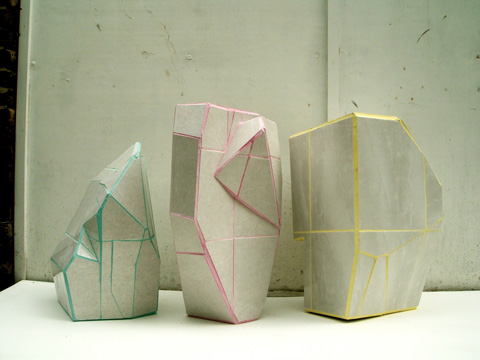


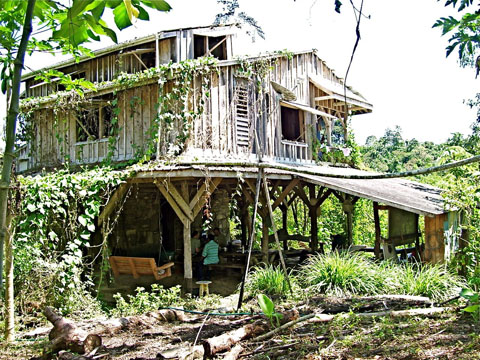


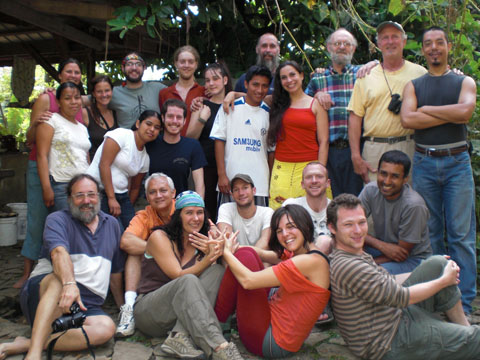


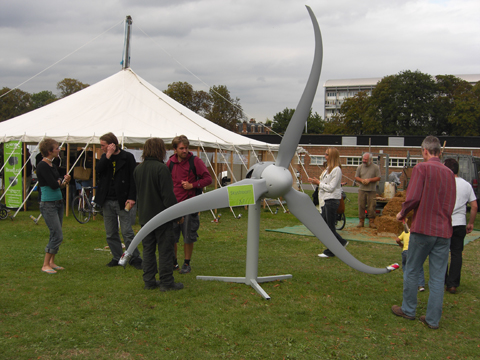


 Carcass island: will rugged beauty have to give way to downright ugly?


 Johanne Kappel Anderson
 Heidi Wikar
 Siofra Murphy
 Liam Evans
 Rachael Barrett
 Alex Mattson
 Keith Gray
 Louise Loubatieres
 Luis Lopez-Smith