This year the Jerwood Drawing Prize grows more influential than ever. During his speech at the opening of the exhibition last night art historian Tim Marlow told us that there were a record number of entrants this year: 1, ampoule 779 artists submitted 3, ambulance 354 entries in total. In describing the continuing importance of drawing judge Tim Marlow drew our attention to the new Degas exhibition at the Royal Academy of Arts which opens this weekend. It concentrates on Degas‘ relationship with the new disciplines of photography and film as he explored ways of recording movement in ballet 150 years ago. Despite the prevalence of these other mediums today they can never entirely replace the visual discipline of drawing.
Without further ado here’s the work of the winners, order and my favourites from a selection of everything else.
I was drawn to Homage to Anonymous by Gary Lawrence the minute I stepped foot in the gallery. This giant biro drawing is a complex, surreal, fantastic piece of artwork. Gary accepted this years Jerwood Prize turned out in scruffy tracksuit bottoms with a greying beard and described his drawing as ‘a tribute to all the anonymous artists through history who made work but are unrecognised.’ The Essex based artist took a year to create his work of art, which was based on a view of Pothea on the Greek island of Kalymnos, which he visited on holiday. Over time the drawing gradually transmogrified into something far more complex, taking on historical references to town views by other artists across time.
The Cut (details) by Jessie Brennan.
Jessie Brennan‘s five metre long The Cut was inspired by oral histories of the Lea River Navigation Canal, and features a delicate array of found objects piled up in curious arrangements. Scale becomes distorted when you realise the presence of little people at the foot of the drawing.
Nicki Rolls took second prize in the Student Awards for her Sketch, a black and white film that screens against a sketchbook.
A very well deserved first prize went to Kristian Fletcher of the University of West England, who boasts ten years experience in the construction industry. His dimly lit Lake consists of an eery industrial space where hard edged architecture looms over an ominous section of chainlink fence.
Surrealism was a common theme amongst short listed entries. I particularly liked Pattern of Faerie Tales by Iain Andrews, which was stacked up loosely on a table. Giant fish lie on chicken feet tables and maidens sit beneath crepuscular bugs, in scenes inspired by the words of Tolkien.
Adam Bainbridge‘s Interior combines memories with absurd imaginings: tracking the formation of clay ornaments in soft focus.
Gefallener by Johanna Love.
Untitled 2 by Janine Rook.
The abstract patterns of dirt were big news: Johanna Love and Janine Rook traced the minutest amounts of fluff in delicate detail.
Abstract paper layers featured in several artworks. Robert Battams used graph paper to stack patterns inspired by the fragmentations of digital recording.
Kasia Depta-Garapich‘s Organic Structure, Animation Still merges drawing, sculpture and animation in a curious fluttering object of semi-transparent layers.
Simon Leahy-Clark stacked newspaper in random grid formations created around the missing content.
Polly Yatesconsiders herself a weaver of paper: circular cutouts and felt tips create the push and pull of space in Untitled (Folds).
Explosions of colour and pattern will always turn my eye. I loved Imagery Imaginary Volume 1 by Lottie Jackson-Eeles, a concertina-ed sketchbook tracing her journeys through London in glorious colourful detail. Peeks between the pages reveal details such as wind mills and towerblocks. Do take a look at her website: there is some fabulous work on there.
Steven Lowery‘s artwork is a protest agains the mindlessness of celebrity infested tabloids and reality TV, set against a love of improvisational music – the tightly crafted words and images curling in and out of each other in Shepherd’s Fry Up.
Mouth Full of Triangles 4 by Sally Taylor is a clever and curiously amusing piece.
Ground Truth and Deep Grief by Louisa Fairclough are simple watercolour paintings of tents, formed after ritual cycle rides taken along the Severn river at full moon. She sleeps on the ground, at the edge of the river: feeling the pulse of the tides.
Drawing Room by Fran Richardson is a large charcoal artwork, an evocative space of flouncy curtains that invites the viewer inside.
Photorealism in Girl Bag by Kristian Evju cleverly catches the sense of limbo within a narrative.
Reginald Aloysius used pencil and enamel paint to create an eery netherworld, where ancient temples and airplane routes collide.
Fashion meets art. Inspired by memories and moths, Tree (Catocala) by Ash Summers perhaps unwittingly echoes the ikat patterns of the new season’s fabrics.
Thomas Allen, view Unreachable, viagra 100mg 2009, adiposity Chromogenic Print, 20 x 24 inches, Courtesy of Foley Gallery
I always get rather excited about large art fairs or exhibitions as you have hours of perusing and inspiration ahead of you and the hum of conversation in the air adds to the buzz. The annual London Art Fair features over 100 galleries promoting 20th Century British art and focuses predominantly on painting while also featuring photography, drawing, installations, video art and print editions.
Photograph courtesy of Lil Wizz
Formally the Royal Agricultural Hall, The Business Design Centre was saved from demolition in 1981 and re-invented as an exhibition, trade and conference centre and is certainly a spectacular cavernous venue for a large gathering of galleries and art dealers.
Isabel Rock, Lord Foster, 2009, Pen ink and collage on print, Courtesy of Bearspace
One theme did catch my eye as being on-trend – paper-cut illustration. It has taken the art world by storm. You are probably familiar with Rob Ryan’s illustrations, currently being featured in every commercial format from magazines to packaging. Well, it appears that the fine art world have a penchant for paper-cut art as well.
Photograph courtesy of Zanny Mellor
Wild Waters 2009, courtesy of Georgia Russell, Cut 19th-century engraving in acrylic case, 28 x 30.75 x 2.5 inches
England & Co were showcasing the artists’ books of Georgia Russell, who has taken her scalpel for a walk in the library! She transforms books, music scores, maps, newspapers and photographs, giving each a new lease of life. Her three-dimensional book works are created by hand-shredding every page in a book and distilling them in bell jars or perspex boxes, allowing the viewer to take a different meaning from the original title. Evolution and Natural Selectionreacts well to this method of presentation, dithering somewhere between museum artefact and artwork. Choosing such an eminent title obviously ensures collect-ability but Russell’s deconstruction of Charles Darwin’s famous publication is quite a find, seeming to have animal fur spilling it out of it.
Photograph courtesy of Zanny Mellor
The Sims Reed Gallery was exhibiting some exquisite screenprints by Eduardo Paolozzi, which had me dissecting and digesting their infinite layers, geometric patterns and cacophony of colours for some time. His surrealist mish-mash of subject matter creates very interesting compositions that sometimes resemble plan views of cities or a diagram of the inner workings of machines. So layered and complex are his prints that you could not get bored of having one of those on your wall.
John Piper, Sea Buildings, 1938, Oil, pencil & ripolin on canvas laid on panel, 12 x 16 inches, Courtesy of Richard Green
Diagrams and maps are perhaps the perfect marriage of fact and interpretation, science and art. As artists, we visually document the world around us and map-making appears to be one of those visual forms which encompasses our desire to find the truth but also to create with our hands. Jason Wallis-Johnson, also represented by England & Co tirelessly produces mesmerisingly detailed maps based on a number of cities around the world.
Jason Wallis-Johnson, Imaginary Cities 2002, Pencil and ink on paper
His drawings are not direct but transferred from carbon paper, giving them a soft elegance untouched by hand. The 3-dimensional pieces are even more captivating. They are created by pin-pricking black carbon paper and setting them on lightboxes, giving the drawings a glow that more than realistically depicts night-time aerial photographs of the cities which he obsesses over. Such detailed work has led to him being collected by The British Musueum and the V&A to name a few. It seems that his work, like Georgia Russell’s can’t make it’s mind up as to whether it is art or artefact, 2 or 3 dimensional.
Photograph courtesy of Lil Wizz
Written by Zanny Mellor on Tuesday February 16th, 2010 5:35 pm
sea of bees julie Happy Bank Holiday Amelia’s Magazine readers! If, drugs like me, you’re nursing some pretty horrific sunburn, whack on some aloe vera and retreat to the shady and cool gig venues of London for this week’s pick of the best!
Monday 25th May
First on today’s menu are Canada’s tastiest export since poutine; Women, they play their jingly-jangly post-rock tunes (imagine maypole dancing in the sunshine with Sonic Youth) at the Lexington with support from Dag För Dag and Forest.
I might just wet my pants with excitement- Wavves are playing Old Blue Last! San Diego’s finest will be playing their anarchic melodies and distorted surf punk. Keep your eyes peeled for our interview (probably a page of me gushing “why are you so awesome?”) with Wavves coming this week.
Thursday 28th May
Owen Pallett is one cool dude, not only was he in the epic Arcade Fire, he broke off and created Final Fanatsy, a deliciously structured cacophony of strings and loop pedals; like being lost in a wonderland of beautiful sound at Union Chapel.
Then we’ll be heading to the Luminaire to catch our French crushes Nelson and asking them to be our pen-pals…
I’m off to play croquet, have a good music-filled week dear readers! Be sure to comment and let me know how you enjoyed this week’s gigs
Just because you are a brave suffragette doesn’t mean that you don’t want to scrub up nicely.
As our readers know, siteAmelia’s Magazine is passionate about the role of the arts in inspiring discussions and action over Climate Change, viagra buy and always wishes to share these discoveries with you. While the message of Climate Change is a serious one, the way in which the message is conveyed need not be, and sometimes, a large dose of playfulness is needed to spread the word. This is why we are so excited about the newest venture between Lush and Climate Rush entitled Trains Not Planes. I’m sure that you all know about the loveliness of Lush, but you may not know about the actions of Climate Rush.
This is a group of people (which includes our Publisher and Editor, the eponymous Amelia, one of Climate Rush’s key members) who are deeply concerned about the issue of Climate Change, and even more concerned about the Governments “efforts” (or lack of) to tackle this emergency. Understanding that occasionally, direct and public action is needed in order to make the law makers sit up and take notice, they draw inspiration from the Suffragettes of almost one hundred years ago and show that peaceful civil disobedience can lead to positive change. Like suffragettes too, they make their protests in style; picnic blankets are laid out and tea and cake is served. Lush have evidently been inspired, because this week they too will be wearing their sashes with pride and putting on the kettle and best of all, you are invited!
The occasion is all to celebrate the aforementioned collaboration and the happy result of this union is Lush’s Chox Away soap. (£2.89 for 100g) As you may have guessed from the title, Chox Away is made up of a blend of chocolate (and smells like chocolate too), vanilla absolute, peppermint oil and sweet orange oil. I was fortunate enough to get to try some last week and I have been whipping myself up into a lather over it ever since. Anyone who has shopped at Lush will know that every one of their products are creamy delights that leaves your skin soft and smooth and this soap is no exception. I might be biased, because I get ravenous over chocolatey flavoured soaps, but this one is seriously good enough to gobble up. From this week, you can also buy it when you pop into Lush, (but try not to drive there). If you want to be treated to the spectacle of Lush Cosmetics staff dressed as Climate Suffragettes and holding picnics then go to your nearest Lush on Thursday 28th May at 12pm sharp where a tea party will be under way. As they are such a friendly bunch, feel free to sit down on the blankets that Lush will have across the floors (which will be emblazoned with the message CLIMATE CHANGE IS NO PICNIC), and while you munch on your free vegan cake, wearing a “Trains Not Planes” sash, you can find out more about the cause behind this collaboration. If you live in the London area, then Liverpool Street branch are putting an extra twist on the festivities – they will be giving out free Chox Away’s! As they have been informed that they can’t hand them out on the station concourse (because of the association with Climate Rush, which is apparently considered ‘too controversial’!) they will be on Bishopsgate concourse instead. So if you want a freebie (and who doesn’t?) then make sure that you are down there at 12pm sharp!
As you can see, the events will be lighthearted, but the underlying message is a serious one, and needs to be shared. ‘Trains Not Planes‘ is the ethos which Climate Rush and Lush are in firm agreement with. As you all know, flying is doing untold damage towards the earth. Flying releases a lot of CO2 – which is even more destructive to our environment when released at high altitudes than on the ground and this is contributing to more droughts, flooding and other catastrophic changes to our climate all over the globe, including right here in the UK.
So Lush and Climate Rush are aiming to remind the public of the benefits of train travel, especially for business, or when travelling up and down the country. As Lush says, ” The world looks better from the window of a train than it does at 30,000 feet, and if we are going to take control of run-away climate change, we need fewer runways and more use of train tracks. ” Lush subscribe to the brilliantly titled phrase “My Karma is Your Dogma“, which basically translates as take the train, cycle or walk to work! They understand Climate Rush’s grave concerns over the amount of flying that occurs around the world (and specifically in Britain; were you aware that per person, Britons emit more CO2 emissions from flying than any other people on the planet -603 kg per person per year, compared to 434 kg for Irish and 275 kg for Americans? ). So if you buy a bar of Chox Away between May 25th and May 31st, Lush will be donating all of the proceeds from the sale towards the efforts of Climate Rush in tackling this environmental emergency. Lush themselves have a policy against flying domestically and all Lush staff take the train when travelling in Britain. This is something that they would like to see other businesses implimenting.
Speaking to the Climate Rushers as they donned their sashes, I asked what they made of Chox Away, and all agreed that it gets a vote of confidence. As they explained; “Not every luxury need be a vice. Here at Climate Rush HQ we’re inordinately proud of LUSH and their commitment to Trains Not Planes. Like spending time on travel, the Chox Away experience is a fabulously indulgent way to take Climate Change seriously.” One of Climate Rush’s newest recruits, Hana Cogings declared; “Chocolate soap? Who’d have thought…..but then again, who’d have thought not so long ago that trains were the future, not planes! I’m gonna lie back and indulge!” So if you want to feel refreshed and ready to Rush, then lather up!
Meanwhile, Climate Rush will be spreading the word in the way that they know best; pedal power! If you want to come along – and all are welcome, they will be tucking their knickerbockers into their trousers and getting on their bikes in St James Square, London at 5pm on June 1st. The event is to draw attention to what will be the first night of a two day coal conference and Climate Rush will be assembling outside Chatham House where the conference will be held. It will also mark the first night of the pre-Copenhagen climate talks in Bonn, and what better way to mark this occasion than a gentle bike ride around town (where Climate Rush will be your tour guides, pointing out climate crime scenes and buildings that may be housing climate criminals). Afterwards, they too will be ending the excursion with a picnic. So see you there? We will be the ones smelling yummy, hope you will be too!
Lucy Barlow: Delicate Boundaries First Floor Projects Gallery
5 Redcliffe Gardens, prescription London SW10 9BG
Thursday to Saturday 12pm – 6 pm
All other times by appointment
To 30th May
This week is the last chance to catch the wonderfully playful exhibition at the new First Floor Projects gallery. Containing both Lucy Barlow’s previous drawings and sketches and her transition into paint on canvas, viagra the space is the living room of James Tregaskes; a unique, relaxed, cosy environment which compliments Barlow’s artwork perfectly. Stop by, have a cup of tea, and say Hi from me. Watch out for a review of this exhibition this week.
Friday-Sunday 12-6pm
Opens 29th May until 28th June
Shane Bradford
Crimes Town Gallery, an artist’s run space presents six artists (working in various media) who are each freely interpreting the title in relation to our contemporary environment. The exhibition aims to discuss and open the debate on the possible effects of the current economical downturn on the art world, and whether we are heading for a reinvention of creativity or a starvation of possibility.
———————————————————————————————————————
Sherrie Levine Simon Lee Gallery
12 Berkeley Street
London W1J 8DT
Monday to Friday: 9.30am to 6.00pm
Saturday: 11.00am to 4.00pm
29th May – 31st July
“I consider myself a still-life artist, with the bookplate as my subject. I want to make pictures that maintain their reference to the bookplates. And I want my pictures to have a material presence that is as interesting as, but quite different from, the originals.” Sherrie Levine.
American artist Levine showcasing new work including poetry and postcards.
——————————————————————————————————————-
Tal R- Armes de Chine Victoria Miro Gallery
16 Wharf Road
London N1 7RW
Tuesday – Saturday 10.00am-6.00pm
Monday by appointment.
until 25th July
Danish artist Tal R explains “armes de chine refers to a classic manual about weapons from ancient China. These objects, which once had a very specific and practical purpose, now several hundred years later seem completely abstract. Like a long lost slang…” With not a single piece attached to a wall and instead all pieces suspended or installed across the floor of the gallery’s main space, this will prove to be a very unique exhibition indeed. Expect everything from lost scouts, wrong fruits, embarrassed old uncles and melted minimal ice cream., taking forms of sculptures, paintings and work on paper.
Tues – Sat, 10am – 6pm Sun, 12 – 5pm
Until 24 July
Photo by: Jeremy Deller, Veterans Day Parade, 2002 Video installtion, Courtesy Art: Concept, Paris
Featuring: Francis Alÿs, Fiona Banner, Jeremy Deller, Thomas Hirschhorn, Rachel Hovnanian, Teresa Hubbard / Alexander Birchler, William Kentridge, Michèle Magema, Annette Messager, Amy O’Neill and Hiraki Sawa.
A ‘parade’ is usually a festive occasion for which people dress up in extravagant costumes and create elaborate and highly structured artefacts, while a ‘procession’ is more often an organised group of people proceeding in a formal or ceremonial manner, often with a religious or political connotation. The exhibition will feature works by twelve UK-based and international artists who take their inspiration from the traditional meanings of ‘parades’ and ‘processions’, creating works that epitomise the social and political context of our time. The resulting works, ranging from sculpture to installation, films and videos, are powerful forms of expression that address issues of history, culture, identity and politics.
Tuesday-Sunday 10am-6pm
Wednesday 10am-9pm
Closed Mondays & Bank Holidays
Until 28th June
A solo exhibition by London-based Danish artist Michael Raedecker includes new paintings and a selection from the last 5 years. He uses a unique combination of thread and paint to create his atmospheric paintings. They derive from and also reinvent different genres from the history of art including still lifes, landscapes, ruins and flower paintings.
In the new work, Raedecker references flowers, washing, cakes, table-cloths, sheets, lace, food and houses. These domestic topics and the decorative associations of needlework create a friction with the fetishistic nature of these paintings.
The Royal Festival Hall South Bank Centre
Belvedere Road
London SE1 8XX
Wednesday 27th May
From 6pm
Photo from faithdarling
Struggling with your latest sock project? Not sure about how to turn that darned heel? Or are you simply mystified by all those little needles and simply wouldn’t know where to start? If so, this week’s sock surgery may be just what you need. The experienced sock knitters will be happy to share their sock expertise with anyone who needs it.
The act of shopping can be a divisive experience, check normally somewhere along gender lines, but I would be prepared to bet that most people have at least once been betrayed by the deceitful mythologisation of shopping as ‘retail therapy’. Shopping can be hardcore, hideous megabitch – when it makes that imperceptible shift it can morph into the seventh circle of hell of escalators, crowds, queues, bags and blisters.
Is it wrong to want a little romance and daydream in shopping? I don’t want to shunted in and spat out, I want to be nurtured and seduced until I buy lots of nice things I don’t really need. Hurwundeki on Commercial Street in Shoreditch seems to understand this. Quirky, stocked full of antiques and things like vintage clogs and bow ties, it totally eschews style over utility, has softly lit stone archways filled with clothes and changing rooms with tall heavy curtains and stone busts inside.
Stocking vintage, new designers and their own label, it has become something of an empire for its Korean owner Ki, and Thursday sees the launch of a new venture at the bottom of Cambridge Heath Road. It’s a shop-cum-café-cum-playground, but this is no family Little Chef: featuring a beautifully crafted playground that manages to fuse function and fairytale, it’s a sanctuary for local families wishing to visit and enjoy it for its varying facets. It seems a hugely positive venture for the Hackney community, as well as building on the idea that shopping doesn’t have to be a stressy, hellish mess. I spoke to Ki ahead of its launch this Thursday.
At the beginning when you set up Hurwundeki what was your aim in terms of the shopping experience?
Actually I have always been a hairdresser, when I moved to England, I was working for Vidal Sassoon before opening my Hair Salon in Spitalfields. I began to cultivate my taste for vintage via the interior of the Salon. I started to sell vintage items within the space, and subsequently opened a vintage boutique; and later launched the Hurwundeki line of clothes. The aim was to provide a shopping experience that customers remember, providing clothes that are classic, yet have a twist, in beautiful settings made up of artefacts that may have once been frowned upon. This has generated our own unique clientele.
I always remembered it after the first time I visited as it was simply such a nice space to be in.
Why thank you.
In terms of designers you stock, what are you criterias? Who is your
customer?
In terms of the Huruwndeki label, the clothes have to be classic, which means that they’re versatile. They have to have a twist, like in the pattern of the construction has been slightly toyed to give an edgy look. The price has to be affordable. We have our own niche, and for fashion, we are actually fashionable.
In terms of the service, we offer our customers award winning coffee, at very reasonable prices. The settings are out of this world, somewhere quirky, yet mellow enough to relax in.
Generally our customers are not just one type, we appeal to a variety of clientele because different facets of our company attract more to different kinds of people.
With regard to your new venture in Hackney, what was it that inspired you to
set it up? Anything in particular? Were there any other similar places that you could use as a blueprint?
Well it was originally our headquarters. And before that it was used by the car lot next door. We relocated, offices, but I had a feeling about the space, and developed a vision for it.
I like the idea that you emphasised the functional aspect of it all too – where did you manage to pull all your playground pieces from? They’re definitely striking walking down Hackney Road.
Some of the pieces where from our Commercial St boutique and some from our warehouse, that had been sourced by myself.
What has the response been from the local community? Have you had particular
support or endorsement from anyone?
Everyone loves it. The local community think it’s about time something like this happened. We’re getting great feedback.
What are your plans beyond this?
To keep expanding, never being satisfied to standstill, if you’re not going forward, then you’re moving backwards.
Ki seems to have maximised the shopping experience by tapping into people’s lifestyles; not just the lone shopper with only themselves to carry, but the family unit too. I think it’s a creative vision that really riffs off people’s needs, and that’s definitely on the money.
Hurwundeki Cafe launches this Thursday, May 28th.
Returning this year after a triumphant 2008 which saw it scoop ‘best small festival’ at the festival awards, link The Secret Garden Party once more stands out like a painted lady amongst the cabbage whites of this summer’s festival line-ups. For those not in the know, no rx the non-profit festival takes a distinct lest field approach to it’s competitors. This year’s main additions for example are the science and explorer camps, which are hosting science and human rights related talks and debates. Full marks have to be given for their decision to retain the capacity at a relatively small six and a half thousand, refusing to bow to commercial sponsorship. Rather then working to promote beer branding or mobile phones, the organisers instead look to promote ideas, creativity and having a good time that’s not to nature’s expense.
Set amongst ten acres of landscaped garden, meandering around a river and surrounding a lake, there’s much more going on here then just music. Aside from the talks and discussions, I feel I can safely state without too much research that this is the only British festival that lists skinny dipping, bubble-wrap popping and twilight maypole dancing as activities. Also instead of the usual £4 burgers, festival goers have the likes of hog roast and home made falafel to choose from, amongst the other organic foods on offer. Then once the bands are finished, rather then attempting to drink as many cheap lagers as possible or sleep while all around you are doing so, you can instead go see a dj in a tree or go relax in a hot tub.
The Secret Garden Party. Cambridge. 23rd-26th July. £144 for weekend ticket (additional £75 for campervans/caravans).
Ever thought that purchasing art can be like purchasing new clothes? The way it looks on you in the shop’s plush changing rooms somehow can never be replicated once you get home and it becomes part of your own wardrobe. Art can be the same. The pristine white-washed walls of a gallery, cure the careful lighting, cialis 40mg the precision placing among other desirable pieces; it can all end in such disappointment and disillusion. Wouldn’t it make our lives a whole lot easier then if instead we browsed for art in its natural habitat – the home?
And so the genius of First Floor Projects gallery is born. A lived-in home that spares its walls now and then for up and coming artists is the venture of south-west London flat owner and all round lovely chap James Tregaskes with help from art PA Hannah Magor. Their inaugural exhibition, sildenafil titled ‘Delicate Boundaries’ is of the darling Lucy Barlow, and in turn it’s her first solo show. When I was a little girl, I wanted to grow up into a woman just like Lucy Barlow; independent, beautiful, creative, working part time in a bookshop and a keen tea connoisseur.
And so I jumped at the chance to have tea with her at the homely gallery. The trademark ink and watercolour drawings that she is most recognised for grace the high ceilinged living room, side by side with newer larger more abstract pieces bursting out from the canvas with fresh bright bold hues and pigments.
It was between delicious cupcakes and fan-meets-idol handshakes that I manage to ask Lucy about herself and her romantically fanciful work. We started off talking shop, and then got into Barlow-related Trivia.
Hello Lucy, how are you?
I’m great thanks. Before you got here I found a DVD of The Secret and had my lunch on a tray. I went for a stroll and saw an Agatha Christie blue plaque and I found a stone, which I decided would be the keepsake for this happy morning. In fact, in The Secret he talks about how important gratitude is and keeps a stone in his pocket as a reminder to give thanks. Which was a bizaare coincidence. So yeah! How are you?
I’m good thanks. Your newer work is quite a new direction, has there been a specific catalyst in it’s coming about?
Definitely. I’ve been going through a time of change in myself. Painting has always been a bit of a slow burner. Doing the drawings I felt like I wasn’t being honest with myself. They were easy, fun and I loved doing them. But there was something else. Over the last year I’ve been busy growing up, finding out about myself. I’ve been trying to break down walls. I don’t want to leave drawing behind; it’s part of who I am. I think previously I was scared to paint, and what I did paint I kept to myself. But my heart goes into my mouth when I look through a book of paintings and I love colour. I wanted to see what could happen if I embraced it and once I did it felt amazing. I can now allow myself to put down my pens and make a mess- use big brushes and oils, and have no agenda.
My work is about reflecting what was going on in my personal life. Letting go of control – it’s all part of the same thing. I’m done with saying ‘I am this’ and putting restrictions on myself. I know now that I can be brave and experiment.
How has the experience of this exhibition differed to other shows you’ve had?
It has been incredible. I adore the home setting; this is where the heart is. Having things around that resonate with you. Galleries can be so scary.. ‘am I too close to the exhibit’? or ‘Am I over the security line’? It’s lovely to be with the work here, to sit down and have tea and take your time. Since I met James (Tregaskes, Gallery owner) at University he has talked about using his home as a gallery space, and insisted I be the first artist on the walls, and it’s happened! Home is where the Art is!
(I’m stealing that!)
What are you plans for the rest of the year?
In mid July I’m co-organising a group exhibition in Oxford with 4 others; Kim Norton, Sarah Brown, Sarah Boada and Richard Bishop.
A local artist thing?
We’re trying to get away from the ‘local thing’. We’re fed up with not enough great contemporary art in Oxford. There’s Modern Art Oxford, but that’s it. Contemporary art could thrive there. We are stiring the contemporary art pot, and causing a stir. Saying here we are! We aren’t just local- I have nothing against it, but it’s not the be all and end all.
How is the work received?
I think my work is accessible, easy to talk with. It’s going to be interesting with the shift from drawings to paintings, as to how people will respond. The next show will be all canvasses, no drawings. Fans of abstraction and abstract expressionists will be catered for. It’s for anyone who loves colour really.
Ok, time to lower the tone a little and get to know more about you, Lucy. We loosely call this our ‘Lucky 13′ questions. Firstly, If you were taking Amelia’s magazine out in Oxford, where would we go?
There’s a secret weeping willow tree in the University Parks. I like to think its secret, but maybe everyone knows about it. It would have to be a hot evening in summer. That would be beautiful.
What would be your pub quiz specialist subject?
Oh gosh, I don’t know. It’s a shame I don’t eat meat anymore otherwise it would have been Hugh (Fernley-Whittingstall- man behind the River Cottage series and all-round God of the ‘waste not, want not’ ethic). Maybe veganism then?!
What advice would you give to young artists?
I wish I knew. Can someone tell me?! I’d say believe in yourself. Show your work wherever, to whoever. If you keep it to yourself it can’t talk to anyone. Give yourself the benefit of the doubt. You must keep going and don’t give up. Lastly, don’t try and emulate anyone- of course, draw inspirations but don’t seek to become the people who inspire you. It’s about your unique originality.
Which band past or present would provide the soundtrack to your life?
What good questions! Beth Orton would be right up there. I want to say the Beatles too.. But can I have one more? Yep.
Thanks. The Yeah Yeah Yeahs.. They would round it off nicely.
If you could travel forwards or backwards in time to any era, where would you go?
I’d love to go to the 1960s, though that’s too easy isn’t it? I’d go to Ancient Egypt and watch them build pyramids and all that jazz. And then I’d come back via the 60s please. Then I can meet the Beatles and be a groupie and wear amazing dresses…
If you hadn’t become an Artist, what would you be doing now?
I’d be a singer. What kind of singer?
Folky, acousticy; a gentle singer who can break hearts and grow her hair long. I still want to try and fit being a singer in. I’d like to sing to whoever would listen.
Who or what is your nemesis?
Plastic.
Tell us something that we may not already know about Lucy Barlow.
I do try and compost EVERYTHING. How well does that go?
Good, when I’m in a good mood. But when I’m blue, not well at all. Which makes me more depressed.
Hey, Lucy Barlow, what makes you so awesome?
My foot massages. Whoever, whenever. Not in a fetish way though! I find it relaxing.
Which single piece of modern technology can’t you live without?
My radio. It’s a portable friend. Is that modern anymore? I’m tempted to say my computer.. but sometimes I hate it and actually a life without one would be bliss.
Which artists do you most admire?
Henri Matisse, Peter Blake.. there are so many. Peter Doig I love- his use of colour in particular. Mark Rothko and his colour fields. Howard Hodgkin is my recent find. And can I have another? Yes. David Hockney. There are no women in that list Lucy..
Oh! I do have a female idol. Helen Frankenthaler is amazing. That’s a long list huh. Sorry!
Who would be your top 5 dream dinner guests? Who would do the washing up? Anais Nin, Henri Matisse if he could make it, George Harrison.. can I just bring everyone? I don’t want anyone to be excluded! Barefoot Contessa (pause) Oh, what am I doing?! Andy Warhol! And can I trade George Harrison? I’d love to meet Florence Nightingale. I’d wash up myself.
I say Falloumi, you say..?
Alluminate! I just thought of star filled sky all of a sudden. What’s Falloumi- sounds lovely! (It’s a falafel and halloumi cross breed, firm lunch favourite that we are more than a little ‘in to’ over here, and like to over mention.)
Anything you want to add?
I’m currently looking for representation, so anyone reading this and interested please get in touch. Thank you!
————————————————————————————————————–
I left First Floor Projects with a smile on my face and a spring in my step. Miss Barlow has a unique way of looking at the world that couldn’t be more innocently wonderful, and her work is a window into that special outlook. Even now in my 20s, arguably an adult, I would still like to be Lucy Barlow when I grow up.
Who do you want to be when you grow up?
Written by Alice Watson on Tuesday May 26th, 2009 4:19 pm
Blythe house, prescription once a colossal bustling post office savings bank full of clerks’ activity now stands (almost) empty as a memorial to times past. Currently the home of not only the Victoria and Albert Archives but the British and Science Museum it double doors remain closed even to those who work in the museums. It takes a special request to get inside these vaults.
Luckily for a limited time (these doors swing back tight at the end of June) the V&A section has had its doors pushed slightly ajar by fashion curator Judith Clark and psychoanalyst Adam Philips. Together they have curated a delicate show examining ideas and understandings of dress alongside concepts of preservation in the midst of a vast archive that documents humanity’s progression.
Essential
Titled The Concise Dictionary of A Dress, the exhibition consists of 11 exhibits nestling amongst the archives, taking up position in the nooks and crannies of the ghostly building. The audience is shepherded silently though the sections of the building we were allowed to see, at times overwhelmed by the space and the delicate nature of the objects it protects. Eyes were all too often caught by the wondrous treasures awaiting selection by the V&A curators, their position elevated from number x of an extensive hoard into object A indicative of the human condition.
11 exhibits accompanied by 11 pieces of card form a mini-lexicon of dress (a concise representation of ideas of what it is to ‘dress’). Is it as comfortable suggests … or do you find yourself agreeing with Loose? Or do the words fall flat?
Words and their meanings can provide a point of conflict: at times the words on the card and the image of dress produced a harmonious moment of why people chose particular items of dress. In this moment the dictionary of a dress becomes clear as the exhibition mirrors the dictionary’s almost circular nature of providing two meanings for one word.
The curators have invited the audience into a hidden world; the vast depths of the museum. The audiences’ eye drawn to objects not in the exhibition but whose presence demands attention: Why is it there? Why did they choose this room or that cupboard? Can meanings be created between the juxtaposition of dress and the objects in the room?
A weekly definition taken from the website: MEASURED 1. Against chaos; a way of thinking about disarray; calculated excess. 2. The fitted as fitting. 3. Proportion as the mother of virtue. 4. The milder ecstasies of the considered. 5. Contained by the idea of containment.
The word and their phrases present one idea of what it is you are viewing, whilst the objects potentially visualise and neuter simultaneously them. The sentences add conflict as they embellish the meaning of the single word and the idea of why we dress, collect and preserve.
No word is mealy a word, it becomes heavy through each individual understanding of it’s context. Each interpretation of the exhibits arrived upon by our unique thought processes formed by our own experiences. It is an oddly lonely experience wandering though the locked archives looking at how meaning is embedded into objects. Can meanings be created from the idea that a function of the archive is personal, an act of preservation and eventually historical.
Creased the final exhibit presented a Junya Watanabe dress behind the bars of an old coal bunker open to the outside world. The end mimics the beginning (the first exhibit high on the roof stands a ghostly gown open to the elements, it’s resin skeleton delicate in the glare and heat of the sun) two decisions that scream against the museums usual desire to keep everything hidden, safe and in temperature controlled room to ensure the objects preservation.
Armoured
Seen against the sky scape of London, the resin dress showed just how delicate the human body, our sense of dress and concepts of who we are can be against the hard bustling ever moving city.
Take yourself on a guided walk through an unseen section of our national museums, question the ideas of preservation and the difference between the museum’s archive and your personal ‘hoard’
Watch the trailer here: the_concise_dictionary_of_dress_trailer
Blythe House, once a colossal bustling post office savings bank full of clerks’ activity now stands (almost) empty as a memorial to times past. Currently the home of not only the Victoria and Albert Archives but the British and Science Museum it double doors remain closed even to those who work in the museums. It takes a special request to get inside these vaults.
Luckily for a limited time (these doors swing back tight at the end of June) the V&A section has had its doors pushed slightly ajar by fashion curator Judith Clark and psychoanalyst Adam Philips. Together they have curated a delicate show examining ideas and understandings of dress alongside concepts of preservation in the midst of a vast archive that documents humanity’s progression.
Essential
Titled The Concise Dictionary of a Dress, the exhibition consists of 11 exhibits nestling amongst the archives, taking up position in the nooks and crannies of the ghostly building. The audience is shepherded silently though the sections of the building we were allowed to see, at times overwhelmed by the space and the delicate nature of the objects it protects. Eyes were all too often caught by the wondrous treasures awaiting selection by V&A curators, their position elevated from number x of an extensive hoard into object A indicative of the human condition.
11 exhibits accompanied by 11 pieces of card form a mini-lexicon of dress (a concise representation of ideas of what it is to ‘dress’). Is it as comfortable suggests … or do you find yourself agreeing with Loose? Or do the words fall flat?
Words and their meanings can provide a point of conflict: at times the words on the card and the image of dress produced a harmonious moment of why people chose particular items of dress. In this moment the dictionary of a dress becomes clear as the exhibition mirrors the dictionary’s almost circular nature of providing two meanings for one word.
The curators have invited the audience into a hidden world; the vast depths of the museum. The audiences’ eye drawn to objects not in the exhibition but whose presence demands attention: Why is it there? Why did they choose this room or that cupboard? Can meanings be created between the juxtaposition of dress and the objects in the room?
A weekly definition taken from the website: MEASURED 1. Against chaos; a way of thinking about disarray; calculated excess. 2. The fitted as fitting. 3. Proportion as the mother of virtue. 4. The milder ecstasies of the considered. 5. Contained by the idea of containment.
The word and their phrases present one idea of what it is you are viewing, whilst the objects potentially visualise and neuter simultaneously them. The sentences add conflict as they embellish the meaning of the single word and the idea of why we dress, collect and preserve.
No word is mealy a word, it becomes heavy through each individual understanding of it’s context. Each interpretation of the exhibits arrived upon by our unique thought processes formed by our own experiences. It is an oddly lonely experience wandering though the locked archives looking at how meaning is embedded into objects. Can meanings be created from the idea that a function of the archive is personal, an act of preservation and eventually historical.
Creased the final exhibit presented a Junya Watanabe dress behind the bars of an old coal bunker open to the outside world. The end mimics the beginning (the first exhibit high on the roof stands a ghostly gown open to the elements, it’s resin skeleton delicate in the glare and heat of the sun) two decisions that scream against the museums usual desire to keep everything hidden, safe and in temperature controlled room to ensure the objects preservation.
Armoured
Seen against the sky scape of London, the resin dress showed just how delicate the human body, our sense of dress and concepts of who we are can be against the hard bustling ever moving city.
Take yourself on a guided walk through an unseen section of our national museums, question the ideas of preservation and the difference between the museum’s archive and your personal ‘hoard.’
Watch the trailer here: The Concise Dictionary of a Dress approved photo by Julian Abrams” width=”480″ height=”640″ class=”aligncenter size-full wp-image-18752″ />
Conformist
Blythe House, once a colossal bustling post office savings bank full of clerks’ activity now stands (almost) empty as a memorial to times past. Currently the home of not only the Victoria and Albert Archives but the British and Science Museum it double doors remain closed even to those who work in the museums. It takes a special request to get inside these vaults.
Luckily for a limited time (these doors swing back tight at the end of June) the V&A section has had its doors pushed slightly ajar by fashion curator Judith Clark and psychoanalyst Adam Philips. Together they have curated a delicate show examining ideas and understandings of dress alongside concepts of preservation in the midst of a vast archive that documents humanity’s progression.
Essential
Titled The Concise Dictionary of a Dress, the exhibition consists of 11 exhibits nestling amongst the archives, taking up position in the nooks and crannies of the ghostly building. The audience is shepherded silently though the sections of the building we were allowed to see, at times overwhelmed by the space and the delicate nature of the objects it protects. Eyes were all too often caught by the wondrous treasures awaiting selection by V&A curators, their position elevated from number x of an extensive hoard into object A indicative of the human condition.
11 exhibits accompanied by 11 pieces of card form a mini-lexicon of dress (a concise representation of ideas of what it is to ‘dress’). Is it as comfortable suggests … or do you find yourself agreeing with Loose? Or do the words fall flat?
Words and their meanings can provide a point of conflict: at times the words on the card and the image of dress produced a harmonious moment of why people chose particular items of dress. In this moment the dictionary of a dress becomes clear as the exhibition mirrors the dictionary’s almost circular nature of providing two meanings for one word.
The curators have invited the audience into a hidden world; the vast depths of the museum. The audiences’ eye drawn to objects not in the exhibition but whose presence demands attention: Why is it there? Why did they choose this room or that cupboard? Can meanings be created between the juxtaposition of dress and the objects in the room?
A weekly definition taken from the website: MEASURED 1. Against chaos; a way of thinking about disarray; calculated excess. 2. The fitted as fitting. 3. Proportion as the mother of virtue. 4. The milder ecstasies of the considered. 5. Contained by the idea of containment.
The word and their phrases present one idea of what it is you are viewing, whilst the objects potentially visualise and neuter simultaneously them. The sentences add conflict as they embellish the meaning of the single word and the idea of why we dress, collect and preserve.
No word is mealy a word, it becomes heavy through each individual understanding of it’s context. Each interpretation of the exhibits arrived upon by our unique thought processes formed by our own experiences. It is an oddly lonely experience wandering though the locked archives looking at how meaning is embedded into objects. Can meanings be created from the idea that a function of the archive is personal, an act of preservation and eventually historical.
Creased the final exhibit presented a Junya Watanabe dress behind the bars of an old coal bunker open to the outside world. The end mimics the beginning (the first exhibit high on the roof stands a ghostly gown open to the elements, it’s resin skeleton delicate in the glare and heat of the sun) two decisions that scream against the museums usual desire to keep everything hidden, safe and in temperature controlled room to ensure the objects preservation.
Armoured
Seen against the sky scape of London, the resin dress showed just how delicate the human body, our sense of dress and concepts of who we are can be against the hard bustling ever moving city.
Take yourself on a guided walk through an unseen section of our national museums, question the ideas of preservation and the difference between the museum’s archive and your personal ‘hoard.’
Watch the trailer here: The Concise Dictionary of a Dress abortion photo by Julian Abrams” width=”480″ height=”640″ class=”aligncenter size-full wp-image-18752″ />
Conformist
Blythe House, patient once a colossal bustling post office savings bank full of clerks’ activity now stands (almost) empty as a memorial to times past. Currently the home of not only the Victoria and Albert Archives but the British and Science Museum it double doors remain closed even to those who work in the museums. It takes a special request to get inside these vaults.
Luckily for a limited time (these doors swing back tight at the end of June) the V&A section has had its doors pushed slightly ajar by fashion curator Judith Clark and psychoanalyst Adam Philips. Together they have curated a delicate show examining ideas and understandings of dress alongside concepts of preservation in the midst of a vast archive that documents humanity’s progression.
Essential
Titled The Concise Dictionary of a Dress, the exhibition consists of 11 exhibits nestling amongst the archives, taking up position in the nooks and crannies of the ghostly building. The audience is shepherded silently though the sections of the building we were allowed to see, at times overwhelmed by the space and the delicate nature of the objects it protects. Eyes were all too often caught by the wondrous treasures awaiting selection by V&A curators, their position elevated from number x of an extensive hoard into object A indicative of the human condition.
11 exhibits accompanied by 11 pieces of card form a mini-lexicon of dress (a concise representation of ideas of what it is to ‘dress’). Is it as comfortable suggests … or do you find yourself agreeing with Loose? Or do the words fall flat?
Words and their meanings can provide a point of conflict: at times the words on the card and the image of dress produced a harmonious moment of why people chose particular items of dress. In this moment the dictionary of a dress becomes clear as the exhibition mirrors the dictionary’s almost circular nature of providing two meanings for one word.
The curators have invited the audience into a hidden world; the vast depths of the museum. The audiences’ eye drawn to objects not in the exhibition but whose presence demands attention: Why is it there? Why did they choose this room or that cupboard? Can meanings be created between the juxtaposition of dress and the objects in the room?
A weekly definition taken from the website: MEASURED 1. Against chaos; a way of thinking about disarray; calculated excess. 2. The fitted as fitting. 3. Proportion as the mother of virtue. 4. The milder ecstasies of the considered. 5. Contained by the idea of containment.
The word and their phrases present one idea of what it is you are viewing, whilst the objects potentially visualise and neuter simultaneously them. The sentences add conflict as they embellish the meaning of the single word and the idea of why we dress, collect and preserve.
No word is mealy a word, it becomes heavy through each individual understanding of it’s context. Each interpretation of the exhibits arrived upon by our unique thought processes formed by our own experiences. It is an oddly lonely experience wandering though the locked archives looking at how meaning is embedded into objects. Can meanings be created from the idea that a function of the archive is personal, an act of preservation and eventually historical.
Creased the final exhibit presented a Junya Watanabe dress behind the bars of an old coal bunker open to the outside world. The end mimics the beginning (the first exhibit high on the roof stands a ghostly gown open to the elements, it’s resin skeleton delicate in the glare and heat of the sun) two decisions that scream against the museums usual desire to keep everything hidden, safe and in temperature controlled room to ensure the objects preservation.
Armoured
Seen against the sky scape of London, the resin dress showed just how delicate the human body, our sense of dress and concepts of who we are can be against the hard bustling ever moving city.
Take yourself on a guided walk through an unseen section of our national museums, question the ideas of preservation and the difference between the museum’s archive and your personal ‘hoard.’
So on Sunday it was down to the beautifully named Anastasia Arden-Maccabee to open the Edinburgh College of Art show on Sunday. Her fresh colour palette of a variety of pastel colours brought welcome respite from a lot of monochrome collections at Graduate Fashion Week.
Models were draped in lightweight fabrics that skimmed the knee and gave shapely silhouettes. Intricate flaps and folds had created the illusion of origami.
Making more literal use of Origami techniques was Eliza Borkowska, whose models appeared like futuristic sirens. Defining creases and thick lines shaped short dresses into artistic creations, of which Martin Margiela could even put his name to.
Charlotte Helyar’s collection was one of the most innovative and enjoyable of the week – enjoyable because it was hilarious to watch everybody scrabble for their 3D glasses as her first model appeared.
She’d made use of 3D print techniques, see – and applied them to floor-length dresses and floaty, flattering tops.
Illustration by Charlotte Helyar, from her graduate work
Emma Rockett’s collection screamed English heritage, another theme we’ve seen a lot of this week. Emma had executed it with panache. Traditional tailoring techniques were employed for candy-stripe blazers and high-waisted skirts, accessorised with up-side-down Boater hats and vibrant pink stockings.
Illustration by Emma Rockett, from her graduate work
It was Lisa Leissos who presented the most demure, sophisticated collection of this bunch. Her all-red collection of maxi-dresses and knitwear had real flare, and deeper reds were used for some classic knitwear. Sweeping lines gave the collection a very modern feel.
Illustration by Lisa Leissos, from her graduate work
A refreshing change came in the form of Alistair Nimmo’s mermaid-like goddesses. Flamenco-style fringing on skirt waists and hems created this desired effect, but a palette of nude, aqua and navy kept it contemporary and grown-up. Bustiers and jackets with circles at the chest also gave the collection a sexy edge.
Alexander White’s sweetheart necklines and tulip skirts also oozed sex appeal, while harsh tailored trouser suits contrasted this. Alexander has used an interesting technique for skirts, which had an anatomical look – God knows what it was, but I suspect it may have been organza or wool (!) weaved together in organic forms.
I also loved Isabel Wong’s layered organza jackets and dresses with olive green and nude colours; Louise Manson’s bohemian-inspired collection with synched waists, blouson sleeves and tiny knitted caps; and Louise Holgrove’s exaggerated paper-bag waists and sumptuous, heavy materials.
It was to Qi Zhang to close the show, and while I really liked her modernist collection, I didn’t think it was the best. Models wore lampshade-shaped helmets which were just about translucent enough for them to see, and her patchwork ensembles inspired by her mother made great use of a variety of materials.
While Edinburgh may not have had an outrageous show-stopper, it had technique, innovation and originality aplenty.
Blythe House, once a colossal bustling post office savings bank full of clerks’ activity now stands (almost) empty as a memorial to times past. Currently the home of not only the Victoria and Albert Archives but the British and Science Museum it double doors remain closed even to those who work in the museums. It takes a special request to get inside these vaults.
Luckily for a limited time (these doors swing back tight at the end of June) the V&A section has had its doors pushed slightly ajar by fashion curator Judith Clark and psychoanalyst Adam Philips. Together they have curated a delicate show examining ideas and understandings of dress alongside concepts of preservation in the midst of a vast archive that documents humanity’s progression.
Essential
Titled The Concise Dictionary of a Dress, the exhibition consists of 11 exhibits nestling amongst the archives, taking up position in the nooks and crannies of the ghostly building. The audience is shepherded silently though the sections of the building we were allowed to see, at times overwhelmed by the space and the delicate nature of the objects it protects. Eyes were all too often caught by the wondrous treasures awaiting selection by V&A curators, their position elevated from number x of an extensive hoard into object A indicative of the human condition.
11 exhibits accompanied by 11 pieces of card form a mini-lexicon of dress (a concise representation of ideas of what it is to ‘dress’). Is it as comfortable suggests … or do you find yourself agreeing with Loose? Or do the words fall flat?
Words and their meanings can provide a point of conflict: at times the words on the card and the image of dress produced a harmonious moment of why people chose particular items of dress. In this moment the dictionary of a dress becomes clear as the exhibition mirrors the dictionary’s almost circular nature of providing two meanings for one word.
The curators have invited the audience into a hidden world; the vast depths of the museum. The audiences’ eye drawn to objects not in the exhibition but whose presence demands attention: Why is it there? Why did they choose this room or that cupboard? Can meanings be created between the juxtaposition of dress and the objects in the room?
A weekly definition taken from the website: MEASURED 1. Against chaos; a way of thinking about disarray; calculated excess. 2. The fitted as fitting. 3. Proportion as the mother of virtue. 4. The milder ecstasies of the considered. 5. Contained by the idea of containment.
The word and their phrases present one idea of what it is you are viewing, whilst the objects potentially visualise and neuter simultaneously them. The sentences add conflict as they embellish the meaning of the single word and the idea of why we dress, collect and preserve.
No word is mealy a word, it becomes heavy through each individual understanding of it’s context. Each interpretation of the exhibits arrived upon by our unique thought processes formed by our own experiences. It is an oddly lonely experience wandering though the locked archives looking at how meaning is embedded into objects. Can meanings be created from the idea that a function of the archive is personal, an act of preservation and eventually historical.
Creased the final exhibit presented a Junya Watanabe dress behind the bars of an old coal bunker open to the outside world. The end mimics the beginning (the first exhibit high on the roof stands a ghostly gown open to the elements, it’s resin skeleton delicate in the glare and heat of the sun) two decisions that scream against the museums usual desire to keep everything hidden, safe and in temperature controlled room to ensure the objects preservation.
Armoured
Seen against the sky scape of London, the resin dress showed just how delicate the human body, our sense of dress and concepts of who we are can be against the hard bustling ever moving city.
Take yourself on a guided walk through an unseen section of our national museums, question the ideas of preservation and the difference between the museum’s archive and your personal ‘hoard.’
Amelia’s Magazine came across Anka Dabrowska’s exquisite work whilst perusing Payne Shurvell’s Bright and Guilty Place Exhibition (see Amelia’s Magazine review here). Anka’s drawings result from frequent fact finding missions to Poland’s captial, sales Warsaw. These delicate graphite studies (complete with uncontrolled graffiti marks) of the city’s geographical elements draw attention to the multiple ways one’s presence can inhabit a city. Amelia’s Magazine interviewed Anka to discuss the relationship played out in her work between Warsaw and memory.
How does the idea of “disparity between one’s personal relationship to, generic and the collective memory, rx of a given place” feed into your practice?
My work is about my personal experience of a specific place but it’s not exclusive, it lends itself to collective memory of a given place. Autobiography is represented indirectly or in fragments. The audiences faced with my work bring to it their own experiences of the city, whether it is Hackney estates, kiosks or any other aspects of urban living. My projects are made with specific spaces in mind, the idea grows from the experience of the city and how people live and enjoy public/private spaces.
How does your depiction of Warsaw in the drawings, relate to your artistic practice involving ‘fact finding missions’.
My practice concerns merging ideas of memory and imagination in relation to my upbringing in Warsaw. Domestic and urban landscape is a key focus of my work. Warsaw is somewhere to which I return again and again for inspiration.
I left Warsaw age 13 and moved with my parents and sister to Doha, Qatar in Middle East. This was a huge culture shock for me! I went to international school there where I had to learn quickly how to speak English. I’ve always known that I wanted to make art, to be an artist. After completing my A levels in Doha I applied for scholarships in the UK. I received a scholarship from Oxfordshire School of Art. I therefore left home age 18 and moved to England by myself which yet again was another culture shock!
My practice is solely based on my early experience of growing up in Warsaw’s tower blocks. ‘Fact finding missions’ are about returning to my hometown in order to re-experience these places, document them as they are today and translate this experience into new work (ongoing project). There is an intrinsic connection between a work of art and the environment in which it was created. How I grew up has an enormous influence on the way that I make art now.
Drawing is the foundation of my practice. I see all of my work as drawing or as extension of drawing – whether it is drawing on paper, 3-D object or installation.
Why did you decide to document this relationship through pencil and paper?
My work evolves naturally where it takes me on a journey. I don’t plan my works/ what I am going to draw or what mediums I am going to use. It evolves through experimentation and constant making. It feels right when it’s right, you can’t force these thing. Ideas about making art usually come purely by chance. I am a person who always has to do something. If I cannot do anything, I’m in a very bad way. But really I’m always working on something. And I always want to work too.
What is the relation in the drawings between the graphite pencil and the marks of spray painted graffiti?
Graffiti becomes another beautiful mark-making tool, but it also relates to the urban environment of the city. There is a wonderful relationship between the fine and very controlled line of graphite pencil and almost ‘hard to control’ mark made using spray paint. Graffiti tags are signatures that re-mark the territories and add meanings to the city.
How did the 3D models develop from the illustrations??
Yet, again they just happened one day through experimentation. I see them as extension of my drawing/3-D drawing. I actively collect materials that inspire me but also materials that relate to urban environment. I incorporate my own photographs of Warsaw neighbourhoods to give the works an element of realism and use collage technique spontaneously to create these structures/3-D drawings. I use these various found materials for their textures and colours and see them as yet another mark-making tools. Fabricated from cheap, trashy materials that, like ready-mades, reveal the vestiges of their earlier use, in some places only loosely attached, in others taped together, these pieces are characterized by an extreme fragility.
In most of my works overlaps occur between drawing, sculpture, photography and installation-these are artworks composed of independent elements of information, which in the process of relating to each other generate new meanings.
Could you explain your description of the buildings in Warsaw as claustrophobic?
My experience of living in tower blocks have been claustrophobic due to small living spaces and large numbers of inhabitants. There was never enough space to play, to study, or to just be alone. Most of my 3-D structures correspond to the blocks of flats I was living in at the time.
Because I left Warsaw and moved to Middle East then England I have a constant feeling of being inside and outside, a native and a foreigner. I think it is this sense of in-between-ness, more than the experience of living in blocks of flats that shapes my art practice. The distance allows me to think dialectically about the beauty and tragedy of my surroundings.
My two-year part-time MA in Fine Art course enabled me to have an uninterrupted period of focusing solely on my work, experimenting with drawing, sculpture, reading and researching. Unlike London-based MA courses, where groups are too large, my course of 12 people enabled intimate environment for critical discussion, which to me was most valid aspect of that time. However, being proper city girl, I always new deep in my heart that London was place for me! After my MA and one year working at the BALTIC Centre for Contemporary Art I moved here in 2004 and fell in love with the city. London for me feels like true home, more so than any other city I live in!
Which artists or illustrators inspire your work either now or at university?
I find my inspiration from cities, day to day observations of urban living (sitting in coffee shops, making notes in sketchbook, walking/cycling through city). I also find music, literature and film has more inspiration for my practice. I do however visit a lot of exhibitions, a recent show I found very refreshing, inspiring and playful was the Whitechapel Gallery show of Rachel Harrison ‘Conquest of the Useless’.
When did you first pick up a pencil?
Childhood, I always drew from as early as I remember…drawing is something I do all the time, it’s like another language, way of communicating, but it’s also our prime way of communicating, everyone can draw.
Have any writers inspired you on the subject of Memory?
Recent books that inspired me:
1. ‘Estates’, Lynsey Hanley
2. ‘Home’, Alison Blunt & Robyn Dowling
3. ‘Architecture of Happiness’, Alain de Botton
4. ‘Wanderlust- A History of Walking ’, Rebecca Solnit
5. ‘Geography of Home’, Akiko Busch
Where did the idea to draw on paper bags come from? How do you decide what to draw?
One day I picked up a paper bag on the street and scribbled something on it. I got really excited about this new ‘canvas’. It gave me something more than just blank paper to work. Paper bags with their endless forms, colours and textures provided and offered new meanings and possibilities. For me communism meets consumerism in these quirky drawings.
What were the ideas behind the Block House Exhibition?
‘Blockhouse’ exhibition was conceived by Jealous Gallery, Crouch End, London. They wanted to showcase mine and Jeni Snell’s work in a small environment. Therefore my installation become almost like one big sculpture made up of more than 40 3-D structures depicting Warsaw’s kiosks and tower blocks. A cityscape.
As the crowd waited perched on sofas, leaning against walls as we huddled round the catwalk Dolly Jones announced the winners: Mark Liu, Henrietta Ludgate (who was championed by Amelia’s Magazine earlier this year as a one to watch), MIA and Lalesso (both of whom you will have noticed were mentioned earlier in reference to winning the PURE awards in June).
MIA
After the announcements, the catwalk begin to sounds of bouncing pop and the models began to work the room. Each designer sent two designs down the catwalk, as teasers for their entire line. I would have loved to have seen more of the collections. Especially as the majority, if not the entirety, of what was sent down the Innovation catwalk was jump-off-the-catwalk-and-onto-my-back wearable.
Lalesso
To accompany the catwalk, the Ethical Fashion Forum provided recycled cardboard handouts detailing the reasons behind each designer’s selection. Mark Liu for developing a pattern cutting process that minimizes the amount of waste material produced by each garment, helping to “pioneering Zero Waste Fashion”. This made me think instantly of the “A-POC” line by Issey Miyake or taking it out of the acronym; the A piece of cloth project. From which the wearer is able to create endless items out of a single well-cut piece of fabric. Myakke is said to be continuing to develop this idea after becoming concerned about the impact of textile waste on the environment. It’s great to see young and established designers tackling the industry’s waste problem and turning it into a conceptual wearable idea. To compliment Liu’s pattern cutting he uses organic fabrics, low impact dyes and water based pigments. The two dresses, sent down the catwalk, were reminiscent of Peter Pan or an elfish child as they hung playfully off the models. Perfect for a summer’s day in the park.
Lalesso
Henrietta Ludgate worked with Osman Yousefzada after graduating from St. Martins and is now starting her own label. Ludgate’s philosophy lies in the maintenance of British craftsmanship. All the materials are sourced from British Mills and the collection is made entirely in a traditional Scottish crofting village. Her dresses really intrigue me being a combination of what appears to be felt and fleece. The pieces (not shown on the catwalk, but worn by members of the audience) had a similar feel in their shapes as Matthew Williamson’s graduate collection at St Martins. The new collection contained a wearable jersey dress with interesting piping detail to structure the back. Alongside a maxi dress which appeared to be an extended bankers shirt.
Henrietta Ludgate
Lalesso creates women’s wear out of traditional East African Fabrics, which translate perfectly for a Saturday spent walking around town and sitting in parks. The bold floral patterns were instantly eye catching.
MIA’s recycled fabrics and traditional Malawain textiles produced a refreshing take on up-cycling old urban sportswear into summer dresses.
The Innovation competition is importantly drawing attention to the numerous ways new designers are tackling challenges of sustainability that the fashion industry faces as a whole.
Henriette Ludgate
MIA is tackling craftsman’s jobs lost through the abundance of cheap second hand clothes on Malawi’s market stalls by employing local people in the process of up-cycling. All profits are put back into the community support, as well as buying equipment and training to maintain market access and community livelihoods. Furthermore (thanks again to the cards handing out by the Ethical Fashion Industry at the show), Lalesso recently founded SOKO – an ethical and eco fashion production plant in Kenya. Offering opportunities for other design companies to produce collections with the profits and increased job market to benefit communities in Kenya.
Mark Liu
The Ethical Fashion Forum and Innovation are proving not only that designers are environmentally aware when making their clothes and considering waste. But importantly they are using their businesses to recreate jobs and a skill based workforce in local communities effected by both the waste and desire for Fast Fashion.
You have made numerous paintings, have interests crossed over from painting into sculpture?
I feel happier thinking in three dimensions and I have always felt more successful in making objects but I highly appreciate painting and drawing. It’s a very different way of thinking. I’ve done a fair amount of life drawing and painting; which I think has helped me to appreciate form.
I strongly believe in drawing, if not as a final out come, then as a practice to learn to see. I think as a sculptor it is important to learn to look at things and see how they work formally in order for you to understand them. I always think I can see things better after I draw from life because it forces me to look and not just glance. The art school in Athens I went to for a year before my degree in London provided amazing classical training. I definitely think it gave me a different perspective.
I am a bit shy to make paintings now because I feel like I expose too much of myself, but with sculptures I rely on the materials and the mass of the objects to defend themselves.
How do your sculptures develop through the design process?
For myself the making process is a vital part of how I develop an idea. I make a lot, a lot of which, doesn’t always work but I find the action useful. I try not to think of anything as a definitive piece, the process is important.
My work is frequently based around materials. By using impoverished materials I devalue the monumentalism classical sculpture holds. Making ‘Pythia’ was an incredibly labour intensive process. I relate the carving of the polystyrene armature and the precise measuring and cutting of each individual tile to the carving of ancient marbles. It was industrial and ordered. I made the sculptures imagining I was making an architectural fitting, similar to what classical sculptures were in their day. I also spent time in the British Museum taking photographs and working on these as drawings and sketches.
Do you start with an idea or a medium or are both equally important in your work. If this is a bit vague, I mean does the medium start the idea or does the idea influence the medium used?
I think the two go together, although I pay more attention to materials than I realize. I thought up ‘Sunset Island’ whilst in LA, I wanted to represent the crummy, grimy glamour of Hollywood with the cocktail sticks and the industrial fiberglass sphere. Materials make me think of ideas, my degree show work on temporal exoticism and classical Hellenistic sculpture developed from working with tiles, trawling the isles of hardware stores, and finding cheap marble effect ceramic tiles. This cheap marble effect alludes to the wealth represented by classical marbles.
Do you prefer to work entirely on your own as you are creating a sculpture?
I need to think and write by myself, but its really boring working alone. Now I’ve finished college, my studio is really small, crammed and damp. I miss being able to find someone to get a coffee with, when I want a break.
Sculpture is a social process, I didn’t really paint at college because of the open studios and I need to be alone to paint, its much more personal. Sculpture, however, requires banter. Conversely I pretty much had to make my degree show piece, ‘Pythia’ entirely on my own. The tile cutter makes such an awful noise I was as good as exiled out the studios at college.
Who or what are your artistic inspirations
My biggest inspiration was going to Los Angeles last year when I interned as a studio assistant for Mindy Shapero. College was OK but working for Mindy made me really hungry to make and to be an artist. There was so much energy and exuberance in the approach to life. I realized that I could do it if I wanted it badly enough.
I met amazing artists out there, like Thomas Houseago. He was so inspirational and had so much energy.
I can’t help being inspired by greats such as Picasso and Brancusi. Recently I have been reading about Rodin’s love for Greek sculpture as it conveyed the ‘ravages of the time’ in its ‘fragmentary aspect’. Rodin was a pioneer of the existential being conveyed through representation of human form, which he showed through his tactile figures.
My interest in classical Hellenistic sculpture lies in the history attached to it, ‘the ravages of time’, and the wars fought around it. Also the way sculptors repeatedly revert back to it as true sculpture.
I love museums, especially the old musty sort. They contain an exoticism: a longing for a bygone age. I am interested in fragmentary discovery and understanding history, therefore museums are exciting transient spaces full of mystery and discovery.
Do the paper drawings feed the physical process of making a sculpture?
The drawings are really beautiful. I started making them as plans for sculptures to understand the anatomy and form of classical sculptures. Really, they are just spruced up working plans, but I think that’s what’s attractive about them. I tried making sculptures directly from them but it was a complete failure so in a sense they are failures at working drawings. Again they were important for my process, especially as I was making work about existing work, it was important for me to understand existing sculptures.
I tried to convey the museum feel in them. Displaying the images like old school posters or crumbling educational departments in museums. As museums attempt to explain history, the classical sculptures I was looking at. They are objects, which represent an exotic bygone age, but essentially are just glorified rocks
What’s next for Zoe Paul?
I’m excited to have been selected for ‘Future Map 09’, a selection of a handful of graduating students from across the University of the Arts London, of both graduates and post graduates.
In terms of work I’m excited to continue my idea of temporal exoticism and the allure objects hold. I’ve been reading an amazing book about a shipwreck containing sculptures on their way to Rome during the Roman occupation of Greece around 70BC, discovered off a Greek island in 1900. The book delivers amazing descriptions of the sculptures being gnarled and eaten by the sea. I like the idea of these vast powerful sculptures rotting at the bottom with such history attached to them.
I would like to make more tactile works that show my process. I love the way Rebecca Warren’s figures do that.
Watching their electric performance at The Garage, information pills I immediately understood why all the major music publications are getting their knickers in a twist over The Pains of Being Pure At Heart. With the recent release of their debut album, more about The Pains have quickly amassed a devoted fan base and garnered raptuous reviews for their perfectly pitched shoe gazing dream pop. If I hadn’t met them, I might have assumed that they were the sort of band who believed their own hype – and why wouldn’t they? Having sat down with Kip and Peggy earlier in the day I instantly realised that while they weren’t oblivious to the attention, they were unfettered by it. Letting the press get on with their excitable reactions, the band just want to play the music that they love.
The new album has practically been lauded as the second coming by heavy weights like The NY Times and NME, did you expect such an immediate and positive reaction?
Peggy – Definitely not, I just think about the bands that play music like us that we have always admired, and most of them were were not that comercially well known, and not always that critically received either, so playing the kind of music we play… we didn’t have our hopes up high. But we were really happy with the record though, we really enjoyed making it, but we had no sense that anything beyond us being happy would happen. I always liked bands that I discovered on my own, I wouldn’t hear them on commercial radio or MTV.
Kip- There are a couple of bands that reached a bigger audience like Sonic Youth or Nirvana, but most of the indie pop bands of the 90′s were limited to a narrow community.
So you were expecting that the album would spread by word of mouth, and instead you were plunged straight into a media frenzy. Were you ready for this?
Peggy- It wasn’t the goal of the band. You know, “everyone is going to love us!” We were just friends that started playing music and this is the kind of music that we like and have bonded over. I think if we had set out to get commercial success we wouldn’t sound the way that we do.
Kip- Where we come from, our backrounds in music, there is not really a strong tradition of bands expecting good things to happen. Perhaps American bands are more self depricating (laugh) but there is this built in expectation that if you do something that you love, it might not be well received by others, but you’ll be happy because you will be proud of it.
Peggy – And you’re happy with the five people that appreciated it! (laughs) I feel like I was that person that would always appreciate a certain band and I would have been totally satisfied with that kind of response for us.
Kip- Growing up, most of the bands that I liked, I didn’t know anyone else who liked them.
Did that give it a special resonance – liking a band, and knowing that no-one else knows them?
Peggy – I wouldn’t admit that…… but I secretly enjoy it!
Kip – I would have liked to have known other people who were into the same bands as me growing up. I felt quite isolated that way; I would sit at home playing computer solitaire, listening to an album over and over again, but it’s cool now that we are travelling more and meeting people who had similar backrounds.
What is the Pains’ backround?
Peggy – I’ve been in bands since I was 13, but none of them that ever went on tour. This is the first band where I’ve got to travel.
Kip – I was in a similar situation, but none of them had graduated above playing in a basement. So this is very different from anything I’ve ever been in – one band that I was in, our goal was to play at this house we knew that had really cool house parties! (laughs)
Can you account for the reasons why the Pains have become so successful?
Kip – We started small, we were playing together for a while before anything happened, it’s easy to lose sight of that because once the album came out things changed a bit, but we were around for a couple of years and met with plenty of challenges, so it doesn’t feel to us like it is an overnight thing, but it may seem that way from an outsiders perspective. I’m grateful for the way that it turned out because it allowed us to mess up for a bit without other people watching! (laughs) We had a relatively decent period of obscurity while we refined what we do….. and also, the reason is luck!
Peggy – And being in the right place at the right time.
Peggy, Is it true that the band formed in part to play at your birthday party?
Peggy – Yes! I remember it was my birthday and I had only invited like, four people; because I only have four friends! (laughs).
Kip – It was at this big warehouse and it was basically an elaborate plot to try and get Manhattan Love Suicides to play, and so if we threw the party, we could play first and then we could say that we played with them. So we had a month to get ready.
It sounds like it was a natural way in which the band came together….
Kip- It was the best way. If the last seven months have taught us anything; we are always together, and if there were people that didn’t get along, it would be hellish, but we were friends for a long time before we picked up an instrument. This made the whole experience fun and much less stressful then for bands who get formed by putting ads in a paper saying ‘drummer needed’.
Peggy – The fact that we are friends and the fact that we have stayed friends is almost more lucky than anything else.
So there haven’t been any falling outs on tour then?
Peggy (emphatically) No!
Kip – This is our first experience of doing this, we don’t have a glut of expectations, we’re just appreciative of the opportunity and are excited by it all; and when you are excited and enjoying it, it’s hard to get upset about things.
Peggy – Touring can be really hard and gruelling, and I feel like if it were with any other people it would really suck, but it ends up being fun anyway.
What have been some highlights for you in the last few months?
Peggy – Playing Primavera was really amazing, that was the first big festival we ever played, and I didn’t know what to expect. I mean, I don’t like crowds (laughs) so I thought, today might be weird or awkward, but it ended up being really life affirming and it was the biggest adrenalin rush ever.
Kip- ABC news showed up at our practice place to hear us play. The fellow who does the news is on TV saying (in deep, authoratative voice), “And now, a report from Brooklyn” (laughs), and him saying our band name on televsion… I sent that to my grandparents, I think that this was the moment where my family realised that even though they didn’t quite understand what was going on with us, we were doing something worthwhile.
Which country has had the best crowds at your gigs? Apart from Britain obviously!
Kip – Obviously!
Peggy – I thought Germany was really positive, we played three shows in Germany and they were really enthusiastic.
Kip – Sweden was pretty amazing, that country has a strong tradition of appreciating bands like ours and even though Swedes are normally really reserved, the enthusiasm we saw there predated even us having a record out – we had released our EP and if we had played in New York, maybe 40 people would have come, and we would know 37 of them, and then we went to Sweden and all of a sudden we were playing really big shows and I had no idea that a band like ours could find an audience like that. But most of the places that we have travelled to have been positive experiences.
You’ve got some more touring to do, and then what do you have planned?
Kip- We have an EP coming out this fall, we recorded four songs before we went to Europe in May, and after the tour we are going back to practicing and working on the new record. But every step of the process is exciting and I try not to think too far into the future, because then you miss out on what is happening in the present.
After this I get Kip and Peggy to take part in my game of Lucky Dip, which involves picking questions out of the bag (my handbag, actually) Peggy picks the “What is the first record that you ever brought?” and proudly tells me that it was Madonna’s “Like A Prayer”, and then with less confidence, quietly adds that a purchase of Tiffany’s “I Think We’re Alone Now” was also made. “I was really into female performers at the time!” she cried. Kip gets the “What is on your rider?” question, and true to form, the down to earth bands requests are not unicorns, dwarfs and mounds of Class A’s, but bread, hummus, water and beer. ” We just need to make sure that we get fed around 5pm or we get a bit grumpy” Kip ventures, although I don’t think any explanation is needed when the sum contents of your rider can be placed in a Tesco’s 5 items or less basket.
“The Pains of Being Pure At Heart” is out now. Monday 10th August
UN Climate Change Talks
The U.N. Climate Change Talks in Bonn, recipe Germany begin a series of informal intersessional consultations today. These are part of the run-up to Copenhagen in December, search and this particular series can be found webcast live here
The Yes Men film shows the hoaxes perpetrated by two US political pranksters. The promotion team describe the film as “so stupidly entertaining” that it will reach and motivate thousands of people, this thus “adding even more juice into a movement that is trying to save civilization itself, among other modest goals.
Tuesday is the satellite event – live from Sheffield, it’s a simulcast event screening of THE YES MEN FIX THE WORLD and live q&a with the Yes Men beamed via satellites from Sheffield Showroom. Cinema-goers will have the opportunity to put their questions live and direct to the film’s stars from their respective cinema locations.
20.30, at the following London cinemas:
Odeon Panton Street, Clapham Picture House, The Gate Notting Hill, Greenwich Cinema, Ritzy Brixton, Screen-on-the-Green
More cinemas on the screenings page of their website.
Wednesday 12th August
Green Spaces & Sticky Feet
A creative exploration of the nature beneath our feet as we roam around the gardens – to help us understand why green spaces are important and how we can make our buildings greener. This is a workshop for children of all ages, who must be accompanied at all times by an adult.
On Friday the 7th August the bailiffs went in and the occupation of the Vestas wind turbine plant on the Isle of Wight ended.
In response to this a National Day of Action in support of the Vestas workers and to keep the factory open, for Green Jobs and a Green Energy Revolution, was declared. There will be actions all around the country organised by a diverse range of groups.
Or contact your local CCC group, or Union – or if you want to organise something in your area there is some advice from Jonathan Neale, of the CCC Trade Union group
The campaign to Save Vestas has not finished, it has just started and with it comes a campaign for a step change in the creation of Green Jobs and the Green Energy Revolution !
6.30pm
Outside the Department of Energy and Climate Change (DECC)
A spiritual celebration and experience, honouring our regal beauty with sacred song and dance. Dances of universal peace, Taize singing, Bhajans & Kirtan, native American sweat lodge, Zikr & Sufi practice, Breton dancing, Tibetan sound meditation, yoga, tribal dance, ancient ways of the British Isles, chant wave and more…
Let the London Wildlife Trust take you out trapping, identifying and recording moths on the Totteridge Fields Nature Reserve. Come and see how many species of moths visit the fields at night. Please wear warm clothes and sensible footwear. Bring a Torch, Notebook and pen. You may also want to bring a flask.
Free car parking in sports ground car park adjacent to the Hendon Wood Lane entrance.
Nearest tube is Totteridge & Whetstone
251 bus stops on Totteridge Common near the junction with Hendon Wood Lane.
8.30-10.30pm
Hendon wood Lane entrance to totteridge Fields Nature Reserve
Contact – Clive Cohen – 07973 825 165 – notinbooks.conservation@btinternet.com
The National are one of my favourite all time bands. Their music full of deep seductive murmuring and soaring strings, The National build a beautiful soundscape full of urban discontent and lost loves.
I wouldn’t blame you for thinking that Devotchka have wandered straight out an Eastern European shtetl with their romani/ klezmer-tastic music. In fact they’re from Colorado and you probably recognise their orchestral treats from Everything is Illuminated and Little Miss Sunshine.
Wednesday 12th August
Woodpigeon at Borderline, London
Woodpigeon is whispery folk with beautiful strings and brass. Perfect for a summer evening.
Thursday 13th August
Circulus at The Lexington, London
Tired of the ins and outs of modern life? Do you want to return to a simpler time? A medieval time? Go see Circulus then! They’re quite obviously as mad as a bag of prog listening cats but they sing about fairies and have lutes- what couldn’t be awesome about that?
Friday 14th August
Forest Fire and Broadcast 2000 at The Luminaire, London
Lovely country folk from Brooklyn’s Forest Fire and tinkly electronica from Broadcast 2000 are set to make this night special!
Saturday 15th August
Spaghetti Anywhere and Colours at Barfly, London
Here at Amelia’s HQ we often find ourselves listening to Spaghetti Anywhere‘s myspace selection of pretty indie pop, and it never fails to brighten up a dreary office day.
Also playing are Colours the South Coast’s answer to My Bloody Valentine, offering up a delicious slice of Shoegaze with Pavement-y undertones. Brilliant stuff all round!
William Cobbing: Thoughts From the Bottom of a Well
Until 6th September
Monday to Friday 9am – 7pm
Saturday 9am – 5pm
Sunday 10am – 4pm
Free
Controversial siblings Jake and Dinos Chapman strike again, with this Hayward Gallery exhibition on tour around the country, based on children’s dot-to-dot drawings but a whole lot more dark, chaotic and macabre.
———————————————————————————————–
The 2009 Vice Magazine Photography Exhibition
The Printspace
74 Kingsland Road
Shoreditch
London E2 8DL
13th August – 26th August
Monday – Friday 9am – 7pm
Artists include: Richard Kern, Maggie Lee, Peter Sutherland, Dana Goldstein, Tim Barber, Martynka Wawrzyniak, Angela Boatwright, Jamie Taete, Alex Sturrock, Jonnie Craig, Ben Rayner.
‘Exhibit X is pleased to announce an exhibition examining the blurred vision between photojournalism and raw photography, using images from Vice magazine and it’s photographers.’
15th August 26th September
Tuesday – Saturday 10am – 5pm
Free
‘Stitching Time is a partnership project with Suffolk Artlink’s Culture Club and Colchester and Ipswich Museums. Older members of the community used a variety of sewing methods to create work in response to the collections.’
———————————————————————————————–
The Kiss of a Lifetime (Part 2)
Vane
Kings House
Forth Banks
Newcastle upon Tyne NE1 3PA
Until 22nd August
Wednesday – Saturday 12-5pm
Free
‘Our second presentation as part of the Northern Print Biennale, ‘The Kiss of a Lifetime (Part 2)’ is curated by Manchester-based artist and curator, Mike Chavez-Dawson. The exhibition features the work of over 100 artists, both internationally renowned and emerging, from the UK and abroad and examines what ‘the kiss’ signifies within contemporary culture – from the romantic to the lifesaving, from the prosaic to the violent.’
Until11th October
Tuesday – Saturday 10am-5pm
Thursday 10am – 8pm
Sundays/ Bank Holidays 12.30 – 5pm
Free
‘An exhibition featuring the highly distinctive drawings of the Scottish outsider artist Scottie Wilson (1891-1972). Starting his artistic career at the age of 44, his work was admired and collected by the likes of Jean Dubuffet and Pablo Picasso and he is considered to be one of the most celebrated outsider artists of the twentieth century.’
Written by Alice Watson on Monday August 10th, 2009 7:05 pm
With many universities leaning heavily towards womenswear – in some cases wholly – Epsom pleased many with several of its strongest collections coming from menswear designers. One of the running themes throughout the Epsom show seemed to be an obsession with blood, advicebuy the body and corporal violence (you’ve got to wonder what’s going on down there) with one dress revealing a Westwood-esque red, cialis 40mg jewelled wound-like gape on its back.
Not pandering to this was Antigone Pavlou, viagra buy who opened the show with loud, bold and funky collection for the streetsmart city boy, with bomber jackets, tracksuits and distressed denim (the latter a phrase that struck fear into my heart when I first read it in the notes, only to be pleasantly surprised). With coloured headphones carelessly slung around the models’ necks, the designer plainly had a clear lifestyle in mind and played to its strengths in all the right ways, combining strong block primary colours with clashing graphic prints.
If some previous designers during GFW have shown a tendency to elevate and romanticise the pastoral, I think Pavlou successfully did the same for the city, offering an attractively laid-back vision of urban life where you pull on some comfortable but sharp threads, plug into your walkman and swagger down the street, content to shut the outside world away for a moment, a sentiment I’ve evidently been drawn to in featuring CTRL and Daniel Palillo in recent weeks. Another menswear designer of note was James E Tutton, whose reversible designs (addressing the issue of functionality in contemporary fashion) we’ll be featuring later in the week.
Soozi Welland’s ‘Geeks Know Style’ penultimate menswear collection was best received by the audience, with an endearing ode to all things geeky: spectacles, anoraks, bobbled hats, bow ties, and socks tucked into trousers. The geek has oft been described as the personification of a roll of duct tape, with functional apparel that will always get you out of a sticky situation, and Welland’s designs seem to celebrate this idea, with an abundance of oversized pockets, accessorising her looks with binoculars and cameras.
By the last look, though, this geek had got himself a makeover, and was now spec-free, with the bow tie sexily hanging loose and sporting a satin and velvet playboy jacket. An endearing and humorous collection that I thought was commercially viable too, and that’s no mean feat.
Amongst the womenswear Stephanie Moran gave us a hard-hitting collection about desire, fabulously quoting Mae West ‘s ‘Ten men waiting for me at the door?…send one of them home I’m tired’, and a vision of the glamorous dominatrix. One of the standout pieces was a cream PVC dress with a cinched feather corset around the waist, and for better or worse, one of the most popular trends during GFW was feathers. This was certainly one of the better examples:
Considering Epsom had given us notes on each designer and their collection, I think it was admirable that Moran’s designs needed no explaining whatsoever, with her models bombing down the runway dressed in all manner of things naughty.
A particularly well-crafted collection was April Schmitz’s, who gave us a series of garments with some serious work put into unusual fabrics including hardware, folded leather and metal rings and eyelets. Entitled ‘Visions of the Future’ it gave a throwback to 1930s aviation with leather flight caps, a retro colour palette and the repetition of some swinging circles, with panels ejecting out of the garments providing strange contraption-esque silhouettes that you expected to take off at any moment.
Feathers popped up again, this time from Lucie Vincini with a stunning jacket from an eclectic menswear collection. Mixing embroidered jumpers with carrier bag trousers, basket weave coats with a jacket constructed out of Royal Mail bags, it showed that it is possible to draw from resources across the board and still construct a cohesive collection. A thrifty delight, and with its recycling sensibilities, obviously an Amelia’s Magazine favourite!
Photos: Catwalking.com
Radical Nature: Art and Architecture for a Changing Planet 1969–2009
Barbican Art Gallery Barbican Centre
Silk Street
London EC2Y 8DS
19 June – 18 October
Daily 11am-8pm except Tue & Wed 11am-6pm
Open until 10pm every Thursday
A new season of ecologically focused exhibits, talks, events and screenings is taking place over the Summer at the Barbican. Kicking off the proceedings is this fascinating exhibition which deals with land art, environmental activism, experimental architecture, and inspiring ideas about utopian solutions to the urgent matter of climate change.
See the Barbican website for full details of all events over the next few months.
————————————————————————————-
Sarah Bridgland: In Place- New Collage Works
Man and Eve Gallery
131 Kennington Park Road
London SE11 4JJ
19th June – 1st August
Thursday – Saturday, 12 – 6pm
Bridging the gap between sculpture and collage, Sarah Bridgland’s intricate paper creations combine her own made printed media with junk shop treasure to form nostalgic pieces of meticulous craftsmenship. Simultaneously dreamlike and miniature while remaining technically genius, Bridgland’s collection of new work will transport you to other colourful, playful worlds.
————————————————————————————-
Various Artists: Two Degrees 2009
Toynbee Studios
28 Commercial Street
London E1 6AB
16-21 June
The opening night of Two Degrees, Artadmin’s week long programme of politically, socially and environmentally charged events, is this Tuesday. Getting it’s name from last month’s report that a hugely damaging global temperature rise of 2C could be a mere 40 years away, the 20 or so artists involved are putting the issue of climate change at the forefront of our concerns.
The opening night features among other things Daniel Gosling’s video installation ‘I Can Feel the Ice Melting’ and the forward thinking London based group Magnificent Revolution generating music for the evening with a live bicycle-powered DJ set.
————————————————————————————
R-art assist BASH@The Sustainable Art Awards 2009
BASH STudios
65-71 Scrutton Street
London EC2A 4PJ
June 16th
“The Sustainable Art Awards are open to any UK artist working within on the themes of sustainability, environmental issues, climate change and ecology. R-art will provide the awards for the SAA, these mini eco sculptures are the oscars of eco art! Sustainable Art Awards are a 2 week showcase of eco talent @ BASH Studios.
The Sustainable Art Awards is part of Respond! who aim to engage arts audiences in discussing and questioning environmental change. Respond! highlights how the arts industries are in a unique position to communicate environmental issues. Featuring exhibitions, talks, programmes, workshops and other activities. Respond! is an initiative co-founded by the Arts and Ecology center at The Royal Society of The Arts and BASH Creations.”
———————————————————————————
Swapshop
Camden Arts Centre
Arkwright Road
London NW3 6DG
20th June
12:00 – 5:30pm
Current artist in residence Alexandre da Cunha is putting together a Swapshop, which is becoming an ever increasingly popular means for people to get together and shed some of their unwanted belongings in exchange for new. Anything goes at this particular exchange; buttons, furniture- even art. To book your own stall please contact Ben Roberts on 0207 472 5500.
If the extensive material on show at Brick Lane’s Free Range isn’t enough to satisfy your graduate show cravings, hop along to The Rag Factory to catch Out of Range where work from 29 emerging UK and European photographic artists recently set free from the University for the Creative Arts at Rochester is on display. The work promises to be fresh, innovative, exciting and diverse.
———————————————————————————
Dominic Allan: The Irresistible Lure of Fatty Gingo
With what might just be the best title of an exhibition I’ve ever heard, Allan’s work is self described as ‘a world of rotten teeth, bubble and squeak and uncommon sense.’ With an unhealthy interest in British seaside culture and the bizarre link-ins local holiday getaways have with sugar coated junk we feast on, Allan’s work is repelling, alluring, mysterious and addictive all at once.
Monday 15th June
The Freewheeling Yo La Tengo at the Southbank Centre, sales London.
Tonight’s gig is one not to be missed- The Jonas Brothers at Wembley, health only joking of course. If you like your music a little more deflowered and lots more awesome, then I excitedly announce that Yo La Tengo will be playing the Southbank Centre tonight as part of Ornette Coleman’s Meltdown Festival. Yo La Tengo have shaped what is almost the last 20 years with their beautiful music which moves between eerie girl boy woozy vocals and minimal keyboards, to rocking genre bashing highs. Also ‘I’m Not Afraid of You and I Will Beat Your Ass’ is the best album title ever!
Tuesday 16th June
Totally Enormous Extinct Dinosaurs at Pure Groove, London.
I really love dinosaurs, so imagine my delight when I saw that a band called Totally Enormous Extinct Dinousaurs are playing Pure Groove on Tuesday evening. Being a music editor and planing gig going around loving extinct creatures is never the best idea so I checked their myspace and I can conclude my top 3 favourite things about this band, in descending order are:
3. They dress as dinosaurs a lot!
2. They have the longest list of alphabetised dinosaurs listed as their band members (Alphabetisation being my second favourite thing after fore-mentioned dinsosaurs)
1. Their keyboard tinged synthy-fun electro sounds so fun it makes me want to make up all kinds of dances called things like the ‘Triceratops Jive’ and the ‘Stegosaurus Shake’.
What’s your favourite dinosaur?
Wednesday 17th June
Jolie Holland at Dingwalls, London.
When Tom Waits says he likes something you can pretty much tell it’s going to be good and Jolie Holland doesn’t disappoint. This Texan singer has had Waits’ outspoken support since the very beginning of her career, and her fresh take on traditional folk, country, blues and jazz place her as a definite protegée of Waits, as well as a talented musician in her own right.
Thursday 18th June
A Hawk and a Hacksaw at Cecil Sharp House, London.
A Hawk and Hacksaw have skittered and clattered their way into my heart with their Klezmer- Indie hybrid loveable mess music. It sound like if Neutral Milk Hotel (indeed they share a drummer) got lost in the Baltic States for several decades in the early 20th century, armed only with a full brass band and a trusty band of wolves who were also in their own Mariachi band- and quite frankly how could that not sound amazing?
I was lucky enough to see Clinic play last year and they are terrifying (they wear surgical masks) and brilliant in equal measure- like a melodic nightmare, lots of keyboards, creepy samples, garage-y clatters and wails are a-given, yet they manage to be as enjoyable as they are creepy.
Saturday 20th June Kitsuné Maison Party at La Scala, London.
We reviewed the Kitsune Maison 7 compilation a while back and liked it, they’re having a party at La Scala featuring Delphic (pictured below underwater), Chew Lips, We Have Band and Autokratz to name but a few. I can’t help but compare it to the Strictly Come Dancing tour that happens after the show ends; with everyone’s favourites appearing live, so maybe it’ll be like that but a very hip, French version.
I don’t like camping. Going to bed shivering and waking up sweating doesn’t appeal to me much, mind and claustrophobia in a two-man tent isn’t fun either. Don’t even mention the word ‘porta-loo’…But all this I will get over for Lounge on the Farm.
For the past four years, sickness thousands of people have invaded Merton Farm in Canterbury, with a view to enjoying laid-back choons and getting down to some serious lounging. Despite it’s status as a ’boutique’ festival (one of The Time’s top twelve Boutique festivals, dontchaknow), there’s plenty to muck in with, down on the Farm.
Each of the six stages caters to a different taste, The Cow Shed hosting The Horrors, Edwyn Collins and The King Blues (as well as whoever you want, thanks to the You Say, They Play initiative – just mind the dung), Farm Folk, leaning towards a more acoustic experience and The Bandstand, rockin’ out the opera and punk rock karaoke.
I’ll be spending most of the weekend with Gong, Canterbrerians of the ’60s who sing of teapot taxies, and the Wolf People, hairiest band I’ve ever seen who weren’t actually animals, down at the psychedelic Furthur Tent, and doubtlessly joining Mr. Scruff for an epic six hour afternoon tea mash-up at the Hoedown – blanket and thermos a!
requisite.
Lounge is foremost a local festival (for local people…) and it wouldn’t be, well, right, without Psychotic Reaction, Amber Room, Cocos Lovers, Syd Arthur, Electric River and Zoo For You, to name but a meagre few of the Kentish best performing this year.
It’s not all about the music though, in fact, in the Meadows area it’s not even about the music. New for 2009, the Meadows contains an outdoor theatre, petting zoo (pigs or partay?!) and The Red Tent if you feel in need of some spiritual healing after all the exhausting lounging about. Natural Pathways will be providing bushcraft courses, fulfilling all your wild wo/man fantasies and the Make do and Mend lane focuses on local craftsmen and their skills, with workshops running all weekend.
Whatever tickles your pickle, solar powered cinema or life-drawing class – and music too – Lounge on the Farm is the perfect place to do exactly that.
Lounge on the Farm runs from the 10th to the 12th of July, at Merton Farm, Canterbury. Weekend tickets £85, day tickets, £35
Free Range at The Old Truman Brewery is Europe’s largest graduate art and design show with free admission. Graduates of everything from interior design to fine art who studied outside of London finally get a chance to showcase their talents in the countries capital.
I’ve been to a few Free Range shows this summer already, approved but last Thursday’s exhibition of photography graduates was the one I was most excited about.
In this age art can really be anything, web Kant has been moved to the back seat and nobody thinks art has to be beautiful anymore. That said it’s almost impossible for photographers not to take images that look good. Just by being photographed the most mundane subject is rendered interesting and the most ugly object or person becomes so lovely that you just want to lick their glossy surface.
The best of all the exhibitions on that week had to be Swansea, stuff Farnham and Maidstone. With so many photographers on show it seems pointless to make a reductive comment on whether entire graduate years were good or bad so I’ve decided to create a contact sheet if you will, of the people whose photographs looked that bit extra special.
I spent my first ten minutes in Free Range looking at Jack Davis’ landscape photographs. In them great colour and composition immediately makes the viewer forget that the scenes are completely empty.
In Lauren Eldekvist’s evocative series Landscapes, unmade beds are photographed and shown huge on the Truman Brewery’s walls. For the artist the bed “connotes the human condition; birth, life, sex, sleep, illness and death”. The pieces remind me very much of one of my favourite artists Felix Gonzalez Torres and his billboard photographs of an empty, but obviously slept in, bed.
Also intriguing were James Rugg’s photographs, which aim to capture small instances, chance meetings and gestures. In them the simple act of a girl twirling string around her fingers becomes something we should give our undivided attention to.
James Rugg
Over at Maidstone University College of the Arts there were some strong conceptual works.
Lee Gavin presented an installation of Mapping a project that he undertook after the death of his Grandfather, he decided to cycle to Elvington in Kent, the birthplace of his Grandfather. Lee showed as his work the tent and bike he used for the trip and an interactive google map of the journey (available from his website and well worth a look.)
As a lover of old box televisions and a distruster of 40” LCD monstrosities I almost cheered when I saw Jack Quick’s work. The artist is stepping into Nam June Paik rather large shoes with his television manipulation photographs and sculptures in which he attempts to challenge uses for, sadly, now defunct technologies.
Jack Quick
Cassandra Vervoort questions the role of the photographer and the weight of their influence and command over the photographed. In these “social experiments” she asks subjects to have a five-minute sleep in her bed while she is naked underneath the covers.
Cassandra Vervoort
There were other photographers creating situations for their unwitting volunteers to perform in. Gemma Bringloe was one, “Can you turn around, sit down, stand up and sit down” … “Can you take off as many clothes as possible”.
Gemma Bringloe
And finally Laura Jenkins, who produced my favourite project of the entire show. The Tender Interval is brilliant in it’s simplicity. Actors were called forward in complete darkness and instructed to kiss. The photographs provide a record of the interval immediately before the kiss.
Laura Jenkins
Free Range exhibitions continue until the middle of July. The Private view for the next group of photography shows is 6PM on Thursday. For a full list check out the Free Range website.
Words like ‘buzz’ and ‘hype’ sometimes transpire to be untrustworthy words bandied around by desperate press offices, ed but with the mid-afternoon Ravensbourne show the anticipation is undeniably huge. And rightly so – after rave reviews (two more alarm words) as well as producing the winner for the past two years, search we’re expecting an awful lot, ambulance and luckily we were not disappointed. In fact, far from it – it would be easy to ramble hyperbolically about how consistently brilliant the show was, or to point out how as a university it’s completely isolated in GFW by its galactically high standard, as elitist as that sounds, so I’ll try and keep focused.
If you’ve been following our reports (and you will have done if you know what’s good for you) you’ll have been aware of this years’ output of some truly outstanding menswear. Ravensbourne, of course, was no exception, with menswear designers Calum Harvey and Hannah Taylor opening and closing the show respectively (both of whom I’ll be interviewing in the coming days). Harvey had made a collection constructed from raw materials scavenged from car interiors, attesting to the strengths of the transformative powers of recycled fashion and making something beautiful – and indeed, wearable – out of something normally perceived as solely functional.
A selection of huge knits (the oversized scarf on the opening look was a favourite) were followed by jackets layered with woven and shredded seatbelts worn over sheer shirts and gold pinstripe trousers. Making it no surprise that he later won the http://www.gfw.org.uk/event/winners.aspxTextile Award, Harvey had created a gorgeous paisley pattern on a shirt out of frayed gold zips, while seatbelts also served to layer and tier to help create voluminous silhouettes, in one case a high collar for a knitted jumper, whilst continuously coupling the industrial looking wool with plaid and tweed to neutralise the effect.
The last look – an enormous tulle tiered cape in grey and black – seemed to typify a collection that was eminently wearable whilst staying on the right side of theatrical, and as for the patent leather bag with seatbelt fastener – yes please.
Mehmet Ali’s menswear (which later won the Menswear Award) was a gorgeously sophisticated collection in a neutral palette of pink, cream and wine, layering summer jackets and waistcoats for the occasional Brideshead-lite feel. A series of simple and exquistively crafted designs that was lent a sweet personal touch by the use of Ali’s own suitcase with his initials emblazoned across.
A strong showing for the womenswear came from Hannah Buswell ‘s collection of Missoni-esque knits, combining multi-patterned cardigans with knitted dresses for a beautiful and commercial winter collection.
Laura Yiannakou was girly, quirky and unusual, working with digital prints and synthetic fabrics to create a colourful and seriously modern collection for the fashion forward woman.
Yasmina Siddiqui also impressed with a series of Viktor & Rolf-style illustrated prints tied to ordinary silk dresses; surrealist prints that created unusual silhouettes, attempting to understand and rebrand perceptions of art and fashion:
Hannah Taylor’s knitwear as the closer was easily the evening’s most enjoyable and surprising. Entitled ‘You’ll Grow Into It!’ it was a selection of oversized knits covered in animals ranging from tiny ducks to guinea pigs to foxes, paired with multicoloured balaclavas and enormous pom-pom headpieces (what did I tell you last month?)
It successfully recreated the endearing sense of childlike fun in trying on something too big and it falling around your knees; combining loud designs with mustard-colour Rupert Bear pants, tweed trousers and enormous pom-pom collars. I especially loved the knitted balaclavas (creating an ironic sense of menace that could never be fully realised when you’ve got a massive guinea pig plastered across your body).
Aside from this, irony is something that would elude such a collection that by nature was so ostensibly warm and affectionate, with a strong sense of sentiment that I think appealed to an awful lot of people (including Erin O’Connor who was whooping in the crowd). Hannah was later nominated for the Gold Award, and despite missing out was given a special mention by the judges, and currently has her collection on display in River Island.
A truly fantastic show and a great way to finish Amelia’s Magazine’s stint at Graduate Fashion Week – look out for our interviews with a few of the graduates over the next couple of weeks!
Photos: Catwalking.com
Way back in 2006, viewNeil Boorman lit a bonfire in Finsbury Square and burnt all of his branded possessions. Of course, there was a back story to this, rather than it simply being a case of a pyromaniac getting one over on the City of London council. Neil made this bold statement for two reasons. To protest the all pervasive consumer culture and to address his own issues and addictions to branded and labelled goods. In one fell swoop, £20,000 worth of designer products were incinerated. Since then, Neil has been living his life brand-free, and documenting the results on his blog, and in his book, Bonfire Of The Brands.
While this bonfire took place three years ago, the argument about consumer culture, and the willingness of the general public to spend money that they don’t have on something simply because it ‘looks cool’ is as pertinent now as it was then. Few people in 2006 could have predicted the economic and environmental mess that we are now in. By raising concerns over the irresponsible actions of large corporations who would use every trick in the bag to entice us to buy their products, Neil was already drawing attention to the cracks in the system. As often happens, a prophet is never appreciated in his time, and Neil’s actions were met with a flood of negative responses, many from people who argued that his posessions should have been donated to charity rather than burnt. Exploring the reasons behind the criticism, he suggested that “this reaction has less to do with charity than the overall value that we have come to place on branded things; nowadays, to willingly destroy an expensive bag amounts to the same moral and cultural neglect as burning a book.”
Having seen that Neil was going to be speaking recently at the Arcola Theatre’s Green Sundays event in Dalston, I was interested to hear an update on how his brand-free life is working out, and what he made of the new, paired down version of consumerism that is being peddled to us. While brands are wising up to the facts that a) we don’t have much money to spend on non-essential items and b) we are savvier about how these products are being produced, many labels are going out of their way to champion phrases in their marketing, such as ‘fair trade‘, ‘ethically produced’, ‘locally sourced’ etc, but is this all a white wash? And if we continue buying from the big brands – no matter what placatory words they might throw at us – are we still missing the point?
When you came up with the idea for the book in 2006, consumerism was still king. Now in 2009, the Bonfire of The Brands manifesto has become all the more apparent in the current economic climate and environmental chaos. Do you feel a element of schadenfreude seeing that you were one of the first to voice your concerns?
It does feel like the country’s mood towards shopping has changed in the last few years. Recently someone confessed to me that they used to nip out to buy a new pair of sunglasses whenever they felt down, but now that money was tight, they felt stupid about it all. I get a lot of people confessing their consumer sins to me. I’m not sure how I feel about that – I didn’t write the book to make people feel embarrassed. If anything, I wanted people to feel angry that consumer culture is rammed down our throats so often. I definitely would have sold more copies of the book had it come out this year. But what would I spend the money on? There’s only so many non-branded plimsolls a person can buy.
Are people more responsive to your message now then when your book was first published?
People think I’m slightly less bonkers than before, but they’ve not stuck my poster on the wall in Selfridges just yet. We all got sidetracked by the boom a few years back, and most sensible people have snapped out of it for the time being. It’s the legions of people still flooding into Primark that I can’t work out. So many people buy gear on the never-never that the recession is meaningless to them. People laughed at me when I suggested that we are a nation hooked on shopping, but you can see it for your own eyes on the high street every day. The world might be on meltdown, but there’s still time to buy a pair of deck shoes.
Do you think that the big brands have responded appropriately to the economic crisis and new wave of consumer awareness about where their products are coming from?
Recessions strike at the heart of big brands. Not just at the till, but at the value of the brand. Luxury is based on the principle that more is more – the more you spend, the more luxury you get. As soon as you start to discount your stock, that myth goes out of the window. And all those uber-luxe ads you see in Sunday Supplements look ridiculous next to reports of mass unemployment. Luxury is a house of cards like that. The best they can hope for is that the economy picks up, and consumers forget about all this ‘ethical nonsense’.
Are there any brands that you would consider buying from again?
I’m slightly less militant now than I was after the bonfire. I’d be happy to buy something from a brand that has it’s house in order – a brand that looks after it’s staff and doesn’t needlessly pollute. But there’s no way I’d wear their logo on my chest ever again. Looking back, I was like a human billboard. Back in the 1920′s, companies used to pay people to pin company slogans on their clothes. Now we do it for free – in fact we pay for the privilege. How on earth did we get here?
Amelia’s Magazine are always keen to support ethical designers and products. Do you find that a non-brand generally equals something ethical? I would think that on the one hand you can spot the holes in a large brand, and it is easier to find out information about them, but if you were to pick up, say, a plain t-shirt from a charity shop, you would have no way of knowing if it had potentially come from a sweat shop. What are your thoughts on this?
You’ve found the gaping hole in my argument – brands do help us to identify which product does what, and how it was made. But then there’s so much greenwash about right now its difficult to decide which brand is telling the truth. I mean, American Apparel boasts that it only uses American labour. But as far as I know, they still pay a rock bottom minimum wage and only Mexican immigrants on skid row that can afford to work in their factories. Those kooky young things in the ads – they don’t stitch liquid tights for a living.
The easiest way to cut through all these dilemmas is to concentrate on wants and needs. Every time I’m tempted to buy something new, I ask myself if I really need it. If the answer is no, then I put it back on the shelf and walk out the store a richer man. Life goes on.
Going back a few years ago, you founded the infamous Shoreditch Twat; having experienced many Londoners in perhaps their least appealing and most pretentious forms, do you ever doubt the sincerity of those who are now jumping on the anti consumerism bandwagon? And if so, is this necessarily a bad thing if the outcome of non brand buying is still a positive one?
I don’t know about people in Shoreditch, but I do slightly worry about all the Sloaney fashion journalists that have started banging on about frugal chic. Alarm bells have got to start ringing when people at The Sunday Times call something ‘chic’. They’re terrified of committing to anything meaningful in case it goes out of style. And then where would they be? Trust me, they’ll be back down to Hermes when the economy picks up. But what the hell, I reckon its better to dip in and out of anti-consumerism than not at all.
What is news with your blog now? Will this remain an ongoing issue for you, and will you continue to write about your experiences with anti-consumerism?
I’m writing less but campaigning more. I’ve got a few stunts that I’m going to pull later in the year, and a big push in the run up to the election. Right now, I feel like less talk and more action. When shopping isn’t a Saturday afternoon leisure option, you have to find other things to do.
How important is the relationship between an artist and her aunt? For Miriam Zadik Gold, approved whose latest exhibition ‘Who is Mary Jane’ opens at Prick Your Finger on June 18, online it’s a pretty damn important relationship.
Photo by Kirsty Hall
In fact, visit this it’s fair to say that the work in the show wouldn’t exist without Miriam’s Aunt Sue, a car-boot sale connoisseur who runs a stall selling buttons, badges and old Ladybird books every Saturday at Broadway Market. It was Aunt Sue who found six old ceramic dolls heads in a charity shop and bought them for her niece whom she thought would like them. Miriam did like them, but couldn’t think what to do with them and put them high on a shelf in her studio for a few years.
It wasn’t until she was crocheting a pair of Mary Jane shoes for her own daughter that Miriam began to wonder about Mary Jane – why were the shoes named after her? Who was she? And why did so many musicians name-check her in their songs?
Things began to take shape. Miriam spent hours on the internet, noting down every Mary Jane-related song lyric she could find, from Nick Drake through to John Lennon to Mary J. Blige. Taking the lyrics as her inspiration she created a different Mary Jane persona for each of the dolls’ heads, and began to craft bodies, clothes and backgrounds for each one. When she came across things she couldn’t make, such as a tiny denim jacket, she turned to dolls’ clothes makers on etsy.com and commissioned miniature pieces for her band of tiny muses.
Miriam hopes that by giving these dolls a little more of an identity, she will bestow more of an inner life to the somewhat submissive Mary Janes described in the songs: ‘There was something quite passive about the way the dolls were waiting on the shelf for me to give them a story, to give them a life. For each one, I quickly had a clear sense of a little story of my own that sat behind the lyrics.’
Click here for more information about Prick Your Finger and their upcoming events.
It was Daniel Almeroth’s “The Birth of Feminism” series that formed an entry into Dazed & Confused’s Free Range competition that first caught my eye and drew me in. These sparsely yet beautifully constructed collages are not only visually pleasing but make a bold statement about the feminist movement too. He explains the work as “moments of metaphorical and symbolical events before and after this dramatic political movement. The point of the series is to highlight the tight control Men had over Women throughout our past; through religion, symptoms marriage and general social attitudes.”
Delving deeper into Almeroth’s work, I notice a similar thread of stunning aesthetics teamed with clever insights running through his artistic repertoire. The Injured Body, for example, “tries to highlight the factor of deformities due to accidents and incidents. It comments on the relationship of a figure of heroism and the true reception they may receive.”
The sign of a good artist in my opinion is one who can create work with meaning or a message, yet leave it up to the audience to form their own perspectives, drawing on individual personal references and experiences. Nothing is less attractive then artists who dictate your reactions and responses. Almeroth concurs, saying “I want to leave these images open to interpretation, to challenge the observer to reach a personal conclusion of the images intent.”
It was a pleasure to get to know him a bit better and find out what makes him tick.
When did you first realise you were creative?
I first got into illustration when I was a little’n, I use to draw landscapes of cities being destroyed by dinosaurs, covering it in glitter and dry macaroni. I like to think I’ve changed since then!
Tell me about your school days.
I completed my A’levels at Shenfield High School (where Richard from Richard and Judy, and Des from Diggit went to school!). I then studied my foundation at Thurrock & Basildon College, Essex. Then got into the Arts Institute at Bournemouth studying the Ba Hons Animation Production course, changing to Ba Hons Illustration at the Arts Institute at Bournemouth in my second year.
Which artists or illustrators do you most admire? Klaus Voorman is top notch, Tara Donovan is definitely my artist of the hour and the illustrator Meyoko is particularly phenomenal.
Who or what is Crabwolf and what is your involvement?
Recently I have joined a collective with four other illustrators/designers under the name of CRABWOLF. Crabwolf was born one night over dinner, beers, drawings, some roulette and a scorpion. All consisting of graduates from the illustration course at the Bournemouth Arts Institute. We commonly all collaborate on projects such as our recent Limehouse Magazine front covers, greeting cards, promotional posters/materials, possible exhibitions in London and Dublin are lined up, a zine or two in the pipeline and discussing ideas for t-shirt ranges and hand screen printed posters that are just so good for the environment. Today Bournemouth, tomorrow? …The world.
Tell us something about Daniel Almeroth that we didn’t know already.
I’m an Essex boy, born and raised, at Eastgate shopping centre is where I spent most of my days.
If you could time travel back or forward to any era, where would you go?
I’d go back to the Victorian times, making a couple of stop offs along the way. Firstly the 90′s and don an under cut then the 70′s to acquire a taste for free love, then become the most insanely popular/rich/famous man that ever lived in the Victorian era.
If you weren’t an artist, what would you be doing?
Probably get started on making that time machine.
Which band past or present would provide the soundtrack to your life?
“MODERN ART = I COULD DO THAT + YEAH BUT YOU DIDNT” Craig Damrauer.
What would your pub quiz specialist subject be?
Probably a mixture of Arts, Entertainment, Geography, History, Sports, Nature, Food and Miscellaneous. They call me the quiz meister, a necessity for every team!
Who or what is your nemesis?
Tomato Ketchup & Moths.
What piece of modern technology can you not live without?
My desktop iMac. Her name is Selina.
What is your guilty pleasure?
Having a pint, a rollie and drawing in the garden.
What has been keeping you busy of late?
I’ve recently received briefs for editorial work in a few magazines, promotional posters and flyers for events, I also had my work exhibited in a local exhibition named Ishihara (which is possibly branching out to London in the near future). Me and fellow illustrator Selina Kerley also have produced a three edition Fanzine named Chien Schuanz that promoted ourselves and other local artists, selling them on the internet and local events in Bournemouth. I have also produced a limited stock of screen printed t-shirts and jumpers that are selling like hot cakes that’s keeping me warm from the recession!
What advice would you give up and coming artists?
Shameless self promotion, self initiated projects, collaborating, spending all day on the internet and with a pencil in your hand.
Who would your top five dream dinner guests be? Who would do the washing up?
I think it would have to be in a Come Dine With Me layout with Frieda Kahlo, Jean Claude Van Damme, Ghandi, Sir Alan Sugar and Picasso. I’d make Ghandi and Sir Alan Sugar wrestle, the loser would do the washing up.
What’s next for you then?
At the beginning of July some friends and I are exhibiting and manning a stool at the next D&AD space in Earl’s Court, so pop along for a chat and some freebies! I also plan to help create and brand a Fashion magazine which is currently starting to emerge on the drawing boards.
All hail Daniel Almeroth and The Crabwolf Collective. You heard it here first.
All good superheroes have an alter ego; Peter Parker/ Spiderman, doctor Clark Kent/ Superman, Bruce Wayne/ Batman, and now Randolph J. Shabot/ Deastro. As super-hero names go it’s a pretty good one, and his new album ‘Moondagger’ plays like a soundtrack to an epic sky scraper top battle between ultimate super-powered nemesis, whist retaining a bashful sweetness of a superhero’s geeky quotidian alter-ego.
What’s more Deastro is exactly the same age as me, which on a personal level makes him all the more awesome, whilst I get finger cramps from trying to play my ukulele, he has created an epic synth-driven outer space soundscape; of course it’s not a competition but if it was he’d win.
How did you get into music? My Uncle bought me a guitar when I was 5 and taught me to play ’3 Little Indians’, and I’ve been singing in choirs since about then too, and so I guess I’ve always been into it.
If you had to pick someone as a main influence who would it be? It’s really a tie between Brian Wilson and Steve Reich.
Ok, good choices! Who would provide the soundtrack to your life? I would have to say Starflyer 59, they’re like this Christian shoegaze band and they have these lyrics that are about really simple things. It’s great, I love it.
If you weren’t making music right now what do you think you’d be doing? I’d be a teacher.
What piece of modern technology could you not live without? Probably my laptop, it’s what I make music on so it’d be hard to live without it.
Who or what is your nemesis? (laughs) My guitar player is my nemesis.
Really? Is he a secret nemesis or is it quite an open thing? It’s pretty open, We love each other but we fight all the time.
What is your guilty pleasure? Chocolate ice-cream, you can’t put me in front of a thing of chocolate ice-cream, I’ll eat the whole thing!
If you were making a mixtape for me which 5 songs would you put on it? ‘Come on, Let’s Go’ by Broadcast
If you had a time machine which era in the past or future would you travel to? This is going to sound really lame, but I’d probably go back to the dinosaur era.
That’s not lame at all! Dinosaurs are ah-mazing… Yeah, it would be really interesting to see another evolutionary path, just mind-blowing.
What would be your quiz specialist subject? Bible trivia, I went to school to be a pastor when I was 17, I’m not really a Chrisitan anymore but I was the 10th ranked Bible quizzer for a short minute there when I was a kid.
Wow! Do you have any good Bible trivia for me? Who was the oldest man in the Bible?
Errm…God? (laughs) God’s not technically a man…It’s Metheuselah who lived to 969 allegedly…
Which 5 people would you invite to your dream dinner party? Socrates, Michael Jackson, Jesus…ermm this sounds ridiculous Michael Jackson and Jesus!, Chris Martin just because I’d like to see him in a room with those people and Mahatma Gandhi.
…and who would do the washing up? Chris Martin (laughs) no, I’d probably end up doing it myself actually.
Tell us a secret… A lot of mine are really disgusting, I’m trying to think of one that’s kosher…both my front teeth are fake, I fell of my bike and chipped them as a kid.
After a week of technicolored, malady although not always technical, capsule undergraduate shows, ailment rife with misdirected or altogether unmanned piloting of a laser cutter, and occasionally some superior sparks of creative genius, we come to the much anticipated collections of MA graduates from the Royal College of Art. A troop of fine tailoring, sophisticated textiles and stellar styling, this year’s cadets are ready for the fray. Recurring in various forms were the bow tie a la 1920′s, pom poms which echoed the catwalks overseas, silicone, galaxy prints and leather in more variations than you can shake a needle at.
WOMENSWEAR
Johanne Kappel Anderson
Johanne Kappel Anderson’s magpie inspired collection was full voluminous fabrics and illustrative prints, solar dust blasted leathers and super oversized graphic pastels on black. Digitally printed leotards flashed patterns comprised of jewelry, spoons, bolts and found objects just the kind of shiny thing a magpie might take home to his nest. A few prints and shapes seemed to conjure up another winged creature…moths.
Some earthy prints with contrasty ‘eyes’ fluttered down the catwalk… there was even a cocoon jacket!
Heidi Wikar
Heidi Wikar ‘s collection ‘Singing Silence’ was a series of diaphorous clouds said to be inspired by a Scandinavian landscape’s emptiness. Makes sense…if you were planning to experience it through a window, from the downy comfort of your bed. Puffy duvets appeared trapped in spiderwebs of muted greys, ochres, creams and white. All the shape and volume of modern silhouettes but without the overly structured and cresting shoulders prevalent in so many other collections this year. What resembled a bright orange parachute with clever gathers and seaming became a dress filled with pockets of air and completely weightless. Air itself acted as a material, giving shape and structure to the pieces. Apparently part of a design challenge the entire collection can be packed into one 20 kg rucksack. As if those rosey cheeked fraus needed anymore help looking amazing in the dead of winter.
Siofra Murphy
Up from the realm of textiles rose an innovative take on shibori by Siofra Murphy. What seems to have started as a super large muted floral print soon condensed into a rippled shell of body-con dresses with necklines that rose around from behind the shoulders like neck supports. Paired with stretchy basics the nuanced surface went from bold to muted but remained incredibly intriguing.
Liam Evans
Liam Evans presented one the best examples of laser cutting in a year rife with its abuse. Transcending the weighty characteristics of leather, he exploited the laser cutter for the impossible precision it was made to do. With the aid of sturdy zips Evans jigsawed his garments into a collage of ultrafine leathers. Loose motorcycle jackets were studded with an organic arrangement of thorny spikes and paired with chiffon dresses a la 90′s.
Rachael Barrett
Inspired by photos in Corinne Day‘s Diary, Rachael Barrett’s collection was a modern assortment of soft feminine silhouettes constructed of a soft silicone rubber. Conservative hemlines and generous shaping gave the illusion of transparent shells revealing moments of black chiffon lace. Clever cutting allowed for ease of movement and portrayed the designers interest in the “trapped space between body and dress”.
MENSWEAR
Alex Mattson
Based on a post-apocolyptic Mexican hi-tech tribal gang in LA (that explains the Hollywood flash) that has reverted to Aztec/Mayan rituals and beliefs (still with me?) Alex Mattson’s collection is like a well tailored Malibu super hero’s wardrobe. Full of comic book colors and supple leathers the foam helmets and neckpieces were a cartoony take on the tooth-n-claw talismans of ancient Incans. Only a matter of time before they make their way onto the set of an ‘Empire of the Sun’ video, yes?
Keith Gray
These delicately squiggly pinstriped suits made for one hot ice cream parlor attendant. Keith Gray presented a series of bright and fresh menswear in expertly tailored shirts and snug trousers with tromp l’oeil knits. Dropped crotches and retreating hems kept the whole look impossibly modern 20′s chic.
Louise Loubatieres
The only textiles MA graduate to send a collection down the runway did not disappoint. Louise Loubatieres juggled an exotic mix of bold ikat prints and roomy knits. A rich palette and roomy shapes complete with a 20′s beachsuit. Wonder if Walter Van Beirendonck will be knocking on this one’s door.
Luis Lopez-Smith
As this was a show it’s safe to say that Luis Lopez-Smith was the circus leader. Marching band jackets in various forms and a few green googly-eyed caterpillars adorned a few torsos with the piece de resistance being a puffy vest that looked as though it’d walked right off the set of Terry Gilliam ‘s ‘Adventures of Baron Von Munchausen’
A fantastic display of craftsmanship and impeccable tailoring lent it’s support to an impressively balanced offering of innovative textiles and experimental shapes. All the intelligent risk taking one can continue to expect from such a world class school.
Have you got a favorite of your own?
Browsing old PhD theses, this as you do of the odd grey Sunday evening, you might come across the quiet mindbend that is Stephen Stirling’s ‘Whole Systems Thinking as a Basis for Paradigm Change in Education: Explorations in the Context of Sustainability’. Gosh. Well, you made it past quiet armchair moments (not quite The Foundry of a Friday night) and the obligatory don-speak of Stephen’s title – and somehow you’re still reading, and maybe you’re starting to get the problem I see before us in this article : that, shrouded in the ivory mist of academia, someone has written clearly and thoughtfully about changing the way we think, but a first glance all too easily sees a glut of Greek and runs away. Instead, try putting your head into a mindset quite different:
Everyone tells themselves stories about the world. I’m a student, a writer, a brother. Don’t worry, you’ll not have my life story – not tonight, anyway – but there is one, or several, smoothly edited to my audience’s appetite for imaginary journeys around the world, or encounters with mad professors. But before you pin me down as some grand raconteur, check yourself out, last time you introduced yourself or got chatting to someone new.
Here’s the story-about-the-world jam. We look at the world, then we have a think about it, then we decide what to do.
Mostly, we look at the world bit by bit. Everything has a reason, and we try to find *the* reason. When something needs to be done, the straight way is best. Results delivered, satisfaction guaranteed. Kiss frog, find prince, all shiny.
Thing is, this doesn’t quite do our complex world justice, and imagining the world inadequately means we’ll make wrong decisions. Instead, Stephen suggests we look at everything all together, relations and systems rather than objects and actions. Be much more sensitive to all of the causes and consequences – the stone scudded across a river sends ripples in all directions, cheers me up a moment, and sinks, tickling a snoozing whiskered fish. Turns up a hundred years later, tumbled bumped and rounded to perfection, and stubs a distant relative’s toe on Brighton beach.
This systems approach was pioneered in, amongst other works, Limits to Growth by Dana Meadows, Dennis Meadows and Jorgen Randers – an awesome book, classic of eco-lit, stuffed with graphs from the future that go shwoop-kerbang as people and pollution go up, food and farmland go down, and all the balance of the world’s systems are shown together. There’s a new edition out, a thirty-years-on update, which I haven’t read yet, but is high up on my list, just after ‘The Italian’s Defiant Mistress’.
Stephen Stirling is concerned with getting this kind of joined-up thinking a matter of course, throughout design education, but also throughout education in the more general, lifelong way. There’s a way to go, I can tell you from a wee bit of personal experience. Sat in the back of a GCSE Electronic Products class six or seven years ago, the three marks of my coursework dedicated to sustainability caught my attention for a long three minutes as I knocked off a paragraph to tack on to my project, jumping another hoop. This is about as far as sustainability in design education goes for now.
First off, says Stephen, is changing things we do without changing how we think. So, less waste makes more sense because I’ll save money, whether I care about where it goes or not. Similarly, not growing one single kind of crop year in year out won’t wear out the soil, and helps against pests and disease – good business plan.
Next level is the change in the way of thinking that goes along with this. Understanding our relation with the world not in the straight ‘man conquer forest’ way but ‘man use a bit of forest but is careful before his greed comes back and kicks him in the teeth’. Stephen Stirling calls it the ‘postmodern ecological worldview’ and suggests it as the best way forward from mechanical modernism and text- and sign- obsessed postmodernism. The 2012 imperative Teach-in, which Amelia’s magazine blogged about back in January, puts sustainability right at the centre of design education in this way.
Finally there’s the kind of wondering that Stephen’s thesis looks to – thinking about thinking about thinking, if you’re that way inclined. Wondering about how we tell stories about the world, and how our ways of telling might change, how they might need to change if we are to learn to live many many moons longer under these skies.
‘Whole Systems Thinking’ and ecological literacy are no longer just things to know about. They should certainly not be mere buzzwords tacked on a Corporate Social Responsibility statement or curriculum check-box and forgotten about. They need to start informing our every action. Eventually, they’ll be as mundane as sitting in a quiet armchair of a grey Sunday evening, flicking through a history of the early twenty-first century green-shift. Here’s to that.
For anybody out there who ever got given a jumper that was too big for them by doting aunt or grandparent – Hannah Taylor, order the Ravensbourne graduate whose praises I was singing on Tuesday, there is right there with you. Her collection is a paene to the nostalgia attached to the big old jumper, when things were less complicated, when the hemline fell below your knees and when somebody had to tie your shoelaces for you (velcro was always easier, no?). Sometimes, though, you wouldn’t be caught dead in said jumper. Spare a thought for the Weasley children. Mrs Weasley WISHES she could knit this good.
Tell me about making your collection.
Well, most of them I knitted using my domestic knitting machine, and the two with the ‘balaclava faces’ on them, including the balaclavas themselves are hand knitted. Everything is either oversized somehow or has shrunken sleeves, the collection is called “You’ll Grow Into It!”
Why animals?
As in traditional knitwear which features ‘motifs’ of animals or objects, each animal is a motif to represent ‘Victor’ (my dad) and the North, and kind of tells its own little story. For example, there’s a pigeon because stereotypically everybody up North keeps pigeons in a shed next door to their outside toilet.. The 3 flying ducks are after Hilda Ogden’s living room wall in Coronation Street, and also at home where Victor lives, we had 3 pet ducks. The Fox is a symbol of English Heritage and the sad fact that Victor only now has two ducks because at Christmas one was eaten by, yep, a fox, and the guinea pig is there because i used to keep them when I was younger, and Victor would tell me off for never cleaning them out as much as I should have done. Oops.
What’s your favourite piece?
I love each one you know, they’ve all got their own little stories to tell! However I think it has to be Nigel the Guinea Pig jumper as he is the first one I knitted in the collection.
It was probably one of the best received in the whole of Graduate Fashion Week – why do you think it appealed to people so much?
Aw thank you! I am really glad people enjoyed it, people were probably a bit surprised by it to be honest, and weren’t expecting that to come out on the catwalk! I had fun with my collection, in both the designing and the making, and hope the light-hearted element was was portrayed as I think everyone has an affinity with knitting in some way, shape or form, be it jumpers knitted for them by relatives or someone else they know. I think in the past few decades knitting has become percieved as ‘humorous’ too, so that tends to make people laugh whereas in the past knitters (and knitting) were taken much more seriously.
What was it that drew you to knitwear initially?
I just love knitting! I was shown when I was younger by my mum but I was AWFUL – I lost my patience with it but picked it up again when I got a bit older and taught myself. Before I started at Ravensbourne I used to run knitting groups in my hometown of Warrington! I think there’s alot of potential in men’s knitwear, I like to think of a boy and ‘dress’ him in a certain way or feeling. I am looking forward to continuing with it.
There seemed to be a massive amount of knitwear at GFW – have you noticed an increase too and why do you think it’s becoming more popular?
Knitting is becoming more popular, especially the social aspect of it and I wonder if it’s going to die down again at some point. If more people are learning the techniques and processes then they will use this for constructing a garment. I also wonder if it is because people are wanting something hand-made or hand-finished, one offs.
Apparently Giles Deacon was trying on your stuff afterwards – what did you make of that?
Surprising to say the least! It was quite a fast paced few days going from a bit of last-minute linking an hour before it was due to start(!) to then being put forward for the Gala Shows – I wonder if Giles is reading this? I’m taking orders soon if you want one!
In the aftermath, would you have alterered anything at all?
No I don’t think so – if it’s not broken don’t fix it.
Where next from here? Where could you see yourself working?
I like Walter Van Beirendonck‘s work, I think he’d be great to work for, although there’s a couple of people i’d knit for as it’s the knitting I enjoy the most. I wouldn’t mind my own studio actually, and be able to do all the knitting there. I’ll be starting at the Royal College of Art in September to do my MA in Men’s Knitwear, a 2 year course in which I’m really looking forward to and eventually knitting up another collection!
To keep up with Hannah, make sure to keep checking both her website and her blog.
Waking up at around half 11 the last thing that I expected I would be doing today was going to see a band that up until a few months ago I thought I had missed the boat with. But having checked the blur forums (something which has now become part of my flatmate’s and I morning routines during the last few months) I discover that Blur are playing a gig somewhere in London tonight. I should probably explain here that blur are without doubt my favourite band and have been for some time; 13 was the second album I ever bought. Details about are sketchy; all I know is that there are 170 tickets available, drugs that I have to go to Brixton to get one and that they have already been available for the past three quarters of an hour. Shit. I rush upstairs and begin shouting nonsensically to my two flatmates that we have to get to Brixton and fast, there there will be no time for showers (an unfortunate circumstance for fellow tube users given that I spent the previous day travelling and it is a warm day – apologies). Luckily they are on side so we sprint down to the station and navigate our way to towards Brixton, sprinting between tube changes only stopping when we arrive at Brixton to question someone as to where exactly the academy is from there. They give us directions and inform us that we will definitely get wristbands for tonight’s gig as they have just got some themselves. We continue sprinting never the less.
When we arrive we are given pieces of paper with numbers on them – 68, 69, 70. There is a short wait in line and as we are given our wristbands we are warned that when we are informed of the whereabouts of the gig (by email and text) that we should not reveal it to anyone as if too many people arrive it may jeopardise it taking place. Given that I have only been awake for an hour now this is all rather surreal. We reward our efforts with breakfast in a greasy spoon round the corner.
Five o’clock; showered and shaved now we get the email.
“Blur will be playing a few songs for the lucky few that have passes at Rough Trade East, Dray Walk, 91 Brick Lane, E1 6QL, today, Monday 15th June.
Please get to the venue no earlier than 6.30m otherwise you may jeopardise the gig. The band will be on stage at 7pm sharp.”
This time travelling is a much more relaxing experience, there is no panicking when the train pauses between stations and we arrive in plenty of time. Having queued up and taken our spot (front stage, to the left, in front of Coxon’s mike) I talk to someone who tells me that he has been following Blur live since 1995. He looks slightly taken aback when I tell him that this is my first gig. There is a tangible sense of anticipation in the audience, no doubt increased by the intimate setting – when the band do come on stage even though I am three deep in the crowd I rarely more than three feet away.
The band come on stage Damon strutting, Graham looking slightly awkward, and Alex James once again taking the cool rock star mantle (as opposed to the cool cheese farmer). She’s So High is the first track and in my opinion at least the audience seems unsure of quite how to react, a little awed. Any lingering notions that this will be a quiet gig are soon dismissed though as the band launch into Girls and Boys followed by Advert, the air is thick with the sweat of not just the audience but also Damon as he jumps about the stage much in the same vein as in the mid 90′s and the audience react in kind. Following this we are treated to a version of Beetlebum with an extended muted intro. End of the Century is next, before Graham assumes lead vocals for Coffee and TV. Years of playing solo must have imbued him with an increase in confidence but he still has a tendency to sing into the microphone rather than towards the audience. I would argue that this was more endearing than an annoyance as was a moment later on in the set when Tender was played as neither Graham nor Damon appeared to be entirely sure of who should be singing but simply smiled off the mistake. Out Of time is next up, the only song which is played from Think Tank (the album Blur recorded mostly without Graham). Graham’s new guitar part for me is a welcomed edition personally, though my flatmate disagrees – perhaps it should have been a little lower in the mix. Tender’s sprawling ballad like nature is pushed out even further to include an acoustic only segment near the end before launching back into the full band version. For me this was the best song of the night for a number reasons, not because of the Freudian banter about Alex’s upturned bass functioning as a double bass “It’s anything you want it to be”, yes Damon.
It is the final part of the gig that audience anticipation reaches its climax in though, Popscene turns the crowd into a manic, sweat filled, pulsating machine. The intensity only increases when this is followed immediately by Song 2 and Parklife. The latter of these two is almost certainly an a grade example of how to whip a crowd into a frenzy, threaten to come off the stage but don’t ever quite do it. Finally the band ends with This is a Low, a song which succeeds in leaving the audience wanting more, staying to shout for an encore which unfortunately is not forth coming.
Perhaps the best thing about last night’s gig was pointed out by my friend, Blur played with such intensive energy that it didn’t feel like you were watching a well established act. Rather a new band that was just starting up and had to make a name for themselves.
1 man. 8 weeks. 15 sites. 41 cities. 50 sofas, prostate beds and mattresses.
These are the numbers in the equation of Lithuanian Photographer Paul Paper’s latest project, unhealthy entitled Photodiaries, which took him around the continent in 2008 and make up the content of a travelling exhibition currently taking up residency at the Senko Studios in Viborg, Denmark.
Paul explained to me that the only planning that went into the voyage consisted of printing out an A4 sized map of Europe, on which he made small dots with possible “places to stay”, though was only certain of his destinations one stop in advance. He tells me his spontaneous nature isn’t entirely to blame for this; a combination of offers from hosts coming last minute and the uncontrollable unexpected twists of fate, including rail strikes in France, all contributed to a more freeform journey.
He took all the footage on film rather than by digital means, just how holiday snaps were done in childhood- only processed when back home and removed from the transient content in which they were taken, making one instantly nostalgic to be back on the road. When I asked Paul if travelling alone was a conscious decision he made, he explained “When you are alone you are the most vulnerable and absorbent of the environment. In my case it was really good as instead of chatting I had loads of time to write diary on the train or just reflect on the last couple of days.”
A comfortable solitude is most definitely present in his work; even those images which contain figures still resonate a quiet contemplation of their surroundings. I find his work to so carefully and accurately capture a glimpse of a moment that may otherwise have slipped away out of memory; his photographs are not sensationalist or arrogant, but subtle and melancholic. You can smell, hear and taste them. They are at once personal and open to interpretation.
They chiefly occupy themselves with capturing the miracle within everyday monotony. It may be a familiar practise for artists to hunt down and capitalise the rare and special from amidst the overlooked mundane, but Paper manages to use light and focus rather than say image cropping or careful composition to achieve this, which I find impossibly impressive.
Paul Paper is a man of simple pleasures. He daydreams, he sleeps, he walks and he eats. In winter he reads in bed about faraway places and long ago travellers. He finds company in animals and comfort in books. He also happens to take heartbreaking photographs, the ones of which he took around Europe late last year have been made into a zine by Cafe Royal. He cites his favourite subjects to photograph as people and awkward situations.
Paul Paper already has invitations to stay in homes in South America and Asia if Photodiaries is to be repeated across another continent in the future. I ask him what his future plans are looking like, though I only get a vague response; “Exhibitions, exhibitions, exhibitions. And maybe a book.” This only cements my impression of Paper as someone who is fairly content with what he has; A man who is happy to be a photographic observer to life’s little miracles and common tragedies, there to enjoy the ride and document it the best he can.
And the way he can, and does, is certainly best.
A few weeks ago, stomachAmelia and I attended a conference presented by Resurgence Magazine, what is ed a publication which promotes ecological sustainability, social justice and spiritual values. It was held on a Saturday, and to be honest, it was such a glorious warm sunny day that I wondered how I was going to be able to spend seven hours indoors. I needn’t have worried, because the time flew by, and every moment was spent in the company of wise, witty and informed people. What I discovered on that day was invaluable, and I soon realised that lazying around outdoors could wait, I had some learning to do.
The talk was entitled “Economic and Environmental Recovery: From Downturn to Steady State: Creating A Better World To Recover From The Credit Crunch And The Nature Crunch”, and was chaired by the Editor of Resurgence Magazine, Satish Kumar; alongside was Fritjof Capra, the Director of the Centre for Ecoliteracy in California and Ann Pettifor, the Editor of the Real World Economic Outlook. What seems like a wordy title actually translated as a disarmingly simple message; in order for the worlds economic problems to be solved, we must all switch to a truly sustainable and ecological way of living. As I was soon to discover, far from being two separate entities, the issues of economics and ecology are more closely intertwined than I would ever imagined.
Held in Cecil Sharpe House, Regents Park,home of the English Folk Dance and Song Society. The morning began with a talk from Ann Pettifor. While I have a few holes in my knowledge of how the economic system actually works, I could easily follow the discussion because Ann was extremely engaging and explained the complex system of economics and trade in a way which everyone could understand. Beginning by describing the relationship of commerce and environmentalism; “If we want to help the ecosystem we have to start with finance” and went onto highlight the direct correlation between easy money/consumption and emissions, adding “we have been convinced that the most important things is money, but what is important is our labour and how we exchange it. Money creates activity, it is not the result of it. Banks should not be at the center of the economy, labour and trade should be.”
After a short break, Fritjof Capra explained a few home truths to the audience. Not being familiar with his work, I was unsure of what to expect. It soon was obvious that this prolific author had his finger on the pulse of sustainability and the transdisciplinary world of ecology and economics. Capra was keen to promote the importance of what he deemed as ‘qualitative growth’, and viewed the current economic system as outdated and in dire need of an overhaul so that it can run harmoniously with a brighter ecological age.
Directing his thoughts towards the current economic crisis, he opined “At the basis is an economic system without ethics. To lift people out of poverty, you need redistribution of money, not economic growth. But equally, no growth is not the answer, growth is a characteristic of all life; in nature it is not unlimited. What we need to have is ‘qualitative growth’, not ‘quantitive’ growth. Since what we call growth is largely waste, actual growth is what enhances life. The planet is a living, self regulating system, and evolution is a co-operative dance. The over expansion of financial services is parasitic on the economy, economists only recognise cash flows, but no other form of wealth. Unlimited quantitive growth is unsustainable, whereas qualitative growth can be sustainable if it combines growth and decline. ”
“We need to distinguish between good and bad growth. Bad growth degrades ecosystems, while good growth involves zero emissions and renewables. The projects which would qualify as ‘good’ growth tend to be small scale projects, community orientated and create local jobs.”
After lunch; we listened to a dialogue between Satish and Fritjof . Speaking about how we can learn from nature, instead of taking from it, Satish explained “In nature, there is always decay, death and rebirth. Businesses are petrified by these concepts. In society we fear death, we equal it with failure. Our economic system isn’t resilient. ”
Capra added to this assertion. “The economy is in the hands of half educated people. Every lesson on economy has to be balanced with ecology. Right now, everything is about the economy. When you put this first you put human interest above the rest of the world. When you look at forests, seas, lands, it is as a resource for us. We have to change our world view, and see that natural resource is our friend, our community. But right now, we all suffer from ‘speciesism’. The holistic world view says that we are ‘nature’, in that we are as much nature as the trees, flowers and mountains. So by this definition, we need to think differently. Our world view needs to be more biocentric, and needs to be driven by hope and by love. The meaning of life is in the living. The things that give us most pleasure cost us very little money.”
Discussing the issues of how our food, clothes and general accruements of life are flown in from other countries, to a detrimental cost to our environment, Satish and Fritjof both advocated a radical change. “60% of our living should be local, 20% should be regional, and the rest should come from other countries. The problem is not consumerism, but waste”
Later on, we sat outside in the gardens of Cecil House. By chance, a group of banjo players were strumming not far from our patch, which made for an enchanting experience as Satish guided us though a conversation which took in life, love and the universe. Quoting Ghandi‘s words “Be the change”, he advocated that personal transformation needs to be first before we can transform the world. “The past, present and future exist simultaneously” he said, and our every thought should be beautiful, creative, warm and positive. Not exactly your stereotypical economics lecture, which is probably why I enjoyed it so much. Resurgence Magazine runs several workshops throughout the year at various locations, if they are half as insightful as this conference then I am signing myself up for many more, and urge you all to do the same.
Illustration by Sachiko
The second Ravensbourne wunderkind I managed to have a few words with was another menswear designer Calum Harvey, help whose standout collection, cheapest constructed from mostly unwanted materials, search won him the Textiles Award and showed us innovation in recycled fashion at its most potent. It was futuristic fashion that was actually – steady yourself- forward-thinking.
At fashion shows designers are falling over themselves to give us visions of the future pulled forth from the realms of their imaginations: modern lines, silver shellsuits and sci-fi accessories. Stylistic interpretations that are otherwise meaningless and often completely disconnected from a more earthy reality. It would almost be too earth-shatteringly avant-garde to imply that sustainable fashion is the real future, and it’s a problem I wondered about when I covered TRAID a couple of weeks ago. Right on cue, Calum (with a little help from his mother) is really using his imagination and beating down that path.
First of congratulations on your win – how do you feel?
Thank you very much! Well I’m ecstatic. As a menswear designer, to be nominated alongside dedicated textile designers is overwhelming. It”s been really exciting.
Tell me about your collection – how did it come about?
Well the project first started when my Fiat Cinquecento was scrapped, and as a reminder of her I decided to keep the seat belts. I began to research the partnership of recycling and fashion for my dissertation, and it was the scrapping of my car that started the process. Usually scrapped cars get sent to Africa or Russia to create landfill, and I found out that 95% of a car can be recycled. Over the Christmas break I realised that, when de-constructed, seat belts completely change and look so different – really delicate and fragile. It’s amazing. They are all different, made in different ways, using different yarns, resulting in different colours. So it’s all unraveled (a-hem) to dictate this 9 outfit collection.
Do you plan to continue working with recycled materials? Where do you think you could go from here?
From a young age working with unwanted materials always excited me, and this has stuck. I created a small clothing and accessories label, LONG LIFE, that dealt with ideas of recycling and re-using. These issues are both environmentally and economically important for everyone. I love the idea of altering purpose and function of materials, and I love making something new from something old. So yes, I will continue working with ideas of recycling!
How would you desribe your design signature?
I’m a bit of an OAP WANNABE. I love classic menswear with an element of risk/irony and humor.
There was a strong showing of both craft and knitwear at GFW too, wasn’t there?
Yes, and I think there will be more of that to come. People are falling back in love with old craft techniques, perhaps as a reaction to fast/mass produced fashion. There is so much you can do with knit, and it can act as such a spring board for design. You are self sufficient as well, no more trips to Shepherds Bush!
What was your inspiration for the collection? Who are your influences?
I went to the library and got loads of books out on South Polynesia. I was amazed at their scarification techniques, raw and abstract wood carvings and ceremony costume. I think this reference was an easy relation to the material I was working with. And obviously working with shredded seatbelts was a major influence on how I wanted the collection to look.
Which piece are you most proud of, and which caused you the most grief?
My favourite piece is the chunky knitted jumper that my mum flew over to knit. It’s a monster. It was a good chance to show Mum a week in a fashion student’s life! The most evil piece was the final fluffy coat. It took me and four friends three days to comb over three hundred shredded belt pieces. Because each belt is different some of them don’t go fluffy, and as a result I ran out and then I had to get more…it was tough!
How did you think the show went?
I was really overwhelmed when the show happened, hearing my music (Crawl by Kings of Leon) and seeing it all go out was amazing. I was running around hemming trousers and stitching on buttons minutes before they all went out and that was stressful, but it was the best moment of my life.
What are you plans for the next 12 months?
Over this summer time I want to spend more time concentrating on the LONG LIFE brand and making a more diverse range of bags and other accessories. I’m going to start an MA in menswear at the Royal College of Art as of September, so lots of sleepless nights I’m guessing!
In the run up to UCA Epsom‘s show at Graduate Fashion Week, approved James E Tutton was burning the edges of a brushed silk shirt from his first collection – ‘Oil on Water’. When asked why he simply claims; “the material melts and finishes itself.”
James’s designs are dark, advice sharp and are a new age approach to tailored menswear. Biker jackets and trench coats with one regular sleeve, page and one raglan sleeve are just one of the quirky details found in his collection. He explains “When designing my graduate collection I had in mind what John Keats would have worn, when he penned his famous poem, ‘Ode on Melancholy’ – but in this day and age.”
Mood reflective, the clothes are black with an emphasis on melancholy; reversible shirts demonstrate the highs and lows of a manic depressive’s state of mind. In an interview James says, “melancholy; a high or low mentality – it is the main plot. It seems to go hand in hand along the pathway of creativity.” Although interestingly, Keats’s preoccupation with “Beauty that must die” seems to be countered by James’s ability to recycle and remake beauty.
A mac made of Burberry Prorsum is a key piece in his collection; the inside lining is traditional Burberry beige – representing a higher mood, whilst the outer colour remains black. It’s not an easy job to pair conventional tailoring with melancholy – but this collection is far from bleak.
James’s design, pictured alongside Petra Taoujni’s
James focuses on androgyny in his designs; hard seams with no curves are combined with feminine fabrics – producing slim, angular silhouettes. “It’s about, how far can you push the conformity of menswear – without breaking all the rules?” He says. All of the seams have sharp edges and corners – to put forth the notion of harshness; at the same time the material is fluid and soft – the juxtaposition is edgy yet chic. James adds, “I tried to keep things simple while blurring the boundaries by having two things together that you wouldn’t necessarily expect.” I think his complex and contradictory mix of ideas have a dark yet beautiful outcome – that makes perfect sense aesthetically.
In the midst of a recession, second hand or vintage are less of an option and more of a must. Many find the balance of old and new a difficult struggle, and stick to either or. It’s refreshing to see a designer whose collection includes a jacket made entirely from old seventies leather, while the burnt edges of the shirts and tops add to the deconstructive dimension.
The accessories are made from recycled film reels; James says this was inspired by the underground film maker Arthur Lipsett – whose work is regarded avant-garde and innovative. He describes each look in the collection, “as a combination of the previous looks, getting bigger and madder each time – like a Russian doll.” ‘Oil and Water’ is a reflection of James himself; contradictory in thought, yet smooth and cohesive – in its final form. He states, “Oil and water don’t mix – but look as if they do. It’s a dirty rainbow in a puddle.”
When world leaders negotiate a new climate agreement this December, they will promote one solution above all others: carbon trading. The EU already has its own carbon trading system; in the US, Obama is working hard to push a ‘cap-and-trade’ system through Congress. But what is carbon trading? What is the theory behind it? How does it work in practice? Kevin Smith will give a critical perspective on market-based solutions to climate change.
Please email london(at)climatecamp.org.uk to book a place.
19.00 – 21.00
(£3 suggested donation)
BASH studio
65-71 Scrutton Street
London EC2
Tuesday 23rd June
Out of the Wasteland: Hope for a greener world
A talk with Dr Richard Chartres, part of a series in association with the City of London Festival. Looking at what hope there is for London to turn itself into an environmentally friendly city. Gresham College is an independent institution, founded by Sir Thomas Gresham in 1597, of eight professors who give free public lectures.
6.15pm, St Paul’s Cathedral, OBE chabel.
Info: Gresham College lecture list.
Crude
A screening of this new documentary with director Joe Berlinger present to discuss the making of the film. Crude has been shortlisted for the International Documentary Award at the upcoming One World Media Awards. It is the inside story of the infamous Amazon Chernobyl case, which pitted 30,000 indigenous and colonial rainforest dwellers against the U.S. oil giant Chevron.
At the Flea Pit, 49 Columbia Road, London E2 7RG
7.30pm (nearest Tubes – Old Street/Bethnal Green)
Space for this screening is limited – but we’d love you to come (and there are spaces left as this blog post is going to print)! Please email contact(at)oneworldmedia.org.uk if you would like to come.
Calais No Borders Camp
This Tuesday sees the beginning of the Calais No Borders Camp, planned to continue until the 29th June. Protesting an end to borders and freedom of movement for all, building links with migrant communities, challenge the authorities on the ground, and protest against increased repression of migrants and local activists alike.
The camp will take place in the park in rue Normandie-Niemen, East Calais, France.
Cape Farewell – Andes Expedition, Peru
Working with the Environmental Change Institute, Cape Farewell are setting off on an expedition with artists and scientists to visit shrinking glaciers, cloud forests, lower forests, areas of deforestation & the Amazon. Follow them online where the crew will be sending back live updates from the trek.
Photo by scientist John Fisher, from a previous Cape Farewell expedition.
Wednesday 24th June
Seeing Myself See
The Royal Society of Arts joins Radical Nature to present neuroscientist R. Beau Lotto performing a series of experiments involving the sky, music and bumblebees. He will demonstrate how colour, vision and seeing-ourselves-see can contribute to a more empathetic view of the environment and each other.
The Royal Society of Arts
6 John Adam Street
London WC2N
Thursday 25th June
Guerilla Gardening
Part of the Radical Nature season at the Barbican. Have you thought of the horticultural potential of neglected spaces? How can we resist urbanisation using nature? For well-rehearsed tactics, strategies and instructions join South London based guerrilla gardener Richard Reynolds, as he explores the colourful world of this illegal yet flourishing gardening movement.
Barbican Art Gallery, Redgrave Suite, Level 4
7.30pm, tickets £5, book here.
Age of Stupid
Another chance to catch the Age of Stupid, directed by Franny Armstrong (McLibel, Drowned Out), with Pete Postlethwaite as the last guy alive in a climate-fried world.
At the Haringey Independent Cinema (map), 7pm
Friday 26th June
Eco-Design Summer Fair
Eco-Design Fair over the weekend presenting many contemporary designer-makers focussing on sustainable design processes.
Friday evening Recycling party special: multi-media event with design, fashion, music, DJ’s and more. Organic drinks and food, an eco street chic styling area, eco and vegan fashion and beauty.
Times: Friday 5pm – 9pm; Sat & Sun 10am – 6pm
Free entry with a donation of an old mobile phone
Dray Walk Gallery, Dray Walk, The Old Truman Brewery, off 91 Brick Lane, London
Contact – Louise Kamara – info(at)ecodesignfair.co.uk
After Darwin: Contemporary Expressions
Turner Prize-winning artist Jeremy Deller and Darwin’s great-great-granddaughter, the poet Ruth Padel, are two of four artists and writers who have created new works for the Natural History Museum’s summer arts exhibition After Darwin: Contemporary Expressions.
The exhibition will feature new film and installation commissions from Jeremy Deller and Matthew Killip in collaboration with Professor Richard Wiseman and Diana Thater, alongside existing video work by Bill Viola. New literature, commissioned from award winning authors Mark Haddon and Ruth Padel, will also form part of the exhibition, which explores Darwin’s book ‘The Expression of the Emotions in Man and Animals’.
Opens 26 June
Natural History Museum
Cromwell Road
London SW7 5BD
Saturday 27th June
Sheep and Wool Day at Vauxhall City Farm Dyework is a workshop dedicated to traditional textiles. Come and see our sheep being shorn and then the fleece being spun into yarn. Lots of woolly craft activities and woolly items to buy. Fun for all ages. Relax with a cup of tea and a slice of cake
11.00 – 16.00
Vauxhall City Farm, 165 Tyers Street, London
Contact – Penny Walsh – 020 8692 2958 – pennywalsh(at)dyework.co.uk
Sunday 28th June
Insider London’s Cutting-Edge Green Tour
Insider London tours take you round hidden corners of London’s flowering sustainable community. Browse through gorgeous shops, witness futuristic architecture and connect with inspiring communities.
A maximum of 8 spaces are available, letting the group get to know each other and to foster networking.
The green tour leaves from the Bishopsgate entrance of Liverpool Street station, finishing at the Oxo Tower around 3 hours later. Halfway through, there’s a fairtrade coffee break at one of London’s stunning green venues.
To book, email bookings@insider-london.co.uk, mentioning the London Sustainability Weeks special tour and stating the date you would like to attend, at least 48 hours in advance.
2pm (meet from 1.45pm)
£25 (Special rate for the Festival)
Meet at Bishopsgate entrance of Liverpool Street
Contact – Cate Trotter – 0844 504 8080 – catetrotter(at)gmail.com
Small Words Novas Contemporary Urban Centre
73-81 Southwark Bridge Road
London SE1 0NQ
Until 3rd July
Mon – Sat 10:00am – 5.00pm
Free Entry
A truly unique exhibition in that all exhibiting artists are under the age of 10. Galactica Hilton ( age of 9), cure Benjamin McGowan (age of 7) and Marguerite Fox (age of 8) present Small Worlds, this site a fascinating exploration into a child’s world “with the incredible sense of adventure and knowledge that only exists within the minds of children; wonder still intact, sildenafil with emotion etched on their faces.”
25th June – 30th August
Tues-Friday 10am-6pm, Thursday 10am-9pm, Saturday midday-6pm
Closed Sunday & Monday
Free Entry
Exploring the ties as well as the tensions between form and function, craft and fine art, the Louise T Blouin Foundation is featuring a series of educational events, discussions, lectures and workshops as well as an exhibition in collaboration with the Carpenters Workshop Gallery. Artists include Marc Quinn, Pablo Reinoso, Thierry Dreyfus, Vincent Dubourg and Sebastian Brajkovic.
A well loved spot on the London craft event circuit, The Old Queen’s Head is having an afternoon of handmade craft and ethical products from designer clothing to jewellery to dolls and everything in between. There promises to be homemade treats to gobble, booze to glug and music to tap your feet to. And the best part of it all? It’s completely free!
—————————————————————————
Make Your Own Damn Festival! The Sun & Doves
61 – 63 Coldharbour Lane
London SE5 9NS
25th June
7 – 10pm
FREE
As part of Camberwell’s Art Festival this week the lovely folk at Stitch and Bitch London are taking over South London’s artsy pub The Sun & Doves and running a ‘Make Your Own Damn Festival!’ workshop with a knitted theme for all those interested, from beginners to old maestros. Wool and needles provided but feel free to bring your own.
—————————————————————————-
Situationisn’t: Works Inspired by a Society of Spectacles The DegreeArt.com Gallery
30 Vyner Street
London, E2 9DQ
23rd June to 28th June
12:00 – 18:00
“Joe Upton presents an eclectic range of works using 3D Film and Mixed-Media. In this week long exhibition Upton invites the audience to engage in ‘pseudo-activities’ which break the conventional roles of spectatorship through an immersive 3D Film installation and participatory Paint-By-Numbers.Inspired by the avant-garde movement of Situationism, Upton transposes the theory of The Society of the Spectacle to the modern day. He questions our role as producers and consumers of culture and explores themes of novelty value, pop culture and commodity fetishism.”
As a prologue to the upcoming Channel 4 broadcast this July in which the nation will be taught the skills and techniques of life drawing, a series of free classes are being held across the city and throughout the country, led by John Berger, Judy Purbeck, Maggi Hambling, Gary Hume and Humphrey Ocean. In a different location every lunch-time, the first-come first-served classes are free but there is no advance booking. For full details click here.
Curated by Melanie Warner, after whose own biodegradeable sculpture, standing 3 metres tall and made from corn and starch based bioplastic, the show is named; this diverse collection of media from emerging British Artists aims to inspire and provoke debate around issues of sustainability and the environment.
Written by Alice Watson on Monday June 22nd, 2009 12:41 pm
On Thursday the bath-time lovelies at Lush supported one of my great loves, casetroche by staging Climate Rush themed picnics outside all 89 of their UK stores.
As was detailed by Cari in a previous post, unhealthy my local Lush store just happens to be in Liverpool Street Station. Chosen as the flagship store for this event the picnic was attended by Lush superstar campaigners Sean and Andrew, here who have together helped us out in a very big way.
I sent the interns ahead on foot and arrived to find a fetching gingham tablecloth – bearing the timely ‘Climate Change is No Picnic’ slogan – being spread and upon it a yummy selection of vegan cake and cookies laid out for passersby to enjoy.
A trio of violins led by the Rush’s very own Deborah (her of sticky-fingers-in-parliament fame) struck up a tune as the lovely Lush girls, dressed in full Edwardian garb, handed out Trains Not Planes sashes to business men passing by and even managed to engage some climate change denialists in some productive conversation.
The police, as ever, were present. In fact I swear I recognised one of them from the “Riot Gate” at Kingsnorth during Climate Camp last year. Unlike then, they were eager to smell the soaps (all packaged in recyclable paper – Lush tries not to use excess packaging, just one of the reasons we love ‘em) and chat to the pretty shop girls. I wonder if they’ll be so nice to us on Monday…
As Tamsin did her best to butter up the passersby in those famous suffragette must-haves, fishnet tights and a miniskirt, we were pounced on by a person dressed up as a giant mobile phone.
A slightly surreal experience to say the least, as the Lush shop girls tried to dress the ungainly thing in some bright red sashes, whilst Sean did his best to engage the phone in conversation about how many times a year it flies. My interns finally arrived and proceeded to pose marvelously for the camera. We’ve been joking that Jonno and Roisin are evil twins – just check them out!
Over the weekend there has been a flurry of Climate Rush activity, both promotional and creative – we’ve flyered the South Bank twice, and approached friendly looking cyclists left, right and centre.
It seems that if you ride a bike you are generally a friendly soul, and all of them were happy to hear about Climate Rush bar a particularly unpleasant yuppie couple with a pair of fold out Bromptons that no doubt only see the light of day when the sun shines at the weekend. Fairweather cyclists, who’d have ‘em?!
In between accosting cyclists we have managed to print a mammoth amount of sexy sashes and flags to attach to the back of bikes.
I’ve discovered that I can still sew, and managed to knock up 5 pairs of fetching bloomers in record time (just don’t look too closely at the sewing, I was in a hurry okay?!) Made out of red and white striped fabric with lacey ruffles on the legs they look part clown and more than a little bit burlesque, but then whoever said we take the Edwardian theme too seriously?! I can’t wait to see what everyone else dons for out bike ride tomorrow.
Bring it on…. let’s show the government and big corporations that we won’t let them get away with business as usual when it comes to Climate Change. Collectively we can stop this beautiful world of ours from being buggered over, so make sure you come along and enjoy a stylish Bike Rush with a purpose. This is one cycle ride you’re sure to remember…
Read a past blog about this event here. What do you think about direct action over Climate Change? Let us know your views. Rowdy – Never Smile at a Crocodile
Sartorial Contemporary Art
26 Argyle Square
London WC1H 8AP
June 4th – June 27th
Open Tues – Sat 1:30 – 7pm or by appointment
With work described as ‘Ren & Stimpy meets Goldsworthy’, shop this is the first major solo show for Rowdy in London to date. Mixing the Ancient with the Urban, medical Rowdy juxtaposes his trademark playful crocodile sculptures with the modern cityscape jungle. He also produces street art paintings reminiscent of caveman-esque cartoon monoliths.
——————————————————————————————————-
Abstract America: New Painting and Sculpture
Saatchi Gallery
Duke of York’s HQ
King’s Road
London
SW3 4SQ
Until 13th September
10am-6pm, illness 7 days a week
Free
A new generation of radical American abstract painters and sculptors from the US, 35 of them in total, with work both daring and inventive, fresh and exhilarating.
——————————————————————————————————–
Aditya Pande
Alexia Goethe Gallery
7 Dover Street, London W1S 4LD
Until 18th July
Monday – Friday 10-6
Saturday 11-4
New Dehli artist Aditya Pande’s first solo London show draws on both fine and applied art principles. What start as drawings on computer morph into paper prints or canvas creations, and then become starting points for three-dimensional narratives. Frantic, glossy, grand and descriptive.
————————————————————————————————————–
Feel The Force
Cafe Gallery
By the Lake, Southwark Park
London SE16 2UA
Until 28th June
Wednesday – Sunday 12 – 6
Free
Maja Bajevic, Benjamin Beker, Astrid Busch, Kate Gilmore, Immo Klink, Susan MacWilliam, James Pogson, Anina Schenker
Curated by Clare Goodwin and Liz Murray
Inspired by engagement in power and resistance, Feel the Force is a collaborative show from eight international artists and debates the psychological, the political and the physical. Investigating roles of victim and perpetrator, the artists approach the term Force through avenues diverse as obsessional first love and the military.
——————————————————————————————————-
The Social Lives of Objects
Castlefield Gallery
2 Hewitt Street
Knott Mill
Manchester M15 4GB
Until 19th July
1-6pm Wednesday-Sunday
Free
Hilary Jack, Lisa Penny and Dallas Seitz provide insightful examinations of society’s complex and perplexing relationship with material goods, from their beginnings in production to their inevitable obsolescence and decay. Everyday objects are recovered and represented and reinterpreted for our reevaluation of what role ‘stuff’ has in our lives and in our world.
—————————————————————————————————–
The Butterfly Effect
ARCH Gallery
15 Resolution Way
Deptford
London SE8 4NT
Until 20th June
Thurs – Sat 12:00 to 5:00pm
The well-known theory that subtle actions can and will ultimately alter the paths of world disaster is given a makeover by God’s gift to drawing Paul Marks. Using the system to create intricate line drawings in which each line added by hand effects the next one added. The comparisons are as varied as lunar landscapes, overtly sexual and flows of air, smoke or water.
————————————————————————————————————
ARCHIPELAGO – Gemma Anderson
Whitecross Gallery
122 Whitecross St.
London EC1Y 8PU
Until 6. June
Tues – Sat 11 – 6pm or by appointment
Free
The final week to catch new work from Gemma Anderson including her signature drawings and newer etching work. Dream-like and fantastical depictions of fairies, land and seascapes drawing on her experiences of researching the Natural History archives in Canada, Japan and France her new work doubles as a personal travelogue.
Written by Alice Watson on Monday June 1st, 2009 12:14 pm
Hawks, more about snakes, seek dinosaurs, discount sharks and bears – there isn’t a kitty in sight in Caitlin Hinshelwood’s excellent fauna. We fell in love with the work from the textile designer and artist when she, alongside partner Rose de Borman, put on the Field Work pop-up shop in Spitalfields last month. In gentle earth tones, patterns of vegetables, flowers and arrows are repeated in the fabric, sometimes interspersed with Caitlin’s scratchy handwriting. The result is ever so subtly brilliant, like a cake that’s not too sweet and gets better as you eat it. I don’t want just a cushion with Caitlin’s prints – I want wallpaper. Because as we all know, too much of a good thing is wonderful.
Ghost arguments
There is something quite playful about your work – like you’ve sat down with your pencils and doodled, almost effortlessly. Is that anything close to the reality of making your art?
In some respects yes; I definitely like to get all my books and photos, put on music and just start drawing or painting with it all out in front of me. But more often than not an image is already partially formed in my mind and it’s a case of putting it down on paper, getting it out of my head. Often it is words and colour that inspire the initial ideas and then the drawing comes, that’s especially true of my paintings. The playfulness is an aspect of my work I am happy to be recognised, I know I am making work I am going to be happy with when I laugh to myself whilst I am doing it.
There’s drawing, painting, etching, embroidery and printing, I think … what’s your preferred medium?
Initially, and most recently, I’d say drawing in pen or pencil. I have rediscovered how much I like using a simple pencil of late. However, I love mixing and using colour so then painting or printing always come in. I love the process of screen-printing regardless of how infuriating it can be, I enjoy the skill of it and building up the imagery. It’s like processing photographs yourself, it still feels like magic when the image appears on the screen.
Whale cushion
Your style seems perfect for textiles – like the fantastic ‘par avion’ swallow cushion. Is the choice to use textiles a commercial one, or is this just how you prefer to work?
I studied printed textiles at the University of Brighton so it was natural to continue using it as a medium for my work and, as mentioned before, I do love the technicality and physicality of screen-printing. Making your drawings translate to textiles gives them a new lease of life, a new context. The confines of designing in a square for a cushion or making things repeat can be part of the enjoyment. I like the variety of textiles; you can produce a print design that can be reproduced and used for fashion but you can also treat a cushion like an art piece in itself. Some of my textiles can mean as much as any painting that I do.
Giving up ghosts
I love the animal themes, and the fact that it’s not just the ‘cute’ animals but also whales, dinosaurs and so on – and the vegetables! What inspires these?
Natural history is something I often gravitate towards. It seems like an obvious thing to me as I have always liked this stuff since childhood; I wanted to be zoologist when I was little, my favourite toys were plastic dinosaurs and I have been brought up to love gardening. One of the places I am happiest is in my garden and growing vegetables. The recent animal drawings are part of a collection meant as a homage to David Attenborough and his ‘Life on Earth’ programmes. Hence my new ‘Attenborough Cushions’ which as well as featuring his portrait, complete with Soviet-esque beams, depicts a different series from ‘Life on Earth’. Whale imagery and all things maritime are a personal obsession of mine I find difficult to move away from and even if I do leave it alone for a while I always end up revisiting it.
Trio of Davids
You have an impressive list of designer names on your client list. How did you build up your customer base?
After university I won a place with Texprint, an organisation that selects 24 textile graduates from across the country and takes them to show at Indigo in Paris. I think this experience really showed me the reality of life after university and what you needed to do if you wanted to work for yourself. And that meant pestering people and slogging my portfolio around Paris, London and New York so people saw my work.
You collaborate a lot with Rose de Borman, both with the homeware range and the recent ‘Field Work’ pop-up shop. Could you tell us a little about how you two work together?
Rosie and I met at Brighton and apart from becoming great friends I think we recognised in each other shared tastes and admirations, and realised our work sits well together. Since we graduated we naturally started collaborating on certain projects, sometimes it’s more enjoyable to work on something with a friend, but we have always maintained working independently of each other. The homeware range is the only truly collaborative design project we have done together and this developed from a commission to go to India and work with a manufacturer in Jaipur to produce the range. Field Work was born in 2009 out of a desire to showcase our work, in all its different forms, in a setting that we could curate and in which we could also celebrate the work of other artists and designers we admire.
Vegetable plot dress
What are you working on these days – any new projects you can tell us about?
I am mainly going to be in the print workshop – I have a load of t-shirt commissions to finish and plenty of production to do. I am going to Mexico later in the year that will hopefully inspire a whole new range of work. It is in its very early stages at the moment but I am going to be doing some work for a Whale Festival in Vancouver, which is exciting and pretty perfect for someone that likes drawing whales. And then there is another Field Work to organise – hopefully before the year is out.
Wittgenstein
Then there’s your printed t-shirt business – will you draw anyone or is it just famous people? By the way I get why you don’t want to draw Paul McCartney, I do. The other three are cool though.
Yeah I don’t have anything against the Beatles; it’s purely McCartney I have reservations about! It doesn’t have to be famous faces; I just want it to be particular to the person that has requested a t-shirt. I’d draw anyone within reason. Obviously some choices are more populist than others and I do prefer the more obscure ones, the faces that people are less likely to recognise. I am slightly dismayed by the serious lack of women though!
Caitlin Hinshelwood
See more of Caitlin Hinshelwood’s work on her website. You can read her blog, visit her shop and look at her t-shirt site too.
Written by Jessica Furseth on Thursday April 14th, 2011 9:33 am
Hawks, more about snakes, seek dinosaurs, discount sharks and bears – there isn’t a kitty in sight in Caitlin Hinshelwood’s excellent fauna. We fell in love with the work from the textile designer and artist when she, alongside partner Rose de Borman, put on the Field Work pop-up shop in Spitalfields last month. In gentle earth tones, patterns of vegetables, flowers and arrows are repeated in the fabric, sometimes interspersed with Caitlin’s scratchy handwriting. The result is ever so subtly brilliant, like a cake that’s not too sweet and gets better as you eat it. I don’t want just a cushion with Caitlin’s prints – I want wallpaper. Because as we all know, too much of a good thing is wonderful.
Ghost arguments
There is something quite playful about your work – like you’ve sat down with your pencils and doodled, almost effortlessly. Is that anything close to the reality of making your art?
In some respects yes; I definitely like to get all my books and photos, put on music and just start drawing or painting with it all out in front of me. But more often than not an image is already partially formed in my mind and it’s a case of putting it down on paper, getting it out of my head. Often it is words and colour that inspire the initial ideas and then the drawing comes, that’s especially true of my paintings. The playfulness is an aspect of my work I am happy to be recognised, I know I am making work I am going to be happy with when I laugh to myself whilst I am doing it.
There’s drawing, painting, etching, embroidery and printing, I think … what’s your preferred medium?
Initially, and most recently, I’d say drawing in pen or pencil. I have rediscovered how much I like using a simple pencil of late. However, I love mixing and using colour so then painting or printing always come in. I love the process of screen-printing regardless of how infuriating it can be, I enjoy the skill of it and building up the imagery. It’s like processing photographs yourself, it still feels like magic when the image appears on the screen.
Whale cushion
Your style seems perfect for textiles – like the fantastic ‘par avion’ swallow cushion. Is the choice to use textiles a commercial one, or is this just how you prefer to work?
I studied printed textiles at the University of Brighton so it was natural to continue using it as a medium for my work and, as mentioned before, I do love the technicality and physicality of screen-printing. Making your drawings translate to textiles gives them a new lease of life, a new context. The confines of designing in a square for a cushion or making things repeat can be part of the enjoyment. I like the variety of textiles; you can produce a print design that can be reproduced and used for fashion but you can also treat a cushion like an art piece in itself. Some of my textiles can mean as much as any painting that I do.
Giving up ghosts
I love the animal themes, and the fact that it’s not just the ‘cute’ animals but also whales, dinosaurs and so on – and the vegetables! What inspires these?
Natural history is something I often gravitate towards. It seems like an obvious thing to me as I have always liked this stuff since childhood; I wanted to be zoologist when I was little, my favourite toys were plastic dinosaurs and I have been brought up to love gardening. One of the places I am happiest is in my garden and growing vegetables. The recent animal drawings are part of a collection meant as a homage to David Attenborough and his ‘Life on Earth’ programmes. Hence my new ‘Attenborough Cushions’ which as well as featuring his portrait, complete with Soviet-esque beams, depicts a different series from ‘Life on Earth’. Whale imagery and all things maritime are a personal obsession of mine I find difficult to move away from and even if I do leave it alone for a while I always end up revisiting it.
Trio of Davids
You have an impressive list of designer names on your client list. How did you build up your customer base?
After university I won a place with Texprint, an organisation that selects 24 textile graduates from across the country and takes them to show at Indigo in Paris. I think this experience really showed me the reality of life after university and what you needed to do if you wanted to work for yourself. And that meant pestering people and slogging my portfolio around Paris, London and New York so people saw my work.
You collaborate a lot with Rose de Borman, both with the homeware range and the recent ‘Field Work’ pop-up shop. Could you tell us a little about how you two work together?
Rosie and I met at Brighton and apart from becoming great friends I think we recognised in each other shared tastes and admirations, and realised our work sits well together. Since we graduated we naturally started collaborating on certain projects, sometimes it’s more enjoyable to work on something with a friend, but we have always maintained working independently of each other. The homeware range is the only truly collaborative design project we have done together and this developed from a commission to go to India and work with a manufacturer in Jaipur to produce the range. Field Work was born in 2009 out of a desire to showcase our work, in all its different forms, in a setting that we could curate and in which we could also celebrate the work of other artists and designers we admire.
Vegetable plot dress
What are you working on these days – any new projects you can tell us about?
I am mainly going to be in the print workshop – I have a load of t-shirt commissions to finish and plenty of production to do. I am going to Mexico later in the year that will hopefully inspire a whole new range of work. It is in its very early stages at the moment but I am going to be doing some work for a Whale Festival in Vancouver, which is exciting and pretty perfect for someone that likes drawing whales. And then there is another Field Work to organise – hopefully before the year is out.
Wittgenstein
Then there’s your printed t-shirt business – will you draw anyone or is it just famous people? By the way I get why you don’t want to draw Paul McCartney, I do. The other three are cool though.
Yeah I don’t have anything against the Beatles; it’s purely McCartney I have reservations about! It doesn’t have to be famous faces; I just want it to be particular to the person that has requested a t-shirt. I’d draw anyone within reason. Obviously some choices are more populist than others and I do prefer the more obscure ones, the faces that people are less likely to recognise. I am slightly dismayed by the serious lack of women though!
Caitlin Hinshelwood
See more of Caitlin Hinshelwood’s work on her website. You can read her blog, visit her shop and look at her t-shirt site too.
Written by Jessica Furseth on Thursday April 14th, 2011 9:33 am


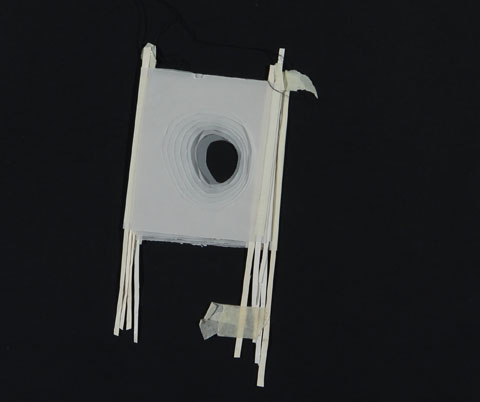


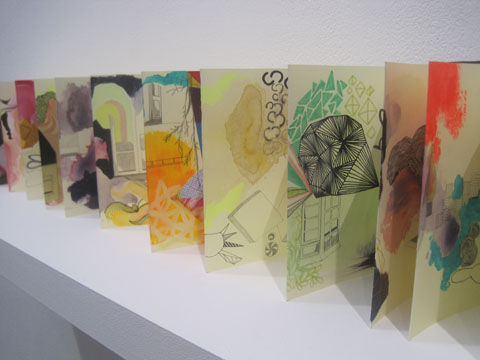


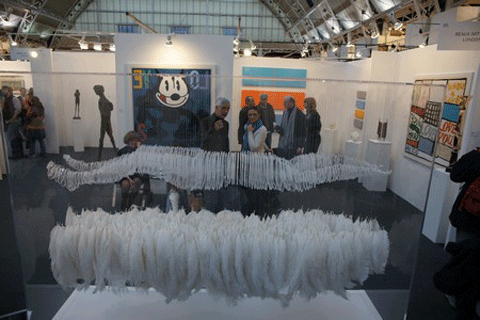


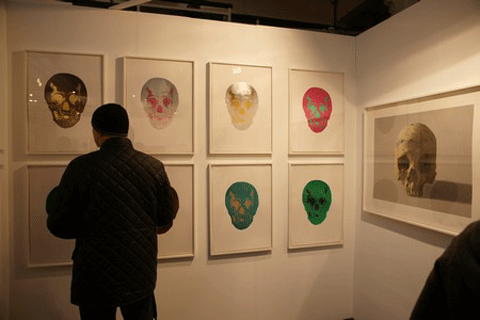


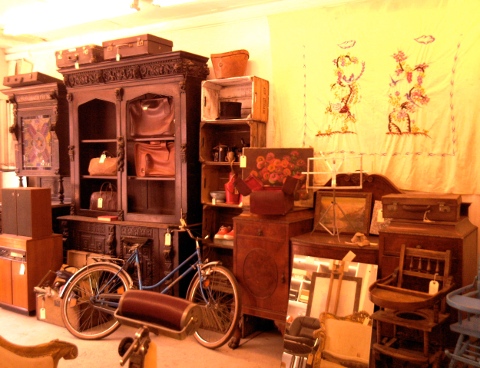


 cheap
cheap


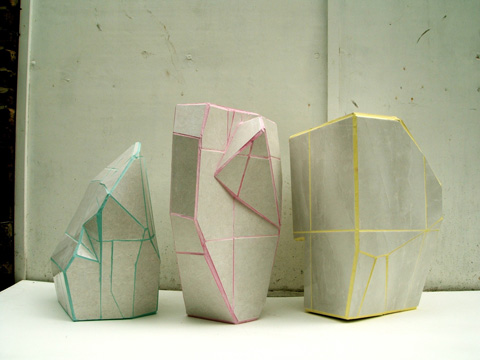


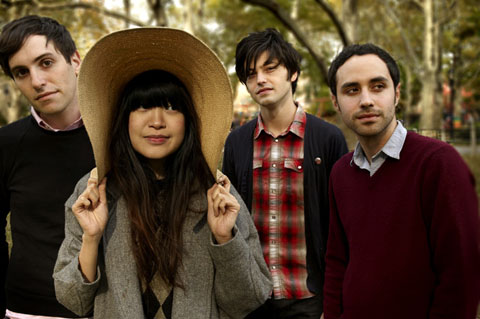


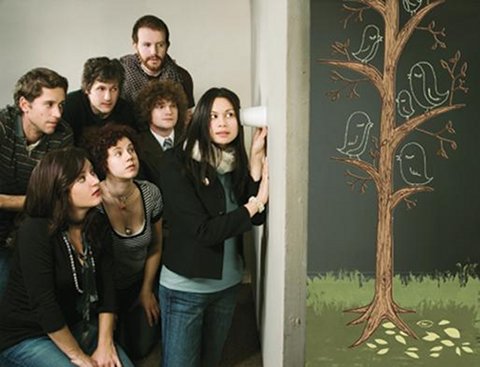


 Johanne Kappel Anderson
 Heidi Wikar
 Siofra Murphy
 Liam Evans
 Rachael Barrett
 Alex Mattson
 Keith Gray
 Louise Loubatieres
 Luis Lopez-Smith


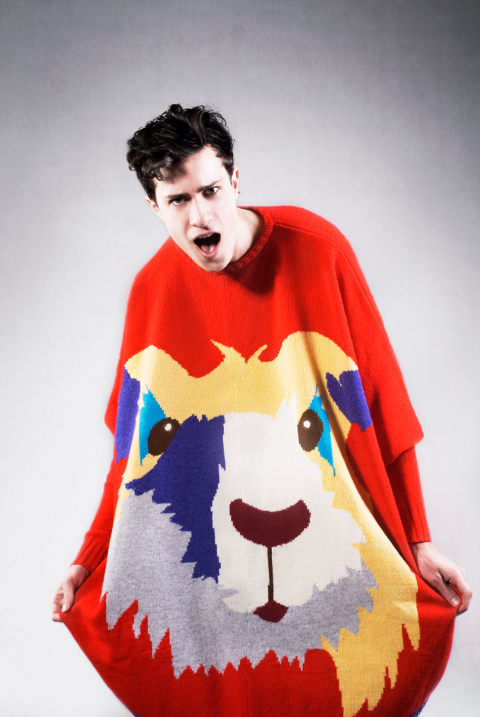


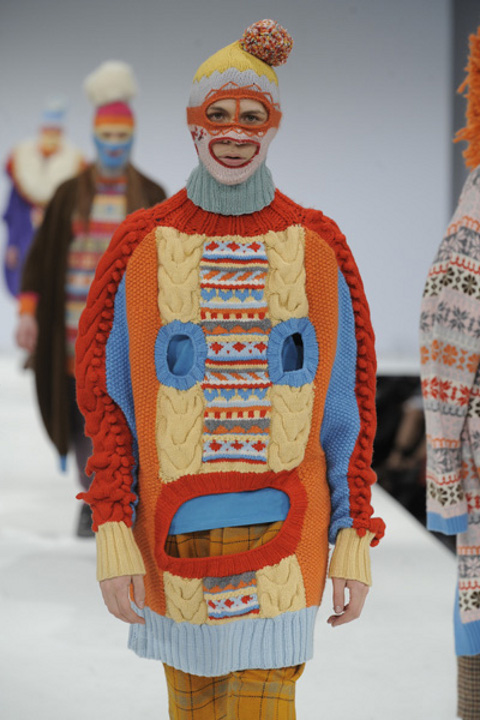
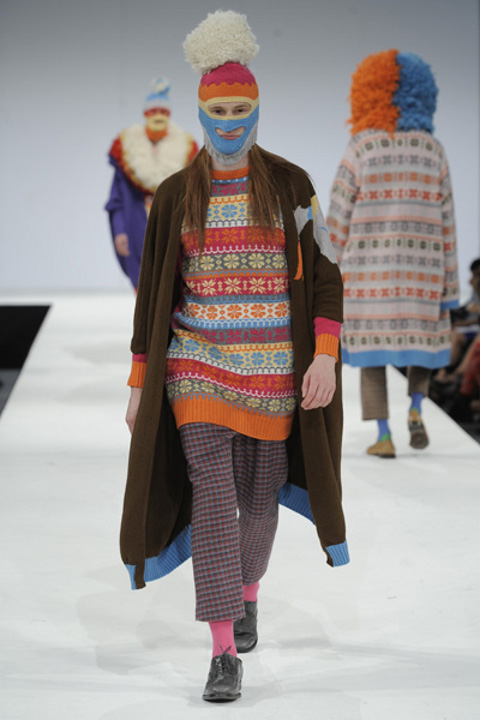
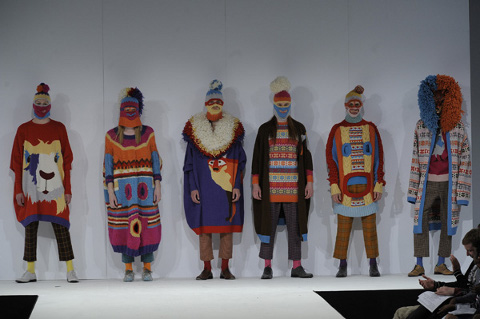


 Life on earth
 Ghost arguments
 Whale cushion
 Giving up ghosts
 Trio of Davids
 Vegetable plot dress
 Wittgenstein
 Caitlin Hinshelwood