Amelia’s Magazine | An interview with Margo McDaid: Amelia’s Colourful Colouring Companion featured artist.

Margo McDaid
Artist Margo McDaid captured my heart with her gorgeous sailors on instagram and has produced a wonderful double page spread for Amelia’s Colourful Colouring Companion featuring her highly decorative portraits of men and women. Here she talks about her move to the coastal town of Ramsgate, and how motherhood as fostered a renewed energy for creating pictures.

Margo McDaid
Where did you study and what happened after graduation? 
I studied at Camberwell College of Art. I exhibited at the New Designers show in Islington and was approached by a company called Babylon Design. I was incredibly naive about the business side of design but so pleased to have been approached by a really well known design company. My designs were produced and sold in The Conran Shop in London and in Paris. When I saw the product I designed in the shop I felt an enormous sense of disappointment. I had laboured over this design in my final year, months spent working on the milling machine, ensuring the product was as beautifully made as possible. The product in the shop was crudely made and lacked the integrity of design. It was a huge revelation and it really quickly made me realize, that I was not prepared to be part of this.

Margo McDaid
How did you get away from mass production and what did you do next?
I started volunteering in an adventure playground in South London. It was so vibrant and fresh and the children were so full of energy and life. It felt like a complete fresh break away form the corporate design world. I started to really love this creative journey. I wasn’t ready for the design world. I just wanted to continue a creative process. I ended up running art workshops in Islington and South London and eventually became a teacher.

Margo McDaid
When did you start drawing and creating for yourself again and who or what has inspired you?
Having a baby was life changing. I became a mother and it felt like a fresh start, a creative start. I had always kept a sketch book and would produce drawings purely for pleasure and make birthday cards for friends. One day I saw my boy drawing and I saw this amazing artist at work. He would come to me and say “I need to draw”. He needed to draw and it completely awoke a long buried need in me too.

Margo McDaid
Can you tell us more about your draw a picture a day project?
It was the daily rituals in my life that led to #drawapictureaday. I believed that if I wanted to make a difference to my artistic journey, then I would have to really invest in skill building. I would need to rid myself of preconceived ideas and just get on with it. Losing a fear of failure is essential. I wanted to discover more about me as an artist.

Margo McDaid colouring
Who did you draw for my colouring book and how did you create your artworks?
I drew two sailors for the colouring book. The sailors are together and are relaxed, they are about to sail away. You can see a boat in the back ground and lots of sea patterns adorn the page. They leave behind the dull aches of life and any expectations others have of them. They have escape. The three women standing in a forest are huddled together in solidarity but there is sadness and fear, both in their expression and body language. They look despondent and detached. They wear clothes that are rich in pattern and their heads are covered in scarves. I think the sub text is about feminism and have we as a society really made progress for women?

Margo McDaid
Where do you draw and how do you integrate your creativity with family life?
I have several tables in different spots where I draw. I tend to move around to be with my children. I set up my drawing table in a playroom/studio. I also have a table in my bedroom/family room. I read a quote recently, by Tracey Emin and she said that mothers couldn’t be successful artists. I felt really angry by that remark but having discussed it with friends I think she made a valid point. To be successful takes a lot of work and focus and as parent, it is almost impossible to give that time to ambition. So that is why I draw everywhere. I draw on the train to work, at football practice, in front of the TV. Any chance I get – I draw.

Margo McDaid
Why did you move to Ramsgate and in what way has it inspired you?
We were living in a tiny flat in Islington, North London and I felt so imprisoned by the physical space. I grew up on a small holding in the North West of Ireland, so I just could not face the thought of my children not having access to the outdoors. Ramsgate was cheap and cheerful, and we fell in love immediately. I have always wanted to live beside the sea, to wake up and just walk to the waters edge. Ramsgate is a varied and really interesting town. The overtly ornate architecture of a once golden age are beginning to be rescued one by one from decay, and even though I am a DFL (Down From London) I have a natural love for this place. Ramsgate has a long history of attracting creative people and has a vibrant art scene. I really feel at home here.

Margo McDaid
What are you currently working on?
I am working on drawings of sailors. I feel that there is a rediscovering of the golden age of seaside life. Dreamland in Margate is a really fun and inspiring place. I want to explore more about seaside aesthetics and develop them in my work. Sea.

Margo McDaid
What imagery and ideas have inspired your range of postcards?
I love the sea. I love the grey textured sea and the clouds. The Thanet skies are really incredible, so much pattern and texture. I make postcards from recycled envelopes. I was opening the water bill one day and thought of the sea. I love patterns, I see them everywhere and I like to combine the way patterns can compliment or contrast. The British Gas cross hatch looks like the November sky in East Kent with rain very softly coming in from the sea.

I have sold out of the first batch of Amelia’s Colourful Colouring Companion featuring the work of Margo McDaid and 43 other artists, but you can preorder a copy to receive in mid January here. Make sure you don’t miss out!

Categories ,#drawapictureaday, ,Adult Colouring Book, ,Amelia’s Colourful Colouring Companion, ,Babylon Design, ,British Gas, ,Camberwell College of Art, ,Colouring Book, ,Down From London, ,Dreamland, ,interview, ,kent, ,Margate, ,Margo McDaid, ,New Designers, ,Ramsgate, ,Thanet, ,The Conran Shop, ,Tracey Emin

Similar Posts:


Amelia’s Magazine | An interview with Alex McGinn: Amelia’s Colourful Colouring Companion featured artist.

Alex McGinn Artwork example 2
Illustrator Alex McGinn was one of a slew of graduates discovered at this summer’s New Designers show. Her distinctive artwork features a strong palette of autumnal colours, which lend themselves perfectly to a host of subjects.

Alex McGinn Artwork example 2
What was the best bit about studying at Falmouth Uni?
At Falmouth University I think the most helpful part of our course was the amount of tutor time and group critiques we had to discuss the development of our work. The university felt like a community, probably because the campus is situated in such a small town. As a student, I really felt the tutors really knew me and were always aware of what particular problem I was trying to overcome.

Alex McGinn Artwork example 4
How do you start a piece of artwork and what is your favourite part of the art making process?
Generally my favourite part of creating an illustration is the ‘thumbnail’ stage. Which is where I am literally laying out every idea that pops into my head until I have this massive page filled with plenty of different visuals to compare and choose from. At this part of the creative process I feel very liberated as I don’t have a fixed idea about what my final outcome will be.

Alex McGinn Artwork example 7
You favour a very particular colour palette, where do you find inspiration for the colours you use?
I think when I was starting to create more editorial illustrations I looked into the kind of colour palettes other successful editorial illustrators use, such as Neil Webb and David Doran. My main aim was however to make the illustrations really jump out at the viewer which is why my colour palette is vivid and bright.

Alex McGinn Double Page colouring book
How did you create the artwork for the colouring book?
I started off by making a few sketches and thumbnails and decided what subject matter would work best for a wide audience. Once I had decided I wanted to create a nature themed image the rest of the process was fairly simple. All my drawings are rather large so I can place all the necessary detail, and then digitally edit using the Adobe Suite.

Alex McGinn Artwork example 6
What are your favourite Dorset landscapes and why?
I personally enjoy the view from the Purbeck peninsula looking towards Corfe Castle which is an area I visited regularly as a child.

Alex McGinn Artwork example 3
How did you get involved with Write to Freedom and what have you done for them?
One of my Falmouth tutors was in contact with a member of Write to Freedom who were collaborating with the Workers’ Educational Association (WEA), and it was through this connection I got one of my first commissions. For this particular commission I was asked to produce a leaflet depicting the History of the Workers’ Educational Association within Dartington, and an illustrated map. The illustrated map was designed to lead the viewer along a trail around Dartington Estate and the surrounding countryside. It was called the ‘Dartington Then and Now‘ Trail. Throughout the trail there were a series of ‘then’ and ‘now’ statements displayed, explaining the past and current projects the WEA undertook in Dartington.

Alex McGinn Artwork example 1
What kind of illustration are you producing for Workers’ Educational Association?
At the moment I am working on another commission now specifically for the Workers’ Educational Association. I am creating large illustrations summarising the development of the WEA over the last 100 years. These illustrations will eventually be displayed in an exhibition towards the end of the year.

Alex McGinn Artwork example 5
Why have you decided to train as a teacher and where do you hope to pass on your skills in the future?
I decided to train to be a teacher whilst keeping up with my freelance work as I really do have a passion for passing on the knowledge I have learnt throughout my education. I enjoy the opportunity to inspire creative thinking at any given opportunity which is why teaching was a logical path for me to undertake. At the moment I am training to teach Secondary Level Art and Design but potentially, in the future, I may qualify to teach at University level as well.

Stay tuned for many more interviews with featured artists from Amelia’s Colourful Colouring Companion.

Categories ,Adult Coloring Book, ,Adult Colouring Book, ,Alex McGinn, ,Amelia’s Colourful Colouring Companion, ,Coloring, ,Coloring Book, ,Colouring, ,Colouring Book, ,Corfe Castle, ,Dartington Estate, ,Dartington Then and Now, ,David Doran, ,Dorset, ,Falmouth University, ,illustration, ,interview, ,Neil Webb, ,New Designers, ,Purbeck peninsula, ,Workers’ Educational Association, ,Write to Freedom

Similar Posts:


Amelia’s Magazine | An interview with Ana Jaks: Amelia’s Colourful Colouring Companion featured artist.

ANAJAKS-FigurePracticeInspiredbyHoliday_Season
I found Ana Jaks at New Designers, where she was also discovered by the likes of Creative Review. She contributes a bold design for Amelia’s Colourful Colouring Companion inspired by recent holidays.

ANAJAKSDRAWING
What did you learn and how did you develop as an artist at university?
I’m a recent graduate who studied illustration at Falmouth University which was probably one of the best environments anyone could ever ask to develop in. Before going to university I already had a very set drawing style which was mainly black and white and was all done in fine liner with barely any colour – it had more of a fine art feel to it than illustration, and being at Falmouth meant I had to break that down, strip everything back and start again. This did prove to be a massive struggle for me and at one point I didn’t think I was good enough to continue the course but the tutors there are honestly some of the most supportive I have ever been around and they really taught me how to use colour and not be afraid to take risks and so I really embraced my time there and I honestly don’t think I could have developed the style I did if it wasn’t for being there.

ANAJAKS-NY
What was the best part about studying at Falmouth Uni?
The best part about being there meant going to New York and showing massive clients like Vice and 3×3 your work, where you would get really focused feedback and as soon as I got back to the UK I took it all on board and tried to really bring my work together a lot more and realised how inspiring architecture is, which is why I created my New York piece. This piece of work really felt like a landmark for me, it was finally something that I thought “yes this is how I want my work to look to an audience.”

ANAJAKS-theselfiephenomenon
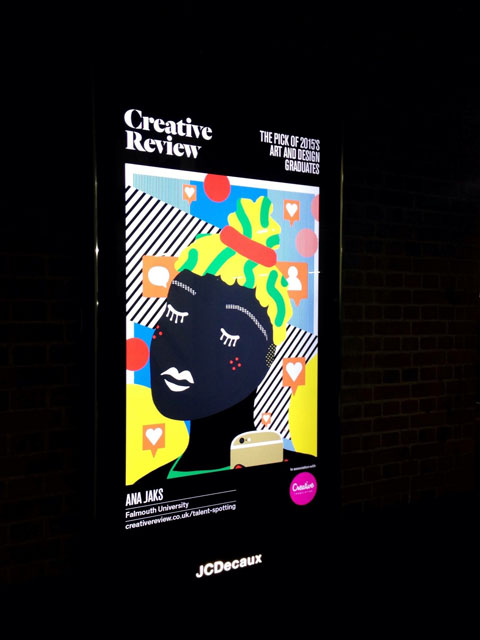
ANAJAKS-CreativeReviewBillboard2
I found your work at New Designers, what was the most exciting bit to come out of your show there?
The Selfie Phenomenon, which was a project I showed at both New Designers and New Blood, and was fortunately lucky enough to be chosen by the Creative Review and JCDecaux’s Talent Spotting Showcase 2015 where 20 graduates got chosen to have their work shown nationwide. I thought I would include this in the images I have sent to you because it was one of the most exciting things to have happened straight after finishing my degree and seemed somewhat unbelievable. 

ANAJAKS-EcoCallobforToteBag
What recent projects have you been working on?
Recently I have been working on an image for a collaborative project to do with helping the environment and focuses around the idea of stopping people from using plastic bags and so instead are selling tote bags for a pound in order to get people to help the environment. I was invited to design an image for the tote bags which involved me drawing animals which is really something I never do and so it was quite interesting for me I suppose? I usually stick to buildings, figures and environments as it’s something I much prefer but this was actually really fun!

`ANAJAKS-Inspiredbyrecentholiday
What areas of illustration do you hope to work on in the future?
My main interests lie in editorial because I always think you manage to get the most interesting images out of them. I also really love fashion and so the idea of being able to work on advertising campaigns with some sort of fashion house would be my absolute dream. Anything that I can apply bright colour, pattern, shape and an element of design to is perfect for me and I’ve even found that children’s books (although not what I had originally expected to like) are something I could really see myself enjoying.

ANAJAKS-CommissionbyFTMagazine2
ANAJAKS-CommissionbyFTMagazine
How did you become a member of YCN and what have you been commissioned for as a result of being on the website?
I am currently a member of YCN and am lucky enough to have my portfolio showcased on their website which has meant I am able to say my first ever commission was for the Financial Times Magazine which was amazing. It was an article about Gastropubs and so I had to draw pubs and food which was bloody great as they are both things I love! This was really important for me as it really gave me a taste of how the professional world worked in terms of being a freelance illustrator.

`ANAJAKS-dblepg
What inspired your double page for my book?
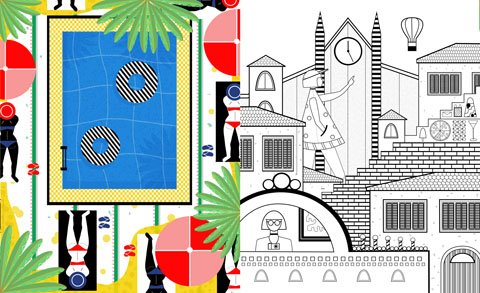
My colouring book pages for you were inspired by my summer holiday I had in summer. I wanted each page to contain an element I enjoyed most about the holiday, which is obviously why there is just one page full of people lying down doing nothing because I felt like I’d been on my feet for a full 3 years doing my degree and being able to do nothing for 2 weeks was bliss haha. When I was drawing this image it was the first time in quite a while that I had actually gone back to hardcore drawing and it was really good for me because it meant I pushed myself a lot on what I was doing. The other half of the image that is in black and white of the buildings is supposed to be the part I enjoy most which is walking around and discovering things – I actually much prefer this page and can’t wait to see how people colour it in!

ANAJAKS-FigurePracticeInsipredbySeasons
How does your interest in social media materialise in your work?
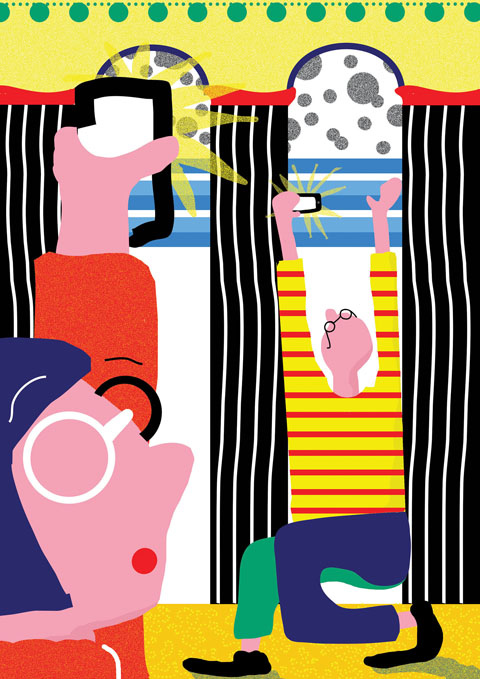
Being on holiday also inspired me to draw other images like tourists flouncing around trying to maniacally take pictures of everything but not really looking at anything. Social media is a big thing for me and my work and a lot of focus tends to lie around it. It’s interesting because we are obviously in a day and age where it can be detrimental to a creative’s career, but then you see how much it takes over some peoples lives and I love trying to wrap my head around it and create solutions to it through illustration.

ANAJAKS-FigurePractice
How do you try and evolve your style?
I am constantly trying to recreate and evolve my style because I think it’s incredibly important not to get stuck or comfortable in what you’re doing and so I always try and develop the way I draw the figure. Fashion has a huge influence on how I create my pictures and so I always try and do portraits just as little fun experiments! It’s also good to do just to let everyone know you are still working, because I want the world to know I am still drawing and I am still enjoying it and that I am really serious about it all and not just getting lazy, but it does get hard difficult running out of inspiration.

ANAJAKS-CreativeReviewBillboard3
What are you working on next?
I have plans for an upcoming project which I don’t want to reveal just yet but I feel like it’s something a lot of people my age can relate to. I tried for ages to think about something that would be “cool” or “appealing” or about something I love. It’s hard to stay inspired straight after your degree and I think it’s a really important time to keep pushing – especially when you are just working a job you don’t want to be to pay the bills. Ideally I would love to work freelance and be working within a company too.

You can colour Ana Jaks‘ art in Amelia’s Colourful Colouring Companion alongside that of 40 other international artists. Funding on Kickstarter now! Make sure you grab a copy or two, it makes a fantastic Christmas gift!

Categories ,#ameliasccc, ,Adult Colouring, ,Amelia’s Colourful Colouring Companion, ,Ana Jaks, ,Coloring, ,Colouring Book, ,Creative Review, ,Falmouth University, ,Financial Times Magazine, ,Holiday, ,illustration, ,interview, ,JCDecaux’s Talent Spotting Showcase 2015, ,New Blood, ,New Designers, ,The Selfie Phenomenon, ,YCN

Similar Posts:


Amelia’s Magazine | An interview with Augusta Akerman: Amelia’s Colourful Colouring Companion featured artist.

Augusta Akerman 'a section of my first litho print'
Augusta Akerman is yes, you got it, yet another Camberwell College of Arts graduate. She contributes a painterly image to my colouring book inspired by a love of 50s modernism. Find her in Amelia’s Colourful Colouring Companion, available now on Kickstarter.

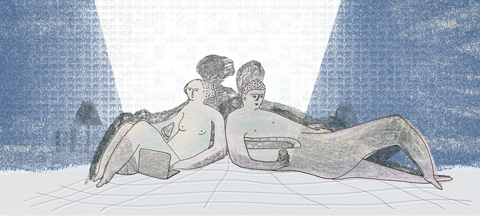
Augusta Akerman 'Couples and Technology'
I love the way you draw figures, which artists have inspired you? I think they look very Henry Moore-esue
Yes you are very right! I have always been very inspired by that particular period around 1950‘s modernism, Festival of Britain era, having been brought up on artists like Moore, Hepworth, Ravilious and Bawden. These were the artists my parents loved, so we were always going to galleries to see this kind of work. Every summer we go to Cornwall and St.Ives was and still is an annual pilgrimage to see Hepworth‘s studio and garden, I could probably draw it from memory. After finishing my MA I had been introduced to what I would call ‘Now Illustration‘ and I found myself constantly looking at contemporaries’ work and worrying about my style. Earlier this year I decided that I was just going to let myself be influenced by the painters, sculptors and designers I grew up loving and have found myself much happier with my work.

Augusta Akerman 'Swimming Against'
Why did you decide to move away from your first degree in fine art photography towards illustration?
Towards the end of my BA at Glasgow College of Art I was already starting to move away from photography. I was making small artist books with a combination of illustrations and photographs and enjoying putting them together, designing covers and hand binding them. I returned to London and worked as a photographers assistant all the while drawing at home in the evenings and weekends. I think this was a real time of discovery for me. I was so embarrassed about my drawing skills that I didn’t really show or tell anyone but kept hundreds of small A5 sketchbooks with random illustrations in. In the end I became more and more confident and illustration naturally took over. I also wasn’t particularly interested in digital photography as I enjoyed using film so I think cost and lack of regular access to a darkroom also contributed to me moving away from it. However I still take photographs, film and digital, who knows what will happen next.

Augusta Akerman 'Sea to Stone'
What did you do in the period between your BA and MA studies?
I worked as a Set Decorator in film and advertising. I fell into this career, starting as an art department assistant and gradually working my way up. It was a very enjoyable job most of the time but could be also be extremely intense and stressful. In the end the feeling that I wasn’t doing exactly what I wanted to do took over and I made the decision to do the MA. I was so frightened to leave that job, because in that world you spend years making contacts and working for little money in the hope of getting somewhere. I am very lucky to have made some good friends whilst working in film and still do the odd job here and there.

Augusta Akerman 'mono print portrait'
Why did you choose Camberwell for your MA?
I chose Camberwell because it was the nearest illustration course to my parent’s house! In order to do the MA I had to move back home and save as much as I could, and I could walk there in under half an hour. The MA represented a way to take a year off from film and see if Illustration could possibly be an option for me. I didn’t apply anywhere else so it was Camberwell or nothing. When meeting the head tutor Jan Woolley and visiting lecturer Chloe Cheese, I had an overwhelming feeling that this was it, I was very close to making a big change in my life, I would have cried my eyes out if they had said no!

Augusta Akerman 'Plastic Sea Soup' nominated for One to Watch
You have described your work as a combination of classic illustration and abstraction, what does this mean in practice?
This is because I think it sits between these two worlds, sometimes I can be quite real in my representation of animals and people, and at other times I just want to work with shapes and textures. I also tend to prefer work that takes a theme or idea and presents it not as a realistic depiction, but one that leaves room for the viewer to project their subconscious onto it.

I definitely think there is an influence of the classic in what I do as inspired by great artists like Tove Jansson and Pauline Baynes. But I aim to give a sense of modern movement and sculptural weight to some pieces by working with dark texture and light washes. I spent a long time being quite soft and delicate with my line and colour choices, so I’m enjoying this moment right now where I’m being braver using black crayons and ink to be more blocky and meshing them with the silky lace lines of water colour and gouache.

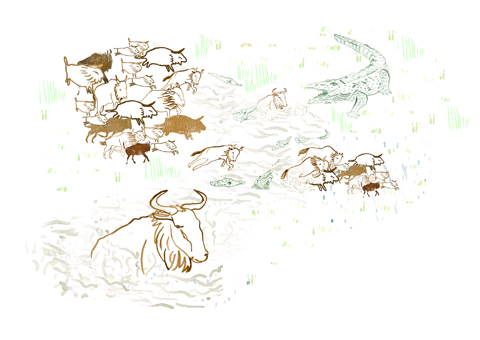
Augusta Akerman 'a section from the Great Migration'
What is your preferred way to approach a new piece of work when first starting to create it?
Depending on whether it is a personal project or a commission I tend to do things differently. However they both start the same way, with research. I love researching the subject and finding out different meanings or views or small snippets of information that can be included in the work to give a little extra detail that maybe only 2 percent will ever ‘get’ but will still interest others. I work either at my desk or sometimes in my dad’s studio. When at my desk I usually put on Radio 4 or a documentary on my computer that I listen to like a radio play, otherwise I get distracted by the images if I can see the screen! When in my dad’s studio I’m usually doing something a bit more messy like mono printing or lino, he tends to listen to the radio too or is working on the computer.

How do you combine pen with litho and other methods of production?
I always work by hand, first sketching in my sketchbook, then taking the images to another level of finish either by painting over them or developing them with mono printing or another print process until I like the way they look. I like the play between hand and digital imagery, computers are extremely useful when cleaning and adding colour to images but I sometimes feel I get overwhelmed by the possibilities. I think in this extremely accessible digital age it’s easy to put off the actual thinking of the development of a piece until it is staring you in the face with 100 layers in Photoshop. I find it hard to think clearly with the back lit white screen and feel more in control with a bit of paper in front of me.

Augusta Akerman 'Amelia's Colouring Book' for online interview RGB
What inspired your piece for my colouring book?
Whilst on holiday in Cornwall I had been drawing in my sketchbook, letting my hand and brain sort of automatic draw. I was not thinking about anything in particular but allowing what I had seen or heard that day come out onto the paper. I thought it looked like a diary in a pattern format. When I came back from holiday and thought about the colouring book I returned to the pattern idea and thought it might be nice for people to colour it in. I started automatic drawing again but this time I thought about all the themes I would like to explore in new projects and shapes and images I was interested in. I decided to create a seated figure drawing what would eventually become the wallpaper as I felt this developed the idea of a dreamy state of doodling, of letting your mind wander around your worries and dreams. The male figure was added later and I liked the idea of it also speaking about a relationship with another person who understands your dreams and helps you conquer your worries. They are both just quietly enjoying a moment supporting each other to make this big mural that charts all the ups and downs of creative making. It’s the most colourful piece I’ve made in a while so the brief did pull me out of my comfort zone a bit.

You recently took part in New Designers One Year On – how did you get involved and what project were you showcasing?
I applied to New Designers One Year On on a whim, because I wanted to be proactive to see if I could promote myself and my work in a professional situation. When I was selected I was very happy but also a little terrified as I knew there would be a lot of preparation and self promotion needed to really get the most out of it. I was showcasing the wallpapers and textiles I had made on my MA as well as newer designs and illustrations. I was very lucky to be surrounded by some amazing designers and illustrators and got a lot out of the experience. I had done Pulse earlier in the year with UAL and do think that in the future I might only do one design fair a year, not only due to cost but also due to the amount of energy you need to sustain that level of self promotion to justify it.

Why have you chosen subjects such as climate change for the basis of your designs?
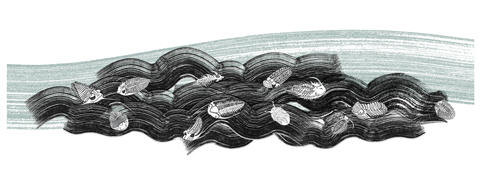
I am very influenced by nature and the natural order of things and have developed a huge respect for the world around us. I am also a constant watcher of all of David Attenborough‘s programs which means I’m a little obsessed with life cycles and repeating patterns. During my MA I knew I wanted to work with pattern and create an illustrated collection of wallpapers and textiles. The life cycles seemed to be a perfect subject as they repeat over and over again. Climate change sneaked into the work, because of researching the migration of animals and reading about the effect climate change is having on their lives, habitats and evolution. For me this is an ongoing theme and subject, I wanted to introduce and present the many circular structures that exist around us in a beautiful and accessible way, as well as providing a piece of information that some may not already be aware of.

Augusta Akerman 'Botanical Institute Wallpaper'
How do you create DIY wallpaper?
There are many ways! I have recently taught a DIY wallpaper class at the South London Botanical Institute where we used craft foam stamps, lino, foam rollers, stencils and direct printing (covering leaves and flowers in paint and pressing onto paper) to create repeat imagery. If you have the time and the space you can buy a roll of lining paper from B&Q and create your own.

What does your residency at the London Print Studio encompass?
I have been working with Lithography, a process I’ve been wanting to explore in more detail for a long time. I love the quality and possibilities of this particular printing process, you can use a number of materials to make your image as well as scratching away layers in the drawing that gives an almost etching like quality. Lithography is a lengthy process which I think puts a lot of people off. I spent 3 and a half hours grinding my large stone to get it right. I have the blisters to prove it! But even this I really enjoyed, it feels quite ancient grinding and preparing the stone then working into it with litho crayons and tusche. You can get an extremely varied quality of line that is then perfectly replicated when printing, but each print is unique with minute changes due to ink placement and roller pressure. I just love it! Although I did find the printing the hardest part this time. I was working one Saturday printing the largest stone and realised I had no more strength left to turn the wheel on the press, thank god I had nearly run out of paper!

How do you hope to grow your fabric design and wallpaper business?
After the Homes and Gardens Fabric Awards, I felt encouraged to continue with my new collection of wallpapers. I have to admit I was starting to feel a little helpless, I had applied for funding to help build the business which I didn’t get and had thought I might need to put it on hold for a while. I am now working on the new collection and hope to have it done by March 2016. It’s very hard trying to start a side business when you’re looking for freelance work and working a part time job, but I enjoy constantly working and thinking up ideas for projects. This is what I wanted! This is why I gave up other careers; in order to be in charge of my own creativity.

Augusta Akerman contributes her work to Amelia’s Colourful Colouring Companion, available now on Kickstarter. Make sure you grab a copy before the campaign closes later this month! Read a previous interview with Augusta here.

Categories ,#ameliasccc, ,Adult Coloring Book, ,Adult Colouring, ,Amelia’s Colourful Colouring Companion, ,Augusta Akerman, ,Bawden, ,Camberwell College of Arts, ,Chloe Cheese, ,Climate Change, ,Colouring Book, ,Cornwall, ,David Attenborough, ,Festival of Britain, ,Glasgow College of Art, ,Hepworth, ,Homes and Gardens Fabric Awards, ,illustration, ,interview, ,Jan Woolley, ,Kickstarter, ,Lithography, ,ma, ,Moore, ,New Designers, ,One Year On, ,Pauline Baynes, ,photography, ,Pulse, ,Radio 4, ,Ravilious, ,Set Decorator, ,South London Botanical Institute, ,St.Ives, ,Tove Jansson, ,Wallpaper

Similar Posts: