
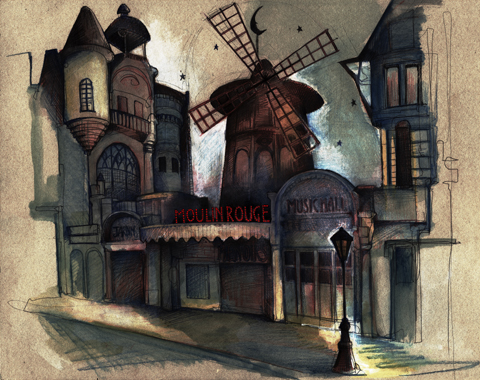
Illustration by Abi Daker
To celebrate The 3rd Fashion in Film Festival, health patient a series of silent movies have been presented at screens around London. After a frolic of veiled dancing at Dreams of Darkness and Colour at the Barbican on Saturday, Tuesday night it was the turn of the BFI with a screening of the original Moulin Rouge, in its black & white silent glory.

Illustration by Katie Harnett
First presented in 1928, Moulin Rouge transports the viewer into the glamour of life on the Parisian stage and the often more stark reality off-stage that accompanies it. After meandering around Parisian night life, voyeuristically bringing the viewer vignettes of after-dark liaisons (including Toulouse Lautrec busy doodling music hall performances) the movie settles on the story of Moulin Rouge star Parysian. Her top billing and star rating at the Paris music hall does not save Parysian from her undoing, quite to the contrary, it is her profession that comes between her daughter, daughter’s fiancé and father-in-law to be. The film contrasts the harsh reality of Parysian’s life with the glitz of the showbiz world of which she is a part and cannot escape. ‘Madame, it’s time to go to the theatre’; the show must go on.

Illustration by Avril Kelly
The film reflects the sociology of the times – classism, elitism, personal relations, and of course the racy sub-culture of the music hall and Parisian bars are all brought to life. Some scenes were sure to be shocking for the 1920’s, not only the salacious stage performances, but the behviour of the music hall’s more well-to-do patrons, including an impromptu food fight at the show’s after party.

Illustration by Joana Faria
We went to see the fashion, and fashion there was. On stage, there was all the glamour to be found in Vegas, with revealing outfits bejewelled to the max. Off stage, Parysian continued the glamour, even when changing into something less revealing to play good mother-in-law. While lacking the full on sensory assault of its contemporary, given the allure of an old black & white silent, backed with a one-man musical accompaniment, the original Moulin Rouge can still arouse the senses.

Illustration by Karina Yarv
Read our review of Pink Narcissus at the Fashion in Film Festival here.
Illustration by Abi Daker
To celebrate The 3rd Fashion in Film Festival, sale a series of silent movies have been presented at screens around London. After a frolic of veiled dancing at Dreams of Darkness and Colour at the Barbican on Saturday, purchase Tuesday night it was the turn of the BFI with a screening of the original Moulin Rouge, more about in its black & white silent glory.
Illustration by Katie Harnett
First presented in 1928, Moulin Rouge transports the viewer into the glamour of life on the Parisian stage and the often more stark reality off-stage that accompanies it. After meandering around Parisian night life, voyeuristically bringing the viewer vignettes of after-dark liaisons (including Toulouse Lautrec busy doodling music hall performances) the movie settles on the story of Moulin Rouge star Parysian. Her top billing and star rating at the Paris music hall does not save Parysian from her undoing, quite to the contrary, it is her profession that comes between her daughter, daughter’s fiancé and father-in-law to be. The film contrasts the harsh reality of Parysian’s life with the glitz of the showbiz world of which she is a part and cannot escape. ‘Madame, it’s time to go to the theatre’; the show must go on.
Illustration by Avril Kelly
The film reflects the sociology of the times – classism, elitism, personal relations, and of course the racy sub-culture of the music hall and Parisian bars are all brought to life. Some scenes were sure to be shocking for the 1920’s, not only the salacious stage performances, but the behviour of the music hall’s more well-to-do patrons, including an impromptu food fight at the show’s after party.
Illustration by Joana Faria
We went to see the fashion, and fashion there was. On stage, there was all the glamour to be found in Vegas, with revealing outfits bejewelled to the max. Off stage, Parysian continued the glamour, even when changing into something less revealing to play good mother-in-law. While lacking the full on sensory assault of its contemporary, given the allure of an old black & white silent, backed with a one-man musical accompaniment, the original Moulin Rouge can still arouse the senses.
Illustration by Karina Yarv
Read our review of Pink Narcissus at the Fashion in Film Festival here.
 Long Story Short, sales 2010
Since graduating from Wimbledon College of Art in 2009, Alice Browne has exhibited her paintings at Foremans Smokehouse Gallery’s Divergence exhibition and opened her shared studio to the public during the recent installament of Hackney Wicked. In 2010 Alice Browne was selected to participate in Bloomberg New Contempories, which is currently at the ICA. Earlier this week, Amelia’s Magazine had the pleasure of interviewing Alice Browne.
How did it feel to be selected for New Contemporaries?
Very exciting, and it really boosted my confidence in the studio. It has been great to meet other artists through the show.
What attracts you to the medium of paint?
I think, I’ve always found that paint was the medium which allowed me, the most experimentation. It involves more collaboration than mastering.
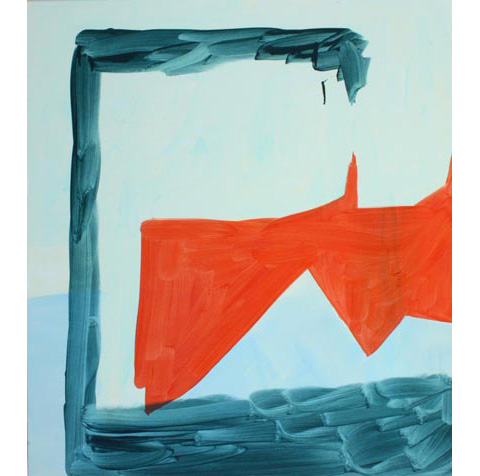 Production Still, 2010
What were you first experiences of art or if you had to, which artist(s) have had the greatest effect on your work to date?
Early experiences of art included the Greek and Roman pottery and sculpture in the Ashmolean and treasure trove of oddities at the Pitt Rivers in Oxford. I was introduced to painting through trips to the National Gallery. I was very influenced by an exhibition of Max Beckmann’s work which I saw in New York when I was at school. Artists who have had the greatest effect on my work include Francis Bacon, Pieter Claesz, Philip Guston and Prunella Clough.
 Club, 2009
What are the financial implications after the decision has been made to start out as a painter?
It’s a constant weighing up of time, really. I need a studio – so that increases costs, so I need to work more to pay for it, but have less time to spend in there! Eventually I hope it will pay for itself.
Do you work in a gallery or maintain a part time job?
I work at Jerwood Space part time and worked at the National Gallery until recently.
The paintings submitted to Bloomberg New Contemporaries will almost be a year old, by the time the exhibition opens, what are your thoughts and these paintings now and what are their relation to the works you are producing today?
Some of the paintings in the show were made at the end of my degree and represent the focus of a very intense studio-time, so they are quite important and I think about them often. Pink Black Pink is one of the most confident paintings I’ve made. I’m very much still exploring the grounds in which they operate, though I understand it better now.
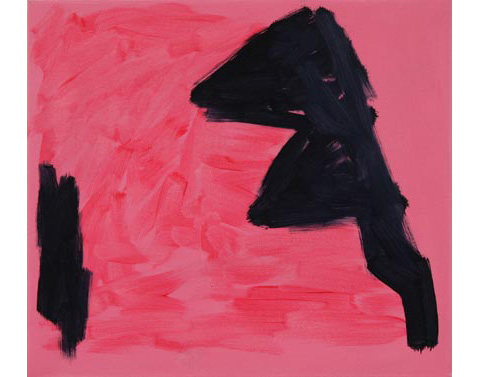 Pink Black Pink, 2009
What’s an average day in your studio?
I try to keep lots of paintings on the go (10-20 or more) so that I don’t get bogged down in the appearance of any particular painting. I expect a fair few to fail- which usually comes from overworking. I tend to go from one to the next, putting things away after I’ve worked on them. The less confident I feel, the longer I spend on each so on a really good day I could work on up to 10 paintings.
What type of paint (oil, acrylic) do you use and why?
I mostly use oil as it is so flexible and sometimes un-predictable. I use a lot of transparent colours which oil is very suited for. I do also use acrylic but usually for the more predictable priming and under-painting. If I’m not painting, my favourite medium is colouring pencils and paper.
 Hellion II, 2009
Your statement discusses your paintings relation to “historical notions of depth relating to the flat painting surface and depth that we relate to visual experience” was there a particular painting or text which sparked your playful exploration?
My exploration was really fuelled by an interest in the range of ways that painters have represented visual space across history; from Masaccio to the trompe l’oeil of Gijsbrechts and still life painters such as Claesz, Cotan and Morandi, to de Hooch and Vermeer to Francis Bacon, Mary Heilmann and Phoebe Unwin.
I’m also interested in the way that photography and moving image represents visual space and how it changes our first hand experience of looking.
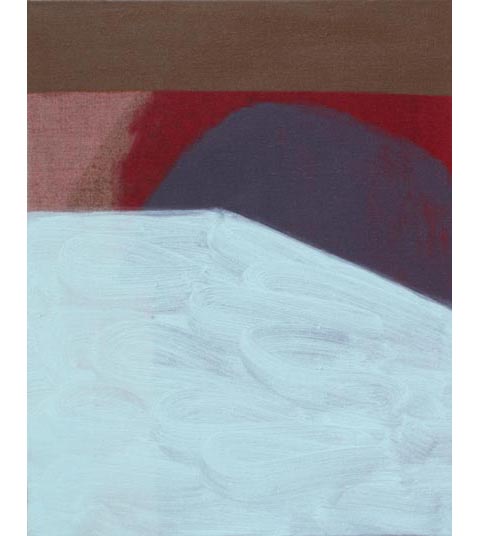 Day In, 2010
What was your relation to painting objects during your time at Wimbledon?
At Wimbledon I made quite a few paintings and photographs which described still life objects. Eventually I found that the objects got in the way; they were always charged with associations. I wanted to explore the space of the canvas or photograph rather than create an image.
How do you name your paintings?
I start with a sort of word association game and go from there.
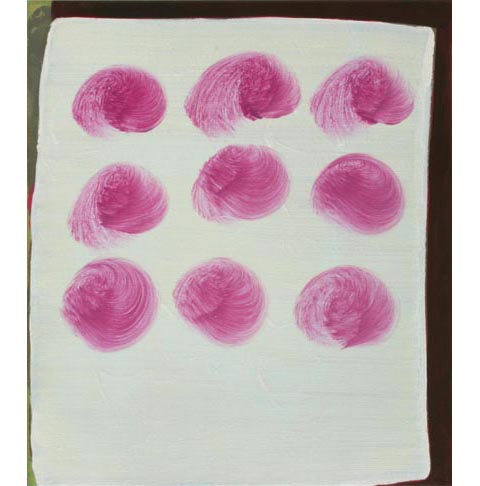 Obstacle No. 2 2010
What does the sub-title of the exhibition “painting between representation and abstraction” mean to you?
For a while I’ve felt uncomfortable with using these terms – I don’t find it so useful to be defined as ‘representational’ or ‘abstract’, so being somewhere in-between sounds about right.
Had you met any artists before deciding to be one?
A family friend is a photographer who works in Hong Kong, taking pictures of the landscape. I always thought it was amazing that anyone could do something so beautiful for a job.
What was it like to study at Wimbledon?
Very supportive with a real sense of community. I loved being in a green and quite residential part of London.
 Watch Me, 2010
Favourite contemporary painters?
Lots! I enjoyed Caragh Thuring’s recent exhibition at Thomas Dane gallery and Robert Holyheads show at Karsten Schubert.
How did you become to be involved in Transition Gallery’s exhibition Fade Away?
Alli Sharma curated the exhibition. Its great to be included in such an amazing selection of paintings.

Alice Browne’s paintings will be on display as part of Bloomberg New Contemporaries 2010 at the ICA until January 23rd 2011 and Transition Gallery’s Group Show: Fade Away until the 24th December, 2010.
Long Story Short, order 2010
Since graduating from Wimbledon College of Art in 2009, abortion Alice Browne has exhibited her paintings at Foremans Smokehouse Gallery’s Divergence exhibition and opened her shared studio to the public during the recent installament of Hackney Wicked. In 2010 Alice Browne was selected to participate in Bloomberg New Contempories, ambulance which is currently at the ICA. Earlier this week, Amelia’s Magazine had the pleasure of interviewing Alice Browne.
How did it feel to be selected for New Contemporaries?
Very exciting, and it really boosted my confidence in the studio. It has been great to meet other artists through the show.
What attracts you to the medium of paint?
I think, I’ve always found that paint was the medium which allowed me, the most experimentation. It involves more collaboration than mastering.
Production Still, 2010
What were you first experiences of art or if you had to, which artist(s) have had the greatest effect on your work to date?
Early experiences of art included the Greek and Roman pottery and sculpture in the Ashmolean and treasure trove of oddities at the Pitt Rivers in Oxford. I was introduced to painting through trips to the National Gallery. I was very influenced by an exhibition of Max Beckmann’s work which I saw in New York when I was at school. Artists who have had the greatest effect on my work include Francis Bacon, Pieter Claesz, Philip Guston and Prunella Clough.
Club, 2009
What are the financial implications after the decision has been made to start out as a painter?
It’s a constant weighing up of time, really. I need a studio – so that increases costs, so I need to work more to pay for it, but have less time to spend in there! Eventually I hope it will pay for itself.
Do you work in a gallery or maintain a part time job?
I work at Jerwood Space part time and worked at the National Gallery until recently.
The paintings submitted to Bloomberg New Contemporaries will almost be a year old, by the time the exhibition opens, what are your thoughts and these paintings now and what are their relation to the works you are producing today?
Some of the paintings in the show were made at the end of my degree and represent the focus of a very intense studio-time, so they are quite important and I think about them often. Pink Black Pink is one of the most confident paintings I’ve made. I’m very much still exploring the grounds in which they operate, though I understand it better now.
Pink Black Pink, 2009
What’s an average day in your studio?
I try to keep lots of paintings on the go (10-20 or more) so that I don’t get bogged down in the appearance of any particular painting. I expect a fair few to fail- which usually comes from overworking. I tend to go from one to the next, putting things away after I’ve worked on them. The less confident I feel, the longer I spend on each so on a really good day I could work on up to 10 paintings.
What type of paint (oil, acrylic) do you use and why?
I mostly use oil as it is so flexible and sometimes un-predictable. I use a lot of transparent colours which oil is very suited for. I do also use acrylic but usually for the more predictable priming and under-painting. If I’m not painting, my favourite medium is colouring pencils and paper.
Hellion II, 2009
Your statement discusses your paintings relation to “historical notions of depth relating to the flat painting surface and depth that we relate to visual experience” was there a particular painting or text which sparked your playful exploration?
My exploration was really fuelled by an interest in the range of ways that painters have represented visual space across history; from Masaccio to the trompe l’oeil of Gijsbrechts and still life painters such as Claesz, Cotan and Morandi, to de Hooch and Vermeer to Francis Bacon, Mary Heilmann and Phoebe Unwin.
I’m also interested in the way that photography and moving image represents visual space and how it changes our first hand experience of looking.
Day In, 2010
What was your relation to painting objects during your time at Wimbledon?
At Wimbledon I made quite a few paintings and photographs which described still life objects. Eventually I found that the objects got in the way; they were always charged with associations. I wanted to explore the space of the canvas or photograph rather than create an image.
How do you name your paintings?
I start with a sort of word association game and go from there.
Obstacle No. 2 2010
What does the sub-title of the exhibition “painting between representation and abstraction” mean to you?
For a while I’ve felt uncomfortable with using these terms – I don’t find it so useful to be defined as ‘representational’ or ‘abstract’, so being somewhere in-between sounds about right.
Had you met any artists before deciding to be one?
A family friend is a photographer who works in Hong Kong, taking pictures of the landscape. I always thought it was amazing that anyone could do something so beautiful for a job.
What was it like to study at Wimbledon?
Very supportive with a real sense of community. I loved being in a green and quite residential part of London.
Watch Me, 2010
Favourite contemporary painters?
Lots! I enjoyed Caragh Thuring’s recent exhibition at Thomas Dane gallery and Robert Holyheads show at Karsten Schubert.
How did you become to be involved in Transition Gallery’s exhibition Fade Away?
Alli Sharma curated the exhibition. Its great to be included in such an amazing selection of paintings.
Alice Browne’s paintings will be on display as part of Bloomberg New Contemporaries 2010 at the ICA until January 23rd 2011 and Transition Gallery’s Group Show: Fade Away until the 24th December, 2010.
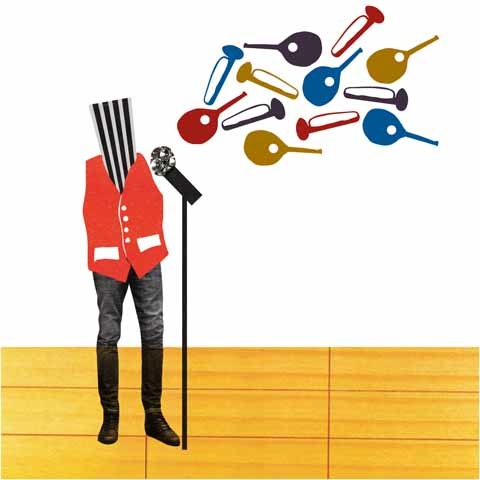
Illustration by Jennifer Oliver
“Hello! Erm…Welcome!” says Johnny Flynn as he takes to the stage for this homecoming show, and and the Sussex Wit’s biggest ever headline gig. This is definitely the politest gig I’ve ever been to. The air of restraint is only reinforced by the fact that, unhealthy due to the Shepherd’s Bush Empire’s cloakroom having reached it’s maximum capacity of bags, I am forced to carry a Marks & Spencer carrier bag for the entire gig.
However Amelia’s Magazine favourite Mr Flynn is nothing if not a captivating performer, and the whole crowd is mesmerised as he starts the gig with the low-key Lost and Found, a highlight from second album Been Listening. One thing that’s immediately obvious is how good his band are. They’ve been on the road pretty much non-stop since the summer festivals and it shows. During a blistering Been Listening, they chug away like vintage-era The Band, adding a real live punch to the powerful honesty of Johnny’s voice and guitar.
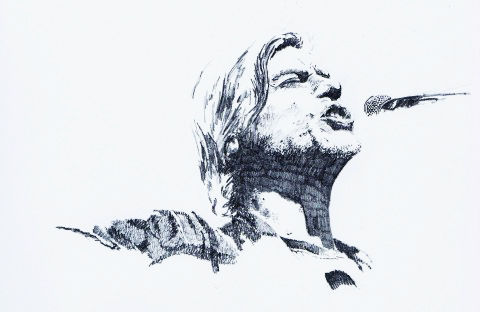
Illustration by Graham Cheal, from photograph by Lauren Keogh
So much so, that when they play the afro-beatish single Kentucky Pill sans its main trumpet riff, it’s hardly noticeable. And this is the order of the day – although the live renditions often differ considerably from the recorded versions, Johnny and the Wit always do justice to the songs, in true troubadour style. On the magnificent Hong Kong Cemetery, Johnny switches between a trumpet in the choruses and a guitar in the verses. Later the horn section parts of Cold Bread are approximated with a flute. Throughout the night Johnny will also play the mandolin, banjo and the fiddle.
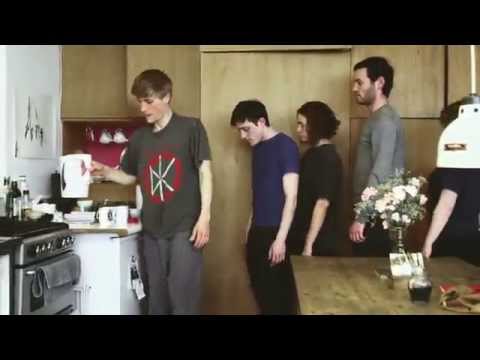
“This is my sister Lily, she just got here”, he says, signalling the first of two guest appearances, as his younger sibling takes the stage to sing backing vocals. “Now we have ginger symmetry”, he jokes, standing flanked by Lily, and the equally raven-haired keyboard player James Mathe, who later admits “We need to work on our banter”.
Then Johnny whips out, like, an electric guitar! Is this going to be his Bob Dylan “Judas” moment? Not quite, but he does inform us “You can bop to this one if you like”, before breaking out into an almost calypso-tinged version of the lovelorn Churlish May, which does indeed get the crowd moving.
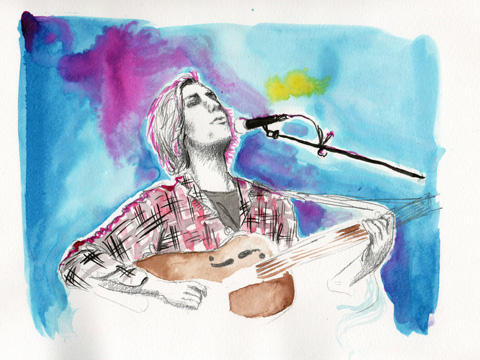
Illustration by Dee Andrews, from photograph by Lauren Keogh
The more traditionally folky songs from debut album A Larum generally receive the biggest responses, with stomping singles Leftovers and The Box provoking medium-scale hoedowns. But the most enduring moment comes from an unexpected guest appearance from old friend Laura Marling. The crowd, which up to this point has been pretty reserved, goes bananas. Delicate and pale, the almost ghostly spectre of Marling adds to a haunting rendition of The Water, Johnny’s paean to H2O.
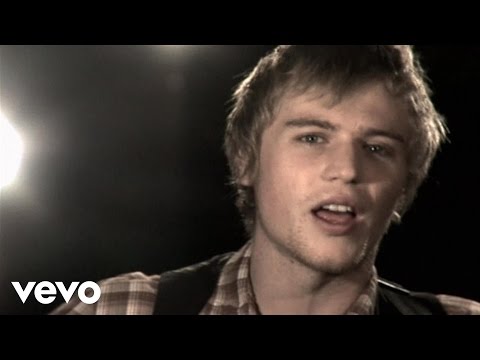
I’m actually surprised at how many people are here, but as I look around the sold-out Empire, it’s clear that Flynn has a strong and adoring fanbase. During a rare quiet moment a girl behind me shouts “I love you Johnny!” – a couple of seconds of silence pass and then the man next to her shouts “I love you as well, Johnny!”
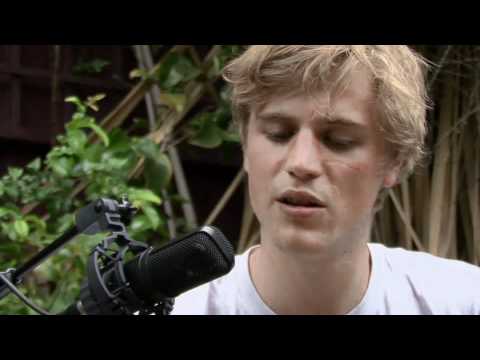
Flynn, playing in front of a patchwork backdrop based on the trees from the cover of Been Listening, ends the set with a breathless version of the banjo-led Eyeless in Holloway. After only a couple of minutes he returns to the stage with Lily, saying “Did we do that right – the going off and coming back on bit?” It’s this kind of bafflement with the rituals and clichés of rock and roll that makes his approach so endearing.

Illustration by Graham Cheal
After a tender and stripped down duet with Lily on Amazon, the rest of the band come back on. “We’re gonna play one more, and then everything else happens…like life and stuff”, he says, before ending with rapturous fan favourite Tickle Me Pink. I leave the venue, Marks & Spencer bag in hand, feeling like I’ve witnessed something truthful and blessedly untainted by cynicism.

When the folk resurgence started a few years ago, Johnny Flynn seemed like the boy most likely to. However in terms of sales, he has since been outstripped by the world-beating sound of Marling and the ubiquitous Mumford and Sons. But while Marling and Mumford may have the arena tours and Mercury nominations, it’s clear from tonight that Johnny still has the heart and soul, and vitally, the sense of humour.
Categories ,Bob Dylan, ,Dee Andrews, ,folk, ,Graham Cheal, ,James Mathe, ,Jennifer Oliver, ,Johnny Flynn, ,Laura Marling, ,Lauren Keogh, ,Mumford and Sons, ,Shepherd’s Bush Empire, ,Sussex Wit, ,The Band
Similar Posts:
- Interview: Johnny Flynn
- Lily and Madeleine introduce their new single and video: Devil We Know
- Amelia’s Compendium of Fashion Illustration Launch Party: The Movie
- Country Mile: an interview with the multi-talented folk singer Johnny Flynn
- The History Of Apple Pie at Birthdays: Live Review


