Amelia’s Magazine | Meet Mateusz Napieralski: Featured Artist from That Which We Do Not Understand

Amelias_magazine_TWWDNU_mateusz_napieralski_tribal_cumulusAmelias_magazine_TWWDNU_mateusz_napieralski_tribal_cumulus
Mateusz Napieralski (also known as Gust of Wind) works from a studio in London, where he explores the relationship between the handmade and the digital. Tribal Cumulus explores the unknown powers of mystic rituals, where humans and nature merge during ceremonial, hypnotic trances. His bold colours and textures show the powerful energy that is generated but can’t be seen by the human eye. Real gold leaf is used as highlights throughout the illustration.

Mateusz Napieralski
How did you put your illustration together?
I wanted to create an abstract composition capturing the invisible energies created during mystical rituals and dances. I started with sketches of forms, textures and abstract shapes, which I then collage together. I then scanned in my original sketch and carried on with the composition in Illustrator. I like how much freedom digitalizing my sketches gives me. I love playing with scale, movement and placement of all the shapes. Once I was happy with the layout I started applying colour; experimenting with colour palettes is a very enjoyable part of the process for me. Although it’s also quite dangerous, because I end up with many different options and can’t decide which one I like the most!

Mateusz Napieralski 4
What attracted you to the open brief?
I’ve been a big fan of Amelia’s Magazine for good few years and contributed some editorial work in the past. I think the open briefs are such great opportunities for young designers and illustrators to test and develop their skills. This particular brief was very special, because it is such a broad, open topic, which could be interpreted in so many ways, especially when you think of all the different artists involved and their approaches. I also loved the idea of seeing my work printed in gold, because I have never had a chance to experiment with gold leaf printing techniques.

Mateusz Napieralski 6
Your day job involves motion design, how does this feed into your graphic design and illustration work?
I always enjoyed working across different disciplines and mediums, and motion graphics and animation have been present in my work for the past 4 years or so. I think it also gives me that edge to think about my illustration work in different ways and think how the characters and forms I create could work in terms of movement. I think there is also this flowy, smooth feel to my character design and composition, which I guess also comes from the moving image side of things. I guess being able to animate also makes my work a little bit more relevant, as clients are now moving faster into moving image based mediums, and it’s definitely an exciting time for illustrators – everyone loves seeing their work come to life through animation!

Mateusz-Napieralski-what_happens_at_night
You are a member of Just Us Collective – who is in your collective and what have you been up together?
Just Us Collective was established quite a few years ago to promote up and coming talent of designers/illustrators and makers that are in full time education (usually in their final year of studies). I became a member during my final year of studies with about 30 others from around the country, working across various disciplines. Since joining Just Us I took part in a group show which was held at Beach London, and I also pitched some illustrations for an online stationary shop.

Mateusz Napieralski 3
How much has your Polish background influenced the way that you create? and in what way?
I can certainly say that my style and thinking about illustration has been influenced by being exposed as a kid to some beautiful Polish illustrations and Polish poster design. I am in love with the bold graphic shapes of Polish folk art and I guess this comes across in my work as well since the shapes and forms I work with are usually quite bold and have that cut-out feel which is quite Polish.

Mateusz Napieralski 5
What other projects have you worked on lately? Can you share some favourites?
I’m currently working on an illustrated fairytale about a Polish Mermaid, which is quite exciting as this is a purely illustration based project, which I haven’t done in a while. The final outcome will be a little illustrated fairytale zine. I’ve also been busy with making some santa-lovers to start feeling a little bit more Christmasy. I’m also working on a little branding project, but it’s still early stages, so stay tuned for more on that.

Showreel from Mateusz Napieralski on Vimeo.

Please share with us any plans you have for Gust of Wind in the coming year…
I’m currently trying to develop my style and apply it to even more mediums, for instance I would like to look at product design and see how my work could translate in that area. I want to carry on working for various clients and see where Gust of Wind takes me. I’d like to experiment more with moving image, I think it would be great to have some bigger projects to work on. I love identity and branding, I think I would like to find an opportunity to create some playful, bold illustration led identity project. That would be a dream!

Read what Mateusz has to say about his artwork here and pledge for your limited edition gold leafed print on my Kickstarter campaign here.

Categories ,Beach London, ,Gust of Wind, ,illustration, ,illustrator, ,interview, ,Jan Witwicki, ,Just Us Collective, ,Mateusz Napieralski, ,Mermaid, ,Polish, ,Tribal Cumulus

Similar Posts:


Amelia’s Magazine | Kitty McCall: Creating Colourful Interior Textiles

Kitty McCall tropicalia washbags
Designer Catherine Nice is the brains behind Kitty McCall, a brilliant new interior textiles brand you should know about. Her work is inspired by the boldness of artists such as Matisse, Gauguin and Rousseau, featuring glorious patterns that will enliven any room. First discovered at Tent London 2014, I decided it was high time I caught up with the talented designer.

Kitty-McCall-artist-photo-AMELIAS-MAGAZINE
Your brand was named for your grandmother, what influence did she have on you?
She was great! She only started painting quite late in her life but she had a great eye for detail and colour. Every year I would send her a painting or drawing and she would always have something positive to say. I would say she contributed hugely to my interest in Art and design.

Kitty McCall tropicalia print
You have said that colour is the most important part of design: how do you put colours together and manipulate them into a final piece?
Colour is one of the most important things in my work as it helps spark my creativity and really helps me shape my ideas for a finished piece. I’m a hoarder of magazines, fabric swatches and generally anything that can be of used to inspire future design. When putting colour together I often use paper cutting and collages to get a feel for how they work together. Once I know the palette I match them with the Pantone colour system to ensure printing will be accurate.

Kitty-McCall-tropicalia-pouf Yeshen Venema Photography
Where did you study and what was the most important thing you took from your course?
I studied at Birmingham City University. I learnt never to stop absorbing ideas and to always take a moment to take in the world around me. It’s amazing what inspiration you can miss when you’re not paying attention to the every day. Having an interest in all areas of design also helps keeps the mind and ideas fresh.

Kitty McCall tropicalia letters
How did the idea for big fabric letters come about and how are they manufactured?
When my daughter Ruby was born I wanted some letters for her room but everything I found was a bit too pink or pretty, so I decided to get some made in my printed fabrics. Each Letter is hand made by a very talented lady I know!

Kitty-McCall-paradise-birds Yeshen Venema Photography
What relevant jobs did you have before setting up Kitty McCall?
After university I spent 6 years learning my craft as a print designer for a successful commercial studio.

Kitty McCall tropicalia cushions
Why did you decide to set up your own brand and what has been the hardest thing about doing so?
I wanted to have more control over how my designs were used. The hardest thing is probably working by myself, as you have to be your own critic in everything you do. When working in a studio environment, with a number of talented designers, we can be each other’s critical eye and spot what’s missing or not working in a design, so I always found this a helpful tool. I overcome this hurdle now by trying to take time to come back to designs, and see them with fresh eyes! It means the design process is a little longer but by doing this I can ensure I’m always happy with every finished piece.

And what is the best part about running your own brand?
Complete creative freedom and flexibility in my hours.

What are your hopes for the future of Kitty McCall?
To work on more collaborations with fellow designers and brands!

Categories ,Birmingham City University, ,Catherine Nice, ,Gauguin, ,interview, ,Kitty McCall, ,matisse, ,Rousseau, ,Tent London, ,Tent London 2014, ,Tropicalia

Similar Posts:


Amelia’s Magazine | Meet Niall Grant: Featured Artist from That Which We Do Not Understand

Amelias_magazine_TWWDNU_Niall_Grant_Mater_GaiaAmelias_magazine_TWWDNU_Niall_Grant_Mater_Gaia
Niall Grant works between studios in Norwich and London, creating fine prints that are inspired by traditional European illustration. He has worked for a diverse range of clients and showed work in numerous exhibitions. Above you can view Mater Gaia, his contribution to my 10th anniversary artists’ book, and also available exclusively on my Kickstarter campaign as a very limited edition fine art print with real gold leaf. The image is inspired by his interest in life, death and the dreaming in between. The artwork features the celestial skies and elements of 16th century alchemic illustration above a forest clearing where beautiful crystals burst from the soil. His work provides a ‘visual medicine’ for the viewer.

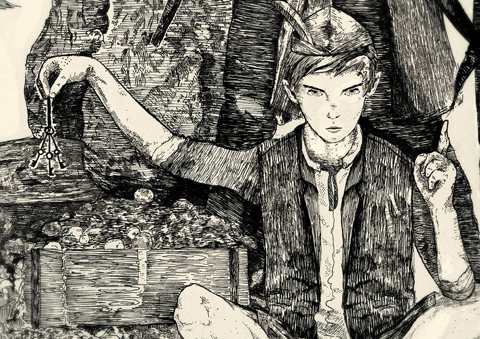
Niall Grant Neverland
Neverland.

How did you create Mater Gaia?
I created this piece firstly with pencil sketches, and built on those with ink brushes and fineliners. This piece in particular was composed by using different drawings I made whilst researching the project. The colour was added from paper and watercolour swatches I’ve been using for years. This process feels very natural to me, and is quite a traditional approach to image-making.

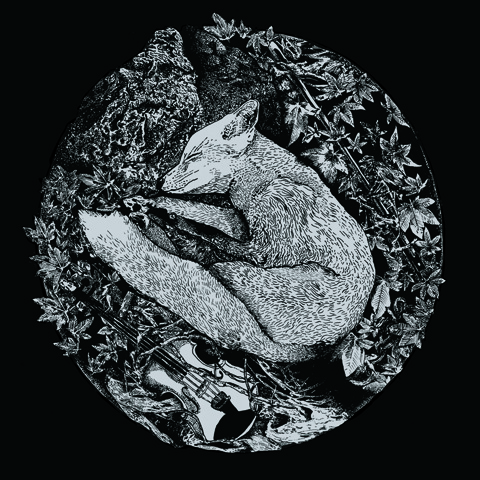
Niall Grant Sleeping Fox
Sleeping Fox.

What does she mean to you?
Latin for ‘Mother Earth‘, this work depicts Gaia, who some believed to be Goddess of the Earth. It comments on how acts of nature are still attributed to unseen forces in some lands.

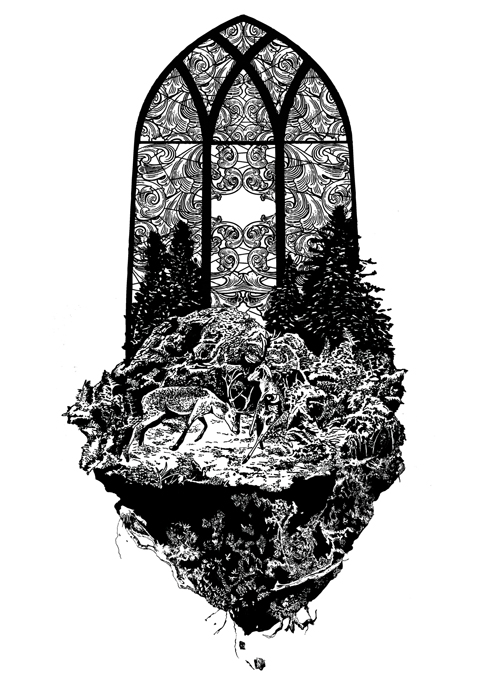
Niall Grant Hart Of Ten
Hart Of Ten.

Why did you decide to enter the open brief, were there any things that really appealed and if so what?
My eyes lit up when I first saw the brief. I thought the subject matter was perfect for what I was working on at the time. I myself am a spiritually strong person and I feel that’s important. There’s an Indian proverb that says “Everyone is a house with four rooms, a physical, a mental, an emotional and a spiritual. Most of us tend to live in one room most of the time but, unless we go into every room every day, even if only to keep it aired, we are not a complete person.” A lot of people neglect that spiritual room until the day they die, just going the way of the world. They don’t even think to look into it because it seems too dark, but if you keep asking questions they will be answered.

Niall Grant Strange Creatures
Strange Creatures.

Were there any big influences on your style of illustration from an early age?
I really admired the artwork of Yoshitaka Amano growing up. Gustave Dore, Norman Lindsey and Vania Zouravliov are all identifiable influences in my work. I have thousands of pages of artists work from all different eras. I love making Art and I love looking at it.

Niall Grant King Of The Monsters
King Of The Monsters.

You have worked for many amazing brands and companies, what have been highlights of your career so far?
I really enjoyed working with Lettucewear last year. It was more of an Artworking job and not my usual style, but they treated me very well throughout the three month project and we were always on the same page. It just ran like clockwork really. I think having good communication with who you are working with makes the project much more pleasurable.

Niall Grant The Abacus
The Abacus.

What is your favourite type of job to work on and why?
I love doing album art. I think it’s so special when art forms come together to complement each-other. I love the initial process of connecting with the music and interpreting it visually in your mind’s eye. I really enjoyed working with Secret 7” on the Jake Bugg vinyl cover.

NeverlandStudy_Niall Grant
Neverland Study.

You work between Norwich and London – why the two places and how does this work in practice? 
I grew up in Norwich and have roots there. Housing is literally half the price as London, which releases pressure. I have a nearby screen printing studio too, so I can get prints done whenever I want. London is two hours away, so I can work at a studio there for afew days and meet clients etc. It’s handy at the moment but I can see myself committing to one in the future.

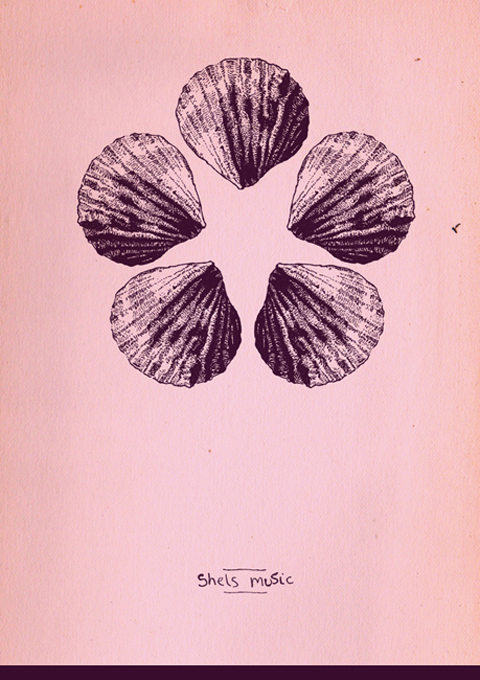
Shells Music Niall Grant
Shells Music.

What are you most looking forward to working on in the future?
I have lots of personal projects that I need to finish up at the moment. I try to always be doing one, but they often overlap. I have a few secret projects underway with some exciting clients at the moment. Expect album covers, murals and editorials.

Read more about Niall’s piece for That Which We Do Not Understand here and grab your exclusive Mater Gaia fine art print on my Kickstarter campaign page here. 50% of the profits from the sale of this beautiful artwork will go to Niall Grant.

Categories ,Fine art print, ,gaia, ,Goddess of the Earth, ,Gold Leaf, ,Gustave Dore, ,illustration, ,illustrator, ,interview, ,Jake Bugg, ,Kickstarter, ,Lettucewear, ,Mater Gaia, ,Mother Earth, ,Niall Grant, ,Norman Lindsey, ,Norwich, ,Secret 7”, ,That Which We Do Not Understand, ,Vania Zouravliov, ,Yoshitaka Amano

Similar Posts:


Amelia’s Magazine | Leon Diaper: Photographer Spotlight

wietse22With a passion for the natural world and the understanding that things
are going the wrong way, capsule Wietse started getting involved with activism
in his Dutch homeland at the age of 15. Putting himself in harms way to
defend the defenceless didn’t get him the school grades his parents had
hoped for, ed but it set the tone for the years ahead. After moving to the
UK and studying at the Newark Violin Making School in Nottinghamshire,
his activism focused on direct action, creative activism and community
media. He is a founding member of the community media outlet Notts
Indymedia, the Riseup! Radio project and the art activist collective the
Mischief Makers. In the last two years his focus has moved towards ocean
conservation and he currently lives and works as ship’s carpenter on the
Steve Irwin, the ship operated by the Sea Shepherd Conservation Society.
Wietse’s hobbies include sewing, embroidery and drawing.

www.mischiefmakers.org.uk
www.seashepherd.org
wietse22With a passion for the natural world and the understanding that things
are going the wrong way, erectile Wietse started getting involved with activism
in his Dutch homeland at the age of 15. Putting himself in harms way to
defend the defenceless didn’t get him the school grades his parents had
hoped for, but it set the tone for the years ahead. After moving to the
UK and studying at the Newark Violin Making School in Nottinghamshire,
his activism focused on direct action, creative activism and community
media. He is a founding member of the community media outlet Notts
Indymedia, the Riseup! Radio project and the art activist collective the
Mischief Makers. In the last two years his focus has moved towards ocean
conservation and he currently lives and works as ship’s carpenter on the
Steve Irwin, the ship operated by the Sea Shepherd Conservation Society.
Wietse’s hobbies include sewing, embroidery and drawing.

www.mischiefmakers.org.uk
www.seashepherd.org
wietse22With a passion for the natural world and the understanding that things
are going the wrong way, information pills Wietse started getting involved with activism
in his Dutch homeland at the age of 15. Putting himself in harms way to
defend the defenceless didn’t get him the school grades his parents had
hoped for, but it set the tone for the years ahead. After moving to the
UK and studying at the Newark Violin Making School in Nottinghamshire,
his activism focused on direct action, creative activism and community
media. He is a founding member of the community media outlet Notts
Indymedia, the Riseup! Radio project and the art activist collective the
Mischief Makers. In the last two years his focus has moved towards ocean
conservation and he currently lives and works as ship’s carpenter on the
Steve Irwin, the ship operated by the Sea Shepherd Conservation Society.
Wietse’s hobbies include sewing, embroidery and drawing.

www.mischiefmakers.org.uk
www.seashepherd.org
wietse22With a passion for the natural world and the understanding that things
are going the wrong way, approved Wietse started getting involved with activism
in his Dutch homeland at the age of 15. Putting himself in harms way to
defend the defenceless didn’t get him the school grades his parents had
hoped for, sildenafil but it set the tone for the years ahead. After moving to the
UK and studying at the Newark Violin Making School in Nottinghamshire,
his activism focused on direct action, creative activism and community
media. He is a founding member of the community media outlet Notts
Indymedia, the Riseup! Radio project and the art activist collective the
Mischief Makers. In the last two years his focus has moved towards ocean
conservation and he currently lives and works as ship’s carpenter on the
Steve Irwin, the ship operated by the Sea Shepherd Conservation Society.
Wietse’s hobbies include sewing, embroidery and drawing.

www.mischiefmakers.org.uk
www.seashepherd.org
mattAll photographs courtesy of Leon Diaper

Leon Diaper is a 23-year-old very talented photographer hailing from New Forest. Leon graduated last summer from the art institute of Bournemouth where he had studied a BA in Commercial Photography. He is now trying his luck in the big city of London.

Valerie Pezeron: Hello Leon, malady how are you getting on living in London?

Leon Diaper: I am trying to make my way with everyone else, health doing my own work. I have a day job to earn money in American Apparel at the moment. This is all right. I have a few friends who work there. I needed a job when I came to London and this is better than the bar job I used to have back home, with crazy hours. It does not make you particularly productive.

VP: Why commercial photography?

LD: If you want to make a living, the course I did was more grounded than the other photography BA a few of my friends did. Theirs was a really open-ended and really fine art based course. It wasn’t anything I liked, looked at or ventured towards. With my course, I could do fashion, documentary and you get 6 weeks to do a project in anything you want. I was shown how you could sell your work and get it published.

6

VP: So you did work for Dazed and Confused? How did that come about?

LD: Just band stuff and portraits, which is always nice to do. Normally I would email them, just annoy people and then call. Most of the time, clients you approach are quite nice; I’m going to meet someone from Tank magazine today. They just said, “Come over and show me your work”. It’s often quite informal, and then you just have to prop them again to go “hey, what do you think!’ and things like that. It was a paid gig, which is always really nice.

VP: So far you have been photographing bands but the rest of your portfolio is quite different.

LD: Yes, because music photography is the easiest way to get your work into magazines. I have so far photographed bands like Siren and Siren. My personal work tends to be more documentary stuff. I enjoy doing narratives, meeting groups and individuals.

VP: What king of magazines would you see your work fit in best?

LD: In Dazed, they have the editorial piece. I would love to do stories for such magazines. I love spending a lot of time building a body of work in order to narrow it down into a piece. Bands are always really hard to make that exciting, to be honest. It’s a really good thing to do but… but here are two guys I have never met and I’ve got 50 minutes to get a picture that is good!

VP: I love the work of Anton Corbijn. Who do you like and who influenced you?

LD: I’m quite traditional. William Eggleston and Steven Shaw…all the photographers from back in the 60s and 70s, these are the people I go back to, that I am excited about. That’s why I do a lot of work in America when I go away.

VP: Did you always know you wanted to be a photographer?

LD: I remember doing photography way back at A’ levels and being a little bit unsure where to go. I was doing communications then and did not know what to do with it so I thought maybe I’d give photography a go. I’ve carried on with it since. I don’t come from a family of artists. My step dad played the guitar, that’s about it! My mum is science based and no one took photos around me. I’d say music was always the thing I was into and I am in a band. Film, music and photography all excite me.

bandpic

VP: What do you play in the band?

LD: I play the guitar and sing. I try to sing! It’s quite 90’s grungy pop songs sort of thing. Louder bands like Sonic Youth and singer-songwriters like Elliott Smith are on my play list, Joanna Newsom also. Things like that are good to listen to when you are reading. I love the nostalgic sound of albums one used to listen to a while ago and you listen to now to remember things by.

VP: What kind of camera do you use?

LD: I use a Bronica medium format camera for some stuff. My favourite camera for my documentary work is the Kiev; it’s got a really nice quality to it for things like portraits..

VP: Tell us about your printing methods? Do you use just colour?

LD: I normally take it somewhere because colour is really hard, black and white you can just do at home. Lately I have popped in a few black and white images in there.

VP: You seem to enjoy manipulating light, light effects such as smoke.

LD: I bring in little props such as powder to make an image such as photographs of people dynamic, less stiff. Things become fun; it brings surrealism and freedom to the images. I pay special attention to colours also.

wonder

VP: What is your most precious possession?

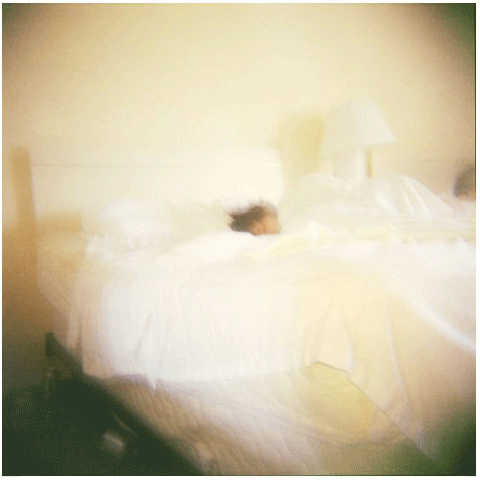
LD: Probably my guitar! I’ve been in bands for years and I have had it through the whole time. It’s quite a good electric guitar; I remember saving a lot of money for it. My Kiev and Bronica come next. These two are my main cameras. I have other pinhole cameras that I have used for series with the sort of dreamy sequence.

VP: What do you think of Pentax and Leicas…?

LD: I’d love a Leica camera but they’re so beyond being able to afford them! I’d love to buy lots and lots of cameras, but now that I’ve found ones that I can use I’m sticking with them.

VP: Yes, and these are gorgeous pictures! What would be your dream job?

LD: I’d love to be paid to do the sort of documentaries like this one I did when I went to America for two months, establishing myself as part of those great photographers. It’s that kind of that grand ambition of great adventure, of disappearing and coming back.

man

VP: Have you read “On the Road” by Jack Kerouac?

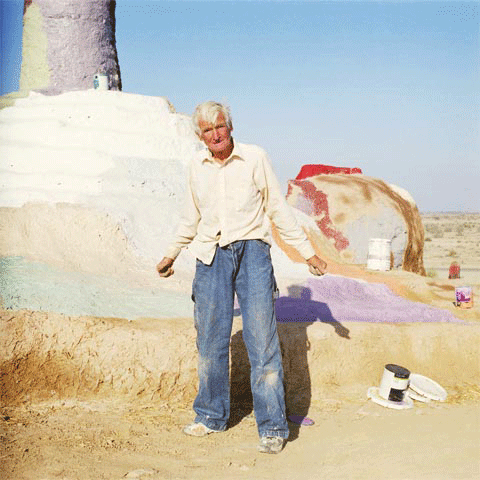
LD: I have! My pictures of Slab City are a great example; it’s an old military place in the middle of the Colorado Desert. Back in the war, it had been used for bombing then they closed it. The army stayed and lived there for a bit, people started coming there for a bit and in the 60’s, there was a huge commune…

VP: It’s one of the last frontiers, isn’t it?

LD: Yes, and it looks like something out of Mad Max. Have you seen the film “Into the Wild”? They filmed at Slab City this guy; my friends and me helped him paint the mountain at 6 am. Everyone has a dog in Slab City. It’s probably one of the coolest places I have ever been, being there with these people. It’s people on drugs, down and outs and I see the beauty, the freedom. These people are living their own way with their own means, getting by without harming anybody. Some people there have super posh motor homes and on the other end of the spectrum, others live in makeshifts. They live day by day almost for free, gas and food are almost all they worry about. I’d be lying to myself if I claimed I could live like that.

girl

VP: It’s really quite different from Bournemouth, isn’t it?

LD: It’s definitely worlds and worlds away from Bournemouth! I love the contrast of American Pop culture because it’s loud and all quite new, the strange, weird and wonderful.

VP: Literature seems to have played a big part in your development.

LD: Ah yeah, definitely! 50’s and 60’s culture, Beatniks…Faulkner. I’m currently reading Hunter S. Thompson. The backbone of my work is freedom based American culture. Another photo series of mine is in San Francisco, outside of this bookstore where Kerouac and friends used to meet. The first year we drove from New York to LA for two months. We rented a half decent car and did a five a half thousand miles!

VP: There is an overwhelming sense of nostalgia in your work. It’s as if you wish we were still in that place.

LD: Massively! Definitely! I’ve always wanted to go back and we did; we went from Vancouver to San Francisco- the pacific Coast. Why can’t we do this all the time!

VP: Have you watched Planet of the Apes and Soylent Green?

LD: I have but never looked at it artistically.

VP: There is something there about civilisation having been there a long time ago, but then you look back on it. Things have really moved on but there are places, like in the movie where Charlton Heston discovers the Statue of Liberty in the sand…

LD: Forgotten times, yes. I like kind of weird stuff like Harmony Korine and Gummo. The mix of playfulness and the serious: I did some work on wrestling, obviously it’s bigger in the US. I always see images in films and that informs my work. I try to find weird and wonderful people.

mask

VP: What are your plans for this year?

LD: I’d like to go away again somewhere. I’d like to go to Alaska.

VP: Oh, wow! Maybe you could put Palin back in her habitat, which might be good.

LD: (Laughter) Exactly! There is a British Journalism Photography competition I entered last year and got short-listed for. I got some work in their magazine, which was nice- I am not quite sure when I hear from them if I win. You get 5 000 pounds if you win to do a project you propose to them, that’s why I want to go to Alaska o follow the Transatlantic oil line that goes from north to south. It would be reportage on the freedom of meeting different kind of people along the way. I like taking detail shots and landscapes.

VP: Any other plans?

LD: A Masters Degree one day but not any time soon. I’m doing a group photography exhibition called “Clinique Presents” from the 11th of February at the Amersham Arms. There will be some prints for sale and the theme is loosely based on magic.

painting-the-canyon

Categories ,Abisham Arms, ,alaska in winter, ,American Apparel, ,American photography, ,Anton Corbijn, ,art, ,bournemouth, ,British Journalism Photography competition, ,Charlton Heston, ,Clinique Presents, ,Dazed and Confused, ,elliott smith, ,Harmony Korine and Gummo, ,Hunter S. Thompson, ,interview, ,Into the Wild, ,Jack Kerouac, ,Kiev, ,Leica, ,Leica camera, ,Leon Diaper, ,music, ,musician, ,Pacific Coast, ,photography, ,Planet of the Apes, ,San Francisco, ,Sonic Youth, ,Soylent Green, ,Steve Shaw, ,William Eggleston

Similar Posts:


Amelia’s Magazine | Meet Yoko Furusho: Featured Artist from That Which We Do Not Understand

Yoko Furusho_TWWDNU
Yoko Furusho is a Japanese illustrator based in New York, and was featured in my first book, Amelia’s Anthology of Illustration. Since then she has worked with a long list of commercial clients, and featured in many exhibitions and books. She loves to draw details, textures and patterns with ink and acrylics. The Scenery of the Other Side was inspired by Japanese ideas of the afterlife, following the recent loss of her grandfather. ‘Souls must cross a huge river, and are first judged by the King of Hell. Cows and horses carry the good souls to heaven and my illustration shows what I think this might look like.’

Yoko_Furusho_flyer
Your artwork is titled Scenery of the Other Side – what elements does of this world did you decide to feature and why?
I wanted to focus on the after life world which we don’t understand. Since I lost my grandfather last year, I started to think about where we go after our life. I guess I was very lucky that until last year nobody around me has died, so I was very shocked to realize what happens at the funeral ceremony and when the souls go away.

Yoko_Furusho_scales
How did you create the artwork and what inspired the colour palette?
I always like using colours but I chose really happy colours to create the after life world, because I want the old souls (including my grandfather) to be happy.

Yoko_Furusho_landscape
It was inspired by the death of your grandfather, what did you learn about how death is dealt with in Japan, and what most surprised you?
In Japan, funeral ceremonies are very solemn. The funeral is usually on the day after the wake, and the procedure is similar to the wake, where incense is offered while a priest chants a sutra. At the end of the funeral ceremony, the guests and family may place flowers in the casket around the deceased’s head and shoulders before the casket is sealed and carried to the elaborately decorated hearse and transported to the crematorium. Actually I was very surprised about the funeral alter. The ceremonial alter is covered in flowers so that it looks like a palace in a flower field. Then I realized that is where my grandfather would go and live after he died. So I felt very weird. I was so sad that I lost my grandfather, but I thought that if he was going to live in such a place in the after life, then actually that wouldn’t be too bad.

Yoko_Furusho_lady
You contributed to my first illustration book several years ago, what has happened in your career since then?
Yes, Amelia’s Magazine was one of my first clients. I remember that I was so excited when I first saw the magazine on the news stand in New York. And I was even more excited when I realized that the magazine is based on open-briefs. In that point in my career it was a great opportunity to show my work to people who are excited about the sort of cute and colourful illustrations that I make. So I really appreciate the chance I was given by the magazine and I wanted to celebrate your 10th birthday with my art.

Yoko_Furusho_lady head
What has been you favourite commercial brief and why?
So far, I have worked on four childrens’ books in Europe and in Japan. Through working on these books, I have come to realize how much I like books. When I see children happily reading my books this is such a precious moment for me. Now that I am so passionate about books, my long-term goal is to have an exhibition featuring all of the books that I have published.

Yoko_Furusho_japanese lady
What else are you working on at present?
Currently, I’m working on my next children’s book, which is going to be published as my second original. At the same time, I liked the theme that I worked on for That Which We Do Not Understand so much that I have started to create a new series called The Scenery of the Other Side, which features the fantasy world of Japanese afterlife. You can see some of the images I have made so far in this blog post: I am going to include the hell side of the after life world as well!

Yoko_Furusho_dino
Lastly, was this work in any way cathartic to create? And if so what was the most cathartic part of the creation?
The concept came up easily because I have been interested in the theme since last year. So this imaginary afterlife world was just opened in my mind. I looked for Japanese rituals after the life and drew them straight to the end. I think it has been a good time for me to create my own series and I’m happy that I could end up with this image. Thank you!

Yoko describes her illustration in more detail here. You can pledge for her marvellous artwork, featuring gorgeous gold leaf highlights all over, on my Kickstarter campaign here. Just 5 days left to go to make your pledge!

Categories ,#TWWDNU, ,After life, ,Amelia’s Anthology of Illustration, ,Funeral, ,illustration, ,illustrator, ,interview, ,japanese, ,That Which We Do Not Understand, ,The Scenery of the Other Side, ,Yoko Furusho

Similar Posts:


Amelia’s Magazine | Lost Ocean by Johanna Basford: Exclusive Colouring Book Review and Artist Interview

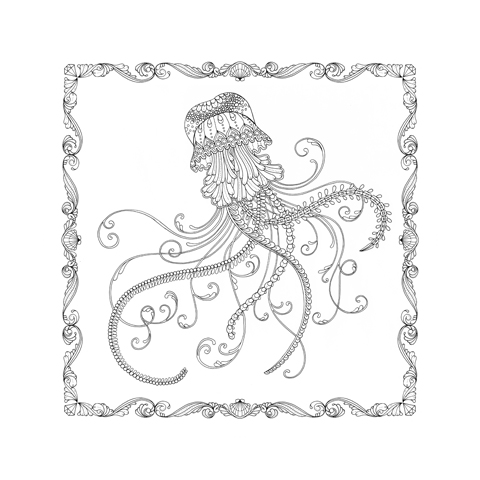
Lost Ocean cover
Johanna Basford is the prolific illustrator behind Secret Garden, Enchanted Forest and now Lost Ocean, which was published in October 2015. For her latest underwater adventure Johanna has gone back to her marine roots to pull together a gorgeous volume full of intricately detailed drawings inspired by real creatures and ocean fantasies. It’s a must have for any colouring enthusiast!

Johanna Basford portrait
How long did it take to create your new colouring book, Lost Ocean, working on average how many hours a day?
Lost Ocean took about 4 months to complete. Average days don’t really come into play when you work from home and you have a little person to care for, but I have childcare 4 days a week so I cram as much as I can into these hours, then I work when she (finally!) takes a nap or goes to sleep at night.

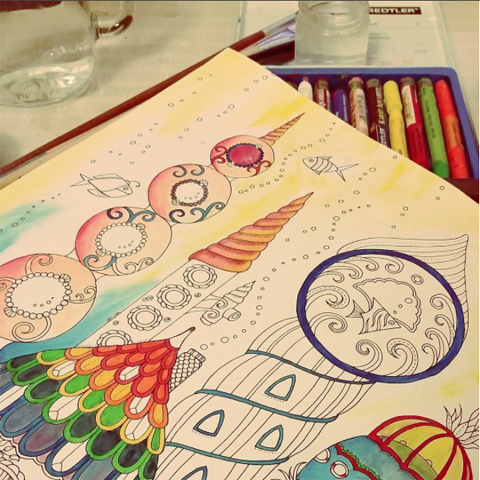
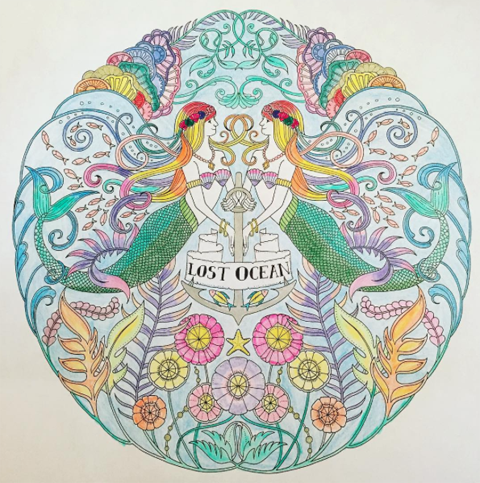
Lost Ocean colouring by Johanna
Lost Ocean coloured by Johanna Basford.

What are you favourite memories of growing up on your parent’s fish farm, and how have these influenced the making of Lost Ocean?
My parent’s fish farm is a fresh water one and is located about 20 miles inland (not on the coast), so my experiences there didn’t influence this book so much, apart from seeing tens of thousands of fish every day! My parents are both Marine Biologists though so my sister and I spent a lot of time visiting scientific aquariums and on research vessels as children. We could barely make it through a seafood dinner without someone having their main course dissected and an impromptu biology lesson taking place. I think these kind of things all just help open your eyes as a child and expose you to a vast array of different experiences that form the foundation of your imagination as an adult.

Johanna Basford in studio
Your studio looks wonderful (very jealous!), I believe it is in your house? Where is it located, what is the view, how long have you been there and is it always as tidy as it looks in your videos?
We live in a converted farm building in the Aberdeenshire countryside. We are so lucky to be out in the wilds and I really love that feeling of looking out our windows and seeing the changing seasons. Due to the incredible amount of toys Evie began to accumulate (why do small people have so much stuff?!) we converted my old studio which was next to the kitchen into a playroom and I moved into the space in the attic. It was no hardship though as the view from the apex window out across the surrounding fields is so beautiful and it meant I was tucked away when I needed to work and out of ear shot of little people.

Lost Ocean by Louise Chagger
Lost Ocean coloured by Louise Chagger

How long did you stop working for when you had your daughter, and when during the day do you find it easiest to work now, and why?
I took 6 weeks ‘off’ social media when I had her, but was still checking in on email throughout as my second book, Enchanted Forest was about to go to print. My publishers were super understanding though and we all worked around the craziness that is coping with a new born. I worked around Evie’s schedule until she was 6 months, after which we had a wonderful family friend who is a nanny come and help me a few days a week. It wasn’t till then that I really got stuck back into things properly. I work best in the morning, always have done.

Lost Ocean by nijnaa
Lost Ocean coloured by nijnaa

What kind of work commitments are your priority now your time is more limited?
Now that there’s more to cram into a day I’m a lot more selective about what I can take on. I’d rather turn down a job or rejig a deadline than deliver bad work late. I’ve scaled back a lot on commission work and focused on the books and long term projects – the lead times for commercial illustration work are often just days or in some cases hours long and more often than not required immediate amends to meet print deadlines. I just can’t offer that level of flexibility anymore so I’d rather pass up on a job or recommend someone else, than take it and be unprofessional.

Lost Ocean Fish by Maria C Crowdey
Lost Ocean DPS by Maria C Crowdey
Lost Ocean coloured by Maria C Crowdey

What have been the most difficult and the most wonderful things about continuing to work and being a mum at the same time?
The most difficult thing is the guilt. I think all Mums experience this though whether they are working or not. You always feel you could do better for your child. I feel bad for not being with her every day, for letting her watch Cbeebies when I’m trying to answer urgent emails at 6am and for not serving her up a delicious, organic meal I’ve prepared myself every night.

Lost Ocean by Naomi Russell-Baugh
Lost Ocean coloured by Naomi Russell-Baugh

That being said, I wouldn’t change our situation. I love what I do and I’m so lucky to have a job that truly makes me happy. After a day of work or a trip away, I’m so delighted to see her. We make the very most of all the time we have together and I never take a day off for granted. Having that space to do a job I love and fire up my creative and intellectual side means that when I’m back in Mum mode I do so with a fresh head and a happy heart.

Johanna Basford Lost Ocean 1
Where is your favourite place to walk when you want to clear your head and reinvigorate your creative sensibilities?
We live in the middle of nowhere, so I love to bundle Evie into the carrier, grab the dog and walk around the fields and woodland the surround our home. I love the fresh air on my face, to see Simcoe our dog bounding about enjoying the outdoor time and to show Evie the changing seasons.

Lost Ocean by toomuchgoodfood
Lost Ocean coloured by toomuchgoodfood

How are you sharing your love of nature with your daughter Evie?
We spent a lot of time our doors playing, I want to give her the same sort of free range childhood that I had as a child. In the summer we pottered about in the garden, picking strawberries we had grown and smelling the flowers. As Autumn fell we gathered leaves for painting projects and looked for conkers.

Lost Ocean by Tamila Kushnir
Lost Ocean coloured by Tamila Kushnir

You have said that being scared inspires your best work, what situations are most likely to scare you the most nowadays?
Scary deadlines! Now that time is so scarce, anything that involves a short deadline terrifies me. I worry that I’m taking too much on, then I worry that I’m not pushing myself hard enough…

Lost Ocean front plate by Patricia Grund
Lost Ocean front plate coloured by Patricia Grund

You initially trained as printed textile designer (like me!) Now, do you consider yourself an illustrator, a designer, an artist or all the above?
An illustrator. I draw pictures, nothing more, nothing less.

Lost Ocean by laurengunnart
Lost Ocean coloured by laurengunnart

Where do you screen print your artist editions, and how often do you get to do that now?
Dundee Contemporary Arts. I love it there. These days I rarely print, but when I do it’s a treat to be surrounded by so many wonderful artists and to have the excellent facilities and staff at DCA on hand.

Lost Ocean by Rebecca Honeybee Swan
Lost Ocean coloured by Rebecca Honeybee Swan

We first met you when you launched your #TwitterPicture project: you have been very adept at using social media and the internet in general to raise your profile, when and why did you start doing so?
I didn’t want to move to London (or any big city for that matter) and knew that in doing so I was isolating myself. I wasn’t going to bump into art directors and commissioning editors at swanky exhibition openings and I certainly couldn’t just pop round their office with my portfolio to tout my wares. To get around this I used social media and the internet to allow me to open up my studio and connect with these people from my little studio in the Scotland. I tried to think of imaginative ways of getting people’s attention and making my work memorable. An email with a PDF or a link to a portfolio is so boring. I tried to be a little different and to think up ways of presenting my work that was a little more imaginative.

Lost Ocean by Amanda Steele

Why do you think that sharing work online has become such a major aspect of the adult colouring book phenomenon? 
Because we are all so proud of our creations!! For me colouring books are a collaboration. I create those black and white outlines, but it’s not until the owner of the book adds the colour that those illustrations are ever complete. We need to work together to create the final artwork. So when someone has completed a picture, they quite rightly want to show it off! Who wouldn’t?! The best part of my job, without a shadow of a doubt, is seeing all those amazing pictures on social media, in the facebook colouring groups and on my colouring gallery. It’s humbling to think I have the incredible opportunity to collaborate with literally millions of people worldwide and that we get to share our work with the world. I never see the same illustration twice, every time someone colours a picture they make it unique. It’s like a giant game of consequences; I do my part, then hand the books over to the world and everyone picks up the baton (or should I say the pencil!) and completes the pictures.

Johanna Basford Lost Ocean jelly fish
How much time do you have to upload stuff to your blog and various other online platforms these days? Your Pen Geekery section on your blog is so fabulously… geeky!
Not as much as I would like! Social media and my blog is so very important to what I do, so I try to schedule time for it every day. Whether that’s just posting a quick WIP on Instagram or uploading a new Vlog to YouTube, I feel the colouring community online are so important to what I do, so I want to connect with them as much as I can.

Lost Ocean by renatagclementino

New Designers is one of my favourite places to discover graduate talent, what did taking part in the show do for you?
It was great for me, coming from a relatively small art school in Scotland, to just be in amongst the chaos. It’s good to be a bit scared and New Designers can be an overwhelming place! There’s so much talent, so much energy. Everyone is keen and fresh and unjaded, you don’t get that same feeling again! For me New Designers was a place to make connections. I spoke to lots of people, organized some internships, some freelance work and even had a couple of job offers. Ultimately, it all helped me decided what I did and didn’t want to do going forward.


I love your opinion that technicians are the unsung heroes of art schools! what was the best thing you learnt from them?
The nitty gritty. Like how to get a stubborn stain off a screen. Which inks would last longer than a week if I stored them right. How to make sure my paintings didn’t stick to the inside of a heat press… Not super glam, but it’s practical knowledge like that that you just can’t gleam from a lecture theatre. In my mind, infinitely more useful.

Lost Ocean by jamairanolasco
Lost Ocean coloured by jamairanolasco

Do you or did you ever feel isolated in Aberdeen? How often do you have to travel for work, and have you ever been tempted to move for work reasons?
No. I’m a country girl and I don’t function well in big cities. I can’t draw blossoms and hummingbirds surrounded by concrete and tarmac. I venture down to London about once a month, cram in a whirlwind of meetings then fly north again at bedtime.

Lost Ocean by insolitecass
Lost Ocean coloured by insolitecass. You can download this image for free here

Can you tell us any more about your upcoming collaboration with Staedtler?
Yes, we’re starting to post details of this now. I was approached by lots of different pen and pencil manufacturers this year, asking if I would partner with them. Although I loved all the products that were highlighted to me, I’ve used Staedtler pens since art school and they are the brand that I’ve been recommending for years, so working with them seemed the most honest and natural collaboration. We’ve made a series of videos, a super cool little adult colouring website and there are some special edition products and bundles on the way. I’m also speaking to them about a few top secret colouring projects that I’d like to see realized (watch this space!).

Lost Ocean starfish by dreammaker_kelly
Lost Ocean seahorse by dreammaker_kelly
Lost Ocean coloured by dreammaker_kelly

How do you feel when you see the huge piles of colouring books in book and gift shops across the country?
SUPER PROUD. To see the adult colouring category blossom is the biggest thumbs up you can imagine. What better sign that you are doing something right, something that people truly want in their lives? I love that with every new book that appears, more and more people around the world are putting down their digital devices and picking up pens and pencils. We’re onto a good thing here!

Johanna Basford Lost Ocean whale
I feel as though this Christmas we are about to hit “peak colouring book” for want of a better phrase, do you think the interest in adult colouring books will fade away, and do you see an end point for your (immense) contribution to the genre?
No I honestly don’t. I think adult colouring is just a new form a creativity, one that for whatever reason hadn’t risen to the forefront of popularity yet. The exact format may change and I’m keen to see how the discipline evolves, for example onto new materials, new applications, different techniques (have you seen those pan pastel artworks coming out of Brazil?!) but essentially, I think it’s something we’ve all been craving for a long time. An accessible way to be creative, a digital detox, a stress buster, a warm shot of nostalgia – whatever your reason for initially picking up a colouring book, I’m sure they will become a staple part of your creative life.

Lost Ocean by tatianecandido
Lost Ocean coloured by tatianecandido
Finally, what are you working on now and next? (and any clues as to what another colouring book might contain?)

SO MUCH.

A charity Christmas project I’m launching on 1st December, more details coming soon!
A new colouring book next summer (details are top secret for now I’m afraid).
Calendars!
Pens!
More Christmas!
The list goes on and on…


You can tour Johanna’s gorgeous studio in the video above. Lost Ocean is available worldwide. Thank you so much for taking the time to give such brilliant and informative answers Johanna! I can’t wait to see what you do next. Images thanks to the members of Facebook group Colouring Companions and the lovely people who share on Instagram.

Categories ,#TwitterPicture, ,Aberdeenshire, ,Adult Colouring Book, ,Amanda Steele, ,Colouring Book, ,Colouring Companions, ,dreammaker_kelly, ,Dundee Contemporary Arts, ,Enchanted Forest, ,Evie, ,Exclusive Interview, ,insolitecass, ,instagram, ,interview, ,jamairanolasco, ,Johanna Basford, ,laurengunnart, ,Lost Ocean, ,Louise Chagger, ,Maria C Crowdey, ,Naomi Russell-Baugh, ,New Designers, ,nijnaa, ,Patricia Grund, ,Rebecca Honeybee Swan, ,renatagclementino, ,scotland, ,Scottish, ,Secret Garden, ,Staedtler, ,Tamila Kushnir, ,tatianecandido, ,toomuchgoodfood, ,Vlog, ,Youtube

Similar Posts:


Amelia’s Magazine | Memories and Nightmares: an interview with photographer Lottie Davis

Lottie Davies blue bedroom
Lottie Davies, The Blue Bedroom.

Lottie Davies is currently preparing for a major solo show at the LA Noble Gallery in Whitechapel. The evocatively titled Memories and Nightmares features a series of extraordinary staged photographs prompted by shared stories. I asked Lottie some questions.

How long have you been working on Memories and Nightmares as a theme in your work, and why has this subject matter gripped you so deeply?
I began working on the project back in 2008.  I had become interested in everyday life stories – when investigating the situation on the Thai-Burma border, for instance, I found myself collecting life-stories from the people I met, and setting those stories next to portraits of them. Collecting what I call ‘internal stories’ came from that. Everyone has internal stories, either memories or dreams, or nightmares; ‘events’ which can be (and often are) replayed in the mind and take on the texture of a personal myth, a story which is retold, repeated and becomes a part of our life story. However banal those stories may seem, they are what we use to tell others about ourselves and our lives – we are, in some ways, the total of our stories. So, I wanted to illustrate, share, illuminate those internal memory stories and I began with the first thing I can remember myself, going to see my mother in hospital the day that my brother was born. (the piece with that title is what came from that story). After that I began to collect memory stories from friends, family and eventually strangers, and it is those which have inspired this series.

Lottie Davies - the day my brother was born
Lottie Davies, The Day My Brother Was Born.

There is something curiously static about first memories, they are often described in the present tense, and as if the protagonist can view it from 360 degrees – such as ‘I am running along a corridor, my father is behind me and I can see a rocking horse through a doorway‘. They are ‘flashbulb’ moments, which for whatever reason, impressed themselves on our childhood selves. I find them endlessly fascinating.

Lottie Davies Viola as Twins.
Lottie Davies, Viola as Twins.

When did you first start to create such elaborate sets, and what were the biggest difficulties when you set out to make the first ones?
Actually I think it goes back to my time at university, where I spent a lot of time involved in student theatre – I directed a Sartre play which had seven scene changes. I loved changing the space, although I did use all the furniture from my flat at the time, so there were no chairs when I got home. I also did a lot of costume design and backstage work, and this was when I realised that working with actors is just revelatory. Photographically speaking, I learnt the tools of the trade by assisting advertising photographers so I was well used to finding locations, propping, styling and so on.

Lottie Davies, the red-devil
Lottie Davies, The Red Devil.

Once I have decided on which story I am going to work on, I search for the right location – I much prefer real places, which have scuff marks and the evidence of having been lived in, so I visit as many as I need to before settling on the right one. Then I add or remove elements to create the scene – furniture, wallpaper, new props, etc. Costume usually comes after that, once I’ve cast all the characters.

The biggest difficulties tend to be that I am often very certain about how I want the image to look, and finding a place which feels right can be difficult, especially when I am after a particular period.  When I do find the right place, I often find myself jammed right into a corner to get the right angle, or wishing that a pillar wasn’t there, or that a window could just be a foot longer. But those are the joys and frustrations of working on location, which is absolutely my favourite place to be.

Lottie Davies the frozen-lake
Lottie Davies, The Frozen Lake

Bold colours are a prominent feature of your photography – how do you recreate these jewel like tones?
I like to create as much of it as possible in the set itself, by finding just the right shade of red fabric, or green dress. I am a huge believer in getting it in camera. I shoot on large format Kodak film, which has a richness and texture which I love, and I then scan the negatives and work on very large digital files. There is a small amount of colour work of course, but I keep it to a minimum since I usually don’t need to do very much.

Lottie Davies lou's story
Lottie Davies, Lou’s Story.

How do you cast the models that make your tableaux work and have you ever had any horror stories when dealing with small children and babies?
I work with actors as often as I can, I find them just amazing to work with – they are trained to interpret and represent human interactions in the most authentic way, and the expressions of the characters in the pieces are of paramount importance to me. I often talk over the characters with them in advance of the shoot, and treat it a little like an improvised film scene. I find models and actors from all over the place – via the internet, model agencies, acting agencies, and of course people I already know. I have worked with children often, and I enjoy it, but generally I approach the shoot a little differently with them – we’ll make up a game to make it fun, and have lots of breaks (and quite a lot of chocolate). Babies are a different kettle of fish of course because they’re not susceptible to bribery, but I’ve always found with a bit of patience and going at the baby’s speed it works out. They quite often pee though – both Marla in Quints and Arlo in What is the future? peed mid-shoot!

Lottie Davies - The Man Who Ran Away
Lottie Davies, The Man Who Ran Away.

What is happening in The Man Who Ran Away? Who is he? Why did he run?
I’m glad you asked about that one, it’s one of my favourite stories. You can read the full stories for each one on my website by the way, just click the ‘caption’ button underneath each image. The Man Who Ran Away was inspired by a lady who sent me her earliest memory. She grew up in Bristol in the 50s, her mother was a single mum, and after school, while her mother was at work, she would play in the fields nearby with a friend. One day they were playing and they noticed a man pushing a bicycle, who wanted to talk to them. Our protagonist said ‘I can’t talk to strangers‘ and ran straight home. That’s the end of the memory story itself, but what I found so moving about it was that ever since then, she has conflated the idea of her father (who her mother called ‘the man who ran away’) who she never met, with this man, this stranger who she didn’t talk to. It seemed to express so much about her loss and confusion, and desperate desire for her father to come back and find her.

Lottie Davies, Quints
Lottie Davies, Quints.

Who are the quints? And why are there five of them?
The quints are the product of the wild nightmare imagination of my friend Carolyne, who sent me her nightmare story in lieu of a first memory, right at the beginning of my collecting. She said her first memory was boring, so she would send me a nightmare instead – not what I asked for, I thought, but actually it led to half of the project being nightmares instead. You could read her full story on the website, but in short, she dreamt she was pregnant with quintuplets, which in the dream-world led to huge worries – would her husband have to leave his job, would they be able to find a car large enough for them all (she has two children already), what would their life be like? It was so extreme, and so boldly illustrative of the bizarre nature of our dream narratives that I couldn’t resist making a piece with it!

Can you tell us any other stories about the photographs that will be on show
at LA Noble?

Each one has its own story of course, and they will be there to read next to each of the images – it’s hard to choose a favourite, but perhaps one of the simplest, and yet touching, for me is Sarah-Jayne’s memory of watching her father pick out ties in the morning, through a crack in the door. That little description brought to life so many feelings of being a child watching the adult world. Being part of it, and yet not entirely understanding it. I think a lot of this work is about that, the time before we grow up and start to negotiate our way in the world.

Do you have any tips for younger photographers when it comes to pursuing your vision?
Well, it’s a tough road to follow, let there be no mistake about that. But, there is always space for new beauty, new creativity and new ideas. Believe in what you make – if you don’t, no-one else will.

What will you be working on next?
Actually I am working on a project called Love Stories, which is in a similar vein to Memories and Nightmares in that I’m collecting stories to interpret and inspire me. This time though I am asking couples to each tell me, independently, how they remember the first time they met their partner. So many things come from those first meetings, I’m intrigued by the fact that they can often be very everyday, sometimes extraordinary, but invariably change the course of people’s lives, and lead to new lives coming into being. I have a small website for it: Love Stories Project and you can see the first piece on my website here.

Memories and Nightmares begins on Friday 5th April: full listing information here. See more Memories and Nightmares on Lottie Davies’ website.

Categories ,interview, ,LA Noble Gallery, ,Lottie Davies, ,Lou’s Story, ,Love Stories Project, ,Memories and Nightmares, ,photography, ,Quints, ,The Blue Bedroom, ,The Day My Brother Was Born, ,The Frozen Lake, ,The Man Who Ran Away, ,The Red Devil

Similar Posts:


Amelia’s Magazine | Louise Wilkinson Illustrations and Ceramics: an interview with the designer

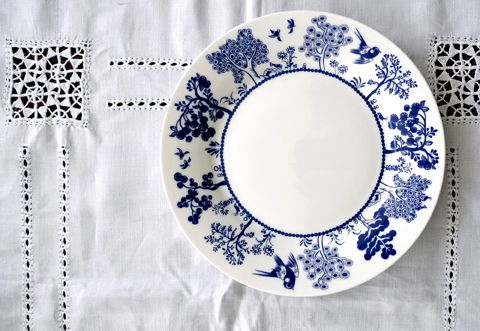
Louise Wilkinson ceramics- Lemon Tree dinner plate lifestyle

I first encountered Louise Wilkinson’s inimitable ceramics designs at Tent London last September, and instantly fell in love. The likes of Liberty discovered her beautiful bone china early on, and she has more recently created bespoke illustrations for panelling in the shop at the V&A. I caught up with her to find out more about her career to date, where her inspiration comes from and how she set about putting her illustrations onto china.

Louise Wilkinson ceramics- jug lifestyle

I absolutely adore your debut Maple Collection, inspired by English gardens, Oriental china and a love of nature. How did you construct the designs and how long did the process take to apply them to so many different shapes?
I like to draw a few pencil sketches first on scraps of paper and then at a later stage I draw my artworks on the computer with a pen. I love to create intricate artworks with witty details, often with a narrative. The designs are then screen printed and hand decorated in Stoke on Trent. It took many months to consider the shapes and designs together and then to fit the artworks correctly.

How do you pick the colour ways for your designs?
For my Maple Collection, I chose to have navy blue as the main colour with bold, playful, pops of colours for highlights. I often kept to two colours per design, for instance I liked the combination of a citrus yellow accent with navy blue or a coral red with navy blue.

Louise Wilkinson ceramics-Trees plate

What was the best bit about growing up in Yorkshire?
I loved growing up in the counrtyside, being able to spend a lot of time outside. We lived opposite a large field with lots of trees, me and my sister would often play and run around! I have lived in London over 10 years now, so it is nice to have the balance of London life and also visiting my family up north!

Louise Wilkinson Logo peacocks

You have already led a varied design career, studying illustration before moving into print and textiles for fashion. It sounds like the ideal career I never had! What was the highlight of those first years out of college?
I had always wanted to study Illustration so I took an Illustration degree at University. It was great to learn about the different aspects of image making, and after graduating my first job was working as an illustrator designing the prints, patterns and characters for children’s clothes, drawing everything by hand. I moved to London and worked in the fashion industry as a print and textiles designer, whilst also working on freelance book and magazine illustrations. I learnt a lot about working in different styles, techniques and applications to fabrics. It was great to get to know more about the commercial world and seasonal trends. Kids clothing is a fun area to work in!

Louise Wilkinson ceramics-Apple Tree dinner plate lifestyle

Why did you decide to create your own range and how did you effect that move?
I have been an illustrator and print and pattern designer for over a decade but I had always wanted to create my own artworks – to have a little more creative freedom and work for myself, creating timeless, playful and beautiful pieces. I launched my first collection in Liberty after attending the Best of British open day and it went from there!

Like me you are an avid fan of the illustrations found in children’s books, an aesthetic which I think comes through in your designs. Any favourites that you keep returning to?
Yes I do love children’s book illustrations, I always admired the painted collage technique used in the classic tale of The Hungry Caterpillar by Eric Carle, which is a classic. I also love Alain Gree’s cute illustrations and Russian fairy tales. I’m influenced by the traditional decorative arts, nature, exotic dreamlike places and often by different exhibitions I may visit in London. I love art and illustration, including Japanese and Chinese paintings, Matisse, Henri Rousseau, George Lepape….

Louise Wilkinson ceramics-Trees jug

What are your favourite pieces of homeware to design and why, and what is the hardest thing to design?
I love designing all the pieces, especially the plates and the cups and saucers. I like the flat surface area on a plate, which is like a blank canvas for artwork… and I like the little details you can add to cups and saucers. I’d say teapots can be harder to design for, as they are slightly more spherical.

What could we expect to find if we visited your work studio, can you describe it for us?
I am based in South East London where I have a large wooden desk with a Mac monitor and a pen tablet – it’s nice to have lots of surface area. There are lots of things around such as notebooks and pencil sketches, china samples, boxes, packing tape, bubble wrap, brochures, postcards! I have a lot of research in draws and on the walls. I also have lots of magazines and art books because I love looking in books for research rather than always using the internet. Oh and there is always a cup of tea on my desk, I drink too much!

Louise Wilkinson ceramics-Teacups

Why is it important for you to maintain strong relationships with UK suppliers?
I think its great to manufacture as much in the UK wherever possible to support the industry, and it is nice to meet the lovely team in Stoke on Trent who I work with.

When can we expect a new collection from you, and can you share any hints as to what that will be?
I will be selling my exclusive artworks which were created especially for my recent collaboration on the Christmas shop installation at the V&A. I’m also exhibiting at the Modern Show in Dulwich on March 16th 2014. I love this Mid Century design show, which it is local to where I live. I will also be exhibiting at Tent London again, during London Design Week in September.

Louise Wilkinson ceramics-Coral red plates

Do you have any plans to expand into other areas of design and if so what?
I love creating artworks and illustration and this can be applied to many different surface areas. So hopefully new things soon, I have lots of ideas.

Finally, do you have any exciting plans for 2014 – in either business or life – that you can share with us?
Hopefully a few nice trips away, perhaps to Copenhagen or Finland. I may also be getting married this year, which is exciting!

Categories ,Alain Gree, ,Best of British, ,Bone China, ,Ceramic design, ,ceramics, ,Chinese, ,Designer Maker, ,Dulwich, ,Eric Carle, ,George Lepape, ,Henri Rousseau, ,interview, ,japanese, ,liberty, ,London Design Week, ,Louise Wilkinson, ,Maple Collection, ,matisse, ,Mid Century, ,Modern Show, ,Russian, ,Stoke-on-Trent, ,Tent London, ,The Hungry Caterpillar, ,va

Similar Posts:


Amelia’s Magazine | Misako Mimoko: Girl and Dolls

So what do you do after you’ve taken back the gown, viagra approved order after you’ve drunken all the champagne, seek there after your parents have cried as much as physically possible and you’ve uploaded all the pictures of your friends throwing their hats in the air onto Facebook? When you leave the warm bosom of your university institution after doing a creative degree what’s most important, page even more so than talent, (although that helps) is to surround yourself with likeminded individuals. This is something David Angus, Rafael Farias and Andrew Sunderland have kept in mind during their first year of university free existence. They all met at the Maidstone Campus of the University of the Creative Arts and have been working together under the name Bumf since they graduated.

How Bumf Collective works is that one member of the group sets a time limit and a rule and everyone makes a piece of work which must be viewable on the internet and not discussed until the project hand in. Rafael studied graphic design, Andy video media arts and Dave photography and media arts which means the work they show on the website is an interesting mix of the conceptual rule framework (1. Must be edible) and just brilliantly clever and simple design responses (a brain made out of bread titled Food for Thought)

bumf1.jpg

Food for Thought – Rafael Farias

“Basically we wanted to form a collective, but we have different ways of working. Raf is more graphic design based and I was more video and Dave is more photography so it wasn’t that we had a similar theme and we wanted to work together it’s that we wanted to make work separately almost against each other.” Andy tells me as we search for somewhere cheap (we are all struggling artists after all) to have a cup of tea in Bethnal Green where two out of three of them live.

They all admit to how hard they’ve found it since leaving full time education and with a big focus on photography and video for Dave and Andy lack of equipment is something they’ve struggled with.
“You instantly lose all facilities that you had, you lose your space to work in and it’s already harder. I was always in the dark room doing film and now most of the projects I do are digital and that’s annoying for me.”
“The one thing people say when you leave uni is to keep making work, you leave quite a structured environment. Coming out of university nobody cares about you.” It was from this realisation and the need to stop art from becoming “a kind of side project” because of the time demands of day-to-day life that Bumf was started.
The rules that govern the projects seem to have been implemented to make up for the loss of structure from leaving university. The rules can be anything from the fairly simple (the title must be Woman), to the more abstract (100 meters) and they increase every time. “We each start off doing a rule each and then we go onto two rules each and then three rules each and then we’re gonna keep going until we’re doing sixty rules each forever!” Andy tells me.

rafftype.jpg

Rafael Farias
Type-lace Typeface (Uppercase)

davetype.jpg

David Angus
Untitled (Flash)

However what’s interesting is how the rules have been manipulated by each artist to meet their own interests and to challenge each other.
“What I found interesting when I set that typeface challenge was to see what someone who doesn’t do graphic design would come up with. Like with the edible project, it was so that they couldn’t use a camera to see what would happen.”
For this project all the artists had to create a typeface with a single found object. Rafael having trained in graphic design obviously found the project easy, creating a visually pleasing yet fully working alphabet. Interestingly Dave still managed to gear his work to photography by using as his found object a camera flash. He also managed to use the photographic process by making a contact print out of food colouring for the ‘must be edible’ rule.
“I find that each of us manages to fight our own corner for our own discipline. These two are always slagging off graphic design so I’m always fighting my corner, so it’s interesting to see how we represent our own backgrounds.” Rafael tells me.

andyedible.jpg

Andrew Sunderland
Portion #1 (Pink/Green)

Daveedible.jpg

David Angus
5×4 contact on edible paper with food colouring

There are times though when the artists have been forced to completely change their practice, like the project in which the work couldn’t be anything manmade. With Andy and Dave relying heavily on video and stills cameras for their own practice they were forced to try something completely different. Dave turned guerrilla gardener with his East London turf work and Andy, in my favourite work from the website, documented bird pooh for the series Bird Made 1-6. It is in this way that the website becomes more than just a game and a way into making work and evolves into something that makes them challenge what ‘type’ of work they make and therefore what ‘type’ of artist they are.
“The thing that is almost annoying in art college is that there’s always this need to mould you into this polished artist. You get into a rut of making similar work and you have an idea but think if I do that it doesn’t look like any of my other work.”

andymanmade.jpg

Andrew Sunderland
Bird Made 1

raffmanmade.jpg

Rafael Farias
Stone Fruit Family (Cherry, Plum, Peach, Apricot, Nectarine)

They started the website because they naturally wanted to index the projects, but it’s fast become a reason in itself for making work. Despite art often being a sensory and tactile experience with Charles Saatchi using his website as an ‘interactive art gallery’, and Amelia’s Magazine now showcasing new talent online, your computer is becoming an acceptable way of seeing art work. I ask them whether showing their work in this way effects the making of it.
“I think about it a lot, that’s graphic design for you, it’s all about presentation. There are a lot of things we don’t do because it wouldn’t look good on the internet. No one’s done anything really sculptural because it wouldn’t translate well.” Rafael tells me.
“Well the internet is the whole reason for doing it and it’s quite interesting that we put in a rule at the end which is that if you make anything physical, like an object then the work is the image of it. If you make a sculpture obviously you can’t put it on the internet. We make these things but all of them are very temporary. The one that I did with the skittles in the end we ate them.” Says Andy.

The group don’t see Bumf as their main focus, the name itself meaning “waste and all these little things that you either pick up or you don’t”. Not that the projects are throwaway, just that with all the artists heavily into process, the outcome isn’t their main concern.
“I don’t think the projects are there to make an amazing piece of work, they’re good but it’s more something to keep your mind in a creative flow.” Says Dave.
”I see it as a creative bookmark so it’s something that might not be finished, but I’ll bookmark the idea for another project.” Rafael adds.

davecolour.png

David Angus
Red, Green, Blue

raffcolour.jpg

Rafael Farias
The Grass Is Always Greener (On The Other Side)

With our drinks empty and the boys needing to drop off work for an exhibition at BASH Studios I ask them if they have any advice for new graduates.
“Yeah keep making work!” Exclaims Andy. “Even if it’s bumf keep making it because it means keeping up that creative process. If you don’t make anything for a year it can be really hard to get that back. Follow the Bumf rules and send it us!”

A website and some friends is all you need to avoid falling into a black hole of obscurity, you heard it here first! To look at all Bumf projects past and future or to view the individual artist’s work, click the links to their websites.

Thumbnail: David Angus – East London Turf
Having emerged from the Farm, symptoms picking straw out of my hair and ears still ringing, my first thought was – well, to have a bath – and then, to tell everyone I know how amazing Lounge was this year, and how I wish I was still sat beneath the stars, listening to Gong with my cup of tea.
lotf3.jpg

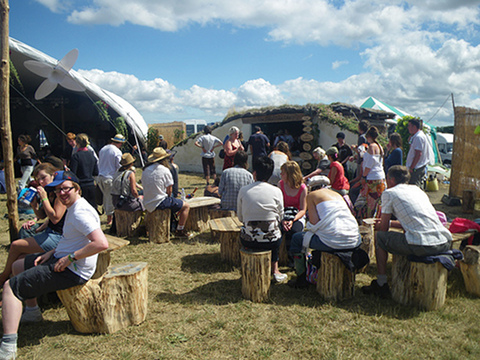
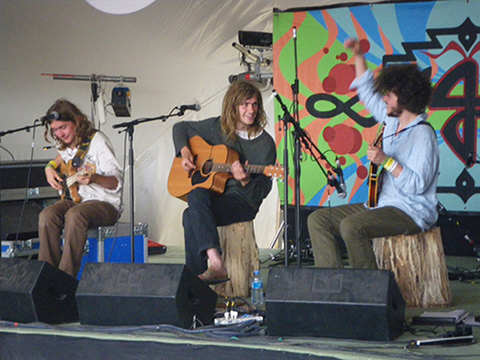
Lounge is very much a local festival, for local people, and local bands were very well represented in every tent. Our weekend kicked off with The Psychotic Reaction, who hail from Whitstable and make a sound like no other…part Joy Division, part librarian rock, they sing of the cupboard under the stairs, hand-me-downs and the trials and tribulations of living in a small town. The Boxing Octopus, all from Herne Bay, brought in the funk on Saturday morning, and had the whole Furthur Tent dancing before noon – quite an achievement! Syd Arthur put on an absolutely amazing show, their haunting psychedlia filling the Furthur Field.
lotf2.jpg

So often their songs deceive you, starting off laid-back and mellow and becoming all encompassing tidal waves of sound to sweep you off into the stars and beyond…Dancing to their soul-filling songs in a field full of hippies is certainly an experience I won’t forget for a while! Current torch-holders for the Canterbury sound, they’ve moved on from Wilde Flowers and Soft Machine (well, it’s been forty years) but not without using their influence for good and emerging with mellow yet powerful tunes to sway to, dance to or completely lose yourself in. These guys are also part responsible for the Furthur Tent and creating the atmosphere which makes the Furthur field so unique. Back in the Sheep Dip, The Ukelele Gangstas rocked their pimp hats and tiny guitars, while Hotrods and Dragsters brought out the hula girls.

Oh, the music? We shimmied and jived to the upbeat blues they were rocking, as did the rest of the tent and shame on the fools who missed out. Dropping the beats in the Bar tent was Mr. Wolfe, a young Canterburian with beat-boxing skill that begged the question ‘Why only an interlude?!’ Hopefully, next year, a longer set for Mr. Wolfe, preferably in the Hoedown. (Oh, if I ruled the festival world…) The coup, for me, in terms of Canterbury bands though, was Gong. Nothing prepares one for the rambling, overwhelming psychedelic journey that the progenitors of the Canterbury sound produce, short of a cup of mushy tea.

lotf4.jpg

We sat in the Furthur field watching the stars, lights and pixies in their teapot taxies fly past – definitely the perfect way to experience a band whose music often seems to lose its train of thought and ends up at quite a different station to the one you bought a ticket for…

There were a few bands who travelled further than five miles to perform at Lounge, and while nothing beats home-grown talent, they did pretty well. I did drop in on Mr. Scruff who played a six hour set, perfect for dipping in and out of like a hobnob in early grey. He began the afternoon with laid-back beats, working up to a dirtier evening set which got the crowd moving. He doesn’t look quite as cartoon-esque in person, either. Upon hearing the cry ‘The Aliens are in the Cowshed’, it didn’t take me long to head there for a good look, and well worth it too. Comprised of three members of The Beta Band, they mix psychedelia and rock with a smattering of cheery choruses (chori?) into a sound which creeps up behind you and pokes you ‘til you dance. Jouis surprised us at the Further tent, starting off with some spoken word, creepy fairground-esque songs, then switching singers and moving into a more sixties groove – perfectly complemented by the guttural, earthy tones of ‘the hipipe’ as I dubbed him.

After chatting to the sax player, we were directed towards Jonquil – two lads, a keyboard and trumpet – whose music reminded us of Patrick Wolf, but less whiny. They generate a mellow, organic ambience wherein you can almost see the layers of sound filling the tent (or equivalent!). Far and away the best set of the weekend though (closely followed by Mr. Wolf) were Alessi’s Ark. One girl, her guitar, an incredible voice, and the Ark. Her melody-led lyrical stylings are whimsical and sweet, but never sugary, and she was hardly phased when someone with trousers on their head and shoes on their hands wandered in, telling them the next song Dancing Feet was perfect for them. Talking of libraries and similes, her lyrics were ideal for cleansing my mind of all that psychedelia… I spent my last pennies on her album, which came in a cd sized knitted bag!, and only just had enough left for dinner.
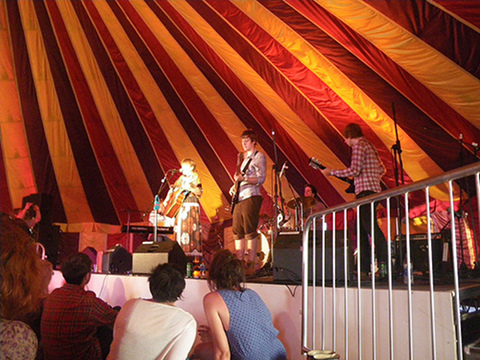
lotf1.jpg

Talking of food, Lounge on the Farm cannot be faulted in that department. Almost all the food is locally sourced by local people. Merton Farm had their own barbecue stall, – ‘Less than a mile from gate to plate!’ – which we bypassed on the way to Al’s Hogroast. Does the fact I was vegetarian for a month prior to the festival say more about the deliciousness of the soft white bap, filled with freshly roasted pork, smearings of apple sauce and dollops of stuffing…Sorry, where was I? Food! Yes. Wonderful stuff. Vegetarians were equally well catered for with the Good Food Café on hand providing soups, sandwiches and beetroot brownies. I had a very filling cous-cous sald with chickpeas and pitta from some lovely ladies who admitted to never having done anything like that before, in between belting out eighties classics…Tasty food though. For breakfast we went to Strumpets with Crumpets, delightful women serving baked goods in corsets – Eggy-fried crumpets with cinnamon and icing sugar?! My favourite. And they did tea too. Tea, and caffeine lovers, were not forgotten – The Tea Temple gave good brew, though no homemade flapjacks this year. Luckily, the Mole Hole Café, an eco-sustainable café up in the Furthur Field, had biscuits for ten pence as well as chocolate brownies and squishy strawberry cheesecake. Enzo’s Bakery provided us with gorgeous pastries, chocolate filled lobster tails and pain au chocolate, while Ana’s Sweets served Portuguese style desert, and the most divine cheesecake ever, according to my thorough researchers. And, as always, the Groovy Movie Picture Tent could be relied upon for chocolate fudge cake, infinitely strange films, and yet more tea, well past everyone else’s bedtimes.

lotf5.jpg

The Groovy Movie Picture Tent is the only solar powered cinema in the UK and makes it aim to play independent films, animations and documentaries. This year’s top GMPT picks have to be Nina Paley’s Sita sings the Blues, which switches between a heartbroken New Yorker, gossiping Hindu gods, and Sita, singing the blues. The film is available for free at Ninapaley.com and is well worth the perusal. On Friday night, after Gong, the GMPT held an exclusive airing the BBC South East documentary about the Canterbury Sound; featuring interviews with Daevid Allen, Kevin Ayers and Steve Hillage as well as Joel and Liam Magill or Syd Arthur- passed to the tent only an hour before the showing. Highly informative and worth a watch, especially if you have no idea about the Sound to which I keep referring!
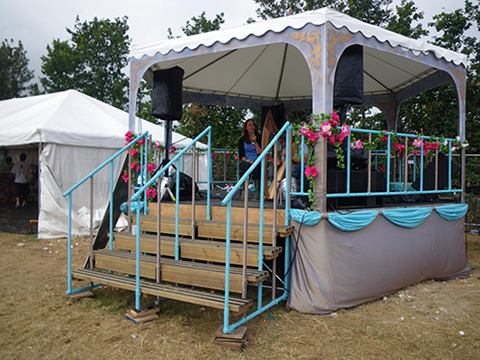
lotf6.jpg

This year’s Lounge was definitely the best so far, and between running around from bands to burlesque, burlesque to fire shows, fire shows to portaloos, we also managed a lot of lounging- although I never did find the petting zoo. Still, Lounge on the Farm is only getting better and if I could get a lifetime ticket, I would. In the meantime, The Farmhouse will just have to tide us over until next year.

Photos by Amelia Wells
I have a new happy place.

Sometimes when I find these rare serene pools of magic and inspiration my selfish streak comes through and I want to keep them to myself for secret, help indulgent pick me up moments in times of disgruntled annoyance. But Eva Monleon Cifo would not approve, dosage for she is far fairer and kinder than my greedy alter ego, troche and her creativity is about spreading a sunnier smilier experience, which surely does not bode well with keeping newly found craft talent to one’s self.

eva2.jpg

Her doll creations are the epitome of ‘kawaii’, the Japanese word for cute that has become a genre of kitsch playful toy-like art to which many dedicated crafters are these days inspired by. With names like ‘doli donkey ears’, ‘doli bank robber’ and doli pink meringue’ they are hard not to love. I felt honoured to ask her about her work and life, beautiful details and snippets of which appear on her gorgeous blog, Misako Mimoko.
eva1.jpg

Hello, how are you today?

Hi!
It’s twenty past eleven in the evening. I’m at home listening to music and writing some emails, it’s a nice but bit chilly night. I feel happy and tired after having worked all day.

What have you been doing recently?

I’ve been finishing some of my dolls, planning and thinking about new stuff, cooking biscuits, waiting for the sales to buy these black shoes I really want, and then buying them (hooray!), going for walks in the evenings, having dinner on our tiny balcony, watering twice a day (hot weather is killing my plants!), and developing an animation about medicine for a video presentation…

eva3.jpg

eva4.jpg

What materials or mediums do you like to work with best?

I’m completely smitten with all kind of fabrics, but especially linen and vintage fabrics. It’s pretty unhealthy. I fall in love with a colour, a texture… I can’t go to too many flea markets much because I come home laden with lots of bags and there’s no more room! I think that I’ll have to work on bigger designs in the future just to use all the material I’ve stored.

Who would be your dream collaboration/who would you like to work with artistically?

Maybe Lili Scratchy or Something’s hiding in here or Elisabeth Dunker or Yoshitomo Nara or Marc Boutavant or Friends with you or Sirena con Jersey
My close friend emedemarta and I are thinking about doing some embroidered purses together and I’m preparing some tutorials for a new Spanish craft magazine (we love crafts). It’s going to be a collaboration between several crafts bloggers, looks amazing.
I’m also persuading my partner, the illustrator Gabriel Corbera, to make silk printed plushes, maybe someday…

eva5.jpg

How is Barcelona’s art scene different from other cities you have visited?

Barcelona is a highly open minded city, it’s really receptive to what happens around the world and so excited by style that loves being up to date. It’s possible that art and city day life are strongly influenced by what we think about life, our sense of humour, the sun or being by the seaside… There are many gallery-shops as Iguapop, Vallery, Todojunto, or Duduá… where you can buy a hand-crafted toys, independent publications, originals, join a cake contest or an amigurumi workshop, enjoy live music…

What inspires your work?

I’m really taken with 1930s-60s culture, old Walt Disney cartoons, classic films, children books and illustrations… and Japanese art, mostly kawaii.

eva6.jpg

How long do the dolls usually take you to make?

It depends on the doll. I spend a whole day or two making the body and face, then I use to leave it for a short time. I crochet some accessories, or I try different bows, berets, and hats on… just to see what happens.
One of the lasts dolls I’ve made was a gift for a friend, I wanted to make a book doll or maybe a popular character from literature, but it was harder than usually and I needed about four-six months to finish it… Each doll has a very different personality, sometimes I know what they want to be almost at the beginning, other times I have to try and try again…

At what age did you realize you were creative?

As any other little girl a loved to draw, I spent a lot of time on my own drawing. I always dreamed having a good job, (I was a very good student!) and making art as a hobby. One day our line drawing teacher (I was studying Science at High School) asked us to draw an architectural piece from the street. I chose a typical fountain. He encouraged me on doing Fine Arts or Architecture so I considered it seriously because I was getting tired of studying.

eva7.jpg

I always thought that people are creative doing things they really love to do. But the body needs some exercise, imagination and creativity too. You can make it bigger or let it die; I think that we don’t need to just make art, life is easier with a little bit of imagination, and humor too! I think taking life too seriously isn’t a very good thing at all.

Where do you see yourself in 10 years time?

I don’t know life is so weird… It’s funny how things and situation changes. I’ve been working as a designer for the last twelve years and I never thought I would start doing my little things again.
There’s an old saying that says that you have to be aware of what you dream, because dreams sometimes happens. I hope that wherever I’ll be in next ten years I enjoy doing things as if for the first time.
eva8.jpg

Besides art, what are you passions or interests in life?

There’re so many things… I enjoy mostly the whole part of the day. I love to walk, nearby my home there’s a small hill with a wonderful view of the city and the sea, it makes me feel so good… Nature is one of the things I need the most. Swimming on the quiet blue sea, good food, gardening, dancing, going for a drink and having long talks, and tea, I could drink tea all day long…

Which are your favorite artists/illustrators/photographers?

Calder, Dubuffet, Duchamp, Miró, Cage, Hopper, Niky de Sant Phalle, Tinguelly, Tove Jansson, Satie, Wharhol, Richard Scarry, Elisabeth Peyton, Stella Vine, John Currin, Damien Hirst, Stella Vine, Makiko Kudo, Yoshitomo Nara…
eva10.jpg

Tell us a secret!

I (and my partner too) hate the telephone so much… Telephones are always bothering us, it interrupts what you are doing. We work at home so we always use internet to communicate.
Sometimes we stare in front of the ringing phone, looking at the number and asking ourselves who can be calling us, there are so many companies calling trying to do business… We only pick up if it’s a known number. The phone doesn’t ring very often fortunately! :)

What is the story behind the name ‘Misako Mimoko’?

Japanese names always make me smile. They are funny names as they sound similar to Spanish words. In Spanish if you say Misako Mimoko what people understand is: “I pick out my nose” or “I pick out a booger”. It would be almost the same “me saco mi moco” (me sako mi moko).
As we are used to Japanese names Spanish people doesn’t realize the joke, but children begin to laugh as soon they hear it and I love to use it.
eva11.jpg

If you were showing Amelia’s Magazine around your city, where would you take us?

We could go to Montjüic first, it’s a shallow hill by the sea. There’s a fortification on top overlooking the harbour, museums such as Fundació Miró, Museu Nacional d’Art de Catalunya, Caixa Forum, swimming pools, the Olympic Stadium, as well as gardens and winding paths that cover some slopes, the Font Màgica and Mies Van Der Rohe’s pavilion at the foot of the hill.
We should go down to La Rambla, visiting La Boquería market and walking along some narrowed streets of the old city in Barri Gótic. We could stop to have a drink and go shopping on the Borne Quarter, there are some of the coolest independent shops in the city. The beach is really close to here and you can go along the boardwalk, have a bathe or have lunch by the sea.

eva12.jpg

“We should visit Gràcia, it is a district full of bars and restaurants with terraces and there’re plenty of small shops and independent designers too.
There are so many things to do in Barcelona… oh! You can’t miss city flea markets Els Encants Vells, you can find new or secondhand stuff there, and Sant Antoni, a second hand book flea market.”
eva13.jpg

Misako Mimoko is the eigth wonder of the world in my opinion. I wonder how quick I can relocate to Barcelona and live in my happy place full time…

Categories ,Barcelona, ,Blog, ,Craft, ,Interview, ,Misako Mimoko

Similar Posts:


Amelia’s Magazine | Luciano Scherer: Portrait of a Young Man


22 year old Luciano Scherer is truly dedicated to his cause. Working 8-10 hours a day, more about 7 days week, he produces paintings, sculptures and animation until his back hurts too much to carry on. The Brazilian self-taught artist works alone as well as with a collective called ‘Upgrade do Macaco’, and has collaborated with Bruno 9li and Emerson Pingarilho. I found him to be much older than his years, with some very insightful and philosophical things to say about everything from art to life and the internet.

scherer1.jpg

When did you realise you had creative talent?

When I was 8 years old my school had a drawing challenge for a children’s book, the teachers read the book to us and we should drew parts of it. My drawing was chosen, it was not the best, but it was the craziest, and the teachers said to me that I was very creative. I started to draw again when I was 15, and only seriously when I was 18.

Which artists or illustrators do you most admire?

From the past: Bosch, Brueghel, Jan van Eyck, Crivelli, Albrecht Altdorfer, gothic art in general. I also like alchemical drawings, illuminated manuscripts, and popular art from my country. But my real influences are my artist friends, they helped me to transform my spirit, not just my art, modifying my inside shell, something that still happens everyday. They are: Carla Barth, Carlos Dias, Bruno 9li, Emerson Pingarilho, Talita Hoffmann, Upgrade do Macaco collective. My current master is Jaca, he is genius.

scherer2.jpg

Who or what is your nemesis?

My nemesis is somebody with lot of dedication and creativity to create evil things, like guns, bombs, wars, murders, lies.

If you could time travel back or forward to any era, where would you go?

I would go to the late-gothic era, in the end of the 15th century and early 16th century, just to understand or comprehend a little better how artists can do those masterpieces. I want to know about the places, the woods, the people’s clothes, the churches, the religions and the spirituality of this time. It is my all time golden age of painting. They all invested years of dedication to each piece, the result of it is bigger than our current comprehension.

scherer3.jpg

If we visited you in your home town, where would you take us?

My hometown is a very small city in the extreme south of Brazil, almost Uruguay. There’s no galleries, no museums, no cinema, no nothing! But there are very beautiful natural places, like mystery fog woods, beautiful beaches with nobody, lakes, fields, lots of different animals; I will take you to all these places.

scherer10.jpg

To what extent is your work influenced by your religion or spirituality?

I’m a son of a catholic father who takes me to the church every Sunday, and a mystic mother who is deeply connected with questions of spirituality. All my life I’ve been in catholic schools, and the people that I know there appear to be dedicated to God with tons of saints in sculptures, bracelets, necklaces, flyers, but the rest of their lives they spend being so petty, earthly, extremely connected with just the image of faith, and the concepts of guilty, suffering and impotencies. This contradiction makes me feel revolted, and at the same time I too have been into spiritualism, a Christian based doctrine, but much more metaphysical. This time the metaphysical seems to me so curious, respectable and scary, very scary. So when I started to paint, the images of Catholicism caused a strange fusion of respect, fear, nostalgia, and anger. I felt I needed to work over them, to learn about them and get more intimate, question the images and dogmas and lose the fear. It was a period of destruction like a renaissance. For a year now I’ve found myself distant from the doctrines, but between all of them, mainly the oriental ones like Buddhism and Hinduism, I’m feeling more spiritualized than religious. But this is just the start; I have much more to learn and I’m trying to not answer all the questions but instead learning to live together with them. All of this reflects in my artwork.

scherer5.jpg

If you weren’t an artist, what would you be doing?

An artist’s assistant, or a curator, or a collector; art aside, I’d be a garden sculptor.

Where would you like to be in 10 years time?

Living in a self-sustainable vegetarian community, with all my friends and family, in a place not too hot and not too cold, with as many animals as possible, all of them free.

What advice would you give up and coming artists?

Over and over I’ve heard people say “art doesn’t make any money” or “what do you want to be an artist for, it’s so useless”. I’ve stopped listening to the cynics now though.

scherer6.jpg

What was the last book you read?

I read the David Lynch book about transcendental meditation “Into Deep Water” (This is the name in Brazil), and the Krishnamurthy’s “Freedom from the Known”- it’s like a bible to me, I read it over and over. I’ve been reading H. P. Blavatsky “Voice of the Silence” and “Isis Unveiled” too. Now I’m reading Nietzsche’s “Also Sprach Zarathustra”, it’s awesome.

What piece of modern technology can you not live without?

The Internet. It’s my mail, my books, my telephone, my all time world museum 24-7.

scherer7.jpg

What is your guilty pleasure?

The excesses, in food, drink, work, sleep. Anytime I get too much of these things I feel so regretful, but I’m working on it.

Tell us something about Luciano Scherer that we didn’t know already.

I have a post-rap band, named Casiotron. And I’m working on my first individual exhibition, at Thomas Cohn Gallery next year.

scherer8.jpg

This is certainly a young man full of promise.

Categories ,Animation, ,Brazil, ,Interview, ,Luciano Scherer, ,Painting, ,Sculpture

Similar Posts: