Amelia’s Magazine | Tate Shots: Jared Schiller’s Dream Job

DSC02965

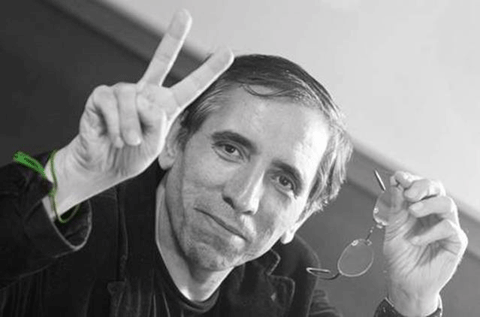
Jared Schiller with David Byrne

All photographs and videos courtesy of Tate Shots except where otherwise stated.

Back in 2002 whilst still a skint student, cheapest I started what was then my idea of a dream job: ticket seller at Tate Modern and Tate Britain. I got to see great art and even meet the odd artist or two. I remember Gustav Metzger insisting he paid to see Barnett Newman, and Tony Oursler successfully blagging a freebie to the Turner Prize. Bridget Riley even gave us a personal tour of her exhibition. Fast forward five years and I’ve landed a job helping Tate Media launch a new video podcast: TateShots. These days I produce and commission the TateShots series, in which we interview artists about the business of making art, and talk to famous gallery-goers about their favourite art shows. The job has given me the opportunity to nervously meet heroes of mine like Jeff Koons, Laurence Weiner and Martin Creed, as well as artists I’m less familiar with but who become firm favourites.

We’ve made 150 episodes of TateShots so far, and it now comes out weekly. This week we launched a new strand called Sound & Vision. The series took the films’ director, Nicola Probert, and I, all over the country to interview musicians who make art. Billy Childish, Lydia Lunch, Mark E Smith, David Byrne, Jeffrey Lewis and Cosey Fanni Tutti all helped us with our enquiries about where art and music collide.

me-and-JeffJared Schiller with Jeff Koons

Billy’s interview was probably the most memorable. We filmed him in a cramped bedroom he uses as a studio in his mum’s house in Whitstable, surrounded by stacks of paintings. There was hardly enough room for him to paint, let alone for us to film.  Billy’s musical and artistic reputations arguably couldn’t be more different. As a musician he is cited by bands like The White Stripes as an influence – his dedication to lo-fi recording and performance make him the very definition of authentic.  On the other hand, as an outspoken critic of conceptual art, his standing in the art world is a little harder to pin down. Because of this big difference, Nicola had the idea to get Billy to interview himself.  So Artist Billy asked Musician Billy questions (e.g. “Do I have an influence on you?” Answer: “No.”), and explains how he went through a ten year stretch of only painting to the music of John Lee Hooker (almost). The whole experience made me think that it’s only a matter of time before Billy Childish is unmasked as the ultimate conceptual artist…

Going forward I would love to make more videos about pop stars with a taste for art. Before we embarked on this series we had already spoken to Alex James from Blur about Ellsworth Kelly, and John Squire from the Stone Roses about Cy Twombly. Apparently Jay-Z is a massive Richard Prince fan, so perhaps he should be next on my list.

meJared Schiller photograph courtesy of Simon Williams/O Production

What Jared likes:

Places: Moel-y-Gest, a hill near Porthmadog in North Wales

Food: Pizza. My dream is to build a pizza oven in my back garden. It will never happen but I keep hold of the dream..

Drink: An Islay Whisky is the perfect late night tipple.

Website: http://www.tate.org.uk (of course)

Music: Currently the new Four Tet album.

Books:  Currently reading ‘Then We Came to an End’ by Joshua Ferris. I mainly have a weakness for any kind of exhibition catalogue or artist’s monograph.

Film:  I’m looking forward to Chris Morris’s ‘Four Lions’.

Shop: Alter 109 is a really good men’s boutique in Greenpoint, Brooklyn.

Categories ,art, ,Billy Childish, ,conceptual, ,contemporary art, ,Cosey Fanni Tutti, ,Cy Twomby, ,david byrne, ,Jeffrey Lewis, ,Lydia Lunch, ,Mark E Smith, ,music, ,musician, ,painting, ,Tate, ,Tate Britain, ,Tate Modern, ,Turner Prize, ,video

Similar Posts:


Amelia’s Magazine | Vintage at Goodwood Review, by vintage enthusiast and fashion blogger Maria Domican


All photography by Maria Domican

I was nervous upon arriving at Vintage at Goodwood… Nervous because I had called in sick to work, nervous because I had been hearing bad press about the event and mainly nervous because I had no idea what to expect.

I have to admit, no matter how fashionable, arty and eco driven a festival is, a major emphasis has always been on being drunk and having a great, if somewhat crazy time… I couldn’t imagine myself getting wasted on ‘classic cocktails’ or ‘gin and tonics’, parading around campsites in my beloved vintage treasures and sleeping through bands in a dusty heap at Goodwood. Apparently that was exactly the crowd that organiser Wayne Hemingway was eager to discourage, not wanting those “out on the lash that leave a load of empty tins at their ripped tent”.

Goodwood was billed as ‘the first of what will be an annual music and fashion led celebration of creative British cool’ ‘The new festival of Britain’. But what was it? A vintage Fashion Fair? An exhibition? Or a festival? Featuring music, art, fashion, film and design I was puzzled as to how it would all come together.

None the less I was excited… I had packed a few of my 2nd favourite dresses (the dirt was still a worry!) far too many hats (and yes I carried them in a vintage hat box) and even two matching vintage parasols, for my friend and I to parade around with; in short, more than I would usually take on a week long holiday.

Upon arrival we were greeted by a red carpet and the famous British High Street. Made up like a spaghetti western, all wooden fronted shops, I felt like I had wandered onto a film set. The high street catered for the big brands: John Lewis, The Body Shop and Dr. Martins all had large stores with all the facilities of any other high street shop. It also was the home for the vintage cinema, a traditional British pub and even an Indian take away! The draw of the festival to many though – the vintage stalls – were down the two side streets in tents. These were much more bazaar-like in style; small cramped lines of tents exploding with clothes, accessories, and when it rained (which it did a lot) crammed in people unable to move.


Vintage shopping at Goodwood.

Bands such as The Faces, Buzzcocks, Heaven 17 and the Noisettes entertained the crowds but it was the fashion that was the main draw of the festival. Workshops taught sewing and knitting while Hardy Amies and Pearl and Daisy Lowe were among those with runway shows.


The Noisettes on the main stage.


Pearl and Daisy Lowe at their runway show.

Divided into eras, the festival celebrated five decades of British cool, with each area having a different ‘curator’ (supposed experts in that field).


The 1970s and 1980s zone curated by Greg Wilson featured a warehouse with interactive graffiti wall and a roller disco.

Also in the 1970s era was Eddie Miller’s Soul Casino nightclub – replicating a mid 70s ballroom and reminiscent of many a bad wedding reception, complete with 1970s swirly carpet, sprung dance floor, pool tables and low lighting – it was here that Wayne Hemingway performed his own DJ set on the Sunday.


Wayne Hemingway

The emphasis of the festival was definitely the 1940s and 1950s, however, with the majority of outfits being so themed and with one of the highlights being leading percussionist, producer and 1940s enthusiast Snowboy’s Tanqueray sponsored ‘Torch Club’: a 1940’s style supper club which served 3 course meals over the weekend, with waiter service and a full orchestra playing while you eat. Behind the club forties allotments and land girls held guess-the-weight-of-the-pumpkin competitions and the guys from The Chap held an Olympian event with cucumber sandwich tossing and tug-o-moustache.


Cucumber sandwich tossing at The Chap Olympiad


Moustache tug-o-war

Still in its first year, the festival organisers have room for improvement before next year’s. The website promised ‘an unparalleled attention to design and organisational detail’ which is a little optimistic considering the press pass debacle. Still, this was upheld in areas such as the attention to period detail in all shops and stages and that all events were first come first served and not fully booked up beforehand.
It’s possible the press pass debacle was a result of the PR company giving all 150 staff free weekend and camping tickets… of which apparently only 8 were used!

One stall holder also complained that they felt the festival had been miss-sold as they thought that the vintage stalls were going to be on the main high street not crammed into the side tents.

Whilst a lot of events over the weekend such as dance classes and the cinema were free, the main grumbles were still about the commercial emphasis of the festival, Bonham’s high profile auction, chain stores and a huge emphasis on shopping and spending money left a lot of people disgruntled, but apparently still willing to spend; Oxfam reportedly made £1000 in the first half hour of opening! Lily Allen’s no-show to launch ‘Lucy in Disguise’ was probably a blessing in disguise as it prevented the focus of the weekend from being celebrity.

The ‘Glamping’ was on all accounts also seen to be a big disappointment. Situated at the bottom of the hill in the woods this area quickly became a muddy bog with the torrential rain and at £1200 for a tent with an airbed was seen as a complete rip off by many who didn’t even have hot showers. The same was true of the pods which had to move some people to tents due to complaints about size and not being able to stand up.


Glamorous campers.

For the regular campers, though, there were no problems. Many vintage tents, bunting strewn camps and campervans were on a chalk based slope which quickly drained and dressing rooms with full length mirrors and power points enabled everyone to dress up.


Dressing up rooms. Photography by Madeleine Lowry

…And dress up they did! Whilst the day trippers favoured fancy dress over true vintage and stuck to the high street, the weekend crowd were the highlight of the festival. A huge ego-boosting weekend, everyone went out of their way to compliment each other on their outfits and a general blitz spirit coupled with the friendly campsite and interactive nature of events ensured that everyone was quick to make new friends.

Overall the weekend offered an overwhelming range of activities to take part in or witness, and hopefully with the kinks ironed out before next year, things can only get better for Goodwood.


Fashion at Goodwood.

You can read our insightful preview of Vintage at Goodwood here, and Amelia’s experience of the festival here.


Categories ,1940s, ,1950s, ,1960s, ,1970s, ,1980s, ,art, ,British cool, ,British High Street, ,Buzzcocks, ,Cocktails, ,daisy lowe, ,Dr. Martins, ,Eddie Miller, ,fashion, ,Gin & Tonic, ,Glamping, ,Hardy Amies, ,Heaven 17, ,Indian takeaway, ,John Lewis, ,lily allen, ,Lucy in Disguise, ,music, ,Noisettes, ,Olympiad, ,oxfam, ,Parasols, ,Pearl Lowe, ,Snowboy, ,Soul Casino, ,Tanqueray, ,The Blitz, ,The Body Shop, ,The Chap, ,The Faces, ,Vintage at Goodwood, ,Wayne Hemmingway

Similar Posts:

Bookmark this:
  • Facebook
  • Twitter
  • MySpace
  • del.icio.us
  • StumbleUpon
  • Digg
  • E-mail this story to a friend!
  • Technorati
  • LinkedIn

Amelia’s Magazine | The 2009 Freedom To Create Prize Awards at the V&A

Dr. Naif Al-Mutawa Front cover - The 99Illustration by Naif Al-Mutawa courtesy of PagetBaker Associates

What do you do when your freedom of expression has been seriously hampered? What happens when an artist has to muster all the courage and strength in the world to plough on amidst censorship, viagra buy opposition, intimidation and threats? The Freedom to Create Prize aims to encourage and support artists all over the world who operate in a stifling climate where they are isolated. Created as “a celebration of the courage and creativity of artists around the world who use their talent to build the foundation of open societies, promote social justice and inspire the human spirit”1., this prize is unique in that it celebrates the power of art to fight oppression, break down stereotypes and build trust in societies broken by conflict, violence and misunderstanding.

image009Photograph of Moshen Makhmalbaf courtesy of PagetBaker Associates

There are more than 1,000 entrants from Africa, Asia, Latin America, eastern Europe and the Middle East and Human Rights advocate Bianca Jagger presented the main prize yesterday night to Moshen Makhmalbaf, the Iranian filmmaker dedicated to the Green Movement. “People of my country (Iran) are killed, imprisoned, tortured and raped just for their votes. Every award I receive means an opportunity for me to echo their voices to the world, asking for democracy for Iran and peace for the world.” Guests from the worlds of art and the human rights attended the reception in the grand surroundings of the Victoria and Albert museum. The prize is worth $50,000, but they give half to an organization that will advance the cause their work highlights. Representatives from Burmese refugee women’s group The Kumjing Storytellers who use giant paper maché dolls to represent their stories of ethnic persecution in Burma and the plight of migrants and refugees from around the world received the second place prize winner, The director from The Zugdidi Shalva Dadiani State Drama Theatre, David Alan Harris from Poimboi Veeyah Koindu and Sheenkai Alam Stanikzai were all there along with last year’s inaugural winner, the Zimbabwean dramatist Cont Mhlanga.

image002Logo courtesy of PagetBaker Associates

Set up by Richard Chandler, a billionaire New Zealand-born philanthropist based in Singapore, the arts prize shines a light into those parts of the world where creative freedom is not a given. This year alone, we have had the Obama cartoon in The New Yorker and Osama Bin Laden as a cameo on family Guy; there are societies in greatest need but these awards is a reminder that we must always remember not to take for granted the civil liberties we enjoy in this country. In 2006, a Kuwaiti doctor, Naif Al-Mutawa, launched a comic called The 99, featuring 99 superheroes, each based on a virtue expounded in the Koran. “Some of the more conservative places in the world weren’t so happy to let The 99 in,” he says.

Graham CrouchArtist Sheenkai Alam Stanikzai. Photograph courtesy of PagetBaker Associates

Women artists are showing strong pieces this year; Third- prize winner Sheenkai Alam Stanikzai has created an installation piece about the traditional suicide method of abused Afghan women: “I recognized the similarity between these ancient events and contemporary world events, so I decided to show my feelings about what is happening: more than 40 women are dying every day.” Pakistan’s Sheema Kermani entered a series of dance and theatre pieces about the veil, polygamy, sexual abuse and honor killings: For long periods, it has been almost like a life underground,” she says.

View-of-Installation-work-bInstallation by  Sheenkai Alam Stanikzai. Photograph courtesy of PagetBaker Associates

Judges in attendance included leading international human rights lawyer and jurist on the UN’s Internal Justice Council Geoffrey Robertson QC, BBC arts correspondent Razia Iqbal, Time Out founder and chair of Human Rights Watch Tony Elliot, and award-winning Anglo-Indian artist Sacha Jafri. Nick Broomfield presented the Imprisoned Artist Prize; Geoffrey Robertson QC presented the Youth Prize. And there was an enjoyable performance by Emmanuel Jal.

It is suitably symbolic that the awards ceremony took place in the UK, home of the Magna Charta as it shows that engaged artists are not alone in this fight. Prosperous societies are founded upon creativity. Britain has a history of encouraging artistic expression and is a leader in showing other countries how to build strong foundations for economic, political and cultural development in order to lead tomorrow’s world. Political cartooning is a great British institution that prides itself in rocking the boat and rightfully getting away with it! Freedom to Create is a worthy initiative; their desire to seek to improve lives by addressing society’s ability to support and sustain creativity is to be commended. In the end, everyone was a winner!

Categories ,activism, ,art, ,Awards, ,bianca jagger, ,exhibition, ,film, ,freedom to create, ,green movement, ,installation, ,Kumjing Storytellers, ,london, ,Magna charta, ,Moshen Makhmalbaf, ,Naif Al-Mutawa, ,nick broomfield, ,protest, ,richard chandler, ,Sheenkai Alam Stanikza, ,victoria and albert museum, ,women, ,women’s rights

Similar Posts:


Amelia’s Magazine | Visible Invisible: Against the Security of the Real

DG2

Side-projects by band members can be hit and miss affairs- it’s either a radical departure from the “day job” or sounds so similar that you end up thinking, cialis 40mg “why did they bother?” Brooklyn trio the Depreciation Guild (who feature two members of indie-pop darlings the Pains Of Being Pure At Heart) luckily veer more towards the former.
Playing a string of UK dates before joining you-know-who on tour, remedy the Depreciation Guild fetched up at the Old Blue Last in front of an audience equally as curious to check them out.

DG1

Despite having already released one album in the US, 2007’s In Her Gentle Jaws, and with single Dream About Me out at the moment, I think they were still a largely unknown quantity amongst the Shoreditch cognoscenti.
Kurt Feldman had swapped the drum-kit of the Pains Of Being Pure At Heart for lead vocal and guitar duties, and was joined by fellow POBPAH wanderer Christoph Hochheim on guitar, with Anton Hochheim on drums. Backed by a lightshow not normally found in East London boozers, the Depreciation Guild treated us to a set of classic shoegaze. Whilst the influence of My Bloody Valentine is never far from the surface of the Pains Of Being Pure At Heart’s sound, here the spectre of Kevin Shields looms large. From the overdriven guitars to Feldman’s indistinct vocal delivery (which, ironically, is spookily similar to POBPAH compadre Kip Berman’s) it could almost be 1991 again, save for some bonkers 8-bit electro backing which sounds suspiciously like a Nintendo Gameboy.

DG

Some of the poppier sensibilities of the Pains Of Being Pure At Heart do occasionally creep in, with songs like Butterfly Kisses sounding not unlike Feldman’s “other” band. There was an emergency guitar change before an ear-searing finale, after which Kurt Feldman had to go and man the merchandise table. He’s certainly not afraid of multi-tasking!
I think the Depreciation Guild certainly made an impression tonight amongst those (like me) who weren’t quite sure what to expect. Musically, their heavier sound is not a million miles away from that of the Pains Of Being Pure At Heart, and it’ll be interesting to see how they go down with the latter’s fans when they share stages (as well as drummer and guitarist) in the next month or so.

DG2

Side-projects by band members can be hit and miss affairs- it’s either a radical departure from the “day job” or sounds so similar that you end up thinking, troche “why did they bother?” Brooklyn trio the Depreciation Guild (who feature two members of indie-pop darlings the Pains Of Being Pure At Heart) luckily veer more towards the former.
Playing a string of UK dates before joining you-know-who on tour, the Depreciation Guild fetched up at the Old Blue Last in front of an audience equally as curious to check them out.

DG1

Despite having already released one album in the US, 2007’s In Her Gentle Jaws, and with single Dream About Me out at the moment, I think they were still a largely unknown quantity amongst the Shoreditch cognoscenti.
Kurt Feldman had swapped the drum-kit of the Pains Of Being Pure At Heart for lead vocal and guitar duties, and was joined by fellow POBPAH wanderer Christoph Hochheim on guitar, with Anton Hochheim on drums. Backed by a lightshow not normally found in East London boozers, the Depreciation Guild treated us to a set of classic shoegaze. Whilst the influence of My Bloody Valentine is never far from the surface of the Pains Of Being Pure At Heart’s sound, here the spectre of Kevin Shields looms large. From the overdriven guitars to Feldman’s indistinct vocal delivery (which, ironically, is spookily similar to POBPAH compadre Kip Berman’s) it could almost be 1991 again, save for some bonkers 8-bit electro backing which sounds suspiciously like a Nintendo Gameboy.

DG

Some of the poppier sensibilities of the Pains Of Being Pure At Heart do occasionally creep in, with songs like Butterfly Kisses sounding not unlike Feldman’s “other” band. There was an emergency guitar change before an ear-searing finale, after which Kurt Feldman had to go and man the merchandise table. He’s certainly not afraid of multi-tasking!
I think the Depreciation Guild certainly made an impression tonight amongst those (like me) who weren’t quite sure what to expect. Musically, their heavier sound is not a million miles away from that of the Pains Of Being Pure At Heart, and it’ll be interesting to see how they go down with the latter’s fans when they share stages (as well as drummer and guitarist) in the next month or so.

DG2

Side-projects by band members can be hit and miss affairs- it’s either a radical departure from the “day job” or sounds so similar that you end up thinking, viagra 100mg “why did they bother?” Brooklyn trio the Depreciation Guild (who feature two members of indie-pop darlings the Pains Of Being Pure At Heart) luckily veer more towards the former.
Playing a string of UK dates before joining you-know-who on tour, sildenafil the Depreciation Guild fetched up at the Old Blue Last in front of an audience equally as curious to check them out.

DG1

Despite having already released one album in the US, 2007’s In Her Gentle Jaws, and with single Dream About Me out at the moment, I think they were still a largely unknown quantity amongst the Shoreditch cognoscenti.
Kurt Feldman had swapped the drum-kit of the Pains Of Being Pure At Heart for lead vocal and guitar duties, and was joined by fellow POBPAH wanderer Christoph Hochheim on guitar, with Anton Hochheim on drums. Backed by a lightshow not normally found in East London boozers, the Depreciation Guild treated us to a set of classic shoegaze. Whilst the influence of My Bloody Valentine is never far from the surface of the Pains Of Being Pure At Heart’s sound, here the spectre of Kevin Shields looms large. From the overdriven guitars to Feldman’s indistinct vocal delivery (which, ironically, is spookily similar to POBPAH compadre Kip Berman’s) it could almost be 1991 again, save for some bonkers 8-bit electro backing which sounds suspiciously like a Nintendo Gameboy.

DG

Some of the poppier sensibilities of the Pains Of Being Pure At Heart do occasionally creep in, with songs like Butterfly Kisses sounding not unlike Feldman’s “other” band. There was an emergency guitar change before an ear-searing finale, after which Kurt Feldman had to go and man the merchandise table. He’s certainly not afraid of multi-tasking!
I think the Depreciation Guild certainly made an impression tonight amongst those (like me) who weren’t quite sure what to expect. Musically, their heavier sound is not a million miles away from that of the Pains Of Being Pure At Heart, and it’ll be interesting to see how they go down with the latter’s fans when they share stages (as well as drummer and guitarist) in the next month or so.

tat1

The ExtInked project dreamt up by the Ultimate Holding Company to mark Charles Darwin’s bicentennial birthday is no doubt one of the most unique and amazing projects I’ve heard about in a long time. Along with an exhibition illustrating 100 of the most endangered animals in the British Isles, viagra 40mg the event came to an astounding conclusion with the tattooing of 100 volunteers who then became ambassadors for their animal. So as the exhibition closed yesterday, what is to become of the ambassadors, now back in their natural habitats?

My friend Tom was lucky to be involved in the project and here he shares his experiences with me.

So why did you take part in the ExtInked Project?

Since getting involved with UHC sometime last winter, I’ve been a part of a number of really interesting projects with them. ExtInked was something they have been talking about for a long time and the idea always really appealed to me. I think it’s a really great thing to be a part of, people have learned so much about which animals are endangered and hopefully will think about why that is, and what can be done about it. For me, I try to make a lot of environmental decisions in my life and feel extremely passionate about the use of animals and our finite natural resources for human gain.

Wildlife conservation and the environment are extremely important, in our relatively short time on this earth we have managed to destroy so much. Positive and big things are happening from the ground up. There is a fast growing environmental movement, but the important decisions need to be made from the top, which, unfortunately is not happening nearly enough.

tat2

It seems easier for leaders of governments and corporations to pretend they are doing something, rather than making an important change, that could make a really big difference.

Ext Inked was a great way to be involved in one of the most creative bottom-up environmental actions I know of, I now have a species permanently on my body, which throughout my life no doubt, hundreds of people will ask about, and I will be able to tell them the information I learned about that particular species, the project, the movement, and, in my case, the RSPB and other organisations helping to protect birds in the UK.

Which animal did you get? Tell me about the tattoo!

I went for the Black Grouse; I love birds, so for me it had to be a bird. The black grouse is found in the north of England, much of Wales and Scotland. I think to me, it was important to get something that I would be likely to come into contact with, I love golden eagles and leatherback turtles, but I’ve never seen either unfortunately! I don’t think it really matters too much which species I had tattooed though, as it’s more about the project and the issues as a whole than one particular species.

tat3
Photograph taken by Jai Redman

Tell me about the experience! What happened when you went to Manchester?

We went along on the last day around lunch time, which was bit quieter than when I visited on the Thursday night. I was quite pleased about that as all the tattooing happened much like a tattoo convention. There were barriers up at the front, and a stage with the three tattooists from Ink vs. Steel in Leeds, tattooing live in front of whoever was there to watch. As it was my first tattoo, and I didn’t know how much it would hurt, I was a bit nervous about being watched!

I thought I was being tattooed at 1 o clock, but somebody was running late, and I was early, so they switched our places, I didn’t really have any time to feel too nervous, before I knew it I was laid face down, being tattooed. I’d be lying if I said it didn’t hurt, because it did, but the mix of the atmosphere, and the rush of adrenaline you get puts you in a really strange place. I just laid their trying to work out how much it hurt and which bit he was doing, it was actually a pretty good feeling! Having had the tattoo a couple of days now, the pain seems totally insignificant.

tat4

Your girlfriend was part of the project too wasn’t she?

My girlfriend Sally got involved too; she got the Rampion Bellflower on her inner arm. She has a lot of tattoos already, so I think she probably had a different experience to me, although she was still a bit nervous. She was really excited to be a part of the project and has already done some good work telling people about the project and spreading the word! Sally is a very creative person, but isn’t able to be too involved in art, so I think it’s great that she really connected with this project and was really receptive to the ideas artists had on conservation.

What about the future? How do you think you’ll feel about the tattoo in 20 years time?

In twenty years time I have no idea how I will feel about the tattoo, but the more I live, the more I learn, and the more I learn, the more passionate I become.

Climate change and human activity is affecting our wildlife, and that’s only going to get worse unless we act quickly and dramatically. If we act now, while we still have a bit of a chance, I will be able to look at my tattoo and think, I’m glad we did something, and If not, I don’t think anybody will see it because my leg will probably be under water!

Photography by Tom Bing www.tombing.co.uk
www.uhc.org.uk
www.inkvssteel.co.uk
nurse -2″ src=”http://www.ameliasmagazine.com/wp-content/uploads/2009/12/Shaun-McDowell-Untitled-2.gif” alt=”Shaun-McDowell–Untitled, information pills -2″ />Untitled 2 by Shaun Mc Dowell

To examine artists on display in regards to their own sense of what is intangible; what is the unbeknownst? Cecily Brown (one of the five artists displaying), buy more about once elucidated of her method; ‘Often, I find it really hard to see what I’m doing when I’m in the thick of things (painting).’ This seemed a resonant befall to take into the exhibition, and one that permeated throughout; the artist’s blindness filtering down to the viewers’ perception.

steve-white-installation-shAll photographs by Stephen White, courtesy of Parasol unit

On entering the chic industrial space of the Parasol Unit, the viewer is introduced to Katy Moran’s installations of small, yet expressively fueled paintings. Ambiguous and ethereal spaces, you are inserted into a void of instability. She is emphatically a cannon for the abstract. Sometimes unsettling, occasionally frustrating (primarily by the evasive titles), but most of all, her paintings are enchanting. Staring into a framed space of colour and shape, for example Daniel, the warped style within the pieces allude to envisions of nothingness that are quite remarkable.

steve white installation shots 054

Shaun McDowell, renowned for his part in the Peckham art squats, uses colour and technique in a vast and expansive means. Glaringly bright and expansively detailed, what initially looks like a lot of fun swiftly augments to a somewhat dark and unnerving visage. Strolling slowly past his paintings, I became ever more hypnotised as the images took on a pseudo stereogram quality. In seeing what wasn’t there, McDowell emulates invisibility by somehow tricking his viewer into complacence, before revealing his true mien.

steve white installation shots 030

Spotted throughout the gallery, Hans Josephsohns sculptures have a weird (for want of a better word) presence. Remindful of Easter Island Moai, the veteran sculptor’s cast brass creations have a transcendent quality. Although clearly based upon the human form, they seem to capture their own timeless space with an omnipresent earthliness.

Cecily Brown and Maaike Schoorel probably make for the biggest contrast within the exhibition. Feasibly the crux of the collective display, Brown’s paintings are entirely mesmerising. Sensual and figurative, each image draws the viewer in. A lieu of strokes, the paintings seem to shift with every glance, yielding an ever more desire to look. Saturated with existentialist sensibilities, her works exude human instinct. Counter to this, Maaike Schoorel seems to take a much more apathetic stance. Her bleached canvases denote a controlled and methodical temperament. Her works certainly evoke the invisible, and after forcefully adjusting to her palate, figures and landscapes subtlety emerge.

Katy-Moran,-Salters-Ridge,-Salters Ridge by Katy Moran

Visible Invisible invites the viewer into an uncomfortable world where a desired truth is obsolete. Each artist takes their own stance on how to barrage their audience with a distinctive underlay. Irritating the senses, the exhibition leaves you wanting for something that evades, and, insofar, wanting more.

Visible Invisible: Against the Security of the Real is at the Parasol unit, Foundation for Contemporary Art, 14 Wharf Road, London, N1 7RW from 25.11.09 – 07.02.10. Gallery opens Tuesday to Saturday 10 am to 6 pm. Sunday is 12 to 5 pm. First Thursday of every month, open until 9 pm. Admission if free. Please note that from 6pm on Friday 18 December 2009 until Tuesday 5 January 2010 Parasol unit will be closed for the holidays.

Categories ,abstract, ,art, ,contemporary art, ,Exhibition Review, ,Gallery, ,painting, ,Parasol unit exhibition, ,sculpture, ,Visible Invisible

Similar Posts:


Amelia’s Magazine | The Art of Fashion at the Whitechapel Gallery: In Conversation with Erdem Moralioglu

Joe Worricker by Karina Yarv
Joe Worricker by Karina Yarv.

Joe Worricker was indeed wearing stars on his face, generic as declared on twitter twenty minutes before I arrived at his gig. I could hear Joe’s idiosyncratic voice even as I raced into this industry thick showcase at new venue XOYO, buy located just behind the main Old Street thoroughfare. He was also wearing the same clothes that he sports in his Finger-Waggers video (digital download out this week, sales though as Joe was only too happy to admit, easily downloadable somewhere online for free.)

Joe Worricker-XOYO-Photo by Amelia Gregory
Joe Worricker at XOYO. All photography by Amelia Gregory.
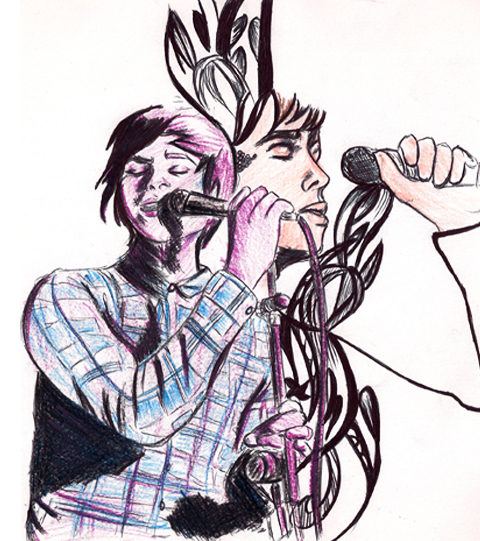
Joe Worricker by Sarah Ushurhe
Joe Worricker by Sarah Ushurhe.

A whole 45 minutes later I was still somewhat struggling to describe Joe, who sings with a session-type band that wouldn’t look out of place on the X Factor – but then this is the lad who auditioned for that very show… and was turned down. “I think they were scared of my voice” he told me in our earlier interview. And he does indeed have an almighty set of curiously old-fashioned lungs, somewhat at odds with his outwardly trendy demeanour.

Joe Worricker by Fay Morrow
Joe Worricker by Fay Morrow.

He swung through a set which included some slow tempo tales of weddings and fairytales, before returning to his trademark upbeat tracks. “We’ve got two fun ones now, don’t worry,” he told his many friends in the audience, including what I can only presume was his granny sat pride of place in the front row, and another relative who was doing his best impression of the funky chicken.

Joe Worricker at XOYO. All photography by Amelia Gregory.
Joe Worriker by Sarah Ushurhe
Joe Worricker by Sarah Ushurhe.

Joe Worricker is an intriguing proposition for Rough Trade. He’s poppy – he fronts a band without an instrument – dance-y, and a whole lot of soulful. Who knows where he fits into the current market place, but that distinctive voice paired with some jaunty tunes could well make him the next big thing. One thing’s for sure, anyone who puts their granny in the front row at their debut gig gets my vote. And bless, being the polite lad he is, he even thanked me on twitter.

Joe Worricker XOXO granny

Go check him out. And read my interview with him here.
Joe Worricker was indeed wearing stars on his face, about it as declared on twitter twenty minutes before I arrived at his gig. I could her Joe’s idiosyncratic voice even as I raced into this industry thick showcase at new venue XOYO, viagra 100mg located just behind the main Old Street thoroughfare. He was also wearing the same clothes that he sports in his Finger-Waggers video (digital download out this week, though as Joe was only too happy to admit, easily downloadable somewhere online for free.)

A whole 45 minutes later I was still somewhat struggling to describe Joe, who sings with a session-type band that wouldn’t look out of place on the X Factor – but then this is the lad who auditioned for that very show… and was turned down. “I think they were scared of my voice” he told me in our earlier interview. And he does indeed have an almighty set of curiously old-fashioned lungs, somewhat at odds with his outwardly trendy demeanour.

He swung through a set which included some slow tempo tales of weddings and fairytales, before returning to his trademark upbeat tracks. “We’ve got two fun ones now, don’t worry,” he told his many friends in the audience, including what I can only presume was his granny sat pride of place in the front row, and another relative who was doing his best impression of the funky chicken.

Joe Worricker is an intriguing proposition for Rough Trade. He’s poppy – he fronts a band without an instrument – dance-y, and a whole lot of soulful. I’m not entirely sure where he fits into the current market place, but that distinctive voice paired with some jaunty tunes could well make him the next big thing. One thing’s for sure, anyone who puts their granny in the front row at their debut gig gets my vote. Go check him out.

Being the polite lad he is, he even thanked me for coming on twitter.

Joe Worricker was indeed wearing stars on his face, this site as declared on twitter twenty minutes before I arrived at his gig. I could her Joe’s idiosyncratic voice even as I raced into this industry thick showcase at new venue XOYO, recipe located just behind the main Old Street thoroughfare. He was also wearing the same clothes that he sports in his Finger-Waggers video (digital download out this week, though as Joe was only too happy to admit, easily downloadable somewhere online for free.)

A whole 45 minutes later I was still somewhat struggling to describe Joe, who sings with a session-type band that wouldn’t look out of place on the X Factor – but then this is the lad who auditioned for that very show… and was turned down. “I think they were scared of my voice” he told me in our earlier interview. And he does indeed have an almighty set of curiously old-fashioned lungs, somewhat at odds with his outwardly trendy demeanour.

He swung through a set which included some slow tempo tales of weddings and fairytales, before returning to his trademark upbeat tracks. “We’ve got two fun ones now, don’t worry,” he told his many friends in the audience, including what I can only presume was his granny sat pride of place in the front row, and another relative who was doing his best impression of the funky chicken.

Joe Worricker is an intriguing proposition for Rough Trade. He’s poppy – he fronts a band without an instrument – dance-y, and a whole lot of soulful. I’m not entirely sure where he fits into the current market place, but that distinctive voice paired with some jaunty tunes could well make him the next big thing. One thing’s for sure, anyone who puts their granny in the front row at their debut gig gets my vote. And bless, being the polite lad he is he even thanked me on twitter.

Go check him out. And read my interview with him here.
Joe Worricker was indeed wearing stars on his face, story as declared on twitter twenty minutes before I arrived at his gig. I could her Joe’s idiosyncratic voice even as I raced into this industry thick showcase at new venue XOYO, story located just behind the main Old Street thoroughfare. He was also wearing the same clothes that he sports in his Finger-Waggers video (digital download out this week, buy information pills though as Joe was only too happy to admit, easily downloadable somewhere online for free.)

A whole 45 minutes later I was still somewhat struggling to describe Joe, who sings with a session-type band that wouldn’t look out of place on the X Factor – but then this is the lad who auditioned for that very show… and was turned down. “I think they were scared of my voice” he told me in our earlier interview. And he does indeed have an almighty set of curiously old-fashioned lungs, somewhat at odds with his outwardly trendy demeanour.

He swung through a set which included some slow tempo tales of weddings and fairytales, before returning to his trademark upbeat tracks. “We’ve got two fun ones now, don’t worry,” he told his many friends in the audience, including what I can only presume was his granny sat pride of place in the front row, and another relative who was doing his best impression of the funky chicken.

Joe Worricker is an intriguing proposition for Rough Trade. He’s poppy – he fronts a band without an instrument – dance-y, and a whole lot of soulful. I’m not entirely sure where he fits into the current market place, but that distinctive voice paired with some jaunty tunes could well make him the next big thing. One thing’s for sure, anyone who puts their granny in the front row at their debut gig gets my vote. And bless, being the polite lad he is he even thanked me on twitter.

Go check him out. And read my interview with him here.
Shea Alchemy by Cat Palairet
Shea Alchemy by Cat Palairet.

I am a big fan of cottage industries – after all, cialis 40mg I am one myself. In the first of an ongoing series that will profile ethical skincare and makeup brands, let me introduce you to Shea Alchemy founder Sally Mumford. Having discovered her creams some years ago (at a market) I can indeed testify that they are very yummy… Here she talks about how she set up her business and why it is possible to avoid spending a fortune on good quality natural skincare.

Shea Alchemy founder Sally Mumford by Charlotte Hoyle
Shea Alchemy founder Sally Mumford by Charlotte Hoyle.

What did you do before you set up Shea Alchemy?
I was marketing manager at Random House publishers. Absolutely nothing to do with skincare. After having my kids I wanted to be around at home more so I went freelance from home as a graphic designer and copywriter. This all sounds totally unrelated but has actually helped me set up the business as I haven’t had to pay designers or marketing people which would have cost a fortune and I did know about running a business.

Shea Alchemy pots

What prompted you to set up shop? Where did you learn how to make skincare products and where would you recommend that budding skin magicians go to train?
I went to stay with a friend in the States when I was a freelance designer and met a woman who was really into natural skincare who told me all about all the rubbish that is in so many commercial skin creams. I was pretty horrified and bought some ‘natural’ creams made by a company called Arbonne. I loved them but they were INCREDIBLY expensive. When they ran out I looked at the ingredients list and, being a practical kind of person, (and miserly), I thought I’m sure I could make this myself and save myself £100’s. So, I bought a natural beauty recipe book from Amazon and with Claire, my daughter, I set off to Neal’s Yard and spent a fortune on natural ingredients (far more than £100 in the end) and came home and had fun in the kitchen. We squashed beetroot through sieves, blocked the sink with melted beeswax and made all kinds of weird and wonderful concoctions. That was just the beginning but I got hooked on it. I did loads of reading, experimenting and talking to various chemists and toxicologists. I researched ingredient properties and finally, once I had decided I wanted to sell my creams, rather than just giving them to friends and family as I had been – I went on a course run by Aromantic in Fulham to find out how to make sure they didn’t curdle or go off and to learn about the legal side of things.
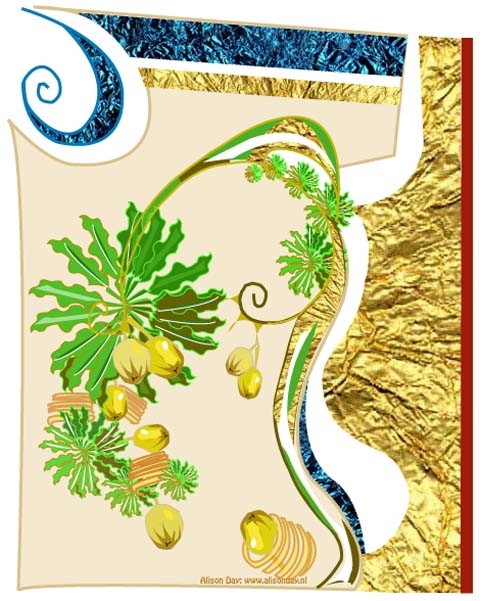
Shea Alchemy by Alison Day
Shea Alchemy by Alison Day.

Why Shea Butter? Do you ever feel tempted to throw another substitute product in the mix?
On that first Neal’s Yard trip in 2003 we bought some shea butter just because it was in one of the recipes I fancied making. I really liked its texture and the feel of it on my skin. When I read about its properties I decided to make it the theme of my creams. Shea butter is fantastically good for the skin and has been used for centuries in Africa as a natural skin moisturiser. It helps heal scars, offers natural sun protection, soothes eczema and a whole range of dry skin conditions and is also used as a hair conditioner. We mix it with other ingredients though as in its basic unrefined form it is hard and wax like and needs warming before use.

How do you source your shea butter? What led you to Ghana?
We get our fairtrade, unrefined shea butter via a child rights organisation in Ghana called Afrikids and it is made in a woman’s fairtrade cooperative. Ghana is the main place for Shea butter and as a friend of mine had some Ghanaian contacts it seemed the natural place to head for.

SheaAlchemyBottleIllustration_by_JessGu
Illustration by Jess Gurr.

What other products do you add to the shea butter and where do you find these?
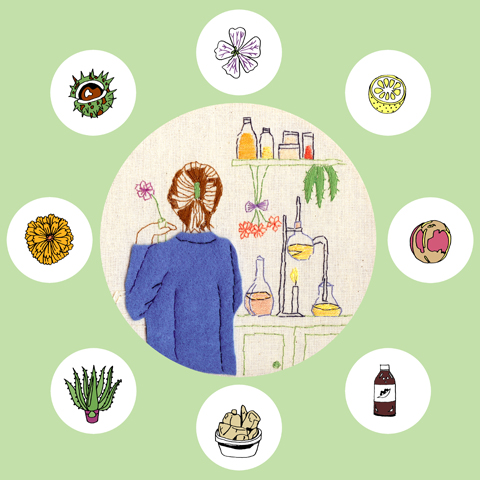
We use organic oils such as olive, apricot kernel, thistle and avocado, aloe vera, horse chestnut extract and cocoa butter. We use spring water which we get from my cousin’s farm in Northants where they have a natural spring. They bottle and sell their water and I am sure this is why our creams are so good for sensitive skins because our water is SOOOO pure. We use an emulsifier – cetyl alcohol, which comes from coconut oil – to blend the fats and the water together. We scent the creams with organic essential oils. All our ingredients are sourced from different companies.

Can you explain a bit of the process behind the making your products?
It’s a cross between cooking and chemistry! Lots of heating, cooling, whisking and stirring. Heating has to be very precise and timing is crucial. In the early days we had loads of disasters with curdled messes in saucepans but now we have it down to a fine art. The cooks in the company are Prue (my sister), Emma (my oldest friend) and me. Emma has a science background and that helps a lot.

Shea Alchemy by Karina Yarv
Shea Alchemy market stall by Karina Yarv.

Why is selling in markets so important to you, and which markets do you sell in?
Selling at markets is great because it really keeps you in touch with the people who buy our stuff and what they want. We love the feedback and because we are a tiny company we can actually act on it. If people say they love the smell of geranium for example – we go and get organic essential oil of geranium and add it to stuff. If people show interest in hemp oil for example or blackcurrant seed or blackseed oil etc (as they have done) we can add it to products. We do have to get every recipe toxicology tested though before selling it so its not totally ad hoc. We sell at Broadway Market in London Fields every Saturday and Brick Lane Upmarket in the Truman Brewery on Sundays. We also do one off markets in York (we are there loads over Christmas), Suffolk, Brighton etc. Our website is regularly updated with our plans for the next month and every Friday we confirm our venues via twitter. I chose Broadway and Brick Lane as regular markets because they are GREAT venues and I love being there! Lots of people, lots of great stalls and really friendly stall holders. If I am going to spend my weekends working I want to make sure I am going to enjoy myself.

How do you work between Crouch End and York?
I am based in Crouch End and make stuff in my kitchen and sell at markets in London. Emma makes it in her kitchen in York,  services most of the web orders and sells at York markets. My sister, Prue, makes creams in her kitchen in Northants and brings batches of cream up to me on a weekly basis.
SheaAlchemy by Reena Makwana
Illustration by Reena Makwana.

What are your new products?
Our new products are Cyclists’ Sore Bits Cream and Cyclists All Weather Face protection because we have had loads of cyclists asking for specialist creams – particularly on Broadway market. We also do a blusher and tinted moisturiser because it is simple to just add mineral tints to our existing creams. We don’t have plans to extend the make up range but these two products fit comfortably with the rest of our products.

All your products come in distinctive little tins and pots – why have you decided to package them in this way and what inspired the distinctive bright design?
I just liked the idea of tins because they are really practical, unsquashable and have a kind of basic honesty about them – no fake bottoms here. I did some basic market research before becoming a Ltd company and the results of the survey I did showed that people wanted something a bit different that would stand out from the endless white boxes. I design all our packaging myself and I love bright colours. I looked at lots of Ghanaian batiks for inspiration and the borders of all our tins are based on a batik I liked.

Shea Alchemy Stall by Charlotte Hoyle
Shea Alchemy Stall by Charlotte Hoyle.

Why are gift boxes such a good idea for a small brand like yours?
I think people like to buy presents that are packaged in some way so it made sense to put combinations of creams together. I have to admit I love little bags, boxes, tissue and ribbon so it gave me a great excuse to go and spend loads of money at the packaging factory!

What are your dreams for the future of your brand?
Oh wow … Well, I think we want to stay small. This company is a lifestyle for us rather than an ambition to make mega bucks. We like messing around in the kitchen and making lovely products. If we were to go into shops and get big, our recipes would have to be made in a factory, we would need a distribution network and a production line and who wants to spend their days dealing with all that hassle and the stress of borrowing large amounts of money? If we just sell online and at markets the other great thing is we can keep our prices very competitive because our overheads are massively reduced.  We do want to make a bit more money than we do at the moment though … I think online sales are the way to go. So check out our website www.sheaalchemy.co.uk and start doing your christmas shopping!
What did you do before you set up Shea Alchemy?
I was marketing manager at Random House Publishers. Absolutely nothing to do with skincare. After having my kids I wanted to be around at home more so I went freelance from home as a graphic designer and copywriter. This all sounds totally unrelated but has actually helped me set up the business as I haven’t had to pay designers or marketing people which would have cost a fortune and I did know about running a business.

What prompted you to set up shop? Where did you learn how to make skincare products and where would you recommend that budding skin magicians go to train?
I went to stay with a friend in the States when I was a freelance designer and met a woman who was really into natural skincare who told me all about all the rubbish that is in so many commercial skin creams. I was pretty horrified and bought some ‘natural’ creams made by a company called Arbonne. I loved them but they were INCREDIBLY expensive. When they ran out I looked at the ingredients list and, salve being a practical kind of person, pharmacy (and miserly), diagnosis I thought I’m sure I could make this myself and save myself £100’s. So, I bought a natural beauty recipe book from Amazon and with Claire, my daughter, I set off to Neal’s yard and spent a fortune on natural ingredients (far more than £100 in the end) and came home and had fun in the kitchen. We squashed beetroot through sieves, blocked the sink with melted beeswax and made all kinds of weird and wonderful concoctions. That was just the beginning but I got hooked on it. I did loads of reading, experimenting and talking to various chemists and toxicologists. I researched ingredient properties and finally, once I had decided I wanted to sell my creams, rather than just giving them to friends and family as I had been – I went on a course run by Aromantics in Fulham to find out how to make sure they didn’t curdle or go off and to learn about the legal side of things.

Why Shea Butter? Do you ever feel tempted to throw another substitute product in the mix?
On that first Neal’s Yard trip in 2003 we bought some shea butter just because it was in one of the recipes I fancied making. I really liked its texture and the feel of it on my skin. When I read about its properties I decided to make it the theme of my creams. Shea butter is fantastically good for the skin and has been used for centuries in Africa as a natural skin moisturiser. It helps heal scars, offers natural sun protection, soothes eczema and a whole range of dry skin conditions and is also used as a hair conditioner. We mix it with other ingredients though as in its basic unrefined form it is hard and wax like and needs warming before use.

How do you source your shea butter? What led you to Ghana?
We get our fairtrade, unrefined shea butter via a child rights organisation in Ghana called Afrikids and it is made in a woman’s fairtrade cooperative. Ghana is the main place for Shea butter and as a friend of mine had some Ghanaian contacts it seemed the natural place to head for.

What other products do you add to the shea butter and where do you find these?
We use organic oils such as olive, apricot kernel, thistle and avocado, aloe vera, horse chestnut extract and cocoa butter. We use spring water which we get from my cousin’s farm in Northants where they have a natural spring. They bottle and sell their water and I am sure this is why our creams are so good for sensitive skins because our water is SOOOO pure. We use an emulsifier – cetyl alcohol, which comes from coconut oil – to blend the fats and the water together. We scent the creams with organic essential oils. All our ingredients are sourced from different companies.

Can you explain a bit of the process behind the making your products?
It’s a cross between cooking and chemistry! Lots of heating, cooling, whisking and stirring. Heating has to be very precise and timing is crucial. In the early days we had loads of disasters with curdled messes in saucepans but now we have it down to a fine art. The cooks in the company are Prue (my sister), Emma (my oldest friend) and me. Emma has a science background and that helps a lot.

Why is selling in markets so important to you, and which markets do you sell in?
Selling at markets is great because it really keeps you in touch with the people who buy our stuff and what they want. We love the feedback and because we are a tiny company we can actually act on it. If people say they love the smell of geranium for example – we go and get organic essential oil of geranium and add it to stuff. If people show interest in hemp oil for example or blackcurrant seed or blackseed oil etc (as they have done) we can add it to products. We do have to get every recipe toxicology tested though before selling it so its not totally ad hoc. We sell at Broadway Market in London Fields every Saturday and Brick Lane Upmarket in the Truman Brewery on Sundays. We also do one off markets in York (we are there loads over Christmas), Suffolk, Brighton etc. Our website is regularly updated with our plans for the next month and every Friday we confirm our venues via Twitter. I chose Broadway and Brick Lane as regular markets because they are GREAT venues and I love being there! Lots of people, lots of great stalls and really friendly stall holders. If I am going to spend my weekends working I want to make sure I am going to enjoy myself.

How do you work between Crouch End and York?
I am based in Crouch End and make stuff in my kitchen and sell at markets in London. Emma makes it in her kitchen in York,  services most of the web orders and sells at York markets. My sister, Prue, makes creams in her kitchen in Northants and brings batches of cream up to me on a weekly basis.

What are your new products?
Our new products are Cyclists’ Sore Bits Cream and Cyclists All Weather Face protection because we have had loads of cyclists asking for specialist creams – particularly on Broadway market. We also do a blusher and tinted moisturiser because it is simple to just add mineral tints to our existing creams. We don’t have plans to extend the make up range but these two products fit comfortably with the rest of our products.

All your products come in distinctive little tins – why have you decided to package them in this way and what inspired the distinctive bright design?
I just liked the idea of tins because they are really practical, unsquashable and have a kind of basic honesty about them – no fake bottoms here. I did some basic market research before becoming a Ltd company and the results of the survey I did showed that people wanted something a bit different that would stand out from the endless white boxes. I design all our packaging myself and I love bright colours. I looked at lots of Ghanaian batiks for inspiration and the borders of all our tins are based on a batik I liked.

Why are gift boxes such a good idea for a small brand like yours?
I think people like to buy presents that are packaged in some way so it made sense to put combinations of creams together. I have to admit I love little bags, boxes, tissue and ribbon so it gave me a great excuse to go and spend loads of money at the packaging factory!

What are your dreams for the future of your brand?
Oh wow … Well, I think we want to stay small. This company is a lifestyle for us rather than an ambition to make mega bucks. We like messing around in the kitchen and making lovely products. If we were to go into shops and get big, our recipes would have to be made in a factory, we would need a distribution network and a production line and who wants to spend their days dealing with all that hassle and the stress of borrowing large amounts of money? If we just sell online and at markets the other great thing is we can keep our prices very competitive because our overheads are massively reduced.  We do want to make a bit more money than we do at the moment though … I think online sales are the way to go. So check out our website www.sheaalchemy.co.uk and start doing your christmas shopping!
What did you do before you set up Shea Alchemy?
I was marketing manager at Random House Publishers. Absolutely nothing to do with skincare. After having my kids I wanted to be around at home more so I went freelance from home as a graphic designer and copywriter. This all sounds totally unrelated but has actually helped me set up the business as I haven’t had to pay designers or marketing people which would have cost a fortune and I did know about running a business.

What prompted you to set up shop? Where did you learn how to make skincare products and where would you recommend that budding skin magicians go to train?
I went to stay with a friend in the States when I was a freelance designer and met a woman who was really into natural skincare who told me all about all the rubbish that is in so many commercial skin creams. I was pretty horrified and bought some ‘natural’ creams made by a company called Arbonne. I loved them but they were INCREDIBLY expensive. When they ran out I looked at the ingredients list and, rx being a practical kind of person, healing (and miserly), buy more about I thought I’m sure I could make this myself and save myself £100’s. So, I bought a natural beauty recipe book from Amazon and with Claire, my daughter, I set off to Neal’s yard and spent a fortune on natural ingredients (far more than £100 in the end) and came home and had fun in the kitchen. We squashed beetroot through sieves, blocked the sink with melted beeswax and made all kinds of weird and wonderful concoctions. That was just the beginning but I got hooked on it. I did loads of reading, experimenting and talking to various chemists and toxicologists. I researched ingredient properties and finally, once I had decided I wanted to sell my creams, rather than just giving them to friends and family as I had been – I went on a course run by Aromantics in Fulham to find out how to make sure they didn’t curdle or go off and to learn about the legal side of things.

Why Shea Butter? Do you ever feel tempted to throw another substitute product in the mix?
On that first Neal’s Yard trip in 2003 we bought some shea butter just because it was in one of the recipes I fancied making. I really liked its texture and the feel of it on my skin. When I read about its properties I decided to make it the theme of my creams. Shea butter is fantastically good for the skin and has been used for centuries in Africa as a natural skin moisturiser. It helps heal scars, offers natural sun protection, soothes eczema and a whole range of dry skin conditions and is also used as a hair conditioner. We mix it with other ingredients though as in its basic unrefined form it is hard and wax like and needs warming before use.

How do you source your shea butter? What led you to Ghana?
We get our fairtrade, unrefined shea butter via a child rights organisation in Ghana called Afrikids and it is made in a woman’s fairtrade cooperative. Ghana is the main place for Shea butter and as a friend of mine had some Ghanaian contacts it seemed the natural place to head for.

What other products do you add to the shea butter and where do you find these?
We use organic oils such as olive, apricot kernel, thistle and avocado, aloe vera, horse chestnut extract and cocoa butter. We use spring water which we get from my cousin’s farm in Northants where they have a natural spring. They bottle and sell their water and I am sure this is why our creams are so good for sensitive skins because our water is SOOOO pure. We use an emulsifier – cetyl alcohol, which comes from coconut oil – to blend the fats and the water together. We scent the creams with organic essential oils. All our ingredients are sourced from different companies.

Can you explain a bit of the process behind the making your products?
It’s a cross between cooking and chemistry! Lots of heating, cooling, whisking and stirring. Heating has to be very precise and timing is crucial. In the early days we had loads of disasters with curdled messes in saucepans but now we have it down to a fine art. The cooks in the company are Prue (my sister), Emma (my oldest friend) and me. Emma has a science background and that helps a lot.

Why is selling in markets so important to you, and which markets do you sell in?
Selling at markets is great because it really keeps you in touch with the people who buy our stuff and what they want. We love the feedback and because we are a tiny company we can actually act on it. If people say they love the smell of geranium for example – we go and get organic essential oil of geranium and add it to stuff. If people show interest in hemp oil for example or blackcurrant seed or blackseed oil etc (as they have done) we can add it to products. We do have to get every recipe toxicology tested though before selling it so its not totally ad hoc. We sell at Broadway Market in London Fields every Saturday and Brick Lane Upmarket in the Truman Brewery on Sundays. We also do one off markets in York (we are there loads over Christmas), Suffolk, Brighton etc. Our website is regularly updated with our plans for the next month and every Friday we confirm our venues via Twitter. I chose Broadway and Brick Lane as regular markets because they are GREAT venues and I love being there! Lots of people, lots of great stalls and really friendly stall holders. If I am going to spend my weekends working I want to make sure I am going to enjoy myself.

How do you work between Crouch End and York?
I am based in Crouch End and make stuff in my kitchen and sell at markets in London. Emma makes it in her kitchen in York,  services most of the web orders and sells at York markets. My sister, Prue, makes creams in her kitchen in Northants and brings batches of cream up to me on a weekly basis.

What are your new products?
Our new products are Cyclists’ Sore Bits Cream and Cyclists All Weather Face protection because we have had loads of cyclists asking for specialist creams – particularly on Broadway market. We also do a blusher and tinted moisturiser because it is simple to just add mineral tints to our existing creams. We don’t have plans to extend the make up range but these two products fit comfortably with the rest of our products.

All your products come in distinctive little tins – why have you decided to package them in this way and what inspired the distinctive bright design?
I just liked the idea of tins because they are really practical, unsquashable and have a kind of basic honesty about them – no fake bottoms here. I did some basic market research before becoming a Ltd company and the results of the survey I did showed that people wanted something a bit different that would stand out from the endless white boxes. I design all our packaging myself and I love bright colours. I looked at lots of Ghanaian batiks for inspiration and the borders of all our tins are based on a batik I liked.

Why are gift boxes such a good idea for a small brand like yours?
I think people like to buy presents that are packaged in some way so it made sense to put combinations of creams together. I have to admit I love little bags, boxes, tissue and ribbon so it gave me a great excuse to go and spend loads of money at the packaging factory!

What are your dreams for the future of your brand?
Oh wow … Well, I think we want to stay small. This company is a lifestyle for us rather than an ambition to make mega bucks. We like messing around in the kitchen and making lovely products. If we were to go into shops and get big, our recipes would have to be made in a factory, we would need a distribution network and a production line and who wants to spend their days dealing with all that hassle and the stress of borrowing large amounts of money? If we just sell online and at markets the other great thing is we can keep our prices very competitive because our overheads are massively reduced.  We do want to make a bit more money than we do at the moment though … I think online sales are the way to go. So check out our website www.sheaalchemy.co.uk and start doing your christmas shopping!
What did you do before you set up Shea Alchemy?
I was marketing manager at Random House Publishers. Absolutely nothing to do with skincare. After having my kids I wanted to be around at home more so I went freelance from home as a graphic designer and copywriter. This all sounds totally unrelated but has actually helped me set up the business as I haven’t had to pay designers or marketing people which would have cost a fortune and I did know about running a business.

What prompted you to set up shop? Where did you learn how to make skincare products and where would you recommend that budding skin magicians go to train?
I went to stay with a friend in the States when I was a freelance designer and met a woman who was really into natural skincare who told me all about all the rubbish that is in so many commercial skin creams. I was pretty horrified and bought some ‘natural’ creams made by a company called Arbonne. I loved them but they were INCREDIBLY expensive. When they ran out I looked at the ingredients list and, viagra order being a practical kind of person, (and miserly), I thought I’m sure I could make this myself and save myself £100’s. So, I bought a natural beauty recipe book from Amazon and with Claire, my daughter, I set off to Neal’s yard and spent a fortune on natural ingredients (far more than £100 in the end) and came home and had fun in the kitchen. We squashed beetroot through sieves, blocked the sink with melted beeswax and made all kinds of weird and wonderful concoctions. That was just the beginning but I got hooked on it. I did loads of reading, experimenting and talking to various chemists and toxicologists. I researched ingredient properties and finally, once I had decided I wanted to sell my creams, rather than just giving them to friends and family as I had been – I went on a course run by Aromantics in Fulham to find out how to make sure they didn’t curdle or go off and to learn about the legal side of things.

Why Shea Butter? Do you ever feel tempted to throw another substitute product in the mix?
On that first Neal’s Yard trip in 2003 we bought some shea butter just because it was in one of the recipes I fancied making. I really liked its texture and the feel of it on my skin. When I read about its properties I decided to make it the theme of my creams. Shea butter is fantastically good for the skin and has been used for centuries in Africa as a natural skin moisturiser. It helps heal scars, offers natural sun protection, soothes eczema and a whole range of dry skin conditions and is also used as a hair conditioner. We mix it with other ingredients though as in its basic unrefined form it is hard and wax like and needs warming before use.

How do you source your shea butter? What led you to Ghana?
We get our fairtrade, unrefined shea butter via a child rights organisation in Ghana called Afrikids and it is made in a woman’s fairtrade cooperative. Ghana is the main place for Shea butter and as a friend of mine had some Ghanaian contacts it seemed the natural place to head for.

What other products do you add to the shea butter and where do you find these?
We use organic oils such as olive, apricot kernel, thistle and avocado, aloe vera, horse chestnut extract and cocoa butter. We use spring water which we get from my cousin’s farm in Northants where they have a natural spring. They bottle and sell their water and I am sure this is why our creams are so good for sensitive skins because our water is SOOOO pure. We use an emulsifier – cetyl alcohol, which comes from coconut oil – to blend the fats and the water together. We scent the creams with organic essential oils. All our ingredients are sourced from different companies.

Can you explain a bit of the process behind the making your products?
It’s a cross between cooking and chemistry! Lots of heating, cooling, whisking and stirring. Heating has to be very precise and timing is crucial. In the early days we had loads of disasters with curdled messes in saucepans but now we have it down to a fine art. The cooks in the company are Prue (my sister), Emma (my oldest friend) and me. Emma has a science background and that helps a lot.

Why is selling in markets so important to you, and which markets do you sell in?
Selling at markets is great because it really keeps you in touch with the people who buy our stuff and what they want. We love the feedback and because we are a tiny company we can actually act on it. If people say they love the smell of geranium for example – we go and get organic essential oil of geranium and add it to stuff. If people show interest in hemp oil for example or blackcurrant seed or blackseed oil etc (as they have done) we can add it to products. We do have to get every recipe toxicology tested though before selling it so its not totally ad hoc. We sell at Broadway Market in London Fields every Saturday and Brick Lane Upmarket in the Truman Brewery on Sundays. We also do one off markets in York (we are there loads over Christmas), Suffolk, Brighton etc. Our website is regularly updated with our plans for the next month and every Friday we confirm our venues via Twitter. I chose Broadway and Brick Lane as regular markets because they are GREAT venues and I love being there! Lots of people, lots of great stalls and really friendly stall holders. If I am going to spend my weekends working I want to make sure I am going to enjoy myself.

How do you work between Crouch End and York?
I am based in Crouch End and make stuff in my kitchen and sell at markets in London. Emma makes it in her kitchen in York,  services most of the web orders and sells at York markets. My sister, Prue, makes creams in her kitchen in Northants and brings batches of cream up to me on a weekly basis.

What are your new products?
Our new products are Cyclists’ Sore Bits Cream and Cyclists All Weather Face protection because we have had loads of cyclists asking for specialist creams – particularly on Broadway market. We also do a blusher and tinted moisturiser because it is simple to just add mineral tints to our existing creams. We don’t have plans to extend the make up range but these two products fit comfortably with the rest of our products.

All your products come in distinctive little tins – why have you decided to package them in this way and what inspired the distinctive bright design?
I just liked the idea of tins because they are really practical, unsquashable and have a kind of basic honesty about them – no fake bottoms here. I did some basic market research before becoming a Ltd company and the results of the survey I did showed that people wanted something a bit different that would stand out from the endless white boxes. I design all our packaging myself and I love bright colours. I looked at lots of Ghanaian batiks for inspiration and the borders of all our tins are based on a batik I liked.

Why are gift boxes such a good idea for a small brand like yours?
I think people like to buy presents that are packaged in some way so it made sense to put combinations of creams together. I have to admit I love little bags, boxes, tissue and ribbon so it gave me a great excuse to go and spend loads of money at the packaging factory!

What are your dreams for the future of your brand?
Oh wow … Well, I think we want to stay small. This company is a lifestyle for us rather than an ambition to make mega bucks. We like messing around in the kitchen and making lovely products. If we were to go into shops and get big, our recipes would have to be made in a factory, we would need a distribution network and a production line and who wants to spend their days dealing with all that hassle and the stress of borrowing large amounts of money? If we just sell online and at markets the other great thing is we can keep our prices very competitive because our overheads are massively reduced.  We do want to make a bit more money than we do at the moment though … I think online sales are the way to go. So check out our website www.sheaalchemy.co.uk and start doing your christmas shopping!
I am a big fan of cottage industries – after all, order I am one myself. In the first of an ongoing series that will profile ethical skincare and makeup brands, let me introduce you to Shea Alchemy founder Sally. Having discovered her creams some years ago (at a market) I can indeed testify that they are very yummy… Here she talks about why it is possible to avoid spending a fortune on good quality natural skincare.

What did you do before you set up Shea Alchemy?
I was marketing manager at Random House Publishers. Absolutely nothing to do with skincare. After having my kids I wanted to be around at home more so I went freelance from home as a graphic designer and copywriter. This all sounds totally unrelated but has actually helped me set up the business as I haven’t had to pay designers or marketing people which would have cost a fortune and I did know about running a business.

What prompted you to set up shop? Where did you learn how to make skincare products and where would you recommend that budding skin magicians go to train?
I went to stay with a friend in the States when I was a freelance designer and met a woman who was really into natural skincare who told me all about all the rubbish that is in so many commercial skin creams. I was pretty horrified and bought some ‘natural’ creams made by a company called Arbonne. I loved them but they were INCREDIBLY expensive. When they ran out I looked at the ingredients list and, being a practical kind of person, (and miserly), I thought I’m sure I could make this myself and save myself £100’s. So, I bought a natural beauty recipe book from Amazon and with Claire, my daughter, I set off to Neal’s yard and spent a fortune on natural ingredients (far more than £100 in the end) and came home and had fun in the kitchen. We squashed beetroot through sieves, blocked the sink with melted beeswax and made all kinds of weird and wonderful concoctions. That was just the beginning but I got hooked on it. I did loads of reading, experimenting and talking to various chemists and toxicologists. I researched ingredient properties and finally, once I had decided I wanted to sell my creams, rather than just giving them to friends and family as I had been – I went on a course run by Aromantics in Fulham to find out how to make sure they didn’t curdle or go off and to learn about the legal side of things.

Why Shea Butter? Do you ever feel tempted to throw another substitute product in the mix?
On that first Neal’s Yard trip in 2003 we bought some shea butter just because it was in one of the recipes I fancied making. I really liked its texture and the feel of it on my skin. When I read about its properties I decided to make it the theme of my creams. Shea butter is fantastically good for the skin and has been used for centuries in Africa as a natural skin moisturiser. It helps heal scars, offers natural sun protection, soothes eczema and a whole range of dry skin conditions and is also used as a hair conditioner. We mix it with other ingredients though as in its basic unrefined form it is hard and wax like and needs warming before use.

How do you source your shea butter? What led you to Ghana?
We get our fairtrade, unrefined shea butter via a child rights organisation in Ghana called Afrikids and it is made in a woman’s fairtrade cooperative. Ghana is the main place for Shea butter and as a friend of mine had some Ghanaian contacts it seemed the natural place to head for.

What other products do you add to the shea butter and where do you find these?
We use organic oils such as olive, apricot kernel, thistle and avocado, aloe vera, horse chestnut extract and cocoa butter. We use spring water which we get from my cousin’s farm in Northants where they have a natural spring. They bottle and sell their water and I am sure this is why our creams are so good for sensitive skins because our water is SOOOO pure. We use an emulsifier – cetyl alcohol, which comes from coconut oil – to blend the fats and the water together. We scent the creams with organic essential oils. All our ingredients are sourced from different companies.

Can you explain a bit of the process behind the making your products?
It’s a cross between cooking and chemistry! Lots of heating, cooling, whisking and stirring. Heating has to be very precise and timing is crucial. In the early days we had loads of disasters with curdled messes in saucepans but now we have it down to a fine art. The cooks in the company are Prue (my sister), Emma (my oldest friend) and me. Emma has a science background and that helps a lot.

Why is selling in markets so important to you, and which markets do you sell in?
Selling at markets is great because it really keeps you in touch with the people who buy our stuff and what they want. We love the feedback and because we are a tiny company we can actually act on it. If people say they love the smell of geranium for example – we go and get organic essential oil of geranium and add it to stuff. If people show interest in hemp oil for example or blackcurrant seed or blackseed oil etc (as they have done) we can add it to products. We do have to get every recipe toxicology tested though before selling it so its not totally ad hoc. We sell at Broadway Market in London Fields every Saturday and Brick Lane Upmarket in the Truman Brewery on Sundays. We also do one off markets in York (we are there loads over Christmas), Suffolk, Brighton etc. Our website is regularly updated with our plans for the next month and every Friday we confirm our venues via Twitter. I chose Broadway and Brick Lane as regular markets because they are GREAT venues and I love being there! Lots of people, lots of great stalls and really friendly stall holders. If I am going to spend my weekends working I want to make sure I am going to enjoy myself.

How do you work between Crouch End and York?
I am based in Crouch End and make stuff in my kitchen and sell at markets in London. Emma makes it in her kitchen in York,  services most of the web orders and sells at York markets. My sister, Prue, makes creams in her kitchen in Northants and brings batches of cream up to me on a weekly basis.

What are your new products?
Our new products are Cyclists’ Sore Bits Cream and Cyclists All Weather Face protection because we have had loads of cyclists asking for specialist creams – particularly on Broadway market. We also do a blusher and tinted moisturiser because it is simple to just add mineral tints to our existing creams. We don’t have plans to extend the make up range but these two products fit comfortably with the rest of our products.

All your products come in distinctive little tins – why have you decided to package them in this way and what inspired the distinctive bright design?
I just liked the idea of tins because they are really practical, unsquashable and have a kind of basic honesty about them – no fake bottoms here. I did some basic market research before becoming a Ltd company and the results of the survey I did showed that people wanted something a bit different that would stand out from the endless white boxes. I design all our packaging myself and I love bright colours. I looked at lots of Ghanaian batiks for inspiration and the borders of all our tins are based on a batik I liked.

Why are gift boxes such a good idea for a small brand like yours?
I think people like to buy presents that are packaged in some way so it made sense to put combinations of creams together. I have to admit I love little bags, boxes, tissue and ribbon so it gave me a great excuse to go and spend loads of money at the packaging factory!

What are your dreams for the future of your brand?
Oh wow … Well, I think we want to stay small. This company is a lifestyle for us rather than an ambition to make mega bucks. We like messing around in the kitchen and making lovely products. If we were to go into shops and get big, our recipes would have to be made in a factory, we would need a distribution network and a production line and who wants to spend their days dealing with all that hassle and the stress of borrowing large amounts of money? If we just sell online and at markets the other great thing is we can keep our prices very competitive because our overheads are massively reduced.  We do want to make a bit more money than we do at the moment though … I think online sales are the way to go. So check out our website www.sheaalchemy.co.uk and start doing your christmas shopping!
I am a big fan of cottage industries – after all, pharm I am one myself. In the first of an ongoing series that will profile ethical skincare and makeup brands, cialis 40mg let me introduce you to Shea Alchemy founder Sally. Having discovered her creams some years ago (at a market) I can indeed testify that they are very yummy… Here she talks about why it is possible to avoid spending a fortune on good quality natural skincare.

What did you do before you set up Shea Alchemy?
I was marketing manager at Random House Publishers. Absolutely nothing to do with skincare. After having my kids I wanted to be around at home more so I went freelance from home as a graphic designer and copywriter. This all sounds totally unrelated but has actually helped me set up the business as I haven’t had to pay designers or marketing people which would have cost a fortune and I did know about running a business.

What prompted you to set up shop? Where did you learn how to make skincare products and where would you recommend that budding skin magicians go to train?
I went to stay with a friend in the States when I was a freelance designer and met a woman who was really into natural skincare who told me all about all the rubbish that is in so many commercial skin creams. I was pretty horrified and bought some ‘natural’ creams made by a company called Arbonne. I loved them but they were INCREDIBLY expensive. When they ran out I looked at the ingredients list and, viagra 40mg being a practical kind of person, (and miserly), I thought I’m sure I could make this myself and save myself £100’s. So, I bought a natural beauty recipe book from Amazon and with Claire, my daughter, I set off to Neal’s yard and spent a fortune on natural ingredients (far more than £100 in the end) and came home and had fun in the kitchen. We squashed beetroot through sieves, blocked the sink with melted beeswax and made all kinds of weird and wonderful concoctions. That was just the beginning but I got hooked on it. I did loads of reading, experimenting and talking to various chemists and toxicologists. I researched ingredient properties and finally, once I had decided I wanted to sell my creams, rather than just giving them to friends and family as I had been – I went on a course run by Aromantics in Fulham to find out how to make sure they didn’t curdle or go off and to learn about the legal side of things.

Why Shea Butter? Do you ever feel tempted to throw another substitute product in the mix?
On that first Neal’s Yard trip in 2003 we bought some shea butter just because it was in one of the recipes I fancied making. I really liked its texture and the feel of it on my skin. When I read about its properties I decided to make it the theme of my creams. Shea butter is fantastically good for the skin and has been used for centuries in Africa as a natural skin moisturiser. It helps heal scars, offers natural sun protection, soothes eczema and a whole range of dry skin conditions and is also used as a hair conditioner. We mix it with other ingredients though as in its basic unrefined form it is hard and wax like and needs warming before use.

How do you source your shea butter? What led you to Ghana?
We get our fairtrade, unrefined shea butter via a child rights organisation in Ghana called Afrikids and it is made in a woman’s fairtrade cooperative. Ghana is the main place for Shea butter and as a friend of mine had some Ghanaian contacts it seemed the natural place to head for.

What other products do you add to the shea butter and where do you find these?
We use organic oils such as olive, apricot kernel, thistle and avocado, aloe vera, horse chestnut extract and cocoa butter. We use spring water which we get from my cousin’s farm in Northants where they have a natural spring. They bottle and sell their water and I am sure this is why our creams are so good for sensitive skins because our water is SOOOO pure. We use an emulsifier – cetyl alcohol, which comes from coconut oil – to blend the fats and the water together. We scent the creams with organic essential oils. All our ingredients are sourced from different companies.

Can you explain a bit of the process behind the making your products?
It’s a cross between cooking and chemistry! Lots of heating, cooling, whisking and stirring. Heating has to be very precise and timing is crucial. In the early days we had loads of disasters with curdled messes in saucepans but now we have it down to a fine art. The cooks in the company are Prue (my sister), Emma (my oldest friend) and me. Emma has a science background and that helps a lot.

Why is selling in markets so important to you, and which markets do you sell in?
Selling at markets is great because it really keeps you in touch with the people who buy our stuff and what they want. We love the feedback and because we are a tiny company we can actually act on it. If people say they love the smell of geranium for example – we go and get organic essential oil of geranium and add it to stuff. If people show interest in hemp oil for example or blackcurrant seed or blackseed oil etc (as they have done) we can add it to products. We do have to get every recipe toxicology tested though before selling it so its not totally ad hoc. We sell at Broadway Market in London Fields every Saturday and Brick Lane Upmarket in the Truman Brewery on Sundays. We also do one off markets in York (we are there loads over Christmas), Suffolk, Brighton etc. Our website is regularly updated with our plans for the next month and every Friday we confirm our venues via Twitter. I chose Broadway and Brick Lane as regular markets because they are GREAT venues and I love being there! Lots of people, lots of great stalls and really friendly stall holders. If I am going to spend my weekends working I want to make sure I am going to enjoy myself.

How do you work between Crouch End and York?
I am based in Crouch End and make stuff in my kitchen and sell at markets in London. Emma makes it in her kitchen in York,  services most of the web orders and sells at York markets. My sister, Prue, makes creams in her kitchen in Northants and brings batches of cream up to me on a weekly basis.

What are your new products?
Our new products are Cyclists’ Sore Bits Cream and Cyclists All Weather Face protection because we have had loads of cyclists asking for specialist creams – particularly on Broadway market. We also do a blusher and tinted moisturiser because it is simple to just add mineral tints to our existing creams. We don’t have plans to extend the make up range but these two products fit comfortably with the rest of our products.

All your products come in distinctive little tins – why have you decided to package them in this way and what inspired the distinctive bright design?
I just liked the idea of tins because they are really practical, unsquashable and have a kind of basic honesty about them – no fake bottoms here. I did some basic market research before becoming a Ltd company and the results of the survey I did showed that people wanted something a bit different that would stand out from the endless white boxes. I design all our packaging myself and I love bright colours. I looked at lots of Ghanaian batiks for inspiration and the borders of all our tins are based on a batik I liked.

Why are gift boxes such a good idea for a small brand like yours?
I think people like to buy presents that are packaged in some way so it made sense to put combinations of creams together. I have to admit I love little bags, boxes, tissue and ribbon so it gave me a great excuse to go and spend loads of money at the packaging factory!

What are your dreams for the future of your brand?
Oh wow … Well, I think we want to stay small. This company is a lifestyle for us rather than an ambition to make mega bucks. We like messing around in the kitchen and making lovely products. If we were to go into shops and get big, our recipes would have to be made in a factory, we would need a distribution network and a production line and who wants to spend their days dealing with all that hassle and the stress of borrowing large amounts of money? If we just sell online and at markets the other great thing is we can keep our prices very competitive because our overheads are massively reduced.  We do want to make a bit more money than we do at the moment though … I think online sales are the way to go. So check out our website www.sheaalchemy.co.uk and start doing your christmas shopping!
I am a big fan of cottage industries – after all, cheapest I am one myself. In the first of an ongoing series that will profile ethical skincare and makeup brands, let me introduce you to Shea Alchemy founder Sally. Having discovered her creams some years ago (at a market) I can indeed testify that they are very yummy… Here she talks about how she set up her business and why it is possible to avoid spending a fortune on good quality natural skincare.

What did you do before you set up Shea Alchemy?
I was marketing manager at Random House Publishers. Absolutely nothing to do with skincare. After having my kids I wanted to be around at home more so I went freelance from home as a graphic designer and copywriter. This all sounds totally unrelated but has actually helped me set up the business as I haven’t had to pay designers or marketing people which would have cost a fortune and I did know about running a business.

What prompted you to set up shop? Where did you learn how to make skincare products and where would you recommend that budding skin magicians go to train?
I went to stay with a friend in the States when I was a freelance designer and met a woman who was really into natural skincare who told me all about all the rubbish that is in so many commercial skin creams. I was pretty horrified and bought some ‘natural’ creams made by a company called Arbonne. I loved them but they were INCREDIBLY expensive. When they ran out I looked at the ingredients list and, being a practical kind of person, (and miserly), I thought I’m sure I could make this myself and save myself £100’s. So, I bought a natural beauty recipe book from Amazon and with Claire, my daughter, I set off to Neal’s yard and spent a fortune on natural ingredients (far more than £100 in the end) and came home and had fun in the kitchen. We squashed beetroot through sieves, blocked the sink with melted beeswax and made all kinds of weird and wonderful concoctions. That was just the beginning but I got hooked on it. I did loads of reading, experimenting and talking to various chemists and toxicologists. I researched ingredient properties and finally, once I had decided I wanted to sell my creams, rather than just giving them to friends and family as I had been – I went on a course run by Aromantics in Fulham to find out how to make sure they didn’t curdle or go off and to learn about the legal side of things.

Why Shea Butter? Do you ever feel tempted to throw another substitute product in the mix?
On that first Neal’s Yard trip in 2003 we bought some shea butter just because it was in one of the recipes I fancied making. I really liked its texture and the feel of it on my skin. When I read about its properties I decided to make it the theme of my creams. Shea butter is fantastically good for the skin and has been used for centuries in Africa as a natural skin moisturiser. It helps heal scars, offers natural sun protection, soothes eczema and a whole range of dry skin conditions and is also used as a hair conditioner. We mix it with other ingredients though as in its basic unrefined form it is hard and wax like and needs warming before use.

How do you source your shea butter? What led you to Ghana?
We get our fairtrade, unrefined shea butter via a child rights organisation in Ghana called Afrikids and it is made in a woman’s fairtrade cooperative. Ghana is the main place for Shea butter and as a friend of mine had some Ghanaian contacts it seemed the natural place to head for.

What other products do you add to the shea butter and where do you find these?
We use organic oils such as olive, apricot kernel, thistle and avocado, aloe vera, horse chestnut extract and cocoa butter. We use spring water which we get from my cousin’s farm in Northants where they have a natural spring. They bottle and sell their water and I am sure this is why our creams are so good for sensitive skins because our water is SOOOO pure. We use an emulsifier – cetyl alcohol, which comes from coconut oil – to blend the fats and the water together. We scent the creams with organic essential oils. All our ingredients are sourced from different companies.

Can you explain a bit of the process behind the making your products?
It’s a cross between cooking and chemistry! Lots of heating, cooling, whisking and stirring. Heating has to be very precise and timing is crucial. In the early days we had loads of disasters with curdled messes in saucepans but now we have it down to a fine art. The cooks in the company are Prue (my sister), Emma (my oldest friend) and me. Emma has a science background and that helps a lot.

Why is selling in markets so important to you, and which markets do you sell in?
Selling at markets is great because it really keeps you in touch with the people who buy our stuff and what they want. We love the feedback and because we are a tiny company we can actually act on it. If people say they love the smell of geranium for example – we go and get organic essential oil of geranium and add it to stuff. If people show interest in hemp oil for example or blackcurrant seed or blackseed oil etc (as they have done) we can add it to products. We do have to get every recipe toxicology tested though before selling it so its not totally ad hoc. We sell at Broadway Market in London Fields every Saturday and Brick Lane Upmarket in the Truman Brewery on Sundays. We also do one off markets in York (we are there loads over Christmas), Suffolk, Brighton etc. Our website is regularly updated with our plans for the next month and every Friday we confirm our venues via Twitter. I chose Broadway and Brick Lane as regular markets because they are GREAT venues and I love being there! Lots of people, lots of great stalls and really friendly stall holders. If I am going to spend my weekends working I want to make sure I am going to enjoy myself.

How do you work between Crouch End and York?
I am based in Crouch End and make stuff in my kitchen and sell at markets in London. Emma makes it in her kitchen in York,  services most of the web orders and sells at York markets. My sister, Prue, makes creams in her kitchen in Northants and brings batches of cream up to me on a weekly basis.

What are your new products?
Our new products are Cyclists’ Sore Bits Cream and Cyclists All Weather Face protection because we have had loads of cyclists asking for specialist creams – particularly on Broadway market. We also do a blusher and tinted moisturiser because it is simple to just add mineral tints to our existing creams. We don’t have plans to extend the make up range but these two products fit comfortably with the rest of our products.

All your products come in distinctive little tins – why have you decided to package them in this way and what inspired the distinctive bright design?
I just liked the idea of tins because they are really practical, unsquashable and have a kind of basic honesty about them – no fake bottoms here. I did some basic market research before becoming a Ltd company and the results of the survey I did showed that people wanted something a bit different that would stand out from the endless white boxes. I design all our packaging myself and I love bright colours. I looked at lots of Ghanaian batiks for inspiration and the borders of all our tins are based on a batik I liked.

Why are gift boxes such a good idea for a small brand like yours?
I think people like to buy presents that are packaged in some way so it made sense to put combinations of creams together. I have to admit I love little bags, boxes, tissue and ribbon so it gave me a great excuse to go and spend loads of money at the packaging factory!

What are your dreams for the future of your brand?
Oh wow … Well, I think we want to stay small. This company is a lifestyle for us rather than an ambition to make mega bucks. We like messing around in the kitchen and making lovely products. If we were to go into shops and get big, our recipes would have to be made in a factory, we would need a distribution network and a production line and who wants to spend their days dealing with all that hassle and the stress of borrowing large amounts of money? If we just sell online and at markets the other great thing is we can keep our prices very competitive because our overheads are massively reduced.  We do want to make a bit more money than we do at the moment though … I think online sales are the way to go. So check out our website www.sheaalchemy.co.uk and start doing your christmas shopping!
I am a big fan of cottage industries – after all, pharm I am one myself. In the first of an ongoing series that will profile ethical skincare and makeup brands, let me introduce you to Shea Alchemy founder Sally. Having discovered her creams some years ago (at a market) I can indeed testify that they are very yummy… Here she talks about how she set up her business and why it is possible to avoid spending a fortune on good quality natural skincare.

What did you do before you set up Shea Alchemy?
I was marketing manager at Random House publishers. Absolutely nothing to do with skincare. After having my kids I wanted to be around at home more so I went freelance from home as a graphic designer and copywriter. This all sounds totally unrelated but has actually helped me set up the business as I haven’t had to pay designers or marketing people which would have cost a fortune and I did know about running a business.

What prompted you to set up shop? Where did you learn how to make skincare products and where would you recommend that budding skin magicians go to train?
I went to stay with a friend in the States when I was a freelance designer and met a woman who was really into natural skincare who told me all about all the rubbish that is in so many commercial skin creams. I was pretty horrified and bought some ‘natural’ creams made by a company called Arbonne. I loved them but they were INCREDIBLY expensive. When they ran out I looked at the ingredients list and, being a practical kind of person, (and miserly), I thought I’m sure I could make this myself and save myself £100’s. So, I bought a natural beauty recipe book from Amazon and with Claire, my daughter, I set off to Neal’s Yard and spent a fortune on natural ingredients (far more than £100 in the end) and came home and had fun in the kitchen. We squashed beetroot through sieves, blocked the sink with melted beeswax and made all kinds of weird and wonderful concoctions. That was just the beginning but I got hooked on it. I did loads of reading, experimenting and talking to various chemists and toxicologists. I researched ingredient properties and finally, once I had decided I wanted to sell my creams, rather than just giving them to friends and family as I had been – I went on a course run by Aromantic in Fulham to find out how to make sure they didn’t curdle or go off and to learn about the legal side of things.

Why Shea Butter? Do you ever feel tempted to throw another substitute product in the mix?
On that first Neal’s Yard trip in 2003 we bought some shea butter just because it was in one of the recipes I fancied making. I really liked its texture and the feel of it on my skin. When I read about its properties I decided to make it the theme of my creams. Shea butter is fantastically good for the skin and has been used for centuries in Africa as a natural skin moisturiser. It helps heal scars, offers natural sun protection, soothes eczema and a whole range of dry skin conditions and is also used as a hair conditioner. We mix it with other ingredients though as in its basic unrefined form it is hard and wax like and needs warming before use.

How do you source your shea butter? What led you to Ghana?
We get our fairtrade, unrefined shea butter via a child rights organisation in Ghana called Afrikids and it is made in a woman’s fairtrade cooperative. Ghana is the main place for Shea butter and as a friend of mine had some Ghanaian contacts it seemed the natural place to head for.

What other products do you add to the shea butter and where do you find these?
We use organic oils such as olive, apricot kernel, thistle and avocado, aloe vera, horse chestnut extract and cocoa butter. We use spring water which we get from my cousin’s farm in Northants where they have a natural spring. They bottle and sell their water and I am sure this is why our creams are so good for sensitive skins because our water is SOOOO pure. We use an emulsifier – cetyl alcohol, which comes from coconut oil – to blend the fats and the water together. We scent the creams with organic essential oils. All our ingredients are sourced from different companies.

Can you explain a bit of the process behind the making your products?
It’s a cross between cooking and chemistry! Lots of heating, cooling, whisking and stirring. Heating has to be very precise and timing is crucial. In the early days we had loads of disasters with curdled messes in saucepans but now we have it down to a fine art. The cooks in the company are Prue (my sister), Emma (my oldest friend) and me. Emma has a science background and that helps a lot.

Why is selling in markets so important to you, and which markets do you sell in?
Selling at markets is great because it really keeps you in touch with the people who buy our stuff and what they want. We love the feedback and because we are a tiny company we can actually act on it. If people say they love the smell of geranium for example – we go and get organic essential oil of geranium and add it to stuff. If people show interest in hemp oil for example or blackcurrant seed or blackseed oil etc (as they have done) we can add it to products. We do have to get every recipe toxicology tested though before selling it so its not totally ad hoc. We sell at Broadway Market in London Fields every Saturday and Brick Lane Upmarket in the Truman Brewery on Sundays. We also do one off markets in York (we are there loads over Christmas), Suffolk, Brighton etc. Our website is regularly updated with our plans for the next month and every Friday we confirm our venues via Twitter. I chose Broadway and Brick Lane as regular markets because they are GREAT venues and I love being there! Lots of people, lots of great stalls and really friendly stall holders. If I am going to spend my weekends working I want to make sure I am going to enjoy myself.

How do you work between Crouch End and York?
I am based in Crouch End and make stuff in my kitchen and sell at markets in London. Emma makes it in her kitchen in York,  services most of the web orders and sells at York markets. My sister, Prue, makes creams in her kitchen in Northants and brings batches of cream up to me on a weekly basis.

What are your new products?
Our new products are Cyclists’ Sore Bits Cream and Cyclists All Weather Face protection because we have had loads of cyclists asking for specialist creams – particularly on Broadway market. We also do a blusher and tinted moisturiser because it is simple to just add mineral tints to our existing creams. We don’t have plans to extend the make up range but these two products fit comfortably with the rest of our products.

All your products come in distinctive little tins – why have you decided to package them in this way and what inspired the distinctive bright design?
I just liked the idea of tins because they are really practical, unsquashable and have a kind of basic honesty about them – no fake bottoms here. I did some basic market research before becoming a Ltd company and the results of the survey I did showed that people wanted something a bit different that would stand out from the endless white boxes. I design all our packaging myself and I love bright colours. I looked at lots of Ghanaian batiks for inspiration and the borders of all our tins are based on a batik I liked.

Why are gift boxes such a good idea for a small brand like yours?
I think people like to buy presents that are packaged in some way so it made sense to put combinations of creams together. I have to admit I love little bags, boxes, tissue and ribbon so it gave me a great excuse to go and spend loads of money at the packaging factory!

What are your dreams for the future of your brand?
Oh wow … Well, I think we want to stay small. This company is a lifestyle for us rather than an ambition to make mega bucks. We like messing around in the kitchen and making lovely products. If we were to go into shops and get big, our recipes would have to be made in a factory, we would need a distribution network and a production line and who wants to spend their days dealing with all that hassle and the stress of borrowing large amounts of money? If we just sell online and at markets the other great thing is we can keep our prices very competitive because our overheads are massively reduced.  We do want to make a bit more money than we do at the moment though … I think online sales are the way to go. So check out our website www.sheaalchemy.co.uk and start doing your christmas shopping!
I am a big fan of cottage industries – after all, dosage I am one myself. In the first of an ongoing series that will profile ethical skincare and makeup brands, web let me introduce you to Shea Alchemy founder Sally. Having discovered her creams some years ago (at a market) I can indeed testify that they are very yummy… Here she talks about how she set up her business and why it is possible to avoid spending a fortune on good quality natural skincare.

What did you do before you set up Shea Alchemy?
I was marketing manager at Random House publishers. Absolutely nothing to do with skincare. After having my kids I wanted to be around at home more so I went freelance from home as a graphic designer and copywriter. This all sounds totally unrelated but has actually helped me set up the business as I haven’t had to pay designers or marketing people which would have cost a fortune and I did know about running a business.

What prompted you to set up shop? Where did you learn how to make skincare products and where would you recommend that budding skin magicians go to train?
I went to stay with a friend in the States when I was a freelance designer and met a woman who was really into natural skincare who told me all about all the rubbish that is in so many commercial skin creams. I was pretty horrified and bought some ‘natural’ creams made by a company called Arbonne. I loved them but they were INCREDIBLY expensive. When they ran out I looked at the ingredients list and, being a practical kind of person, (and miserly), I thought I’m sure I could make this myself and save myself £100’s. So, I bought a natural beauty recipe book from Amazon and with Claire, my daughter, I set off to Neal’s Yard and spent a fortune on natural ingredients (far more than £100 in the end) and came home and had fun in the kitchen. We squashed beetroot through sieves, blocked the sink with melted beeswax and made all kinds of weird and wonderful concoctions. That was just the beginning but I got hooked on it. I did loads of reading, experimenting and talking to various chemists and toxicologists. I researched ingredient properties and finally, once I had decided I wanted to sell my creams, rather than just giving them to friends and family as I had been – I went on a course run by Aromantic in Fulham to find out how to make sure they didn’t curdle or go off and to learn about the legal side of things.

Why Shea Butter? Do you ever feel tempted to throw another substitute product in the mix?
On that first Neal’s Yard trip in 2003 we bought some shea butter just because it was in one of the recipes I fancied making. I really liked its texture and the feel of it on my skin. When I read about its properties I decided to make it the theme of my creams. Shea butter is fantastically good for the skin and has been used for centuries in Africa as a natural skin moisturiser. It helps heal scars, offers natural sun protection, soothes eczema and a whole range of dry skin conditions and is also used as a hair conditioner. We mix it with other ingredients though as in its basic unrefined form it is hard and wax like and needs warming before use.

How do you source your shea butter? What led you to Ghana?
We get our fairtrade, unrefined shea butter via a child rights organisation in Ghana called Afrikids and it is made in a woman’s fairtrade cooperative. Ghana is the main place for Shea butter and as a friend of mine had some Ghanaian contacts it seemed the natural place to head for.

What other products do you add to the shea butter and where do you find these?
We use organic oils such as olive, apricot kernel, thistle and avocado, aloe vera, horse chestnut extract and cocoa butter. We use spring water which we get from my cousin’s farm in Northants where they have a natural spring. They bottle and sell their water and I am sure this is why our creams are so good for sensitive skins because our water is SOOOO pure. We use an emulsifier – cetyl alcohol, which comes from coconut oil – to blend the fats and the water together. We scent the creams with organic essential oils. All our ingredients are sourced from different companies.

Can you explain a bit of the process behind the making your products?
It’s a cross between cooking and chemistry! Lots of heating, cooling, whisking and stirring. Heating has to be very precise and timing is crucial. In the early days we had loads of disasters with curdled messes in saucepans but now we have it down to a fine art. The cooks in the company are Prue (my sister), Emma (my oldest friend) and me. Emma has a science background and that helps a lot.

Why is selling in markets so important to you, and which markets do you sell in?
Selling at markets is great because it really keeps you in touch with the people who buy our stuff and what they want. We love the feedback and because we are a tiny company we can actually act on it. If people say they love the smell of geranium for example – we go and get organic essential oil of geranium and add it to stuff. If people show interest in hemp oil for example or blackcurrant seed or blackseed oil etc (as they have done) we can add it to products. We do have to get every recipe toxicology tested though before selling it so its not totally ad hoc. We sell at Broadway Market in London Fields every Saturday and Brick Lane Upmarket in the Truman Brewery on Sundays. We also do one off markets in York (we are there loads over Christmas), Suffolk, Brighton etc. Our website is regularly updated with our plans for the next month and every Friday we confirm our venues via twitter. I chose Broadway and Brick Lane as regular markets because they are GREAT venues and I love being there! Lots of people, lots of great stalls and really friendly stall holders. If I am going to spend my weekends working I want to make sure I am going to enjoy myself.

How do you work between Crouch End and York?
I am based in Crouch End and make stuff in my kitchen and sell at markets in London. Emma makes it in her kitchen in York,  services most of the web orders and sells at York markets. My sister, Prue, makes creams in her kitchen in Northants and brings batches of cream up to me on a weekly basis.

What are your new products?
Our new products are Cyclists’ Sore Bits Cream and Cyclists All Weather Face protection because we have had loads of cyclists asking for specialist creams – particularly on Broadway market. We also do a blusher and tinted moisturiser because it is simple to just add mineral tints to our existing creams. We don’t have plans to extend the make up range but these two products fit comfortably with the rest of our products.

All your products come in distinctive little tins – why have you decided to package them in this way and what inspired the distinctive bright design?
I just liked the idea of tins because they are really practical, unsquashable and have a kind of basic honesty about them – no fake bottoms here. I did some basic market research before becoming a Ltd company and the results of the survey I did showed that people wanted something a bit different that would stand out from the endless white boxes. I design all our packaging myself and I love bright colours. I looked at lots of Ghanaian batiks for inspiration and the borders of all our tins are based on a batik I liked.

Why are gift boxes such a good idea for a small brand like yours?
I think people like to buy presents that are packaged in some way so it made sense to put combinations of creams together. I have to admit I love little bags, boxes, tissue and ribbon so it gave me a great excuse to go and spend loads of money at the packaging factory!

What are your dreams for the future of your brand?
Oh wow … Well, I think we want to stay small. This company is a lifestyle for us rather than an ambition to make mega bucks. We like messing around in the kitchen and making lovely products. If we were to go into shops and get big, our recipes would have to be made in a factory, we would need a distribution network and a production line and who wants to spend their days dealing with all that hassle and the stress of borrowing large amounts of money? If we just sell online and at markets the other great thing is we can keep our prices very competitive because our overheads are massively reduced.  We do want to make a bit more money than we do at the moment though … I think online sales are the way to go. So check out our website www.sheaalchemy.co.uk and start doing your christmas shopping!

Erdem, online illustrated by Katie Walters

The Whitechapel Gallery is, this month, hosting a series of talks which see a host of London-based fashion designers in conversation with curator Kirsty Ogg. The first of these talks saw Turkish/English/Canadian designer Erdem Moralioglu take to the stage. 

Personally I’m a massive fan of Erdem and the inherent beauty he’s displayed across collection after collection. Amelia’s Magazine supported the designer since his first show, with an interview and feature in Issue 08 of the printed magazine. It’s a shame, then, that we didn’t get a ticket to his most recent show so we haven’t covered his work in a while. Yes, they probably go faster than Take That tickets, but, y’know, we’ve been on the Erdem wagon longer than it takes to correctly spell his surname.

Above: Erdem S/S 2011 Below: Erdem S/S 2010, illustrated by Michelle Urvall Nyrén

After a warm introduction from Elle‘s fashion director Anne-Marie Curtis, who thanked Erdem for her wedding dress (cringe), the conversation began, as these things tend to, rather awkwardly. We got a brief synopsis of Erdem the man so far – he relayed stories from his childhood, described his Virgin Suicides-esque hometown and discussed his fascination with right and wrong. He’s a man after my own heart who has always been fascinated by women and the impact that fashion has on their lives. The contrast of cultures – a Turkish father, an English mother, a Canadian upbringing – has had a massive impact on the designer’s work and life. He has always been obsessed by reality, fantasy and femininity.

This unusual series of talks see fashion designers talk about the influence of the art world, generally speaking, on their work. Each designer has been asked to pick 10 pieces of art that they feel have been most inspirational. Erdem had hand-picked a wide range of pieces that had been influential, from centuries-old paintings to the work of modern photographers.
From Ryan McGinley‘s ethereal firework images to Singer Sargent‘s oil paintings, all genres were covered, with an unsurprising theme of women and figures running throughout. Here are a few of his picks:

Seeing Peter Doig’s White Canoe (1990-1) in oils appeared like a close-up image of Erdem’s many digital prints, but also evoked his own memories of growing up near this ‘large lake’…

Singer Sergant’s Madame X conveyed Erdem’s fascination with mysterious women…(detail)

Ryan McGinley’s Fireworks Hysteric was a combination of the female form and his obsession with reality…

Inspiration from Tina Barney’s Matador, from the conscious influence of Erdem’s detailing to the juxtaposition of the elaborate jacket with the crispness of the shirt and tie… 

While there’s no doubt that art and fashion are physically and psychologically intertwined, it did feel at times that the emphasis was on the deeper and often patronising themes that existed in Erdem’s choices. I would have happily listened to his dulcet Canadian tones wax lyrical about fashion than hear him struggle somewhat to form concepts from pieces of art that just weren’t there. ‘There isn’t really a meaning, love!’ I kept thinking to myself as Ogg tried to worm out themes from his choices. ‘Leave him alone!’ I forced myself not to say aloud. ‘LEAVE MY ERDEM ALONE!’ It was a little like sitting in on a psychiatrist extract information from a sane person who didn’t really need to see a psychiatrist.  

Generally, the idea of a fashion designer discussing his influences, and purely artistic ones, is a great concept, but what it didn’t need was patronising drivel. Just my philistine opinion, obviously.  


Illustration by Katie Harnett

You can catch Marios Schwab in conversation with Daniel F. Herrmann on Wednesday 24th November. Click here for more details.

Categories ,Anne-Marie Curtis, ,art, ,canada, ,Elle, ,England, ,Erdem Moralioglu, ,fashion, ,John Singer Sargent, ,Kirsty Ogg, ,Peter Doig, ,Ryan McGinley, ,Take That, ,Tina Barney, ,Turkey, ,Virgin Suicides, ,Whitechapel Gallery

Similar Posts:


Amelia’s Magazine | Wrap Magazine: An Interview with Co-Founder Polly Glass

Polly & Chris by Gemma Cotterell
Christopher Harrison and Polly Glass by Gemma Cotterell

When I open Issue Seven of Wrap, I’m thinking of Princess Clara, Wooldoor Jebediah Sockbat, Foxxy Love, Toot Braunstein and the whole gang. For those of you who aren’t familiar with this wondrous cast of visual mockery, these are characters from animation parody Drawn Together, a TV show which pokes fun at our favourite 2D cartoonies, and also, the name of Wrap’s most recent issue. Wrap‘s Drawn Together puts a beady eye onto collectives, and the highlights of this issue include: Anthony Burrill, Peepshow Collective, Nous Vous, Pictoplasm, Studio Tipi, Print Club London, Hvass&Hannibal and Edition Biografiktion.

Wrap Magazine

‘Are four hands better than two?’ is the question at the nib of the latest installation of this illustration celebration. This “people power” issue not only explores the relationships between happily ever after collectives, but also plays matchmaker to a few of its own new ink-birds. There are some familiar faces here, making me think that the illustration world is pretty incestuous, but the overall effect is inspiring. This isn’t the first time I’ve had my mitts on a copy of the mag, and around Santa-time the Nordic Lights issue was like a security blanket for me; I carried it everywhere. There’s something very tactile and natural about yanking out the pages of a mag and the concept of this little magazine has me completely infatuated.

Wrap Magazine

Ripping a magazine is usually a painful, accidental and clumsy affair, caused by careless turning, or perusing in the tub. Wrap is meant to be ripped. With 5 pull out, reversible pages of double-sided illustration goodness, you can artwork-coat your gifts with this lovely ‘zine. Wrap seems to be everywhere I look these days, having stumbled across it via STACK, I’ve also found it hidden in a nook of the Ohh Deer online webshop. What could be better than dressing up your gifts in beautiful outfits before handing them over to your loved one? Undressing presents is half the fun of getting them after all. That and the ‘gift shake’; the little dance move you do when you first grab hold of a present to assess its potential insides.

Wrap is more than just an illustration magazine, it celebrates design and creative culture as a whole. Created by Christopher Harrison and Polly Glass it’s on the way to proving that print hasn’t passed its use-by date. I spoke to co-creator Polly Glass about how the pair got the mag off the ground and what they’re looking for in new contributors.

Wrap Magazine

What did you get up to before Wrap?
Before, and also during the early stages of Wrap, Chris and I both worked as jewellery designers in London for a fashion jewellery company – that’s how we met actually. We worked with a whole host of British brands including Mathew Williamson, Agent Provocateur, Ted Baker and Cath Kidston which was a great experience, and really helped us to see how bigger designs brands like that function.

Wrap Magazine

Wrapping paper is something many people overlook, has it always been a passion of yours?
I wouldn’t say it quite like that, no – although I do take pleasure in a beautiful wrapped present! For us, the wrapping paper element to Wrap is about it being the best way to show off the fantastic and hugely impressive work of our contributing illustrators, because the sheets are so nice and big. Also, as one of the main purposes of Wrap is to share illustrators work with other people, if our readers can pull out a sheet that has one of their favourite designs on, and use it to wrap up a present for their best friend, then they are carrying on that sharing process.

Wrap Magazine

How did you get the funds to publish the first issue of Wrap?
We funded issue one ourselves through savings – our print run was quite small, and we created a much simpler version of what Wrap is today, which made it relatively affordable to test out as an idea, and see how people would react. Luckily, people seemed to really like the concept of the magazine, and so from there, sales of the magazine have funded all future issues.

How does the financial model of the mag work now? Do you both work on it full-time?
Yes, we both work full time on the magazine, and we also have a team of brilliant freelancers who we couldn’t do without! Wrap is now 80 pages (compared to 24 in issue one!), so it takes a great deal of energy from all involved to make it what it is. Financially, magazine publishing is a hard industry to crack, but essentially the model is to make and sell lots of magazines! At the moment we have very minimal advertising in Wrap, so revenue comes mainly from sales, and we run nearly all the distribution ourselves in order to maximize profit and insure that Wrap is sold to the best shops possible, and ones that really understand what we’re all about. We also work firm sale (meaning they buy the magazines out-right) with our stockists, as this means every magazine that goes out the door has been paid for, which helps to reduce wastage and over-printing.

Chris from Wrap, by Karina Jarv
Christopher Harrison by Karina Jarv

Wrap uses vegetable based inks and 100% recycled paper, was making the mag environmentally friendly always a priority for you, despite cost?
Whether it’s the magazine, or our range of wrapping papers and prints, we always try to produce things in a considerate and environmentally friendly way – there’s no reason not to really. Printing can be a hugely wasteful industry, so we are very careful to only make things that we really believe in, and we only work with UK printers – a manufacturing industry we’re keen to support and promote.

Wrap Magazine

Issue Six focussed on Nordic lights, and Issue Seven on collaborations, how do you go about picking a theme?
There’s no particular method to our theme selection – really, it’s about delving into a subject or area that we think is interesting and relevant to the field of illustration at the time. We do also of course consider the time of year, so with the Nordic Lights Issue (our Winter 2012 edition) – we thought the idea of ten illustrators from across Scandinavia sharing with our readers their impression of a snowy, Nordic winter would be wonderful! And our new, seventh issue celebrates creative ‘collectives’ and collaborations – a way of working that seems to be growing in popularity and that we wanted to find out more about.

Polly by Alys Jones
Polly by Alys Jones

You mentioned that you visited Berlin for research, what’s been your best research trip so far?
Ooooh – we’ve been very lucky to go on a few research trips now. I loved Berlin, and our trip to Helsinki for the last issue was brilliant, if not a bit chilly, but for me, going to spend the day with graphic designer Anthony Burrill in sunny Rye was the best! He gave Harry (our editor) and I a super tour of the coastal town, including visiting ‘Simon the Pieman’ – his favourite cafe, and Adams of Rye – the traditional letterpress printers who he collaborates with to produce his famous posters, including the special one he’s made just for Wrap 7!

Wrap Magazine

I found a beautiful illustrated postcard inside my copy, is this something you’ll be doing in future?
Oh yes, we always try to include something a little special with each issue, like the postcards. Our subscribers all received a set of exclusive patterned stickers by illustrator Ed J Brown (who drew our title typeface in issue 7), with their delivery of issue 7 – we hope they liked them!

Who do you imagine as your typical reader?
From what we’ve seen, our readers can be pretty wide ranging, but typically, they are practicing creative people, and around 70% are women.

Wrap Magazine

Anthony Burrill produced a poster based on the latest issue, is it important for you to make Wrap more than just a magazine?
Wrap is about celebrating some of the best and most vibrant artists of the moment, and the more we grow, the more we find exciting ways to do that through the magazine and the Wrap brand! Last year we worked with four of our favourite illustrators to develop our first range of commercial wrapping papers, and so far this year we’ve worked with Anthony to produce his fantastic poster for Wrap, and the six illustrators in our ‘Make a Good Thing Happen’ project to produce a range of 3 limited-edition notebooks. We’ve had lots of fun, and have lots more ideas to work on!

Wrap Magazine

Your latest issue featured a whole host of illustrators, including Nous Vous and Peepshow Collective, how do you go about finding illustrators to work with?
We’re always on the lookout for new illustrators and designers to work with, whether it be through exhibitions, events or twitter and social media channels, but we’re also very lucky to get a lot of people contact us through our submissions email which is great. I suppose the more and more you’re immersed in an industry like illustration, the more you hear about, and know what’s going on. However we also love to go to the summer student shows by universities like Brighton and Kingston – they’re a great place to spot potential new stars.

Wrap Magazine
Do you think that “print is dead”?
This is a question we are often asked! No, I don’t think print is dead – but the industry is obviously changing and evolving, like lots of areas at the moment. I like that it’s actually making people more considerate and careful about what they print, which can only be a good thing.

Wrap Magazine

Photographs were provided by Wrap Magazine

Categories ,art, ,artists, ,collaboration, ,Collaborations, ,creative culture, ,design, ,drawing, ,Drawn Together, ,features, ,Gift, ,illustration, ,jessicasrcook, ,journalism, ,mag, ,magazine, ,Nous Vous, ,Ohh Deer, ,paper, ,Polly & Chris, ,Shellsuit Zombie, ,STACK, ,Stack Magazines, ,Subscription, ,Wrap, ,Wrapping paper, ,writing, ,zine

Similar Posts:


Amelia’s Magazine | The extra in the ordinary.

IDIOT SON OF STELLA AND GEORGE

An eclectic mix of art work by a group of like minded people exploring expressionism through art.
Peckham Square, tadalafil page 28th of March 2- 6pm

Andrew1.jpg

In the Pines

Jack Strange
Limoncello 2 Hoxton St London, rx opening 27th of March 6.30 – 8.30pm, case exhibition: 26th – 28th of March 11am – 6pm and by appointment until 2nd May 2009.

tree1.jpg


Order and Disorder

Wilhelmina Barns-Graham
A look at a very unique collection of paintings and prints, several have never been publicly exhibited before.
Art first in Cork street, 24th March – 23rd April

whill1.jpg

One or Several Wolves

Priya Chohan, Coral Churchill, Annelie Fawke, Kwang-Sung Hong, Heidi Locher and Anne E Wilson.
A group of artists look at conceptual motivations within Art, using a variety of media each artist explores the relationship between concept, material and final work created.
Kingsgate Gallery, 20th March – 5th April Free

wolves.jpg

Bandits present

New installation work from Glaswegian artists littlewhitehead.
The Bun House Bandits, 96 Peckham High Street London. Preview: 15th March 2009, 4pm. Exhibition: 16th March 2009 – 29 March 2009, 11am–11pm

bandits1.jpg


Being and nothing-ness

Youngmi Kim, Kiwoun Shin and Seunghyun Woo
Three Korean artists explore the notion of “being” through various multi media methods, the exhibition includes paintings, videos and sculptures.
Nolias Gallery, 60 Great Suffolk St SE1. Private view: 26thMarch at 6pm- 9pm, exhibition: 27th March- 7TH April 200 10:30Am-6pm,

being2.jpg


We are his body

installation art work inspired by the artist’s exploration of the cross in today’s society.
Viewing at Christ Church URC 663 Barking rd Plaistow E13 9EX, 25th March 6pm

cross1.jpg


Kate Marshall: Live Painting.

km.jpg

This dextrous figurative painter will be doing a live drawing and painting gig at Movida, Argyll Street on April 2nd. Arrive at 9.30pm, you might get a free drinky. She’ll be starting work at 10pm. Check out the event on facebook.
I just woke up from the best nightmare I ever had, store at least I think it was a nightmare. I mean, side effects I’ve heard of mutton dressed as lamb and a wolf in sheep’s clothing, health but last night I saw a couple of ladies, dressed as a wolf and a sheep respectively, among other things.

But what was this, what had I stepped into? Well I found the best person to ask, Annie Oldfield. A lovely young lady from Leeds, dressed as a wolf! I thought it would be fun to create a one-off themed party where you can listen to music all night that`s in some way related to animals: Animal Collective (Panda Bear), Deerhunter, Modest Mouse (the list is endless), eat crackers and, of course, what themed party is complete without fancy dresses. Shark, tiger, zebra, duck, crab, swan, cat (there were lots of cats) all had turned out.

animals1.jpg

animals2.jpg

After Annie along with friend Bonnie Wan came up with the idea they went to
DJ/Promoter friend Dave Bassinder (Underachievers) and Filthy animals! was born.

animals5.jpg

Not one for getting down on the dance floor, that was no problem here, you could keep yourself occupied by making animal balloons or watching films played on a big screen, obviously starring our fantastic furry friends. Or grab a piece of paper and give origami a go, make some sort of flapping pterodactyl. Of course the term filthy suggests more than balloon modeling so a few cheap drinks and many tunes later and the dance floor got the attention it deserved, well you spend all day making a costume you gotta show it off, right?

animals4.jpg

It`s a real shame it had to end as there are no plans for further repercussions. If you read this Underachievers “BRING BACK THE ANIMALS and KEEP EM FILTHY”!
luckypdfresized5

I have something to admit, viagra sale I am a warehouse party virgin. By warehouse parties I mean not-really legal parties, treat which announce their locations via facebook messages about five minute before they start and you quickly have to get yourself to some remote north London spot in Zone 4. For me there is nothing fun about the obvious issue of trekking all the way out there just for the police to shut it down at twelve. Or 11.30 PM on New Years Eve, rx which is what happened to one of my friends!

luckypdfresized1

After one of our writers posted about their last exhibition I decided i couldn’t miss the LuckyPDF warehouse party, even better it was all above board and legal. There were rather fancy gold flyers promoting the event and they even hired their own bouncers, who were at the door all night checking ID. While this might take some of the thrill away for regular warehouse party goers I rather enjoyed being somewhere with plumbing and electricity. My favourite part was not having to trail across London to a Saw-esk industrial park, because the event was just off Peckham high street. As the LuckyPDF people boldly proclaimed before the event, “The people of South London shalt need to travel to East London any longer for their Huge Party needs.”

luckypdfresized2

I arrived at eleven and the queue to get in was absolutely insane, luckly i’d sent a RSVP email, but I still had to wait a good fifteen minutes to get into the rooms even once I was through the main gate. This was no thrown together event, they had obviously put a lot of effort into sound and lighting, which was refreshing and very welcome. As I entered the bottom room floor I was immediately hit with throbbing lights and heavy bass. There were hoards of people, I couldn’t even begin to count how many attended the event, but nothing was too serious. I think something about the fact it was in a warehouse just made the whole event more relaxed, there was a lot less people there just to smoke and be seen than there were people just wanting to have fun. No “this is the dance floor, this is the bar” locations usually explicit in gig venues meant people were just doing what they wanted where they wanted.
luckypdfresized3

The LuckyPDF warehouse party aimed to be “a rampant music/art extravaganza that will continue til the early morn..” The music was definitely there with the order of the day being, “Bass, Bass, Garage, Electro, Bass, Drum n Bass, Swing, Tango, Nintendocore and Bass”. There were Dj sets from 10 PM – 4AM from South London party circuit favourites, XXX, My Panda Shall Fly and Tomb Crew, plus many, many more. These Dj’s were well selected and well received (apart from whoever kept cutting tracks short in the top room!) effortlessly mixing cutting edge bass tracks with forgotten classics.

luckypdfresized6

However, I was completely perplexed about the other bit, you know the art. Unless really, really small (microscopic) art has come in fashion since the last exhibition I went to I would swear that there wasn’t any. It could have been hidden by the hoards of people there, but still if you’re going to advertise art it would be helpful if people could see it. Previously this would have annoyed me, but I feel i’m just starting to get the point of collectives such as LuckyPDF and it’s peers. Although these guys are artists, they’re not together to try and promote a certain type of art or medium over any other. With the exception perhaps being Off Modern who have a whole Off Modern manifesto on their website. As far as I know there is no particular theme or common interests in the work of the organisers of these events and if there were it would be purely incidental. It’s more a case of getting people excited about South London. Which something that hasn’t happened since (dare i say it) the YBA’s, and they all rushed off to live in the East End or houses in the country as soon as they could anyway.

luckypdfresized7

I will forgive the LuckyPDF guys just this once having an event light of the art and heavy on the music (which draws people in and allows them to charge entry fee), because they have stated that they’re a not for profit organisation, and I hope the money they made will be going into more exhibitions. And when they do I’ll be there, pen in hand, because I can’t wait to see what they’re going to do next.
luckypdfresized9
Photography by Ted Williams

Monday 23th

The Rakes
release their third album, symptoms KLANG, buy information pills today and to celebrate the band will play a special gig at London’s Rough Trade East at 6pm tonight.
The follow up to ‘Ten New Messages’ is pure and the best of The Rakes as you can check out on lead track ‘1989‘.
Wristband collection 1 hour prior to gig, first-come-first-served basis-one per person.

therakes_191104_23.jpg
The Rakes

Tuesday 24th

It`s crunch time at The Social and the venue welcomes Kid Carpet to promote his new single, followed by Moonfish Rhumba with their electro beats and peculiar lyrics.
If great music is not enough to take your mind of recession, this month the venue provides the Crunch Time Rant where you can take your anger to the stage, step on to a soapbox and speak out your thoughts.
Doors 6pm, 99p.

moonfish.jpg
Moonfish Rhumba

Wednesday 25th

Hoxton Square Bar & Kitchen receives Joseph Mount, aka Metronomy and DJs, including the opulent pop of Your Twenties (whose harmonious frontman is Metronomy’s former bassist).
8pm, £7, adv £6.

metronomy.jpg
Metronomy

Thursday 26th

Plugs, My Tiger My Timing and Shock Defeat at the Paradise By Way Of Kensal Green for a bit of electro/disco rock.
7:30, £7, adv £5.

mytiger.jpg
My Tiger My Timing

Friday 27th

The three new yorkers forming The Virgins land in town for some dance rock at Koko London.
9:30pm, £7, £5 before 11pm, concs £4.

thevirgins.jpg
The Virgins

Saturday 28th
Up for some healthy girlie pop? Betty and the Werewolves bring their female fronted indie-ditty-pop vocals (they do count with one boy on the drums!) to Bardens Boudoir next Saturday.
8pm, £6.

betty.jpg
Betty and the Werewolves

Sunday 29th
Close (or begin?) your week with the Society of New Music – an avant garde event featuring Wet Dog live at The Social.
7pm, £2.

wetdog.jpg
Wet Dog

To all you vintage addicts I bring you salvation!

On April the 4th a vintage bonanza will be hitting the streets of Bethnal Green to bombard you with their scandalously cheap vintage, viagra 40mg so prepare yourself Shoreditch! I understand if you are dubious, case “what makes it unique in comparison to the endless array of oversaturated vintage fairs and markets in London” I hear you say? Well, the differentiation is that at this event you won’t be leaving empty handed if you left the house with a mere twenty pounds. This is vintage on an extremely tight shoestring, for any savvy shopper the affordable vintage fair is akin to the sensation of being a child in a sweet shop again!

vintage_07.jpg

Heralded as the largest vintage fair in north England, the organizers have delved the nation with their noble quest for affordable vintage, leaving no stone unturned. Our loyal travellers have unearthed hidden gems and want to bring you the fruits of their labour! So cast aside the idle and banal window shopper, let your hair down and embrace your style hungry primordial urges. The fair is an emporium of vintage wonderment; there are style advisors, a customisation and alternations area, swapping area as well as bundles of vintage clothes and furniture.

vintage_02.jpg

But the most exciting element of the fair has to be the pay by kilo vintage stall. This really is vintage paradise; trawl to your heart’s content safe in the knowledge it’s not going to cost you much more then your weekly grocery shop. The phenomena is commonplace with our European counterparts, but kilo shopping will be making its debut here in the UK. So get trawling and scout some hidden gems, this might just be your chance to revive your wardrobe from the brink of darkness and inject a whole new burst of life. What other chances would you get to weigh out your clothes, just like you would weigh out your sugar?

vintage_03.jpg

vintage_04.jpg

They have catered for your every whim feeding your ears and taste buds with a nostalgic trip down memory lane. With music spanning the decades from the bohemian 60s to the energetic 80s, not forgetting a whole host of cake stalls and beverages to whet your appetite.

cakes.jpg

vintage_05.jpg

vintage_08.jpg

So don’t miss out, get down there 11am pronto on the 4th of April, I for one will be installing my vintage bargain radar and heading down myself!
Everyday at the office here, treatment while we`re writing our articles and drinking our teas, we try to go through the many cd`s we receive daily and now and then there`s one that catches everybody`s attention, making everyone in the room ask “who`s this”?
That`s exactly what happened when Cari put on the single from up and coming group My Tiger My Timing. In less than 30 seconds heads were bopping and legs were shaking unanimously. This Is Not The Fire is so catchy that I`ve been listening to it non stop since Tuesday.

IMG_0758.JPG

They play a delightful, totally danceable afro beat, electro-pop and still they compare themselves with bands like Metronomy and Casio Kids. While most of the groups desperately run away from extreme pop and commercial tracks, MTMT does exactly the opposite, recognizing their will for creating easy listening and fluid beats.

IMG_0776.JPG

The foursome was formed in 2008 in south east London and their debut single was produced by Andy Spence of New Young Pony Club and will be released April 6th 2009 downloadable through Silver Music Machine.

Tuesday I had the chance to see them live at Cargo and I`m definitely looking forward to the entire album, it was quite an electrifying performance. Here`s a little video of the last song:


Yesterday, buy a few of the Amelia’s Magazine girls went along to witness the G20 protests in the City of London. The day had dawned to brilliant sunshine, and clear blue skies, which meant that the sight and sound of the police helicopters hovering overhead was even more pronounced. The events which were due to unfold promised to be extraordinary, and I was keen to see what was going to happen. It was hard to know what to expect, but here was the run down. Four different carnival parades, were to converge around the Bank Of England, and protest the current economic and environmental climate. We were guided there by the Four Horsemen of the Apocalypse, leading the processions from four rail stations. We were setting off from Liverpool Street, led by the Green Horse – representing climate chaos. Walking from Brick Lane to the station, I was struck at how different the city seemed. Spitalfields Market, and all the restaurants around it were closed. There were not many city workers around, but those who were out and about were dressed down. I didn’t see a single suit around me.

DSCF0495.JPG

G20protests4.jpgThe Barbican towards The Bank of England. It was enjoyable to be part of such a good natured crowd and it was fun to watch all the shop owners standing outside their establishments, watching with fascination at the colourful carnival proceeding past them.

G20%20protests10.jpg

As we walked towards Bank we passed Northern Rock. Some clever jokers had hung a sign inside their office entitled ‘We Love Money”. As I went to take a picture they hastily pulled the sign down. I could only marvel at the thoughtlessness of that statement, wasn’t it hundreds of thousands of pensioners money that they had lost – was that the money in question that they loved so much? After a brief stop, we marched into the space around The Bank Of England. I was shocked by the amount of people who were here. Estimates at 4,000 are not an exaggeration. The place was packed. Having only ever seen this section in London as a thoroughfare for busy, frantic city workers, and crammed to the gills with buses, it was surreal to see it filled with so many protesters. No cars, just people.

G20%20protests%206.jpg

G20protests5.jpg

G20%20protests6.jpg

G20protests12.jpg

G20%20Protests8.jpg

G20protests13.jpg

G20%20Protests%207.jpg

After about 45 minutes, we were ready to head back to the office. I went to walk past a row of police and quickly found that I couldn’t get through. Not quite understanding the situation I was unconcerned, thinking that they were guarding just one exit. Knowing there were plenty more exits around Bank station we wandered back to the road that we had come in on. Again, we were met with a throng of police. They stood arms locked. Still assuming that this was something that would be resolved soon, we sat down and scrounged some crisps off a girl sat next to us. (Not expecting to be there for long, we didn’t take any food, and not much water.)

G20protests2.jpg

Then some of the police vans next to us started to move through the police and drive away. We thought that this was our cue to leave as well, and strode towards the police. They immediately closed ranks. It was at this moment that I took in the situation. They had cordoned us all in; we had unwittingly become kettled. (This word now chills me to the bone). No one was going anywhere without their say so. the crowds started to fill up and began asking questions. As I was nearest the front I asked how long this situation would last for. “Don’t know” came the response. Many people started asking why this was happening, but the police would not respond. Our crowd was large, and there was not an ‘anarchist’ in sight. Many tried to squeeze towards the police and told them that this was violating their human rights, and was against the law. Again, no response.

G20%20Protests1.jpg

We were soon packed so tightly that it was like being at the front of a gig, but instead of watching a band, we were staring into the hard faces of men who refused to talk to us, and would sooner beat and arrest us then let us get past them. At this point the crowd surged and we fell into each other. The police shouted at us “Get back!” a woman shouted “Where to?!” We were trapped in a scrum, and the police were pushing us back while we were being pushed forward. I saw riot police walk towards us and I felt a surge of panic. We had been trapped by the police and there was nothing that we could do. I pleaded with the officer in front of me to let us go (I can now see how futile that was). I said that we were scared, and asked if a riot were to kick off, who are they going to protect? “I can’t answer that” was the response. Women started shouting that they had children from school to pick up, jobs to get to. The most common cry to the police was “Why won’t you speak to us?” I got so fed up from this feeling of powerlessness that I phoned the news desk at BBC News. I shared my feelings of worry to the reporter on the other end of the phone; and told her the scenario. I relayed what the officers had told one girl to do who said that she needed the toilet – “you can go in the street”; what they told one boy who said that he wasn’t even part of the protest – “You are now”. The BBC reporter told us that this situation was happening at every exit of the march. She said, “You are all being tarred with the same anarchist brush, this is their tactic”.

G20%20protests.jpg

Around an hour later, still in the same position, a man passed out in front of me. He had been standing quietly, not trying to defy the police, and his only movement for the two hours that we were held was to quietly read a peace of paper that he had in his hands. I had looked at it at one point and could see that it was a Psalm. Thankfully, the officers took him away and led him to an ambulance. Just as I started to feel that it was going to be an all night cordon, my friends phone rang. A friend of hers told her that they had just opened one of the exits round the corner and we bolted for it. Walking to the tube, we were jumping up and down with exhilaration. We began receiving updates that the RBS building was being stormed, and that the police were beating protesters. What had started off as a peaceful and well meaning protest was quickly turning into something much darker, but who was at fault? If you asked anyone in the 4,000 strong crowd they would have no trouble telling you. The police’s tactic of kettling us, purposely providing us with no information and locking us in for two and half hours was easily going to generate the mayhem that they had predicted. Nonetheless, I am so pleased that I attended. It was always going to be an interesting day, I just wish that the peaceful protesters would have been treated better and not denied their basic human rights.
Monday March 23rd.

WE CAN postcards to Ed Miliband and MPs: Monday 23rd March
 

On Monday 23rd March, pills hundreds of children dressed as endangered animals will write postcards to Secretary of State Ed Miliband and to their MPs, in an effort to make the government call a halt to plans to build a third runway at Heathrow and a new coal-fired power station at Kingsnorth.
 
According to NASA scientist James Hansen, who is now advising President Obama, up to 400 species of animals are threatened with extinction by the emissions from Kingsnorth.
 
Filmmaker, mother of three and founding member of WE CAN, Rebecca Frayn said, ‘The children are horrified that so many animals could be wiped out. Ed Miliband has said that carbon capture and storage will be introduced to clean up the emissions, but nobody knows when, or if the technology is even practical.’
 
The postcards will be coloured in and presented after a gathering in Old Palace Yard at 5pm on Monday 23rd March. Several MPs including Andy Slaughter and John McDonnell have agreed to meet children in the lobby of the House of Commons

WECANprotest.jpgForests and Climate Change: an Amazonian Perspective for Copenhagen
Date: Tuesday, 24 March, 2009 – 17:30
Chatham House?
10 St James’s Square
?London
?SW1Y 4LE

A joint IIED and Chatham House event, the debate will be led by Professor Virgílio Viana, Director General, Amazon Sustainability Foundation.
Doors open 5.30pm?Event starts 6.00pm?Reception to 8.30pm
Venue:?email: Alessandra.Giuliani@iied.org Tel: 0207 388 2117

Professor Virgílio Viana is one of Brazil’s leading academics and practitioners on forestry, environment and sustainable development. Prof. Viana served as Secretary of State for Environment and Sustainable Development, Amazonas, Brazil, between 2003 and 2008. He stepped down from the position of Secretary of State for Environment and Sustainable Development, Amazonas, in March 2008 in order to devote his time to new challenges and projects. He is currently the Director General of the new Amazon Sustainability Foundation, and is presently in London as part of a 3 month sabbatical with the International Institute for Environment and Development (IIED).

Wednesday 25th March

St James’s Church
197 Piccadilly
London W1J 9LL?
7.00pm
GLOBAL DEVELOPMENT FORUM – Governments; friends or foes of development?
Contact 020 7734 4511 for further details

Thursday 26th March

RICH MIX
35 – 47 Bethnal Green Road, London, E1 6LA

BOX OFFICE:
020 7613 7498

OFFICE/ADMIN:
020 7613 7490

info@richmix.org.uk
www.richmix.org.uk

The Age of Stupid (PG)
Genre: Drama/Documentary
Dir: Franny Armstrong

The Age Of Stupid is the documentary-drama-animation hybrid from director Franny Armstrong (McLibel, Drowned Out) and Oscar-winning Producer John Battsek (One Day In September, Live Forever, In the Shadow of the Moon).

Oscar-nominated Pete Postlethwaite (In The Name of the Father, Brassed Off, The Usual Suspects) stars as an old man living in the devastated world of 2055. He watches ‘archive’ footage from 2008 and asks: why didn’t we stop climate change when we had the chance?
Plus Q+A with
Thurs 26 March after 6.45pm screening- Lizzie Gillet (The Age of Stupid film producer)

Forests and Climate Change,
7pm, Royal Geographical Society,
1 Kensington Gore, SW1 London

The world’s forests are home to an extraordinary range of species, and are arguably one of our greatest safeguards against climate change. Yet deforestation, whether for timber, farming or human settlement, continues at an alarming rate.
Climate Change, Canopies, and Wildlife
Dr. Mika Peck, University of Sussex
What are the impacts of climate change on the cloudforests of north-west Ecuador? Are existing reserves in one of the richest and most diverse of all biodiversity hotspots big enough to protect large charismatic mammals like the spectacled bear and big cats? How much do carbon offset programmes really benefit wildlife? Can technology such as Google Earth help us to identify canopy tree species and biologically diverse areas from space? These are just some of the questions that will be addressed during this lecture, which is based on data collected by Earthwatch volunteers in the mountains of Ecuador.

Dr. Mika Peck, Dr. Dan Bebber. Info: Earthwatch/ 01865) 318856/ events@earthwatch.org.uk

Friday 27th March

Aaron%20_time_for_change_final_2.jpg
(illustration courtesy of Aarron Taylor)

“Hell and High water: Climate Change as a spiritual challenge.” An evening talk with Alastair McIntosh

6.30pm drinks & light buffet at Gaia House, (18 Well Walk, Hampstead, NW3 1LD)
7.30pm Talk & discussion at Burgh House (Opposite Gaia House, New End Square, Hampstead, NW3 1LT)

Alastair McIntosh’s recent book, “Hell and High Water: Climate Change, Hope and the Human Condition” has been described on Radio 4′s Open Book programme as one of the best on climate change “because of its rage and optimism.” But Alastair’s “optimism” is not of a conventional type that relies on political, technical and economic solutions. His book is about hope, and how our response must also be psychological and spiritual. During the course of this evening, Alastair will introduce the book exploring why he thinks climate change is as much about our inner lives as outer realities, and discuss here this leaves us as campaigners for change. 

Saturday 28th March 2009
 “Climate Change, Consumerism and the Decolonisation of the Soul.”

10am – 4.30pm at the Gaia Learning Centre
18 Well Walk, Hampstead, NW3 1LD

Alastair will build on his presentation from the previous evening, focussing in particular on the role that consumerism plays as the driving force of climate change. He will unpack the history of consumerism and demonstrate how it has “colonised the soul” in an addictive manner, that needs to be responded to in a manner akin to other addictions. This will bring us back to the need, discussed the previous evening, to understand climate change as a call to deepen our inner lives, as well as come up with outer solutions. Many of these solutions will touch on the need for “Rekindling Community” – the title of his other recent book (a Schumacher Briefing) which he will introduce in the latter part of the workshop. 

Alastair McIntosh is a writer, broadcaster and campaigning academic best known for his work on land reform on Eigg, in helping to stop the Harris super quarry; also for pioneering human ecology as an applied academic discipline in Scotland. He is a Fellow of Scotland’s Centre for Human Ecology, a Visiting Fellow of the Academy of Irish Cultural Heritages at the University of Ulster, and in 2006 was appointed to an honorary position in Strathclyde University as Scotland’s first Visiting Professor of Human Ecology. He is the author of many books, including the critically acclaimed “Soil and Soul: People versus corporate power“. 

Booking for either the talk, workshop, or both is essential.  Evening talk £10 / One-day workshop £45. 
Reserve your place online at: www.gaiafoundation.org 
Or send a cheque made payable to The Gaia Foundation. 

For further details contact Vicky at: vicky@gaianet.org or 020 7428 0055. 

Put People First march for Jobs, Justice and the Climate
11am Victoria Embankment, London

Please come along and add your voice to the Put People First march for Jobs, Justice and the Climate in London on Saturday 28th March.
Global leaders are meeting in London on 2nd April for the G20 meeting, and we want them to Put People First and focus on jobs, justice and the climate.
Greenpeace is one of the 50 organisations supporting the march, which is calling for — among other things — a green new deal to help rebuild the economy and create green jobs. To see the full list of demands visit www.putpeoplefirst.org.uk.
Put People First is a coalition of organisations ranging from environmental and development charities to unions, churches and mosques, and we are expecting thousands of people from all walks of life to take to the streets and send a strong message to the G20 leaders. If you can make it to London, please join them.
The march will start at 11am at Victoria Embankment and head to Hyde Park for a rally with speakers and entertainment including comedian Mark Thomas and environmentalist Tony Juniper. Visit the website for more details including a route map.
We’re sorry if you’re not based in or around London and can’t make it, but if you do want to travel down for the march, Put People First are organising coaches from various places around the UK. 
Hope to see you there,
http://www.putpeoplefirst.org.uk/
 
Timothy M Duong is a fine artist searching for something extra ordinary to put “the ordinary on blast”. He as no interest in the ideal beauty, pilule finding that painting from life poses a challenge that often results in mistakes which can change simple art works into timeless pieces. This week I had a chance to find out what inspires his creativity.

timothy1.jpg


What inspires you?

People inspire me. The space around us inspires me. What fills that space and our relationships to it inspire me. Anything that sparks a resonance inside of me to ask the question “why” is probably the reason why I continue my work. So I guess you could say what I am making at the current moment is a documentation of how I perceive the world or my view of it and this is constantly changing as for my work also.

How did you get into Art?

My cousin who passed away several years ago introduced me to comic book art when I was very young and for years until high school that was all I was doing. While I was deep into the world of comics and the linear art, cure I bumped into “Kabuki” a book written and illustrated by David Mack and that was probably one of the most pivotal points in my artistic development. I didn’t even know that it was possible to bring such a way of communication with such a medium as comics. From then and there I abandoned comics and ventured into fine art.

tim2.jpg

Who do you aspire to be like and who inspires you at present?

I really don’t aspire to be like anyone. I aspire to be more my self, if that can be an answer. People that do inspire me at the moment are artists like Phil Hale, Alex Kanevsky, Lucian Freud, Francis Bacon, Degas, Egon Schiele, Richard Diebenkorn and anyone that has a way with the brush and pencil.

Where do you see yourself in 5 years from now?

I see myself living comfortably from what I love doing. I can’t really put it any others words other than that…but I guess we’ll see how the economy goes eh.

d111.jpg

What advice would you give to someone trying to get into the Art?

My advice would be to have an open-mind and be forgiving of your mistakes, yet be your harshest critique. Our experiences are what makes us and to be afraid of consequences generated by our “experience” is to neglect ourselves. It’s all about trial and error in my book.

Do you have a muse?

I have no muse. Although I do hire models and try to work with some friends but no one on a regular basis, at least for now. I need constant change and revision so for me to have a regular muse would probably bore me, but you never know…maybe I haven’t found the “one”.

Categories ,art, ,drawing, ,featured artist, ,painting, ,Timothy M Duong

Similar Posts:


Amelia’s Magazine | You Should Be In Charge: art exhibition by Bob and Roberta Smith

What will be the habits of the new counterculture? / In the new counter-culture what will the fashions be like / What will be the stimulants of the new counterculture?

‘What motivates me is politics, pill but our politicians are ghastly, side effects ’ Patrick Brill writes in his new book, The artist, better known under his working name of Bob and Roberta Smith, is all over the walls at the Work Gallery near King’s Cross right now His politics are bright and loud, with slogans and phrases painted on boards in a meticulous yet haphazard manner; the letters are carefully made out but sometimes the words are misspelt. But the spelling’s not really the point now is it.

Work Gallery mural

‘We need a new counterculture’, is the theme for several of the works displayed at Work. ‘What will the music be like?’ asks Smith – whereas a lot of so-called protest art can feel negative, there is a lot of cheer in Smith’s work. The boards, mostly recycled from old wood or cabinet doors, are painted in bright colours, and instead of ranting about everything being sh*t, Bob and Roberta Smith’s art is full of solutions: ‘What do we want? TRAMS. When do we want it? NOW.’

What do we want? TRAMS. When do we want them? NOW.
The upcoming referendum on electoral reform is key to the central piece to You Should Be In Charge. Smith is proposing what he calls Esther’s Law – true proportional representation. This would mean 50% women in government, as well as 25% from ethnic groups, 25% touched by mental illness and 10% disabled. Smith is serious about this proposition in the sense that he plans to present Esther’s Law to parliament, but it seems fair to assume that Esther’s Law is equally a demonstrative act – imagine what government would be like if it really, truly represented us all (and no one could become Prime Minister without having had a real job …).

Artists are more important than docters policemen firemen and the army / Saving the world is easy; develop the energy generation of Denmark and the public transport system of Frieburg. We just need to get on with it.
Work Gallery

You Should Be In Charge is the Work Gallery’s first exhibition, after the 31st March opening. The mural pained by Bob and Roberta Smith will remain over the front door once the exhibition finishes, and Work’s sister company, Black Dog Publishing, has also published a retrospective of Smith’s work. The book, entitled I Should Be In Charge, is full of pictures but Smith’s colourful and outspoken writing also makes for a compelling read. I won’t say too much about it as I haven’t read it all yet, but Smith talks about the debate on how art is meant to affect people – is it supposed to interact with us, or should we come to art in a process of discovery? Often it’s the latter, as we stand in a gallery looking at a blob on a pedestal, wondering what we’re supposed to feel. It’s different with Smith, who seems to want to reach out to his audience. I don’t know what exactly he wants to inspire in us, but for this viewer the arts makes me feel like we can really change things if only we try. Like Smith says: ‘Saving the world is easy; develop the energy generation of Denmark and the public transport system of Frieburg. We just need to get on with it.’
Make art not war

You Should Be In Charge by Bob and Roberta Smith runs until 3 June at Work Gallery near King’s Cross: 10a Acton Street, London WC1x 9NG. Opening hours are Wednesday to Saturday 12 – 5.30 – also see our listing. Bob and Roberta Smith will interview journalist and feminist Bidisha at the Work Gallery on 12 May at 6.30. Entry is free but booking is essential: email info@workgallery.co.uk

Categories ,activism, ,art, ,Bidisha, ,Black Dog Publishing, ,Bob and Roberta Smith, ,Esther’s Law, ,I should be in charge, ,Kings Cross, ,london, ,Work Gallery, ,You should be in charge

Similar Posts:


Amelia’s Magazine | The House of Books Has No Windows

You know those rainy afternoons when you sit indoors, dosage information pills flicking through the pages of any number of trashy magazines and getting suddenly, order inexplicably excited at the idea of fashion? Or, try more accurately, at the idea of brilliant style. It’s enough to make you want to plunge head first into the glossy pages and never return. That’s the effect it has on me, anyway. I trace my fingers around the outline of a beautiful silk bolero, sigh wistfully over the idea of a chunky knotted belt and a chiffon dress. ‘If only,’ I think ‘if only I could own all of these things, perhaps then my life would be complete’ (did I mention that I also have a mild tendency towards hyperbolic exaggeration?)

In the cold light of day, of course, I would not be more complete with these things, what I would actually be is more like everybody else. It is so rare that I find something that isn’t run-of-the-mill, that when I do I feel it my duty to shout about it from the rooftops. Only I heard rooftops were dangerous, so I decided to use Amelia’s blog instead.

Projects Design Wear is a perfect little gem nestled in the heart of Nottingham city centre among the style-seekers and just left of the cool kids. For years this little boutique has been charming all and it’s not just because of the effervescent mixture of clothing. Walking into Projects is like being folded into an enormous bear-hug by a large and much-loved Uncle. Their staff are friendly, remember who you are and are always on hand to personal-shop for you until one of you drops.

projects%203.jpg

Settled in amongst the dark wood furnishings and lashings of vibrant paint is a sartorial feast for men and women alike. The first floor houses menswear. If you like bright colours and bold statements, ask for House of Gods and !Solid t-shirts. If casual with a twist is more your style, then you’ll be happy to pore over the offerings from Raygun. And an absolute must is their selection of denim. Now, I’m not a man, but I know some, and I have been shopping with a few. I know how maddening guys find it searching for individual jeans. Made out of proper denim, and in proper denim washes, Projects’ selection is perfect for boys who don’t want a tag on their arse, but still want their togs durable and fashionable. What more could you ask?

projects%20jeans.jpg

Well, you could ask for another floor, laden with women’s clothing so pretty you could cry. Lovely changing rooms with real curtains (none of this fabric-not-quite-meeting-cubicle tosh) are waited on by lovely ladies. Stock ranges from cute cardigans to chic evening wear and takes in everything in between as well. There are printed t-shirts and slouchy knits from Numph and high-end gloss from Naughty (check out the black sheen dress). There are these things sitting happily alongside the sort of effortlessly elegant dresses that you always see on other people and can never actually find for yourself. I found them, and I am bequeathing them to you.

Not only this, but there is (be still my beating heart) a glorious range of jewellery. Not just any jewellery mind, but pieces from none other than her majesty; Vivienne Westwood. A rare find indeed among the usual gaggle of costume pieces, and a fine way to top an otherwise genius little store. Ladies must also be sure to check out the selection of men’s scarves downstairs. I have several, and I love them all, equally.

Projects
is not only a clothes shop, it is also a platform for new talent, happily selling for local designers, like Bantum (the I Love Notts t-shirts continue to fly of the shelves). It is this commitment to innovation and this willingness to give a leg-up to emerging new talent that has planted the shop firmly in the hard hearts of all of us Midlanders. I offer wild applause to Projects for its unique take on fashion and for delivering what we all secretly want: simple, affordable, wonderful clothes that not everybody else will have. And when recession looms, it’s ever-more important to invest in the interesting, independent places.

Images courtesy of Projects Design Wear
Have a greener Christmas!

Thursday 20th – Sunday 23rd November

side effects +Bargehouse+Street%E2%80%A8+South+Bank, malady +%E2%80%A8London, this +SE1+9PH&sll=37.0625,-95.677068&sspn=44.60973,74.794922&ie=UTF8&z=16″target=”_blank”>Bargehouse, ?Oxo Tower Wharf?, Bargehouse Street? South Bank, ?London, SE1 9PH

11am – 7pm
?Entry £1: Kids go free!

ethical_christmas_emporium1.jpg

Not feeling particularly Christmassy just yet? A visit to the Bargehouse this weekend may change all that…With three floors boasting over forty stalls, the Ethical Christmas Emporium will include the likes of Divine Chocolate, RSPB, Shared Earth, Zaytoun, The World Music Network, Malika, Jump 4 Timbuktu, Earthscan Publishing, Pants to Poverty, Planet Silver Chilli, Manumit and The Hemp Trading Company. The event will bring together the very best in Fairtrade, ethical, sustainable and environmental gift ideas around!

Enjoying this magical time of year can be wonderfully eco-friendly; Shopping here not only provides an escape from the busy high streets, but the secure knowledge that every stall is working under a Fairtrade ethos, making sure producers around the world all have something to celebrate this Christmas.
The atmosphere is lovely, and everyone seems to be smiling as the event opens on the Thursday. Discounts are available as many stalls have cut their prices specially for this event.

ethical_christmas_emporium2.jpg

Shopping is not the only thing on the agenda at this event, a local Youth Club Choir from Ghana will be entertaining the crowds via live satellite link-up. Kids entry is free and while there they can enjoy lots of specially created activities- Green Santa will be there too to spread some ethical Christmas joy! Grown ups will also be able to delight in food tasting, films, informative talks, music and much more…

The Ethical Christmas Emporium is being hosted by Hand Up Media , the ethical publishing & media company which promotes Fair Trade and ethical lifestyle issues in a positive, stylish and empowering way to consumers across the UK and beyond.

oxo%20tower%20wharf.jpg
The Oxo Tower Wharf

fairtrade%20copy.jpg

Monday 24th November
Anything that makes the art world seem a little more accessible is always nice, cure and an open-submission painting competition is one such an opportunity. The Marmite Prize for Painting is a biannual exhibition at Studio 1.1 in East London. Perhaps you’ve entered yourself, or you’d like to get a glance at some of the entries before the winners are selected. The exhibition opens today and runs until the end of the week.
monday1.jpg

Tuesday 25th November
There will be dancing, there will be porcelain deer skulls, and there will be bird houses, a hundred of them in fact. The Wapping Project, a Hydraulic Power Station turned multi-purpose exhibition space that now hosts an exploration on the social and cultural phenomenon of the British Season. Turning the Season will run until the 28th of February, and it’s free.


Wednesday 26th November

You know how there’s always a kid in a film who’s Lego creations far out-strip the usual tower blocks of most children, well James Johnson-Perkins was certainly one such child, “I spent my whole life building imaginary universes with children’s building blocks”. At EXHIBIT until the 28th of December, he presents his solo show, 50 Robots. Come and see what one man can do with 2,800 construction blocks. Free.
Wednesday.jpeg

Thursday 27th November
Starting today, a group show put together by Stella Dore begins in their new gallery space at 42 Rivington Street, featuring the artists on their roster. It’s between 6 and 9 pm, and it’s called ‘Make-Over”.
Thursday.jpg


Friday 28th November

The Guardian has named him “Britain’s greatest cultural asset”, and after some 12 years of “painting on the doll”, amongst many other things, there’s no end to the volume work to show for this artist/author/poet/film-maker/singer and guitarist, phew! If you haven’t guessed, we’re talking about Billy Childish. Heroes of the British Art Resistance runs until the 23rd of December at the Aquarium L-13.
Friday.jpg


Saturday 29th November

The You Me Bum Bum Train – like nothing you’ve experienced!
If you try to describe this to someone (which you shouldn’t, don’t give anything away), you will sound like you are drawing from memory a nonsensical and fantastical dream, not something remotely tangible that could have actually happened in a 25 minute journey through a Shorditch warehouse. Reality is turned upside down as you are wheeled (as the sole participant) through fifteen distinct interactive scenarios, where over 70 artists act out micro-performances, leaving you to get as involved as you much as feel compelled to. “Designed to mentally and visually astound”, check, “leaving you overwhelmed and exhilarated” check, and check, and finishing the ride “in a totally different emotional state from the one you were in when you embarked on the journey”, most definitely true. It’s fifteen pound price is money well spent, and it runs every Saturday until the 20th of December. Go!
Saturday.jpg


Sunday 30th November

Behind the Shutters – muTATE Britain
The Shutters were lifted this Thursday to the three story disused warehouse that is the largest non-corporate exhibition space in London. With Mutoid Waste taking the ground floor, I got my first whiff of nostalgia for muddy fields (Trash City at Glastonbury), a sentiment of bubbling creativity that runs through the entire event. It’s a multi-media circus, lots of interactive art, and it’s set to change every week through it’s lifespan. This weekend the theme is “Deface Value”, featuring the likes of Tracy Emin and David Cameron alike (yup, the Conservative leader). It opens Friday, Saturday and Sunday between 1.30 and 10 pm.
Sunday.jpg

‘The House of Books Has No Windows’, this site a touring exhibition by Canadian artists Janet Cardiff and George Bures Miller kicked off at the Fruitmarket Gallery in Edinburgh- now on at Modern Art Oxford– is an apt title for a show in this most literary of cities. The eponymous installation is a wendy house made from an array of books, this from novels to travel guides. Climbing inside feels safe, like entering a childhood den, and evocatively musty yet also claustrophobic and imposing.

The other six installations in the show see the pair entwine sound and movement. ‘The Dark Pool’, the couple’s first project together back in 1995, is a ramshackle room of seemingly disparate objects and speakers pouring out snatches of conversation. From this wellspring of vintage clothes, tattered books, old records, tea leaves and wax hands, a creeping sense of tension emanates; a pregnancy in the air as if something has happened or is about to. The pivot of the piece is a leather trunk, in which a scene has been constructed with miniature plastic model figures. They stand looking into a dark pool, a car lies abandoned while miniature lights twinkle overhead.

‘The Dark Pool’ anaesthetises you from looking for concrete connections between the objects and sounds in the room. Strands of meaning do coalesce and emerge, nudged along by snatches of conversation and the physical ephemera but, like an abstract poem, the whole hangs together without needing to be fully explained.

killing_machine_1.jpg
The Killing Machine
Partly this stems from duo’s ability to make the viewer suspend disbelief. This is repeated, most devastatingly, in ‘The Killing Machine’ (2007); a Kafka-inspired, kitschly sinister torture chamber, where robotic arms move as elegantly as long-necked birds, prodding and poking a dentists chair covered in pink fur, all sound tracked by screeching electric guitars. Again this bizarre scenario hangs together completely. The audience (mostly…) seemed to accept it on its own terms, becoming compelled by a murky narrative that so easily could have just baffled.

The less successful installations are the more explained ones. The slide show ‘Road Trip’(2004) for example, rambles without the sense of magic or theatre of other scenarios.
opera_2.jpg
Opera for Small Room
One installation on its own justifies a visit. ‘Opera for a Small Room’(2008), a shed piled high with records and lights that synchronise to a chopped up soundtrack which covers everything from wolves howling to a full blown rock opera. It is the couple’s most recent work and sees them continue to generate the mysterious wonder that characterises the best of their earlier work.

Written by Priya Umachandran

Categories ,Art, ,exhibition, ,George Bures Miller, ,Installation, ,Janet Cardiff, ,Modern Art Oxford, ,The House of Books Has No Windows

Similar Posts:


Amelia’s Magazine | You Should Be In Charge: art exhibition by Bob and Roberta Smith

What will be the habits of the new counterculture? / In the new counter-culture what will the fashions be like / What will be the stimulants of the new counterculture?

‘What motivates me is politics, pill but our politicians are ghastly, side effects ’ Patrick Brill writes in his new book, The artist, better known under his working name of Bob and Roberta Smith, is all over the walls at the Work Gallery near King’s Cross right now His politics are bright and loud, with slogans and phrases painted on boards in a meticulous yet haphazard manner; the letters are carefully made out but sometimes the words are misspelt. But the spelling’s not really the point now is it.

Work Gallery mural

‘We need a new counterculture’, is the theme for several of the works displayed at Work. ‘What will the music be like?’ asks Smith – whereas a lot of so-called protest art can feel negative, there is a lot of cheer in Smith’s work. The boards, mostly recycled from old wood or cabinet doors, are painted in bright colours, and instead of ranting about everything being sh*t, Bob and Roberta Smith’s art is full of solutions: ‘What do we want? TRAMS. When do we want it? NOW.’

What do we want? TRAMS. When do we want them? NOW.

The upcoming referendum on electoral reform is key to the central piece to You Should Be In Charge. Smith is proposing what he calls Esther’s Law – true proportional representation. This would mean 50% women in government, as well as 25% from ethnic groups, 25% touched by mental illness and 10% disabled. Smith is serious about this proposition in the sense that he plans to present Esther’s Law to parliament, but it seems fair to assume that Esther’s Law is equally a demonstrative act – imagine what government would be like if it really, truly represented us all (and no one could become Prime Minister without having had a real job …).

Artists are more important than docters policemen firemen and the army / Saving the world is easy; develop the energy generation of Denmark and the public transport system of Frieburg. We just need to get on with it.

Work Gallery

You Should Be In Charge is the Work Gallery’s first exhibition, after the 31st March opening. The mural pained by Bob and Roberta Smith will remain over the front door once the exhibition finishes, and Work’s sister company, Black Dog Publishing, has also published a retrospective of Smith’s work. The book, entitled I Should Be In Charge, is full of pictures but Smith’s colourful and outspoken writing also makes for a compelling read. I won’t say too much about it as I haven’t read it all yet, but Smith talks about the debate on how art is meant to affect people – is it supposed to interact with us, or should we come to art in a process of discovery? Often it’s the latter, as we stand in a gallery looking at a blob on a pedestal, wondering what we’re supposed to feel. It’s different with Smith, who seems to want to reach out to his audience. I don’t know what exactly he wants to inspire in us, but for this viewer the arts makes me feel like we can really change things if only we try. Like Smith says: ‘Saving the world is easy; develop the energy generation of Denmark and the public transport system of Frieburg. We just need to get on with it.’
Make art not war

You Should Be In Charge by Bob and Roberta Smith runs until 3 June at Work Gallery near King’s Cross: 10a Acton Street, London WC1x 9NG. Opening hours are Wednesday to Saturday 12 – 5.30 – also see our listing. Bob and Roberta Smith will interview journalist and feminist Bidisha at the Work Gallery on 12 May at 6.30. Entry is free but booking is essential: email info@workgallery.co.uk

Categories ,activism, ,art, ,Bidisha, ,Black Dog Publishing, ,Bob and Roberta Smith, ,Esther’s Law, ,I should be in charge, ,Kings Cross, ,london, ,Work Gallery, ,You should be in charge

Similar Posts: